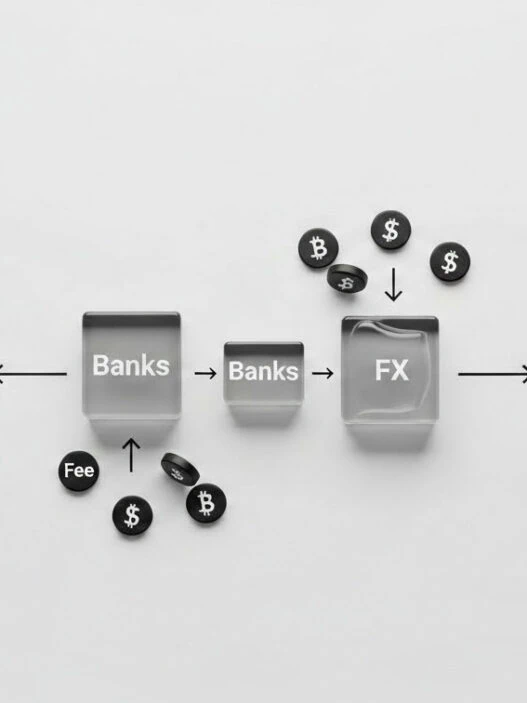











The enterprise blockchain market reaches $44.29 billion in 2026, representing 59% year-over-year growth as JPMorgan Chase, BlackRock, and major financial institutions deploy tokenization infrastructure processing trillions in transaction volume. JPMorgan’s Kinexys platform now settles $1.5 trillion annually in cross-border payments, while BlackRock’s BUIDL tokenized Treasury fund manages $2 billion in assets, demonstrating blockchain technology’s transition from experimental proof-of-concepts to mission-critical financial infrastructure.
Blockchain technology in 2026 represents digital ledger systems enabling transparent, immutable record-keeping across distributed networks without centralized intermediaries. The technology underpins cryptocurrency markets, tokenized securities, supply chain tracking, and programmable financial instruments replacing manual reconciliation processes that cost global banks $50-70 billion annually. With 560 million users worldwide and enterprise spending reaching $19 billion, blockchain has evolved from disruptive innovation to essential infrastructure powering next-generation financial services.
According to institutional tokenized assets analysis, blockchain adoption accelerates as regulatory frameworks including EU MiCA and US GENIUS Act provide legal clarity enabling institutional capital deployment at scale.
Table of Contents
- What Is Blockchain Technology?
- 2026 Market Size & Growth
- JPMorgan Kinexys Platform
- BlackRock Tokenization Strategy
- Enterprise Adoption Sectors
- AI + Blockchain Convergence
- Regulatory Frameworks 2026
- Blockchain Technology FAQs
What Is Blockchain Technology?
Blockchain technology comprises distributed ledger systems recording transactions across multiple computers in cryptographically secured blocks linked chronologically, creating tamper-resistant records verifiable by network participants without centralized authority oversight.
Core Technical Components
Blockchain architecture consists of three fundamental elements. First, distributed ledgers replicate transaction records across thousands of network nodes, eliminating single points of failure and enabling Byzantine fault tolerance where networks function correctly despite node failures or malicious actors. Second, cryptographic hashing secures each block through mathematical algorithms producing unique digital fingerprints, where any data modification invalidates subsequent blocks exposing tampering attempts. Third, consensus mechanisms coordinate network agreement on valid transactions through protocols including Proof of Work, Proof of Stake, or Byzantine Fault Tolerance algorithms used by enterprise permissioned networks.
Smart contracts extend blockchain functionality beyond simple value transfers, enabling programmable logic executing automatically when predefined conditions are met. These self-executing agreements eliminate intermediary requirements in financial settlements, insurance claims processing, and supply chain milestone verification. Ethereum pioneered smart contract deployment in 2015, while enterprise blockchains including Hyperledger Fabric and R3 Corda adapted the concept for permissioned corporate environments requiring privacy controls and regulatory compliance.
Public blockchains including Bitcoin and Ethereum operate permissionlessly, enabling anyone to participate as validator, transaction submitter, or data observer. Private enterprise blockchains restrict network access to authorized participants, providing governance controls and transaction privacy necessary for corporate operations handling confidential data.
Enterprise vs Public Blockchain
Enterprise blockchain platforms prioritize transaction throughput, privacy controls, and regulatory compliance over the censorship resistance and decentralization emphasized by public cryptocurrency networks. JPMorgan’s Kinexys processes 10,000+ transactions per second with sub-second finality using proof-of-authority consensus, contrasting with Ethereum’s 15-30 transactions per second public throughput.
Permissioned architectures enable selective data disclosure where transaction counterparties view complete details while regulators access audit trails and other network participants see only metadata confirming settlement finality. This privacy model proves essential for financial institutions processing client transactions subject to confidentiality obligations and anti-money laundering requirements.
Hybrid models are emerging in 2026 as institutions recognize benefits of public blockchain composability and liquidity while maintaining permissioned controls for sensitive operations. BlackRock’s BUIDL tokenized Treasury fund operates on public Ethereum blockchain with investor whitelist restrictions and regulated transfer protocols, demonstrating convergence between permissioned institutional requirements and public blockchain infrastructure advantages.

2026 Market Size & Growth
The global enterprise blockchain market reaches $44.29 billion in 2026, accelerating from $27.85 billion in 2024 and projecting $746.41 billion by 2032 at 47.5% compound annual growth rate according to market research firms tracking distributed ledger technology adoption across industries.
Sector-Specific Market Breakdown
Financial services dominate blockchain spending with 41% market share representing $18.2 billion in 2026 enterprise deployments. Payment processing applications account for 42% of financial services blockchain investment as banks pursue real-time settlement capabilities, cross-border payment efficiency, and programmable money functionality reducing correspondent banking infrastructure costs. Securities tokenization and digital asset custody generate additional institutional investment as asset managers including BlackRock, Fidelity, and Franklin Templeton deploy blockchain-native fund structures.
Healthcare blockchain adoption reaches $8.3 billion in 2026, growing toward projected $43.37 billion by 2030 at 52.5% CAGR. Clinical data exchange represents primary use case as 39% of healthcare organizations implement blockchain solutions enabling secure patient record sharing across provider networks while maintaining HIPAA compliance and audit trail requirements. Pharmaceutical supply chain verification prevents counterfeit drug distribution through cryptographic provenance tracking from manufacturing through dispensing.
Supply chain and logistics blockchain spending totals $6.1 billion in 2026 as enterprises including Walmart, Maersk, and BMW implement track-and-trace systems providing end-to-end visibility across complex global supply networks. Automated customs clearance, provenance verification, and conflict mineral compliance drive adoption in manufacturing, retail, and automotive sectors.
Geographic Distribution
North America leads blockchain adoption with 38% market share ($16.8 billion) driven by US financial institution deployment and regulatory clarity through GENIUS Act stablecoin framework and SEC digital asset guidance. Europe captures 32% market share ($14.2 billion) as EU MiCA regulation effective January 2025 provides comprehensive legal framework for tokenized assets and crypto-asset service providers operating across 27 member states.
Asia-Pacific blockchain spending reaches $8.9 billion in 2026 with 20% market share, led by Singapore’s progressive regulatory approach through Monetary Authority payment services framework, Hong Kong’s virtual asset licensing regime, and UAE’s Abu Dhabi Global Market digital asset regulations. China pursues blockchain adoption through government-controlled networks rather than public cryptocurrency infrastructure, implementing yuan-denominated Central Bank Digital Currency and permissioned enterprise ledgers.
JPMorgan Kinexys Platform
JPMorgan Chase operates the world’s largest institutional blockchain deployment through Kinexys platform, formerly known as Onyx, processing $1.5 trillion annually in cross-border payments, securities settlements, and tokenized asset transactions across 100+ participating financial institutions.
Cross-Border Payment Infrastructure
Kinexys Multi-Currency Network enables real-time international payments settling in local currencies without correspondent banking intermediaries that traditionally add 3-5 day delays and $30-50 transaction fees. The system processes payments in 30+ currencies using JPMorgan’s proprietary JPM Coin stablecoin, with $2 billion daily transaction volume as of December 2025.
Corporate treasurers at multinational companies including BMW, Siemens, and Anheuser-Busch InBev utilize Kinexys for automated accounts payable settlements, reducing foreign exchange costs by 40-60% compared to traditional SWIFT wire transfers. BMW announced deployment of Kinexys for automated supplier payments in December 2025, processing initial treasury transfers on-chain with plans to expand across its global supply chain throughout 2026.
The platform integrates with existing enterprise resource planning systems through APIs enabling straight-through processing from purchase order to blockchain settlement without manual treasury intervention. This automation eliminates reconciliation errors costing companies 0.5-2% of transaction values through discrepancies requiring manual investigation and correction.
Tokenized Asset Platform
JPMorgan launched Kinexys Fund Flow in October 2025, enabling tokenization of private equity funds, hedge funds, and real estate investments. The platform targets institutional and high-net-worth investors seeking access to alternative assets traditionally requiring multi-million dollar minimums and lock-up periods ranging from 3-10 years.
Tokenization enables fractional ownership where $100,000 minimum investments provide exposure to funds previously requiring $5-25 million commitments. Secondary market trading functionality allows investors to exit positions before fund maturity, addressing illiquidity concerns deterring retail and smaller institutional allocations to private markets.
JPMorgan Asset Management head Anton Pil stated blockchain adoption in alternative investments is inevitable, as tokenization makes processes more efficient, lowers barriers, and opens opportunities to broader investor bases. The bank projects expanding Fund Flow platform to tokenize $10-20 billion in alternative assets by end-2026 across private equity, real estate, infrastructure, and private credit strategies.
Smart Contract Automation
Kinexys implements programmable payment logic enabling conditional transfers, escrow automation, and multi-party settlement coordination. Supply chain finance applications utilize smart contracts releasing payment upon shipment verification, delivery confirmation, or quality inspection completion recorded through Internet of Things sensors and third-party logistics integrations.
Trade finance letters of credit execute automatically through smart contracts coordinating document verification between exporters, importers, banks, and customs authorities. This automation reduces letter of credit processing time from 5-10 days to under 24 hours while eliminating $1,500-5,000 in document checking and courier fees per transaction.

BlackRock Tokenization Strategy
BlackRock, managing $10.5 trillion in assets, positions blockchain technology as fundamental infrastructure for next-generation financial markets through tokenized Treasury funds, programmable securities, and digital asset custody integration.
BUIDL Tokenized Money Market Fund
BlackRock launched BUIDL tokenized Treasury fund in March 2024, reaching $2 billion in assets under management by December 2025 and establishing the largest blockchain-native institutional investment product. The fund operates on Ethereum blockchain, providing qualified investors exposure to US Treasury bills and repurchase agreements with real-time net asset value updates, instant settlement, and 24/7 trading availability.
BUIDL tokens represent fractional ownership of underlying Treasury securities, with smart contracts automatically distributing monthly dividend payments in USDC stablecoin. Institutional investors including DeFi protocols Ondo Finance and Mountain Protocol utilize BUIDL as collateral for lending operations, demonstrating convergence between traditional asset management and decentralized finance infrastructure.
The fund requires $5 million minimum investment and restricts ownership to qualified purchasers meeting accredited investor thresholds. Transfer restrictions ensure regulatory compliance while enabling programmable collateral functionality unavailable with traditional money market fund structures settling through legacy custodian and clearinghouse systems.
Institutional Digital Asset Infrastructure
BlackRock CEO Larry Fink describes tokenization as the next generation of financial markets, emphasizing blockchain’s potential to improve settlement efficiency, enhance liquidity, and reduce operational costs across the firm’s $10.5 trillion asset base. The company projects migrating 5-10% of managed assets to blockchain infrastructure by 2030, representing $500 billion to $1 trillion in tokenized securities.
BlackRock partners with Coinbase for institutional cryptocurrency custody, enabling client access to Bitcoin, Ethereum, and digital asset investment products through familiar wealth management interfaces. The firm’s Bitcoin ETF launched January 2024 has accumulated $40 billion in assets, making BlackRock the largest Bitcoin investment product manager globally.
Tokenization roadmap extends beyond Treasury securities to include corporate bonds, mortgage-backed securities, municipal bonds, and private credit instruments. Each asset class migration requires coordination with regulators, legal opinion on digital security status, and technology integration with existing portfolio management systems and client reporting infrastructure.
Competitive Positioning
BlackRock competes with Fidelity’s FDIT tokenized Treasury product managing $732 million across eight blockchains, Franklin Templeton’s BENJI token fund, and WisdomTree’s blockchain-native ETF structures. The asset management industry recognizes tokenization as strategic imperative rather than optional innovation, with firms lacking blockchain capabilities risking competitive disadvantage as institutional investors demand programmable securities and 24/7 settlement functionality.
Samara Cohen, BlackRock’s global head of market development, stated stablecoins are becoming the bridge between traditional finance and digital liquidity, highlighting the firm’s recognition that blockchain infrastructure transformation extends beyond isolated products to systemic financial market architecture evolution.
Enterprise Adoption Sectors
Blockchain technology deployment accelerates across healthcare, supply chain, energy, and government sectors as enterprises recognize efficiency gains, transparency improvements, and cost reductions from distributed ledger implementation.
Healthcare: Clinical Data Exchange
Healthcare blockchain implementations enable secure patient record sharing across provider networks while maintaining HIPAA compliance and patient consent controls. Protocols including Health Level Seven International FHIR standard integrate with blockchain smart contracts governing data access permissions, audit trails, and automated consent management.
The Veterans Affairs Department operates the largest US government blockchain deployment, enabling 9 million veterans to share medical records across VA hospitals, private providers, and Department of Defense facilities. The system eliminates duplicate testing costing $30 billion annually through redundant diagnostic procedures when patients receive care from multiple uncoordinated providers.
Pharmaceutical companies utilize blockchain for clinical trial data integrity, creating immutable records of patient enrollment, adverse event reporting, and efficacy outcomes preventing data manipulation or selective publication bias. FDA explores accepting blockchain-verified trial data as regulatory submission evidence, potentially accelerating drug approval timelines.
Supply Chain: Track and Trace
Global supply chains implement blockchain systems providing end-to-end visibility from raw material sourcing through manufacturing, distribution, and retail sale. Walmart’s Food Trust Network tracks fresh produce and meat products, enabling 2-second trace-back from store shelf to farm origin versus 7-day manual process using paper records and phone calls.
During food safety incidents, blockchain enables surgical recalls targeting specific contaminated batches rather than blanket recalls destroying millions in safe product. This precision saves retailers and manufacturers $400 million annually while protecting consumer safety through faster contamination source identification.
Conflict mineral compliance leverages blockchain provenance tracking ensuring cobalt, tantalum, tungsten, and gold sourcing excludes mines funding armed conflict in Democratic Republic of Congo and surrounding regions. Electronics manufacturers demonstrate regulatory compliance through cryptographic supply chain verification rather than manual audit trails subject to document forgery.
Energy: Renewable Energy Certificates
Power grid operators implement blockchain systems tracking renewable energy generation, transmission, and consumption for carbon credit allocation and renewable energy certificate trading. Solar panel and wind turbine output data recorded on blockchain enables automated certificate issuance and secondary market trading without centralized registry bottlenecks.
Corporate sustainability commitments require verifiable renewable energy consumption proof. Blockchain-based renewable energy certificate systems prevent double-counting where single megawatt-hour generation creates multiple fraudulent certificates sold to different corporate buyers claiming identical environmental benefit.
Peer-to-peer energy trading pilots enable solar panel owners selling excess generation to neighbors through smart contracts executing automated settlements based on smart meter readings. These microgrids reduce transmission losses and grid infrastructure costs while accelerating renewable energy adoption through investment returns improving solar panel economics.

AI + Blockchain Convergence
Artificial intelligence and blockchain technology convergence creates decentralized machine learning infrastructure, verifiable AI model training, and automated intelligent contract execution representing 27% of new blockchain startup focus areas in 2026.
Decentralized AI Training
Blockchain enables distributed AI model training across multiple data owners without centralizing sensitive information. Healthcare institutions collaborate on machine learning models analyzing patient outcomes while cryptographic techniques including federated learning and zero-knowledge proofs prevent raw medical record exposure violating privacy regulations.
Pharmaceutical research consortiums utilize blockchain-coordinated AI analyzing clinical trial data from competing companies to identify drug candidate efficacy patterns impossible to detect from individual company datasets. Blockchain ensures computational integrity and equitable intellectual property attribution when collaborative models produce commercially valuable discoveries.
This convergence addresses AI centralization concerns where three tech giants control 63% of cloud infrastructure and OpenAI and Anthropic dominate 88% of AI-native company revenue. Blockchain provides open, permissionless foundation for AI development avoiding oligopolistic control over critical machine learning infrastructure and model access.
AI-Enhanced Smart Contracts
Machine learning algorithms embedded in smart contracts enable dynamic decision-making responding to real-time data inputs. Insurance contracts automatically process claims using computer vision analyzing damage photos and predictive models estimating repair costs, reducing claims processing from weeks to hours while eliminating adjuster bias and fraud.
Supply chain smart contracts integrate AI demand forecasting optimizing inventory levels and triggering automated reorder points based on sales velocity predictions. These intelligent contracts reduce stockouts costing retailers 8-10% of potential revenue while minimizing excess inventory carrying costs.
Credit underwriting smart contracts utilize machine learning risk models evaluating borrower creditworthiness from alternative data including utility payments, rent history, and educational credentials rather than traditional credit scores excluding 26 million “credit invisible” Americans from lending markets.
Verifiable AI Model Provenance
Blockchain creates tamper-proof records of AI model training data, algorithm versions, and computational processes enabling verification that models comply with fairness requirements and function as intended. Regulatory agencies require AI explainability and bias audits for models determining credit approvals, employment decisions, and healthcare treatment recommendations.
Immutable training data manifests recorded on blockchain enable retrospective bias audits identifying discriminatory patterns in historical model versions. This audit capability protects companies from regulatory penalties and civil liability for AI system decisions violating anti-discrimination laws.
Regulatory Frameworks 2026
Global regulatory clarity accelerates blockchain adoption as jurisdictions including United States, European Union, United Kingdom, and Singapore implement comprehensive frameworks governing digital assets, tokenized securities, and enterprise blockchain deployments.
United States: GENIUS Act
The Guiding and Establishing National Innovation for US Stablecoins Act passed December 2025 establishes federal regulatory framework for payment stablecoins, defining issuer requirements, reserve obligations, and regulatory oversight responsibilities between Federal Reserve, Office of the Comptroller of the Currency, and state regulators.
The legislation requires stablecoin issuers maintaining adequate reserves in cash, Treasury securities, and central bank deposits backing token circulation. Monthly third-party attestation reports verify reserve adequacy similar to requirements implemented through EU MiCA regulation. Non-bank stablecoin issuers must secure state money transmitter licenses or federal limited purpose trust charters providing bank-equivalent regulatory oversight.
Securities tokenization proceeds under existing SEC frameworks treating blockchain-based securities identically to traditional instruments, requiring registration statements, prospectus disclosures, and broker-dealer intermediation. SEC issued guidance in 2025 clarifying that tokenization does not alter security status or regulatory requirements, providing legal certainty for asset managers deploying blockchain-native investment products.
European Union: MiCA Implementation
Markets in Crypto-Assets Regulation became fully effective January 2025, establishing comprehensive European Union framework for crypto-asset issuers, service providers, and exchanges operating across 27 member states. The regulation creates passporting rights where companies authorized in one EU jurisdiction operate throughout union without separate licensing.
MiCA distinguishes asset-referenced tokens backed by multiple assets, e-money tokens pegged to single fiat currencies, and utility tokens providing access to decentralized network services. Each category faces tailored requirements addressing consumer protection, market integrity, and financial stability concerns specific to token economic models and use cases.
Significant stablecoin issuers exceeding 5 million holders or €5 million daily transaction volume face enhanced supervision by European Banking Authority rather than national regulators, preventing regulatory arbitrage and ensuring consistent oversight of systemically important crypto infrastructure.
Asia-Pacific Frameworks
Singapore Monetary Authority established Payment Services Act framework requiring stablecoin issuers securing Major Payment Institution licenses, maintaining 100% reserves in trust accounts, and providing monthly attestation reports. The regulation balances innovation accommodation with investor protection, positioning Singapore as competitive digital asset hub attracting regional blockchain deployment.
Hong Kong implemented virtual asset service provider licensing regime requiring cryptocurrency exchanges, custody providers, and tokenization platforms obtaining authorization from Securities and Futures Commission. The framework mandates segregated client asset storage, insurance coverage, and cybersecurity controls protecting investors from exchange failures and hacking incidents.
United Arab Emirates established multiple digital asset regulatory zones including Dubai Virtual Assets Regulatory Authority and Abu Dhabi Global Market, competing to attract crypto companies through streamlined licensing, tax incentives, and regulatory sandboxes testing innovative business models before full commercial deployment.
Blockchain Technology FAQs
What is blockchain technology in simple terms?
Blockchain technology is digital ledger system recording transactions across multiple computers in secured, linked blocks, creating tamper-resistant records verifiable by participants without centralized authority. Think of it as shared spreadsheet that updates automatically and cannot be changed retroactively.
How are enterprises using blockchain in 2026?
Enterprises deploy blockchain for cross-border payments (JPMorgan Kinexys processing $1.5T annually), tokenized assets (BlackRock BUIDL with $2B), supply chain tracking (Walmart Food Trust), healthcare records (VA patient data sharing), and renewable energy certificates.
What is the blockchain market size in 2026?
The global enterprise blockchain market reaches $44.29 billion in 2026, growing 59% from $27.85 billion in 2024, with projections of $746.41 billion by 2032 at 47.5% compound annual growth rate.
What is tokenization in blockchain?
Tokenization converts real-world assets including securities, real estate, and alternative investments into digital tokens recorded on blockchain, enabling fractional ownership, 24/7 trading, programmable compliance, and instant settlement. JPMorgan and BlackRock lead institutional tokenization deployment.
How does blockchain differ from traditional databases?
Blockchain distributes data across multiple nodes with cryptographic verification and consensus mechanisms preventing unauthorized changes, while traditional databases rely on centralized administrators controlling access and modifications. Blockchain provides tamper-proof audit trails and eliminates intermediary trust requirements.
What regulations govern blockchain in 2026?
Major frameworks include US GENIUS Act for stablecoins, EU MiCA for crypto-assets (effective January 2025), Singapore MAS Payment Services Act, and Hong Kong VASP licensing. These provide legal clarity for institutional blockchain deployment and investor protection standards.
SOURCES
- Intellivon – Blockchain Trends 2026 Enterprise Analysis
- VanEck – Top Blockchain Companies Leading 2026
- Hipther – JPMorgan BMW Blockchain Integration December 2025
- CoinDesk – BlackRock 2026 AI Report Blockchain Analysis
- PrivateCharterX – BlackRock Tokenized Assets BUIDL Guide
- PrivateCharterX – Institutional Tokenization Strategy
- PrivateCharterX – Institutional Blockchain Adoption
- Binariks – Emerging Blockchain Technology Trends 2025-2030
- DemandSage – Blockchain Statistics 2025 Adoption Rates
- Yellow – Wall Street Blockchain Reversal JPMorgan BlackRock