



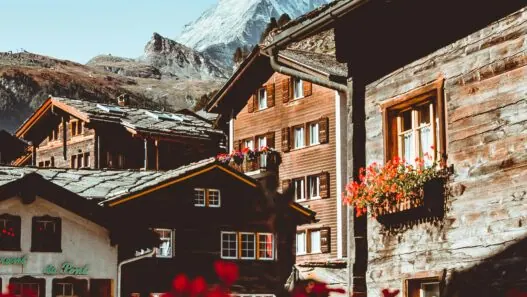
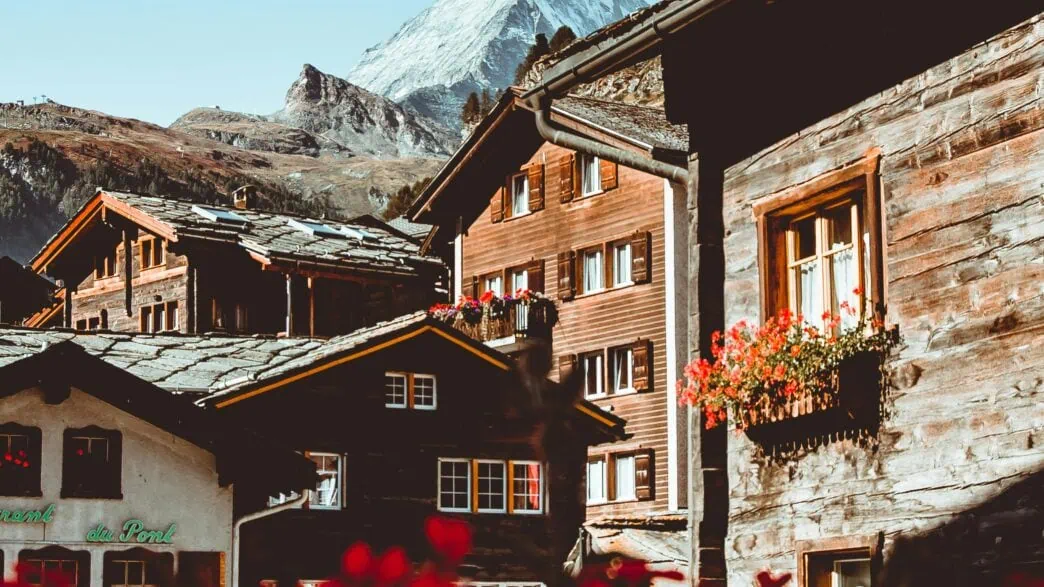
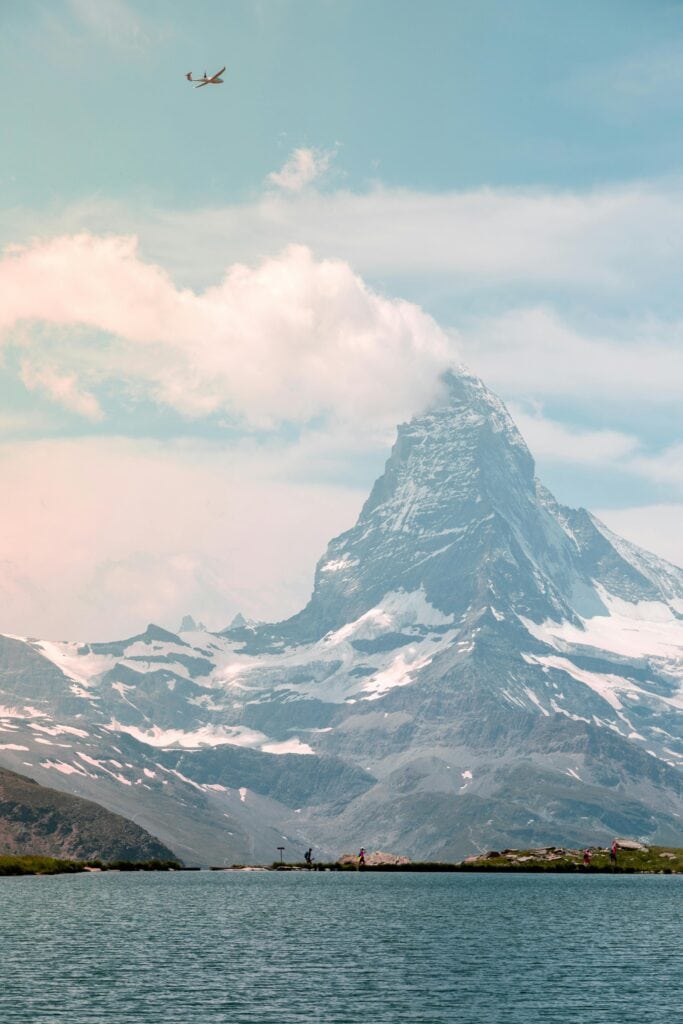
Zermatt Switzerland stands as one of the Alps’ most iconic destinations, dominated by the instantly recognizable pyramid of the Matterhorn (4,478m), Switzerland’s most photographed mountain. This car-free village at 1,620 meters elevation combines world-class year-round skiing with luxury hotels, Michelin-starred dining, and unique Alpine character impossible to replicate. Unlike resorts accessible by private car, Zermatt Switzerland requires arrival by train or helicopter, creating atmospheric separation from everyday life while filtering casual visitors who balk at logistics constraints.
For discerning travelers seeking authentic Alpine luxury without automotive traffic, serious skiers prioritizing extensive high-altitude terrain and glacier access, mountaineering enthusiasts drawn to the Matterhorn’s legendary status, and executives requiring discrete sophistication, Zermatt Switzerland delivers exceptional experiences. The village’s pedestrian-only policy means electric taxis and horse-drawn carriages provide all ground transport, creating peaceful atmosphere and air quality unmatched by road-accessible resorts. The 360 kilometers of ski terrain reaches 3,883 meters at the Klein Matterhorn, enabling summer glacier skiing when other resorts close for the season.
This comprehensive guide provides essential intelligence for planning Zermatt Switzerland visits in 2026, covering transport logistics from Zurich and Geneva, car-free village navigation, skiing terrain across three mountains, luxury hotel selection, costs and budgeting, year-round activity options, and practical tips for maximizing your Zermatt experience. Whether visiting for winter skiing, summer mountaineering, or simply experiencing Switzerland’s most dramatic Alpine setting, this guide delivers actionable information for successful Zermatt trips.
For official Zermatt information and current conditions, visit Zermatt Tourism. Real-time ski conditions and lift operations appear on the Matterhorn Paradise portal.
Zermatt Switzerland at a Glance
- Location: Valais, Switzerland (Swiss-Italian border)
- Elevation: 1,620m (village), 3,883m (Klein Matterhorn summit)
- Population: 5,800 residents
- Car Access: None – car-free village since 1947
- Ski Season: Year-round (glacier), main season Nov-May
- Ski Area: 360km pistes, 52 lifts, 3 mountains
- Nearest Airport: Zurich (ZRH, 250km), Geneva (GVA, 240km)
- Train Access: Täsch (parking) to Zermatt (12 min)
- Helicopter Time: Zurich 45min, Geneva 45min
- Signature Feature: Matterhorn views from entire village
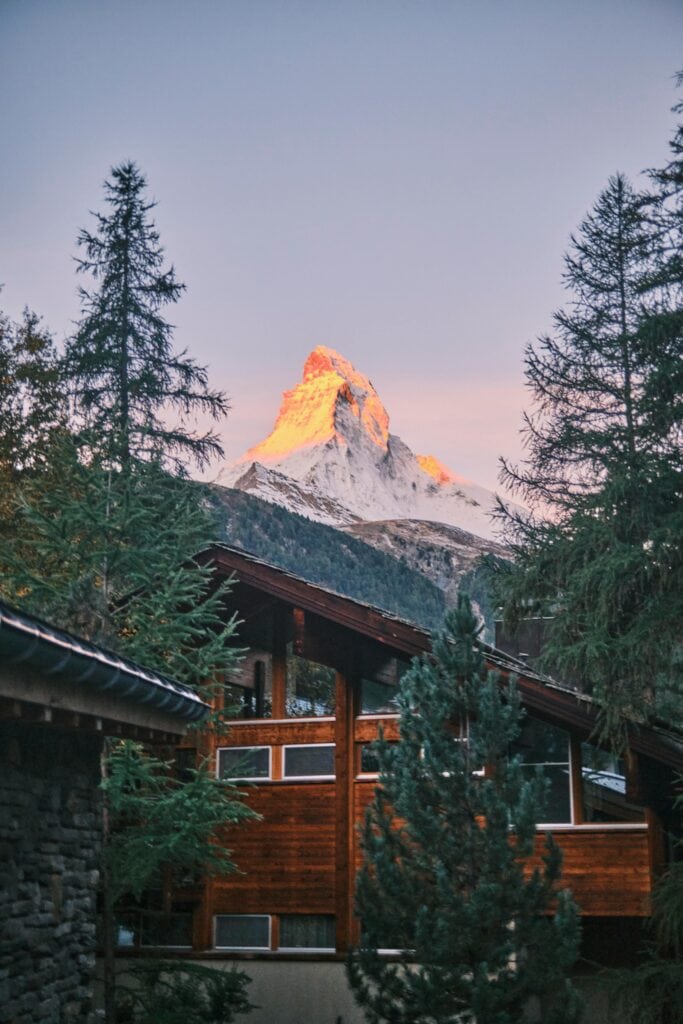
Table of Contents
- Zermatt Switzerland Overview
- Getting to Zermatt: Train & Helicopter
- Navigating the Car-Free Village
- Skiing Zermatt: Three Mountains
- Best Luxury Hotels in Zermatt
- Michelin Dining & Mountain Restaurants
- Summer Activities & Mountaineering
- Gornergrat Railway & Sightseeing
- Costs & Budgeting
- Practical Tips & What to Pack
- Frequently Asked Questions
Zermatt Switzerland Overview: The Matterhorn Village
Zermatt Switzerland’s history intertwines completely with the Matterhorn. The mountain’s first ascent in 1865 by Edward Whymper’s team ended tragically with four climbers falling to their deaths during descent, creating international sensation and establishing Zermatt as mountaineering capital. The disaster paradoxically boosted tourism—adventurers and spectators flocked to witness the deadly peak. Over 160 years later, the Matterhorn remains Zermatt’s primary draw, visible from virtually every location in the valley and providing the iconic backdrop defining Switzerland itself.
Why Zermatt Remains Exceptional
Zermatt Switzerland differentiates through unique characteristics impossible for competing resorts to replicate. The car-free policy since 1947 creates atmosphere and air quality unmatched anywhere—walking village streets in complete quiet except for electric taxi hums and church bells proves remarkably peaceful. The Matterhorn provides instantly recognizable setting that no marketing budget could create. Year-round skiing enabled by the Theodul Glacier and Klein Matterhorn elevation extends seasons beyond typical November-April operations, attracting serious skiers and national teams training summers.
The village maintains authentic Swiss mountain character despite luxury development. Traditional wooden chalets (many 400+ years old) mix with modern hotels, all constrained by strict building codes preserving architectural heritage. The population includes significant seasonal workers but maintains core Swiss-German community that’s lived here for generations. This authenticity contrasts with purpose-built resorts like Les Arcs or Avoriaz that lack historical foundation, and even competes favorably against historic but car-accessible resorts like St. Moritz or Verbier. For comprehensive St. Moritz comparison, see our detailed St. Moritz Switzerland winter guide.
Zermatt vs Verbier vs St. Moritz
Comparing Zermatt Switzerland to Switzerland’s other luxury ski resorts clarifies positioning. St. Moritz emphasizes refined social calendar (White Turf, Snow Polo), palace hotel tradition, and Engadin sunshine. Verbier attracts younger, party-focused adventurers prioritizing off-piste terrain and energetic après-ski. Zermatt combines serious mountaineering heritage, car-free environmental consciousness, iconic Matterhorn setting, and year-round skiing impossible at lower resorts.
Zermatt suits travelers valuing authentic Alpine atmosphere, environmental sustainability, exceptional high-altitude skiing, and dramatic natural beauty over social calendar or party scenes. The car-free policy eliminates one segment of luxury travelers who refuse to abandon vehicle convenience, while attracting those who specifically seek that unique atmosphere. Families appreciate safe pedestrian environment and extensive beginner terrain. Serious skiers target the glacier access and extensive advanced runs. Everyone photographs the Matterhorn obsessively.
Getting to Zermatt Switzerland: Train & Helicopter Access
Zermatt Switzerland’s car-free status fundamentally shapes access logistics. Private cars must park in Täsch (5 kilometers down-valley), with passengers completing journeys via shuttle train. This creates initial inconvenience that filters casual visitors while creating opportunity for premium helicopter services bypassing ground transport entirely. Understanding access options enables selecting appropriate methods for specific priorities—budget, time efficiency, or dramatic helicopter arrival.
Zurich to Zermatt: Primary International Gateway
Most international travelers reach Zermatt Switzerland via Zurich Airport (ZRH), Switzerland’s largest international hub. From Zurich, three primary options exist: train (3.5 hours), helicopter (45 minutes), or combination private jet to Sion with helicopter transfer (total 75 minutes).
Swiss Federal Railways operates regular Zurich-Zermatt service requiring one change in Visp. The journey showcases spectacular scenery including the Rhône valley and mountain passes approaching Zermatt. First-class tickets cost CHF 160-200 round-trip per person, offering comfortable seating, WiFi, and productive work environment. The Glacier Express tourist train operates Zurich-Zermatt route (7.5 hours) with panoramic windows showcasing maximum scenery, though the extended duration makes it impractical for most travelers beyond those specifically prioritizing the journey itself. Book through SBB Swiss Railways for best availability. For comprehensive Zurich coverage including airport logistics, see our detailed Zurich Switzerland complete guide.
Driving to Täsch requires 3.5-4 hours from Zurich via A2 motorway through the Gotthard Tunnel or Simplon Pass. Swiss motorway vignette (CHF 40 annual) required. Täsch parking facilities charge CHF 15-17 daily (covered garage CHF 19-21), with the shuttle train (MGB) operating every 20 minutes to Zermatt (12-minute journey, CHF 16 round-trip adults). This option suits those requiring vehicles elsewhere in Switzerland but adds logistics complexity versus direct train to Zermatt.
Executive Ground Transport from Zurich to Täsch operates via luxury chauffeur services in Mercedes S-Class or similar vehicles (CHF 1,400-2,000 one-way). However, the mandatory train from Täsch to Zermatt eliminates door-to-door luxury benefits, making this option less appealing than helicopter for those prioritizing premium service. For detailed chauffeur options, see our comprehensive Zurich chauffeur service guide.
Geneva to Zermatt: Western Switzerland Access
Geneva Switzerland sits 240 kilometers from Zermatt, requiring 3.5 hours by train via Visp (CHF 140-180 round-trip first class). The routing makes Geneva slightly less convenient than Zurich for Zermatt access, though helicopter charter (45 minutes, CHF 12,000-20,000 per flight) equalizes travel times for premium transport users. For comprehensive Geneva coverage, see our detailed Geneva Switzerland complete guide.
Helicopter Charter to Zermatt Switzerland
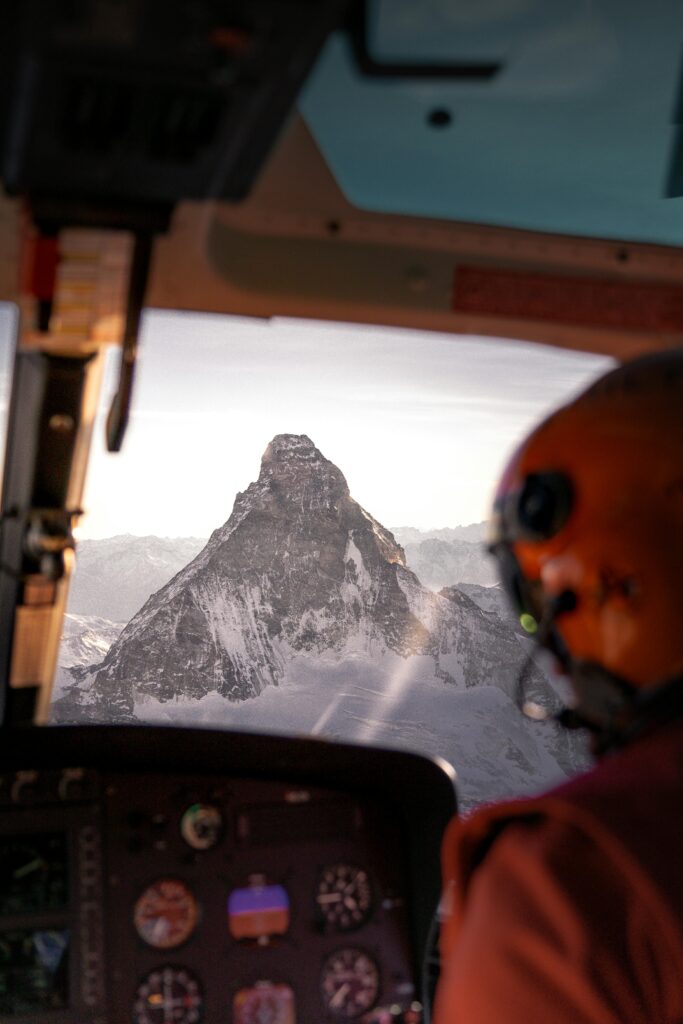
Helicopter charter represents the ultimate Zermatt Switzerland access method, transforming 3.5-hour ground journeys into 45-minute scenic flights directly to village helipads. The dramatic time savings, spectacular aerial Matterhorn views, and seamless luxury justify premium costs for time-sensitive executives and those who simply refuse ground transport constraints.
Zurich-Zermatt helicopter flights require approximately 45 minutes, with pricing CHF 12,000-20,000 per flight depending on aircraft type and season. Geneva-Zermatt similarly requires 45 minutes given the roughly equal distances. Popular aircraft include Airbus H125 (4-5 passengers), AgustaWestland AW109 (6 passengers), and larger models for groups requiring more capacity or luggage space. Most operators offer round-trip rates and weather contingency planning essential given Alpine mountain flying.
Zermatt maintains multiple helipads including the main public heliport near the Gornergrat railway station and private helipads at luxury hotels (Mont Cervin Palace, Riffelalp Resort). The helicopter arrival provides dramatic introduction—descending into the valley with Matterhorn towering above, landing amid Alpine chalets, with hotel staff greeting arrivals. Weather remains the primary constraint, with winter storms and summer afternoon thunderstorms sometimes grounding operations. For comprehensive Swiss helicopter charter information, see our detailed helicopter charter price guide for Switzerland.
Sion Airport: Private Aviation Alternative
Sion Airport, 60 kilometers from Zermatt Switzerland, serves private aviation seeking alternatives to Zurich. The smaller facility handles business jets with less congestion than major airports, though limited infrastructure and mountain valley location create operational constraints. Most private jet passengers flying to Sion connect via helicopter to Zermatt (20 minutes, CHF 4,000-6,000), creating seamless private aviation experience. Light jets (Citation CJ3, Phenom 300) and midsize aircraft serve Sion regularly. For comprehensive private jet information, explore our detailed private jet charter guide.
Navigating Zermatt Switzerland’s Car-Free Village
Zermatt Switzerland’s car-free policy since 1947 creates unique village atmosphere and requires understanding alternative transport systems. The village stretches approximately 2 kilometers along the valley floor from the train station to the southern residential areas, easily walkable in 25-30 minutes. However, luggage, weather, elevation, and convenience create demand for electric vehicles and services that substitute for private cars elsewhere.
Electric Taxis & Shuttle Services
Small electric taxis (resembling golf carts) provide Zermatt Switzerland’s primary motorized transport. These vehicles operate on fixed routes and offer on-demand service, charging CHF 10-25 for village trips depending on distance. Hotels dispatch electric vehicles for station pickups—most properties arrange automatic retrieval service, with staff greeting trains and loading luggage. The electric taxis operate quietly, travel at moderate speeds (30 km/hour maximum), and navigate village streets easily given compact size.
Luxury hotels including Mont Cervin Palace, The Omnia, and Riffelalp Resort operate private shuttle services for guests, reducing reliance on public electric taxis. Some properties maintain vintage electric vehicles or horse-drawn carriages for special occasions and photo opportunities. Despite these services, walking remains primary movement mode—most restaurants, shops, and attractions fall within easy pedestrian distance from hotel clusters.
Horse-Drawn Carriages
Horse-drawn sleighs (winter) and carriages (summer) provide atmospheric if expensive transport for romantics and photographers. Rides cost CHF 50-100 for short village trips, CHF 150-250 for extended tours. The carriages operate more as tourist attractions than practical transport, though some visitors genuinely prefer the experience for environmental or nostalgic reasons. Wedding parties and special occasions frequently incorporate carriage service for photo opportunities with Matterhorn backdrop.
Walking in Zermatt: The Reality
Walking Zermatt Switzerland proves generally pleasant given the car-free environment, but reality includes considerations beyond romantic visions of Alpine strolls. The village sits at 1,620 meters elevation where altitude affects some visitors, particularly arriving from sea level. Winter temperatures (often -10°C to -20°C) require serious outerwear for any extended walking. Streets receive excellent snow clearing but can become icy. Luggage complicates walking—rolling bags struggle on uneven surfaces and winter ice.
Most visitors walk extensively within the village once established at hotels. The pedestrian-only Bahnhofstrasse (main street) concentrates shops, restaurants, and services along 800-meter stretch from train station to church square. Side streets provide quieter routes avoiding crowds. Wayfinding proves easy given the valley’s linear geography—the Matterhorn provides constant landmark, and getting lost remains nearly impossible. Evening walks showcase different atmosphere—village lights, mountain silhouettes, and exceptional air quality create memorable experiences impossible in car-accessible resorts.
Skiing Zermatt Switzerland: Three Mountains & Year-Round Glacier
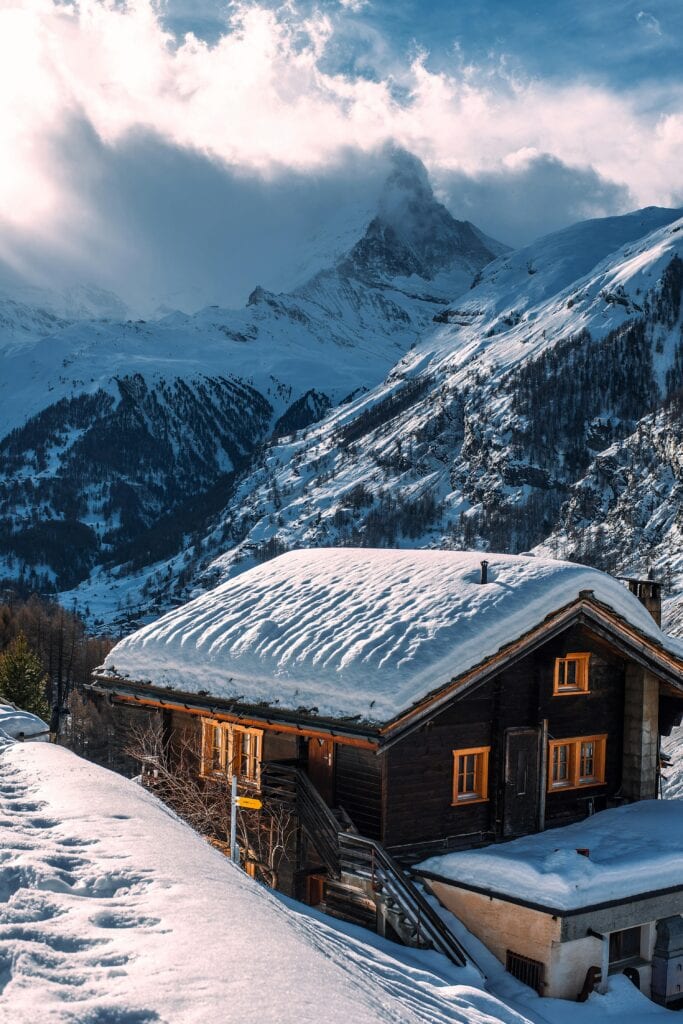
Zermatt Switzerland offers 360 kilometers of marked pistes across three distinct mountain areas connected by lifts: Sunnegga-Rothorn, Gornergrat-Stockhorn, and Klein Matterhorn-Cervinia. The skiing suits all ability levels with notable strengths in advanced terrain, high-altitude snow reliability, and unique cross-border access to Italy’s Cervinia resort. Understanding each area’s characteristics enables strategic planning maximizing limited vacation time and matching terrain to group abilities.
Klein Matterhorn: Glacier Skiing & Italy Access
Klein Matterhorn, reached via cable car from Zermatt Switzerland to 3,883 meters elevation, provides Zermatt’s signature skiing experience. The summit station claims Europe’s highest cable car station, offering 360-degree Alpine panoramas including the Matterhorn, Monte Rosa, and dozens of 4,000-meter peaks. The Theodul Glacier below enables year-round skiing when snow conditions permit, attracting national teams training summers and serious skiers seeking reliable snow.
The skiing from Klein Matterhorn includes groomed runs down to Trockener Steg mid-station (intermediate-advanced terrain), extensive off-piste opportunities requiring guides, and the unique Cervinia connection. The Italian border runs across the glacier, with lifts enabling seamless access to Cervinia’s 150+ kilometers of additional terrain. Combined Zermatt-Cervinia skiing creates 360+ kilometer network, though most skiers spend majority of time on Swiss side given superior snow quality at higher elevations.
Weather affects Klein Matterhorn significantly—high winds and storms close upper lifts regularly. The exposed summit and glacier sections create legitimate Alpine environment where conditions change rapidly. Always check forecasts before committing to Klein Matterhorn days, and maintain backup plans for lower-elevation skiing when weather deteriorates. Summer glacier skiing (June-September) operates morning-only given afternoon sun degrading snow quality.
Gornergrat-Stockhorn: Scenic Cruising
Gornergrat, accessed via the iconic cogwheel railway from Zermatt Switzerland (33 minutes to 3,089m summit), provides spectacular Matterhorn views and extensive intermediate cruising terrain. The railway itself operates as tourist attraction—many non-skiers ride solely for mountain panoramas and summit restaurant access. Skiers benefit from quick village-to-summit transport avoiding cable car queues.
The skiing emphasizes groomed blue and red runs with gentle gradients perfect for confident intermediates. The Stockhorn section extends terrain with steeper options and mogul runs for advanced skiers. Snow quality generally excels given north-facing exposure and elevations reaching 3,000+ meters. Gornergrat suits families, groups with mixed abilities, and skiers prioritizing mileage over challenge. The area becomes extremely crowded peak season given railway access and beginner-friendly reputation—arrive early or ski afternoons when day-trippers depart.
Mountain restaurants on Gornergrat include the Kulm Hotel at the summit (oldest mountain hotel in Switzerland, operating since 1896), Riffelberg with Matterhorn-facing terrace, and multiple mid-mountain options. Reservations prove essential during peak weeks for quality establishments. Expect CHF 40-80 per person for mountain lunch including drinks.
Sunnegga-Rothorn: Family-Friendly & Sunny
Sunnegga, reached via underground funicular from Zermatt Switzerland (3 minutes to 2,288m), provides the village’s most accessible skiing with strong emphasis on beginner and intermediate terrain. The sunny south-facing exposure creates warm conditions ideal for learning and casual skiing. The Wolli Park at Sunnegga offers dedicated children’s area with magic carpet lifts and ski school facilities.
Advanced skiers find less interest in Sunnegga’s primarily blue-red terrain, though the Rothorn summit (3,103m accessed via cable car) provides some steeper options and starting point for challenging runs back to valley. The Kumme black run tests technique on steep moguls and narrow sections. Most serious skiers use Sunnegga for warm-ups or afternoon laps rather than full-day skiing.
The area’s strength lies in accessibility, reliability (lower elevation means less weather-affected), and family appeal. Parents teaching children appreciate the contained terrain, gentle gradients, and quick village access for mid-day breaks. The Leisee lake at Sunnegga provides toboggan run and winter walking, enabling non-skiing family members to access mountain facilities.
Off-Piste & Backcountry
Zermatt Switzerland provides extensive off-piste terrain attracting advanced skiers and freeriders from worldwide. Famous routes include the Stockhorn powder fields, various Klein Matterhorn descents, and the legendary Valle Blanche-style run from the Theodul Glacier to Furi (vertical drop 2,200m). However, avalanche danger requires serious consideration—professional mountain guides prove essential for safe off-piste exploration.
Guide services cost CHF 600-900 per day (typically guiding up to 4-5 skiers), providing local knowledge, avalanche safety, and route selection. Equipment including transceivers, probes, shovels, and airbag packs costs CHF 50-70 daily rental. Never ski off-piste without proper equipment, training, and ideally professional guidance. The mountains remain spectacular but unforgiving—Zermatt sees regular avalanche incidents affecting both tourists and locals.
Best Luxury Hotels in Zermatt Switzerland
Zermatt Switzerland hotel scene spans from grand five-star properties to cozy mountain chalets, with options for all budgets and preferences. The car-free village enables hotels throughout the compact center to claim walkable convenience. Understanding hotel positioning, amenities, and character enables selecting accommodations matching specific requirements for winter skiing, summer mountaineering, or sightseeing visits.
Mont Cervin Palace: Zermatt’s Grand Dame
Mont Cervin Palace represents Zermatt Switzerland’s premier luxury hotel, a Belle Époque landmark opened 1852 combining historical elegance with comprehensive modern five-star amenities. The 153-room property dominates village center location with Matterhorn views from many rooms and suites. Facilities include indoor and outdoor pools, extensive spa, multiple restaurants (including After Seven holding one Michelin star), wine cellar with 40,000+ bottles, and legendary hospitality spanning nearly 170 years.
Rooms and suites range CHF 800-1,600 nightly for standard doubles (winter high season) to CHF 3,000-8,000 for palatial suites. The hotel operates on bed-and-breakfast basis (half-board available), providing flexibility for dining throughout the village versus St. Moritz palace hotels’ mandatory half-board. Service reaches white-glove standards with staff recognizing repeat guests, anticipating needs, and maintaining discretion essential for celebrity clientele.
The Mont Cervin attracts establishment wealth—families returning for generations, business executives combining work with Alpine leisure, and sophisticated travelers valuing tradition alongside modern luxury. The atmosphere maintains formality in public areas while accommodating contemporary casual styles. The hotel suits those seeking Zermatt’s ultimate luxury address willing to pay premium rates for iconic status and exceptional service. Book direct through Mont Cervin Palace for best room selection.
The Omnia: Modern Mountain Design
The Omnia delivers contemporary luxury in unique elevated location accessed via underground funicular from village center. The 30-room boutique property emphasizes modern design, floor-to-ceiling windows showcasing Matterhorn views, and intimate scale enabling highly personalized service. The hotel features spa, gourmet restaurant, and lounge areas with dramatic mountain vistas impossible in village-level properties.
Rates range CHF 700-1,200 for doubles to CHF 2,000-4,000 for suites (winter high season). The smaller size creates exclusive atmosphere—fewer children, more couples, and emphasis on design-conscious luxury. The Omnia attracts younger wealthy travelers (35-55) seeking contemporary style over Belle Époque tradition, and those who specifically value the elevated position providing unique perspective on Zermatt and Matterhorn. The funicular access adds novelty though potentially complicates quick village access for dining or nightlife.
Riffelalp Resort: Mountaintop Retreat
Riffelalp Resort occupies unique location at 2,222 meters on the Gornergrat railway line, creating mountain retreat atmosphere impossible at village-level hotels. The 65-room property combines Belle Époque architecture (opened 1884) with modern amenities including Switzerland’s highest nine-hole golf course (summer), extensive spa, and direct ski access. The resort operates tram connecting to Gornergrat railway, enabling relatively quick village access (20 minutes total travel time).
Rates range CHF 500-900 for doubles to CHF 1,500-3,000 for suites. The mountaintop location provides exceptional Matterhorn proximity and peaceful atmosphere but requires accepting the 20-minute tram journey for village dining or shopping. Riffelalp suits those seeking mountain immersion over village convenience, families wanting comprehensive resort facilities without village distractions, and romantics prioritizing Matterhorn views over nightlife access. The property operates seasonally (winter and summer), closing during spring and fall shoulder seasons.
Backstage Hotel: Boutique Chic
Backstage Hotel delivers design-forward luxury in intimate 18-room format emphasizing rock-and-roll aesthetic and contemporary style. The village-center location provides easy walking access to restaurants, shops, and cable cars. Rooms feature bold design, modern technology, and some Matterhorn views. The hotel attracts younger luxury travelers (30-50) seeking boutique character over grand hotel formality.
Rates range CHF 400-700 for doubles to CHF 900-1,500 for suites. The smaller scale and design focus create distinct personality differentiating from traditional five-star properties. Backstage suits those valuing contemporary aesthetics, personalized service of smaller hotels, and central location enabling spontaneous village exploration. However, facilities remain limited compared to larger properties—no extensive spa, limited dining options on-site, and smaller public areas.
Hotel Firefly: Accessible Luxury
Hotel Firefly provides four-star comfort at more accessible pricing while maintaining quality standards and excellent location near the Sunnegga funicular. The 38-room property features mountain-style interiors, wellness facilities, and half-board dining. Rates range CHF 300-500 for doubles (winter high season), representing significant savings versus five-star properties while delivering solid quality and service.
Firefly suits budget-conscious travelers still requiring quality accommodations, families seeking good value with convenient ski access, and those prioritizing skiing over luxury hotel amenities. The property doesn’t compete with Mont Cervin or The Omnia for prestige but delivers reliable comfort at fair pricing—smart choice for those whose budgets don’t stretch to CHF 1,000+ nightly room rates.
Michelin Dining & Mountain Restaurants in Zermatt Switzerland
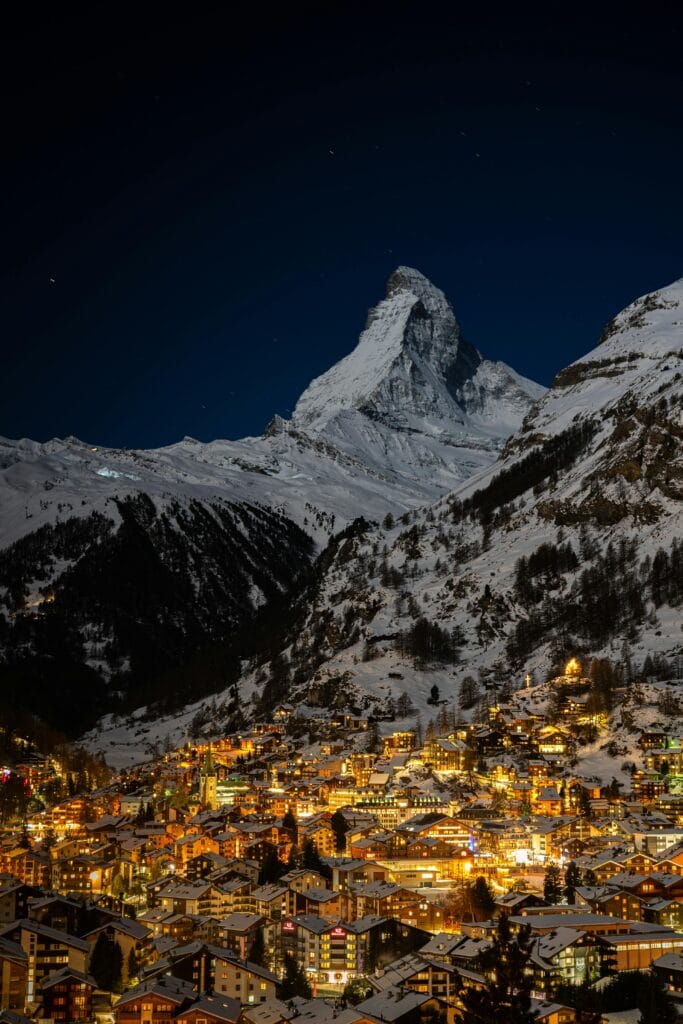
Zermatt Switzerland maintains sophisticated dining scene with multiple Michelin-starred restaurants, excellent mid-range Swiss cuisine, and spectacular mountain restaurants combining food with altitude and Matterhorn views. The village’s car-free atmosphere and Alpine setting create unique dining experiences impossible in car-accessible resorts, with many restaurants emphasizing local Valais specialties alongside international haute cuisine.
Michelin-Starred Restaurants
After Seven (Mont Cervin Palace) holds one Michelin star, serving innovative European cuisine in elegant subterranean setting designed like wine cellar. Chef Ivo Adam emphasizes seasonal ingredients, technical precision, and artistic presentation. The restaurant accommodates just 34 guests, creating intimate atmosphere. Tasting menus CHF 220-280 per person, wine pairings CHF 120-180 additional. Reservations essential weeks ahead for peak season. Dress: smart casual minimum.
Ristorante Capri (Hotel Perren) holds one Michelin star, delivering refined Italian cuisine with emphasis on seafood, house-made pasta, and regional Italian specialties. Chef Antonio Caminiti brings authentic Italian techniques to Alpine setting. Tasting menu CHF 180-220. Reservations required. Dress: smart casual.
Additional notable restaurants approaching Michelin level include Le Grill (Riffelalp Resort) specializing in grilled meats and mountain views, and The Omnia’s restaurant emphasizing contemporary European cuisine in dramatic design setting. While lacking Michelin stars, these establish excellent quality exceeding typical resort dining.
Traditional Swiss & Valais Cuisine
Schäferstube delivers authentic Valais specialties in cozy wood-paneled setting. Signature dishes include raclette (melted Valais cheese served with potatoes and pickles), dried meat platters, and cheese fondue. Prices CHF 40-70 per person. Grillroom (Steak House Ritz) specializes in grilled meats, Swiss cheese dishes, and hearty mountain portions. Walliserkanne provides traditional atmosphere with emphasis on local game, mushroom dishes (autumn), and regional wines.
These restaurants suit travelers seeking authentic Swiss mountain cuisine versus international hotel dining. The atmosphere emphasizes conviviality—communal tables, local dialect conversations, and relaxed service contrasting with formal Michelin establishments. Reservations advisable for dinner during peak season. Most operate on half-board arrangements for hotel guests while welcoming outside diners space-permitting.
Mountain Restaurants
Zermatt Switzerland’s mountain restaurants rank among the Alps’ finest, combining spectacular locations with surprisingly sophisticated cuisine. Chez Vrony (Findeln) represents the gold standard—family-operated mountain restaurant emphasizing local ingredients, house-cured meats, and exceptional service at 2,100 meters. The sunny terrace provides Matterhorn views, and reservations prove absolutely essential (book upon arrival in Zermatt for later in week). Expect CHF 60-100 per person.
Findlerhof, neighboring Chez Vrony, delivers similar quality with slightly easier reservations and famous chamois (Alpine antelope) specialties. Fluhalp (2,600m) provides remote location requiring 20-minute hike from Stellisee lift, rewarding effort with exceptional food and dramatic setting. Riffelhaus 1853 at Gornergrat combines restaurant, hotel, and arguably Switzerland’s best mountain restaurant views of Matterhorn.
Budget CHF 40-80 per person for quality mountain restaurant lunch including drinks. Always make reservations for popular establishments—walk-ins risk disappointment during peak weeks. Mountain restaurants operate lunch-only (typically 11:30-15:00), closing afterward. Some maintain winter toboggan runs or walking paths enabling evening visits, though most require daytime access via ski lifts.
Après-Ski & Nightlife
Zermatt Switzerland après-ski operates more sedately than Austrian or French party resorts, though several venues provide lively atmosphere. Hennu Stall at Furi mid-station delivers the closest Zermatt comes to traditional Austrian-style après-ski with music, drinks, and dancing. Olympia Stübli and Papperla Pub in village center continue après-ski into evening with live music and crowded bars.
Broken Bar Disco operates as Zermatt’s primary nightclub, though atmosphere remains relatively tame compared to Verbier or St. Anton party scenes. Most visitors eschew late nights given early ski starts and altitude affecting alcohol tolerance. The village generally operates as early-to-bed destination, with streets quiet by midnight even during peak season. Those seeking serious nightlife should consider Verbier or Austrian resorts rather than Zermatt.
Summer Activities & Mountaineering in Zermatt Switzerland
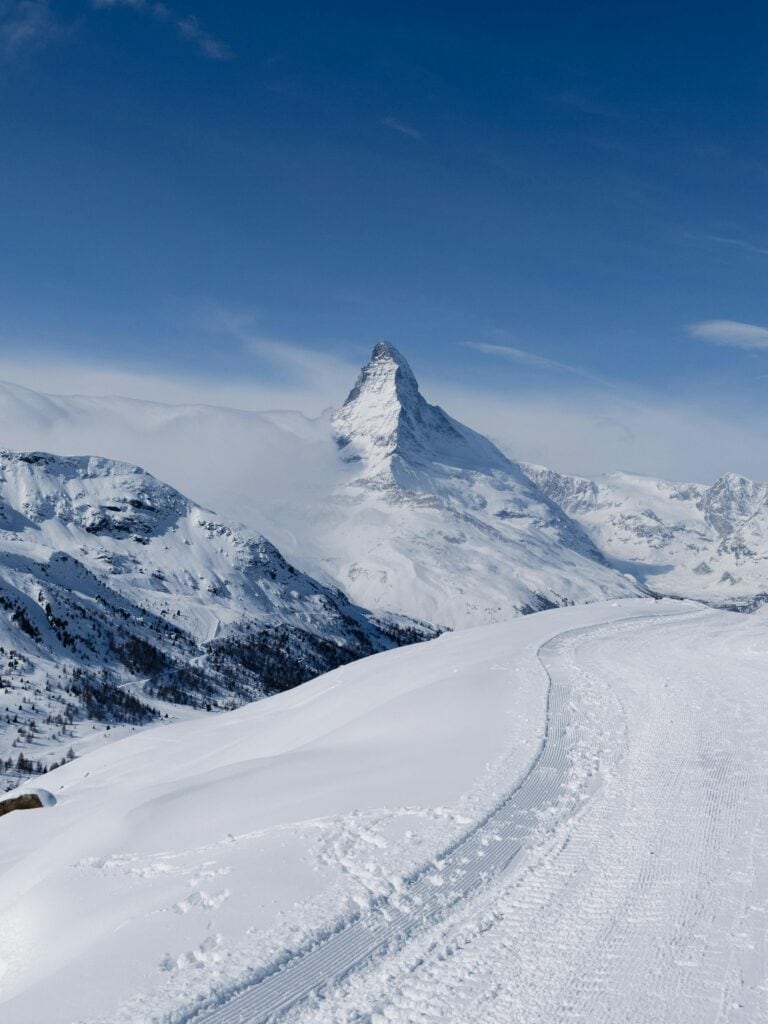
Zermatt Switzerland transitions seamlessly from winter ski resort to summer mountain destination, operating year-round with extensive programming for non-winter visits. Summer activities emphasize hiking, mountaineering, trail running, and mountain biking, with the Matterhorn providing constant dramatic backdrop. The glacier skiing continues through summer (conditions permitting), making Zermatt unique among Alpine resorts for true year-round operations.
Hiking & Mountain Trails
Zermatt maintains 400+ kilometers of marked hiking trails ranging from valley-floor walks suitable for all abilities to serious Alpine routes requiring mountaineering experience. The Five Lakes Walk (Fünfseenweg) ranks as Zermatt’s most popular hike—2.5-hour loop from Blauherd passing five Alpine lakes reflecting Matterhorn in calm conditions. The trail suits moderate fitness levels and operates snow-free June-October.
More demanding hikes include the Höhenweg Höhbalmen trail (2,600m elevation, stunning Matterhorn proximity), the Gornergrat summit hike (accessible via railway with descent on foot), and various glacier-view trails. Serious mountain hikers tackle multi-day tours including the Haute Route to Chamonix (typically 6-7 days, guide recommended) or the Monte Rosa circuit. Always check weather forecasts, carry appropriate gear (layers, sun protection, emergency supplies), and assess personal fitness realistically—mountain hiking differs significantly from valley walking.
Matterhorn Climbing & Mountaineering
The Matterhorn, while iconic, ranks among the Alps’ most dangerous peaks with dozens of climbing deaths occurring over decades. Successful summits require excellent physical condition, previous Alpine climbing experience, multi-day acclimatization, and professional mountain guide. The normal route (Hörnligrat) combines rock scrambling, exposed ridges, fixed ropes, and glacier crossing—not suitable for casual climbers or those with vertigo.
IFMGA-certified mountain guides charge CHF 1,800-2,500 for two-day Matterhorn attempts (typically one client per guide given difficulty). Success rates vary 50-70% depending on conditions, weather, and client fitness. Alternative mountaineering objectives include Breithorn (4,164m, easier 4,000m peak accessible to strong hikers with guide), Monte Rosa (4,634m, Switzerland’s highest), and dozens of other Alpine summits accessible from Zermatt Switzerland. The village maintains mountaineering infrastructure including guide offices, equipment rental, and rescue services unmatched elsewhere in the Alps.
Trail Running & Mountain Biking
Trail running exploded in popularity with Zermatt hosting the annual Matterhorn Ultraks race each July, attracting thousands of runners for distances from 16km to 46km across brutal Alpine terrain. The village’s extensive trail network, dramatic scenery, and altitude create ideal training ground for serious trail runners. Guided trail running camps operate throughout summer for various ability levels.
Mountain biking in Zermatt Switzerland includes 300+ kilometers of marked trails and bike-park facilities at Sunnegga. The terrain emphasizes flow trails and cross-country routes versus extreme downhill—Zermatt’s pedestrian culture and environmental consciousness limit aggressive downhill development. E-bikes (electric mountain bikes) enable accessing mountain trails without fitness levels required for traditional bikes, with rental shops providing various options CHF 60-90 daily.
Gornergrat Railway & Non-Skiing Sightseeing
The Gornergrat railway, opened 1898, operates as Switzerland’s second-highest cogwheel railway and Zermatt Switzerland’s primary sightseeing attraction for non-skiers. The 33-minute journey climbs from Zermatt (1,620m) to Gornergrat summit (3,089m) providing spectacular Matterhorn views and access to mountain restaurants, hiking trails, and simply spectacular Alpine panoramas. The railway operates year-round (weather permitting) as both tourist attraction and ski lift, creating unique hybrid transportation serving both purposes.
The Gornergrat Experience
Trains depart Zermatt every 24 minutes during peak summer season (every 30-60 minutes winter, less frequent shoulder seasons). The journey passes through larch forests, Alpine meadows, and barren high-altitude landscape approaching the Theodul Glacier. The open-air observation car at train rear provides unobstructed photography opportunities. Round-trip tickets cost CHF 110 adults, CHF 55 children (Swiss Travel Pass holders receive 50% discount, Interrail pass 25% discount).
The Gornergrat summit station houses the 3100 Kulmhotel, viewpoint platforms, and restaurant facilities. The panorama encompasses 29 peaks exceeding 4,000 meters including Monte Rosa, Liskamm, Breithorn, and of course the Matterhorn dominating the view. Non-skiers can enjoy the mountain environment, photograph endlessly, and hike maintained trails from the summit. The Gornergrat sunset experience (special evening departures available) provides magical lighting on peaks as sun sets—reservations required for sunset restaurant dinners at the summit hotel.
Alternative Sightseeing Options
The Klein Matterhorn cable car enables non-skiers to access 3,883m elevation—Europe’s highest cable car station with glacier ice palace, viewing platform, and summer glacier walking opportunities. Round-trip CHF 120 adults. The Sunnegga underground funicular provides quick mountain access (3 minutes) and the Leisee lake viewpoint offering classic Matterhorn reflection photography. Round-trip CHF 35 adults.
Village-level attractions include the Matterhorn Museum (CHF 12 adults) documenting climbing history and 1865 first ascent tragedy, cemetery with graves of climbers who died on the Matterhorn, and the parish church (1913) with distinctive architecture. The Hinterdorf (old village) preserves traditional Valais architecture with ancient wooden barns and houses. Alpine ibex and chamois can sometimes be spotted on mountainsides above the village, particularly early morning or evening.
Costs & Budgeting for Zermatt Switzerland
Zermatt Switzerland operates at premium pricing reflecting limited supply, high demand, car-free logistics requiring electric vehicles and specialized services, and uncompromising quality standards. However, costs generally run 20-30% below St. Moritz due to less extreme luxury positioning and more practical family-oriented infrastructure. Understanding realistic budget requirements prevents surprises and enables appropriate trip planning.
Accommodation Costs
Five-star luxury (Mont Cervin Palace, The Omnia, Riffelalp Resort): CHF 700-1,600 per night doubles (winter high season), CHF 2,000-8,000 suites. Four-star hotels (Firefly, Ambassador, numerous others): CHF 300-600 doubles. Three-star properties and pensions: CHF 150-350 doubles. Apartment rentals: CHF 200-800 nightly depending on size, location, and season. Most hotels operate bed-and-breakfast (half-board available at premium), providing dining flexibility.
Weekly accommodation costs for couple (6 nights): CHF 4,200-9,600 five-star, CHF 1,800-3,600 four-star, CHF 900-2,100 budget hotels. High season (Christmas-New Year, February-March, summer July-August) commands 30-50% premiums versus shoulder seasons. Minimum stays of 3-7 nights apply during peak periods.
Skiing Costs
Ski pass (Zermatt only): 6 days CHF 412 adults, CHF 206 children, CHF 370 seniors. International pass (Zermatt-Cervinia): 6 days CHF 444 adults enabling cross-border skiing. Equipment rental: CHF 50-80 daily adults quality equipment, CHF 80-120 premium/race equipment. Weekly rental provides discounts: CHF 250-400 standard, CHF 400-600 premium. Children equipment: CHF 25-40 daily, CHF 125-200 weekly.
Ski school: private lessons CHF 100-150 per hour, group lessons CHF 70-90 per person per 2.5-hour session. Five-day group course (2.5 hours daily): CHF 350-450 adults, CHF 280-350 children. Total weekly skiing costs per person (pass, rental, group lessons): CHF 1,050-1,250 adults, CHF 600-800 children.
Dining Costs
Mountain restaurant lunch: CHF 30-80 per person depending on establishment. Village restaurant dinner: CHF 50-120 per person mid-range, CHF 150-300 Michelin establishments. Casual dining (pizza, pasta, burgers): CHF 25-45 per person. Hotel half-board supplements: CHF 80-120 per person daily. Weekly meal costs: CHF 420-1,050 per person for lunches and dinners (excluding hotel half-board), CHF 200-400 additional for drinks, snacks, coffee.
Transport Costs
Train Zurich-Zermatt: CHF 320-400 round-trip couple first class. Täsch parking: CHF 105-147 weekly covered garage. Helicopter charter Zurich-Zermatt: CHF 24,000-40,000 round-trip (aircraft, not per person). Electric taxis within village: CHF 10-25 per trip. Gornergrat railway: CHF 110 adults round-trip, CHF 55 children.
Total Zermatt Week Budget Examples
Moderate Comfort (Four-Star, Train, Group Lessons)
– Train Zurich-Zermatt: CHF 400 (2 people)
– Hotel Firefly (6 nights, breakfast): CHF 2,400
– Ski passes: CHF 824 (2 adults, 6 days)
– Equipment rental: CHF 800
– Ski school: CHF 900 (group, 2 people)
– Meals (lunches, dinners): CHF 1,400
Total: CHF 6,724 (~USD 7,500) couple
Luxury Experience (Five-Star, Helicopter, Private Lessons)
– Helicopter round-trip: CHF 32,000
– Mont Cervin Palace (6 nights): CHF 12,000
– Ski passes: CHF 824
– Premium equipment: CHF 1,200
– Private lessons: CHF 3,600 (12 hours total, shared)
– Michelin dining + extras: CHF 3,000
Total: CHF 52,624 (~USD 59,000) couple
Practical Tips & What to Pack for Zermatt Switzerland
Clothing Essentials
Zermatt Switzerland’s 1,620m village elevation and ski terrain reaching 3,883m create genuine Alpine environment requiring serious preparation. Layer systems prove essential: technical base layers (merino wool or synthetic), insulating mid-layers (fleece or down), waterproof-breathable shells. High-altitude UV radiation demands SPF 50+ sunscreen, category 3-4 glacier glasses, and face protection. Pack warm gloves, neck gaiter, and windproof jacket even for summer visits given rapid weather changes at altitude.
The car-free village enables leaving ski gear at hotels or lockers without vehicle loading concerns. However, comfortable walking shoes prove essential given pedestrian-only streets—luggage wheels struggle on cobblestones and winter ice. Hotel dress codes generally remain casual given Zermatt’s sporty character, though Michelin restaurants expect smart casual minimum (jacket for men advisable).
Money & Tipping
Switzerland uses Swiss Franc (CHF). Credit cards accepted universally, ATMs widely available. Service charges included in prices by law, making tipping optional—rounding bills or 5-10% for exceptional service suffices. Ski instructors appreciate CHF 20-50 depending on private/group and satisfaction. Hotel porters: CHF 5 per bag. Electric taxi drivers: round up fare.
Some premium services including helicopter charter and luxury hotels now accept cryptocurrency payment (Bitcoin, Ethereum, stablecoins). Confirm payment options when booking high-value services.
Altitude & Health
Zermatt village at 1,620m creates minimal altitude effects for most visitors. However, skiing reaches 3,883m where noticeable altitude impacts occur—headaches, shortness of breath, fatigue, and sleep disruption affect some individuals. Mitigation: arrive day early for acclimatization, maintain hydration (drink more than normal), limit alcohol first 24-48 hours, avoid overexertion early days. Most people adapt within 2-3 days. Serious altitude sickness remains rare but requires descent and medical attention if symptoms worsen.
Frequently Asked Questions: Zermatt Switzerland
Why is Zermatt Switzerland car-free?
Zermatt Switzerland banned private cars in 1947 to preserve air quality, maintain peaceful Alpine atmosphere, and protect the village’s traditional character. The policy predates modern environmental consciousness, initially motivated by practical concerns about narrow streets and fire risk from gasoline vehicles. Today the car-free status creates unique selling point attracting environmentally conscious travelers and those seeking authentic Alpine experience without automotive noise and pollution. The policy remains strictly enforced—only electric vehicles, emergency services, and construction equipment operate within the village.
Can you drive to Zermatt Switzerland?
No. Private cars must park in Täsch (5 kilometers down-valley), with passengers completing the journey via shuttle train (12 minutes, CHF 16 round-trip). Täsch parking costs CHF 15-21 daily depending on covered/uncovered facilities. This creates initial inconvenience but the train runs every 20 minutes and the system operates efficiently. Alternative access includes direct train from Zurich/Geneva (bypassing parking concerns) or helicopter charter (ultimate luxury bypassing all ground transport). The car-free restriction applies universally—no exceptions exist for luxury guests, diplomats, or anyone else.
Is Zermatt good for beginner skiers?
Yes. Zermatt Switzerland offers extensive beginner terrain particularly on Sunnegga mountain, with dedicated learning areas, magic carpet lifts, and excellent ski schools. The gentle blue runs at Sunnegga and Gornergrat provide progression opportunities as skills improve. However, the village’s vertical scale can intimidate absolute beginners—the mountain environment feels more serious than purpose-built family resorts. Families with beginning children might find the extensive advanced terrain unused, though most visitors appreciate Zermatt’s ability to serve all skill levels within one resort. Advanced skiers in groups with beginners can access challenging terrain while beginners enjoy appropriate slopes.
When is the best time to visit Zermatt Switzerland?
Zermatt Switzerland operates year-round with distinct seasons offering different advantages. Winter (December-April) provides prime skiing with reliable snow at high elevations, winter sports atmosphere, and full hotel/restaurant operations. February-March offers best combination of snow quality, weather, and daylight. Summer (June-September) delivers hiking, mountaineering, warmer weather, and continued glacier skiing. July-August sees peak summer crowds and warmest conditions. Shoulder seasons (May, October-November) offer lowest prices but many facilities close and weather proves unpredictable. Avoid late December (Christmas week) for value—February or March provide better skiing at lower prices.
How expensive is Zermatt Switzerland compared to other ski resorts?
Zermatt Switzerland ranks among Europe’s more expensive ski resorts but costs generally run 20-30% below St. Moritz’s extreme pricing. A week-long stay for two people runs CHF 6,000-8,000 for moderate comfort (four-star hotel, train transport, group lessons) to CHF 40,000-60,000 for luxury (five-star hotel, helicopter, private services). These figures include transport, accommodation, skiing, and dining. Budget-conscious travelers can reduce costs through three-star hotels, self-catering apartments, and train transport, though Zermatt fundamentally caters to affluent clientele—finding true bargains proves difficult. Compared to North American resorts, Zermatt appears expensive but delivers superior infrastructure, snow reliability, and authentic Alpine atmosphere.
Can you see the Matterhorn from Zermatt village?
Yes. The Matterhorn dominates Zermatt Switzerland’s southern skyline, visible from most village locations when weather permits. However, morning clouds often obscure the peak with afternoon clearing—patience rewards those seeking photographs. The best village viewpoints include the church square, various bridges crossing the Vispa river, and the Hinterdorf old village. Hotel rooms advertised as “Matterhorn view” command premium rates—verify exact views as some rooms offer partial views requiring specific window positions. The Gornergrat railway and various mountain restaurants provide more dramatic close-up Matterhorn perspectives than village-level views.
Is Zermatt Switzerland worth visiting in summer?
Absolutely. Zermatt transitions seamlessly to summer mountain destination with 400+ kilometers hiking trails, mountaineering opportunities including Matterhorn ascents, trail running, mountain biking, and continued glacier skiing at Klein Matterhorn. Summer provides access to mountain environment without winter sports focus, appealing to hikers, climbers, families seeking Alpine experience, and those who simply enjoy mountain scenery. However, summer operates as secondary season—fewer hotels open (many close for maintenance), reduced restaurant options, and less vibrant atmosphere than winter peak season. Budget-conscious travelers find better summer value with lower hotel rates and package deals.
How long should I spend in Zermatt Switzerland?
Minimum 3-4 days enables experiencing Zermatt properly—skiing multiple mountains, riding Gornergrat railway, dining at quality restaurants, and adjusting to altitude. One week (7 days/6 nights) provides ideal duration for serious skiers wanting to explore the full terrain, families with varied activities, or those combining skiing with relaxation. Extended stays (10-14 days) suit serious mountaineers, ski enthusiasts training at altitude, or those who simply appreciate slow Alpine living. The extensive ski terrain, year-round operations, and village atmosphere reward longer stays versus quick weekend trips barely scratching the surface.
What’s better: Zermatt or St. Moritz?
Zermatt Switzerland and St. Moritz serve different preferences rather than one being objectively “better.” Choose Zermatt for: iconic Matterhorn setting, car-free environmental consciousness, year-round glacier skiing, serious mountaineering culture, slightly more accessible pricing, and authentic village atmosphere. Choose St. Moritz for: social calendar (White Turf, Snow Polo), palace hotel tradition, refined luxury emphasis, Engadin sunshine climate, and discrete European sophistication. Skiing quality roughly equals in both. Many visitors eventually experience both resorts to understand Swiss Alpine diversity. For comprehensive St. Moritz comparison, see our detailed St. Moritz Switzerland winter guide.
Can I use Euros in Zermatt Switzerland?
Some Zermatt Switzerland establishments accept Euros but give change in Swiss Francs at unfavorable exchange rates—using CHF or credit cards proves more economical. ATMs provide CHF withdrawal with reasonable exchange rates. Hotels, restaurants, and ski passes accept credit cards universally. The widespread Euro acceptance (given proximity to Italy) creates convenience for European visitors, though financial sense dictates using CHF when possible. Budget daily CHF 50-100 cash for tips, mountain huts possibly cash-only, and backup for rare card system failures.
Conclusion: Planning Your Zermatt Switzerland Experience
Zermatt Switzerland rewards travelers who embrace its unique character—car-free tranquility, iconic Matterhorn setting, serious mountain environment, and authentic Alpine atmosphere. Success requires appropriate preparation acknowledging the village’s logistics (no cars), altitude (impacts some visitors), and premium positioning (expensive but worth it for those valuing what Zermatt offers). Those who invest effort understanding Zermatt on its own terms rather than comparing to car-accessible resorts discover rewards justifying the commitment.
The combination of year-round skiing, spectacular natural beauty, comprehensive luxury infrastructure, and environmental consciousness creates destination appealing to increasingly sustainability-aware luxury travelers. The Matterhorn provides marketing asset no resort budget could create—instant global recognition translating to consistent demand sustaining Zermatt’s premium positioning. Whether visiting for winter skiing, summer mountaineering, or simply experiencing Switzerland’s most dramatic Alpine setting, Zermatt delivers unforgettable memories for those who appreciate mountain environments at their finest.
Book accommodations well ahead—five-star hotels fill months in advance for peak weeks. Arrange helicopter charter or confirm train schedules early. Research restaurant reservations and book Michelin establishments upon finalizing dates. Prepare budgets acknowledging Zermatt’s premium pricing. Above all, approach Zermatt with appreciation for the mountain environment, environmental values, and authentic Alpine culture defining this legendary village. Welcome to Zermatt Switzerland—where the Matterhorn stands eternal and the mountains call.
Related Guides: