









Table of Contents
- JPMorgan Launches MONY Fund on Ethereum
- MONY Fund Structure and Access
- Kinexys Digital Assets Platform
- Why JPMorgan Chose Public Ethereum
- Competing with BlackRock BUIDL Fund
- USDC Stablecoin Integration
- Wall Street’s Blockchain Pivot
- Market Implications for Tokenization
- Frequently Asked Questions
JPMorgan Launches MONY Fund on Ethereum
JPMorgan Chase deployed institutional capital onto public blockchain infrastructure on December 15, 2025. JPMorgan Asset Management announced the launch of My OnChain Net Yield Fund, a tokenized money market fund operating on Ethereum blockchain.
The bank seeded MONY with $100 million of its own capital before opening to external qualified investors. This represents the first tokenized money market fund launched on public blockchain by the largest Global Systemically Important Bank.
JPMorgan manages $4 trillion in assets. When institutions of this scale deploy meaningful capital onto public blockchains, it signals fundamental shift in how traditional finance views distributed ledger technology.
George Gatch, CEO of JPMorgan Asset Management, stated in the official announcement, “Active management and innovation are at the heart of how we deliver new solutions for investors navigating today’s financial landscape.”
The launch marks dramatic evolution for JPMorgan, which historically favored private, permissioned blockchain systems. MONY operates on public Ethereum, the same network used by decentralized finance protocols and cryptocurrency applications.
MONY Fund Structure and Access
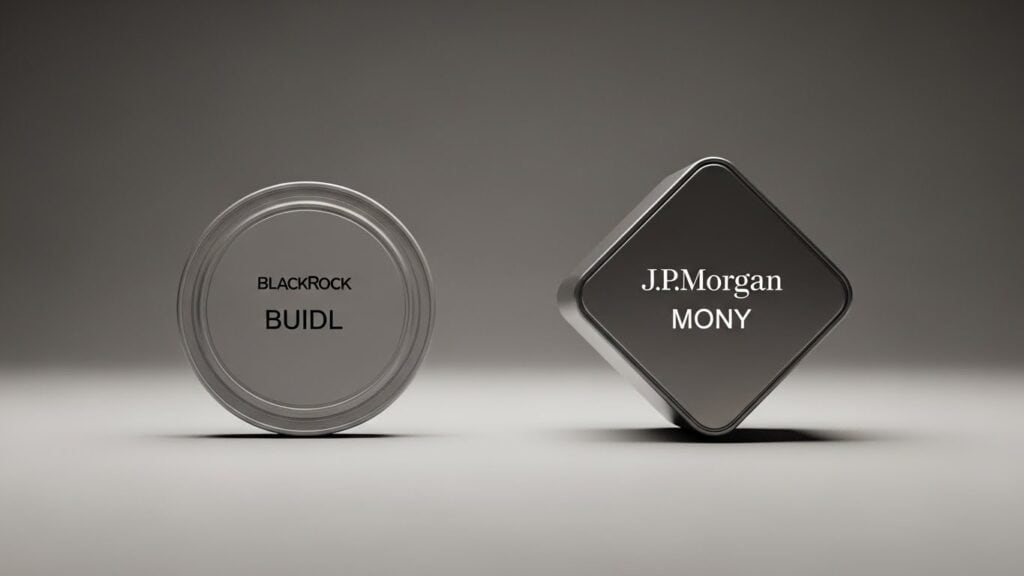
JPMorgan MONY operates as 506(c) private placement fund available exclusively to qualified investors through Morgan Money platform. The structure mirrors BlackRock’s BUIDL fund, which has grown to $1.8 billion in assets under management.
Qualified investors include individuals with minimum $5 million in investable assets and institutions with at least $25 million. The fund requires $1 million minimum investment, positioning it for high-net-worth individuals and institutional allocators.
MONY invests solely in U.S. Treasury securities and repurchase agreements fully collateralized by Treasuries. This conservative investment strategy provides yield while maintaining capital preservation objectives typical of money market funds.
The fund offers daily dividend reinvestment, with investors able to subscribe and redeem using either cash or Circle’s USDC stablecoin. This dual settlement mechanism bridges traditional banking rails with blockchain-native infrastructure.
Investors receive digital tokens at their blockchain addresses after subscribing through Morgan Money platform. These tokens represent ownership claims in the fund and can be held in cryptocurrency wallets, providing peer-to-peer transferability unavailable in traditional money market funds.
Kinexys Digital Assets Platform
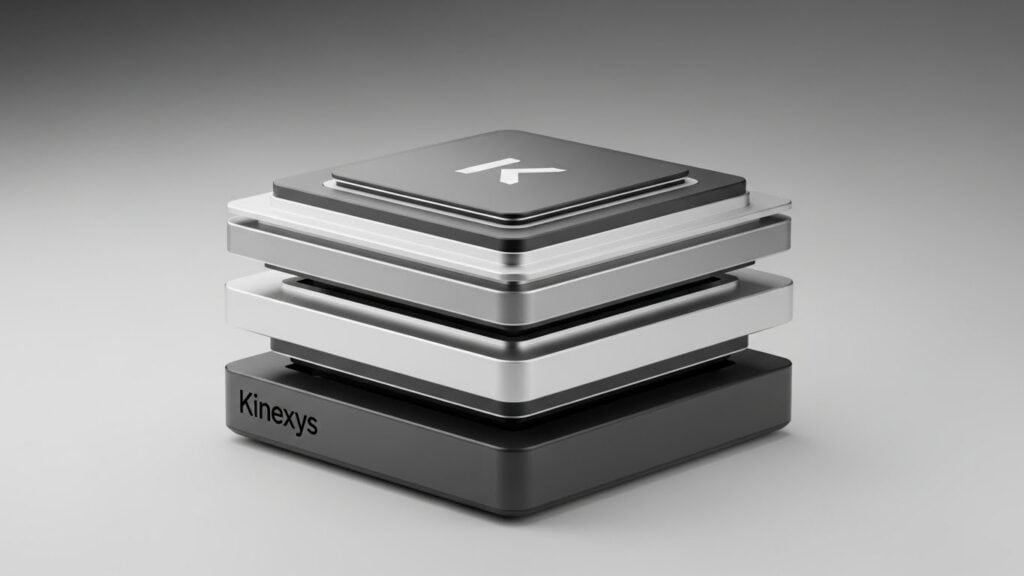
JPMorgan MONY launch was enabled by Kinexys Digital Assets, the bank’s multi-chain asset tokenization platform. Kinexys represents JPMorgan’s institutional-grade blockchain infrastructure, rebranded from the earlier Onyx Digital Assets initiative.
The platform provides technical infrastructure connecting traditional financial systems with blockchain networks. Kinexys handles token minting, custody integration, compliance automation, and settlement processes that enable regulated financial institutions to operate on public blockchains.
JPMorgan developed Kinexys to offer clients blockchain capabilities without requiring them to build proprietary distributed ledger systems. The platform supports multiple blockchain networks, though MONY launched specifically on Ethereum.
Recent weeks demonstrated Kinexys versatility. The bank arranged commercial paper issuance for Galaxy Digital subsidiary on Solana blockchain using newly created USCP token, with settlement in USDC stablecoin.
Kinexys also launched deposit token on Coinbase’s Base network, a layer-2 scaling solution built on Ethereum. This multi-chain approach suggests JPMorgan evaluates blockchain infrastructure based on technical merits rather than ideological preference for specific networks.
The platform architecture separates compliance and custody functions from blockchain settlement. Traditional custodians maintain asset custody while blockchain records ownership and enables programmable transfers. This hybrid approach satisfies regulatory requirements while accessing blockchain efficiency gains.
Why JPMorgan Chose Public Ethereum
JPMorgan’s decision to launch MONY on public Ethereum represents strategic departure from the bank’s historical blockchain approach. For years, JPMorgan operated private, permissioned blockchain systems like JPM Coin and Liink for interbank settlement.
Public Ethereum offers network effects unavailable on private blockchains. The network hosts $70 billion in decentralized finance protocols, $300 billion in stablecoins, and growing ecosystem of tokenized real-world assets. MONY tokens can potentially interact with this existing infrastructure.
Ethereum provides transparency impossible in private systems. All transactions record on public ledger viewable by regulators, auditors, and market participants. This transparency reduces information asymmetry and enables real-time compliance monitoring.
The network’s established security matters profoundly. Ethereum secures over $500 billion in total value with proven track record since 2015. Private blockchains lack this battle-tested security infrastructure and would require significant investment to match Ethereum’s resilience.
Interoperability drove the decision. Operating on public Ethereum enables MONY tokens to connect with other blockchain-based financial products, custody solutions, and decentralized applications without custom integration work.
The choice signals institutional acceptance that public blockchains provide sufficient governance, security, and regulatory compliance for traditional finance operations. This represents profound shift from earlier banking industry skepticism toward public distributed ledgers.
Competing with BlackRock BUIDL Fund
JPMorgan MONY launches into direct competition with BlackRock’s USD Institutional Digital Liquidity Fund. BlackRock’s BUIDL fund, launched in March 2024, has grown to approximately $1.8 billion in assets under management across eight blockchain networks.
BUIDL pioneered the tokenized money market fund category for major asset managers. The fund provides institutional investors access to Treasury-backed yield through blockchain-native instruments, establishing proof-of-concept that traditional asset management firms sought.
BlackRock leveraged Securitize for tokenization infrastructure and Wormhole for cross-chain interoperability. This multi-chain approach enables BUIDL to operate on Ethereum, Solana, Polygon, Arbitrum, Optimism, Avalanche, Aptos, and Stellar simultaneously.
JPMorgan’s single-chain Ethereum launch contrasts with BlackRock’s multi-chain strategy. However, Kinexys platform capabilities suggest JPMorgan could expand MONY to additional networks based on client demand and technical evaluation.
The competitive dynamic extends beyond product features to institutional credibility. JPMorgan brings $4 trillion in assets under management and deep banking relationships. BlackRock manages $10 trillion and dominates ETF market with established distribution channels.
John Donohue, Head of Global Liquidity at JPMorgan Asset Management, expressed competitive confidence in statements to press, “We expect other GSIB banks to follow our lead in providing clients with greater optionality in how they invest in money market funds.”
Franklin Templeton also operates in this space with Franklin OnChain U.S. Government Money Fund, launched in 2021. The fund operates on Ethereum, Avalanche, Stellar, Aptos, and layer-2 networks, managing approximately $594 million in assets.
This competitive environment benefits institutional investors through expanding product options, improving terms, and accelerating innovation in blockchain-based financial instruments.
USDC Stablecoin Integration
JPMorgan MONY accepts Circle’s USDC stablecoin for subscriptions and redemptions, marking significant endorsement of regulated stablecoins by major banking institution. This integration creates seamless bridge between traditional dollar deposits and blockchain-native settlement.
USDC operates as fully-reserved dollar stablecoin backed by cash and short-term U.S. Treasury securities. Circle, the issuer, maintains reserves through regulated financial institutions and publishes monthly attestation reports from independent accounting firms.
The stablecoin integration enables near-instant settlement for MONY transactions. Traditional money market fund subscriptions typically settle T+1 or T+2. USDC transactions settle within minutes on Ethereum, accelerating capital deployment and improving liquidity management.
Accepting USDC validates stablecoins as legitimate settlement rails for institutional finance. Major banks historically avoided stablecoins due to regulatory uncertainty and reputational risk. JPMorgan’s integration signals these concerns have diminished sufficiently for production deployment.
The dual settlement mechanism provides optionality institutional investors demand. Clients comfortable with traditional banking can use cash rails. Those operating blockchain-native treasuries can use USDC without converting to traditional payment systems.
USDC market capitalization exceeds $50 billion with daily transaction volumes reaching billions. The stablecoin has demonstrated stability through multiple market stress events, providing confidence for institutional adoption.
This integration also positions JPMorgan to serve cryptocurrency-native institutions and high-net-worth individuals managing digital asset portfolios. These market participants hold significant USDC balances and seek yield-generating instruments without converting to traditional currencies.

Wall Street’s Blockchain Pivot
JPMorgan MONY launch represents broader Wall Street movement toward public blockchain infrastructure. Multiple systemically important financial institutions announced blockchain initiatives in recent weeks, signaling coordinated industry shift.
The timing coincides with improved regulatory clarity. The SEC approved tokenization initiatives for DTCC in December 2025. Congress passed GENIUS Act providing stablecoin regulations. These developments removed regulatory uncertainty that previously constrained institutional blockchain adoption.
Traditional banks historically built private, permissioned blockchains for internal use cases. JPMorgan’s JPM Coin, HSBC’s internal tokenization platform, and similar initiatives operated on closed networks without public blockchain integration.
The pivot to public blockchains acknowledges that isolated private networks cannot achieve network effects necessary for industry transformation. Interoperability, liquidity pooling, and ecosystem development require shared infrastructure that only public blockchains provide.
Several factors drove this strategic shift. First, public blockchain security matured significantly. Ethereum’s transition to proof-of-stake improved energy efficiency while maintaining security. Layer-2 scaling solutions addressed transaction cost concerns.
Second, custody infrastructure evolved to institutional standards. Regulated custodians like Coinbase Custody, BitGo, and Anchorage Digital provide institutional-grade security with insurance, multi-signature controls, and regulatory compliance.
Third, decentralized finance demonstrated product-market fit. DeFi protocols processed trillions in transaction volume, proving that blockchain-based financial products could achieve scale. Traditional institutions recognized opportunity to access this liquidity and innovation.
Fourth, competitive pressure intensified. Banks that delay blockchain adoption risk losing clients to institutions offering blockchain-enabled products with superior efficiency, transparency, and programmability.
The shift manifests across multiple use cases beyond tokenized funds. Cross-border payments, trade finance, securities settlement, and collateral management all show institutional blockchain adoption accelerating through 2025.
Market Implications for Tokenization
JPMorgan MONY launch accelerates tokenized asset market growth through multiple channels. The announcement validates public blockchain infrastructure for institutional capital, reducing adoption friction for other market participants.
First, distribution advantages. JPMorgan’s banking relationships provide direct access to institutional clients, family offices, and high-net-worth individuals. MONY can leverage existing client relationships rather than building distribution from scratch like blockchain-native competitors.
Second, regulatory template. JPMorgan’s 506(c) structure and SEC compliance approach establish playbook other institutions can follow. This reduces legal uncertainty and accelerates time-to-market for competing products.
Third, talent validation. JPMorgan’s move signals to financial services professionals that blockchain expertise represents mainstream career path rather than speculative fringe. This improves talent recruitment for blockchain-focused roles across traditional finance.
Fourth, infrastructure investment. The launch justifies continued investment in blockchain custody, compliance, and integration solutions. Service providers gain confidence that institutional demand will support business models built on blockchain infrastructure.
Fifth, competitive catalysts. Other GSIBs will follow with similar products to avoid losing market share. This competitive dynamic accelerates innovation and improves product terms for institutional investors.
The tokenized money market fund category could grow significantly. Money market funds hold approximately $6 trillion in assets across the United States. Even single-digit percentage adoption would represent hundreds of billions moving onto blockchain infrastructure.
This growth extends beyond money market funds. Treasury bonds, corporate debt, structured products, and alternative assets all represent tokenization opportunities once institutional infrastructure proves itself with simpler instruments like MONY.
The announcement also impacts Ethereum directly. Institutional capital flowing onto Ethereum validates the network as settlement layer for traditional finance. This supports Ethereum’s evolution from cryptocurrency platform to foundational infrastructure for financial markets.
Frequently Asked Questions
What is JPMorgan MONY fund?
MONY (My OnChain Net Yield Fund) is JPMorgan Asset Management’s first tokenized money market fund operating on public Ethereum blockchain. Launched December 15, 2025 with $100 million seed capital, the fund invests in U.S. Treasury securities and Treasury-collateralized repurchase agreements.
Who can invest in JPMorgan MONY?
MONY is available to qualified investors including individuals with minimum $5 million in investable assets and institutions with at least $25 million. The fund requires $1 million minimum investment and operates as 506(c) private placement accessible through Morgan Money platform.
Why did JPMorgan choose Ethereum over private blockchain?
Public Ethereum provides network effects, transparency, established security, and interoperability unavailable on private blockchains. The network hosts $70 billion in DeFi protocols and $300 billion in stablecoins, enabling MONY to integrate with existing blockchain infrastructure.
How does MONY compare to BlackRock BUIDL fund?
MONY competes directly with BlackRock’s $1.8 billion BUIDL fund. Both offer Treasury-backed yield through blockchain-native instruments. BlackRock operates across eight blockchains while JPMorgan launched exclusively on Ethereum. JPMorgan manages $4 trillion in assets compared to BlackRock’s $10 trillion.
What is Kinexys Digital Assets?
Kinexys Digital Assets is JPMorgan’s multi-chain asset tokenization platform that provides institutional-grade blockchain infrastructure. The platform handles token minting, custody integration, compliance automation, and settlement processes enabling regulated institutions to operate on public blockchains.
Can investors use stablecoins with MONY?
Yes. JPMorgan MONY accepts Circle’s USDC stablecoin for subscriptions and redemptions alongside traditional cash. This integration enables near-instant settlement compared to T+1 or T+2 timelines in traditional money market funds, while providing optionality for blockchain-native institutional investors.
Related Resources
Learn more about institutional blockchain and tokenized finance:
- DTCC SEC Tokenization Approval: Russell 1000 Stocks Treasuries
- SBI Ripple Asia Doppler Finance: XRP Yield Infrastructure
- BlackRock BUIDL Fund: $1.8B Tokenized Treasury Analysis
Sources
- JPMorgan Asset Management Launches First Tokenized Money Market Fund – PR Newswire
- JPMorgan Launches Tokenized Money Market Fund on Ethereum – CoinDesk
- JPMorgan Debuts First Money Market Fund Tokenized on Ethereum – Bloomberg
- JPMorgan Launches Tokenized Money-Market Fund on Ethereum – The Block
- JPMorgan Prepares to Launch First Tokenized Money Market Fund – PYMNTS
- JP Morgan Launches Tokenized MMF on Ethereum – Ledger Insights
- JPMorgan Taps Ethereum for Tokenized MONY Fund – Yahoo Finance