










Table of Contents
- B3 Tokenization Platform Announcement December 2025
- Unified Liquidity Pool Architecture
- B3 Tokenization Platform Technical Features
- Brazilian Real Stablecoin Launch 2026
- Tokenized Stock Market Integration
- Bitcoin Ethereum Solana Options Expansion
- Alternative to Brazil CBDC Drex
- Latin America Blockchain Leadership
- 600,000 Investors $2.4B Assets
- Frequently Asked Questions
B3 Tokenization Platform Announcement December 2025
B3 tokenization platform will launch in 2026 as Brazil’s stock exchange deploys comprehensive blockchain infrastructure. The B3 tokenization platform announcement came December 17, 2025, revealing plans for Brazilian real-pegged stablecoin and unified liquidity architecture.
The exchange revealed that the B3 tokenization platform enables assets to be tokenized and traded on-chain while maintaining connection to existing market infrastructure.
Luiz Masagão, B3’s Vice President of Products and Clients, presented the B3 tokenization platform initiative at B3 Day 2025. The platform represents Latin America’s most ambitious traditional finance blockchain integration.
B3 tokenization platform design includes unified liquidity pool where tokenized assets and traditional securities share same order book. This architecture eliminates fragmentation between on-chain and off-chain trading venues.
“The token buyer won’t know they are buying from a traditional stock seller,” Masagão explained in statements to press. “This allows for a smooth transition, with both systems using the same liquidity.”
Unified Liquidity Pool Architecture
B3 tokenization platform implements shared liquidity model fundamentally different from most blockchain financial products. Traditional tokenization projects create separate venues with isolated liquidity pools. B3 connects tokenized assets directly to existing central limit order book.
This technical architecture means orders for tokenized equities automatically match against traditional stock orders at identical prices. A buyer purchasing tokenized shares through blockchain wallet executes trade against seller using conventional brokerage account, with neither party aware of counterparty’s settlement method.
The unified approach solves critical challenge facing tokenized securities: liquidity fragmentation. Separate trading venues for tokenized versions of existing securities typically suffer from wide bid-ask spreads and limited market depth. B3’s model provides tokenized instruments immediate access to full liquidity of Brazil’s established capital markets.
Masagão emphasized infrastructure enables rather than forces adoption. “We don’t force the entire ecosystem of brokers to adapt to 24/7 liquidation,” he stated, “but whoever wants to do it will be able to do it through a fully tokenized infrastructure and be able to enjoy the liquidity of the traditional market.”
The platform provides protocols, software development kits, and developer tools for market participants to build applications accessing tokenized assets. This open architecture approach mirrors successful strategies deployed by DTCC’s Canton Network tokenization initiative, which similarly connects blockchain infrastructure to legacy market systems.
Extended trading hours represent key advantage. Traditional Brazilian markets operate during business hours. Tokenized assets settlement through blockchain enables continuous trading capability for participants choosing to operate beyond standard market hours while maintaining connection to main liquidity pool.
B3 Tokenization Platform Technical Features
The B3 tokenization platform implements several technical innovations distinguishing it from isolated blockchain pilots. Smart contract infrastructure automates settlement, compliance checks, and corporate actions without manual intermediary involvement.
B3 tokenization platform architecture supports extended trading hours beyond traditional market operations. Participants choosing continuous trading access blockchain settlement while maintaining connection to main liquidity pool during standard hours.
Developer tools and APIs enable market participants to build applications accessing the B3 tokenization platform. This open architecture approach creates innovation ecosystem for fintech startups and institutional participants.

Brazilian Real Stablecoin Launch 2026
B3 plans to issue stablecoin pegged to Brazilian real serving as native settlement asset within tokenization environment. The stablecoin enables instant clearing for tokenized asset transactions without relying on traditional cash settlement cycles.
“We are also going to launch a B3 stablecoin, which will serve as a tool to enable token trading,” Masagão announced. The token functions as payment and clearing infrastructure rather than retail-facing cryptocurrency.
Traditional settlement in Brazilian markets follows T+2 convention, with trades settling two business days after execution. B3 stablecoin enables near-instant settlement for tokenized instruments, reducing counterparty risk and freeing capital locked in settlement processes.
The real-pegged stablecoin operates within B3’s closed ecosystem. Unlike public stablecoins accessible across decentralized finance protocols, B3’s token remains confined to exchange infrastructure. This design provides regulatory control while accessing blockchain efficiency benefits.
Real-pegged design addresses specific Brazilian market needs. Brazil maintains active foreign exchange controls and capital flow regulations. A domestic stablecoin operating within regulated exchange infrastructure satisfies compliance requirements while enabling blockchain settlement advantages.
The stablecoin also fills vacuum created by Brazil’s central bank digital currency program. Brazil began testing Drex, the country’s CBDC, on blockchain platform in late 2023. However, the central bank retired the Drex blockchain platform in 2025, shifting focus to different infrastructure approach.
Masagão noted, “The B3 stablecoin fills a gap in the digitalized economy market, with the end of the Drex by the central bank.” This positions B3’s token as de facto solution for blockchain-based real settlement in Brazilian financial markets.
The stablecoin’s backing mechanism remains subject to regulatory approval. B3 likely will implement full reserve backing similar to models used by regulated stablecoins in other jurisdictions, maintaining one-to-one correspondence between tokens issued and real deposits held.
Tokenized Stock Market Integration
B3 tokenization platform launches initially with equity tokenization. Brazilian stocks will be issued as blockchain-native tokens while maintaining registration in traditional securities depository systems.
The dual-representation model preserves existing ownership frameworks. Equities remain registered to traditional custodians in B3’s central securities depository. Tokenized versions represent derivative claims on underlying shares rather than direct ownership transfers onto blockchain.
This approach satisfies regulatory requirements while accessing blockchain benefits. Securities regulations in most jurisdictions including Brazil treat share ownership as legal construct requiring specific registration procedures. Rather than migrating legal ownership to blockchain, B3 creates tokenized representation layer operating alongside traditional infrastructure.
Fungibility between tokenized and traditional shares represents critical feature. Investors can convert conventional shares to tokens and redeem tokens for traditional shares without restriction. This two-way convertibility ensures price parity and prevents premium/discount situations between token and non-token versions.
The platform enables programmable features unavailable in traditional equity infrastructure. Smart contracts can automate dividend distributions, enforce transfer restrictions for compliance purposes, and enable complex corporate actions without manual intermediary involvement.
Tokenized equities also unlock new use cases. Shareholders could pledge tokens as collateral in decentralized lending protocols, trade shares 24/7 rather than only during market hours, and settle cross-border transactions near-instantly rather than through multi-day international settlement processes.
B3’s institutional credibility provides advantages over crypto-native tokenized securities platforms. The exchange operates under Comissão de Valores Mobiliários (CVM) oversight, Brazil’s securities regulator, ensuring tokenized products meet same standards as traditional offerings.
Bitcoin Ethereum Solana Options Expansion
B3 develops weekly options contracts tied to Bitcoin, Ethereum, and Solana alongside tokenization platform. These cryptocurrency derivatives currently await approval from CVM, Brazil’s securities regulator.
The proposed instruments include weekly expiration options providing short-term hedging and speculation tools for crypto investors. Event-based contracts similar to prediction market structures also form part of the development pipeline.
B3 already operates extensive cryptocurrency product suite. The exchange listed its first crypto ETF in April 2021, years before United States approved spot Bitcoin ETFs.
Current offerings include products tracking BTC, ETH, SOL, and diversified crypto indices. These exchange-traded products serve approximately 600,000 investors managing $2.4 billion in assets under management through B3’s platform.
Asset manager Valour listed four additional crypto ETPs on B3 earlier in December 2025, expanding available investment vehicles. The steady product expansion demonstrates institutional appetite for regulated crypto exposure in Latin American markets.
Weekly options approval would position B3 among limited exchanges globally offering short-dated cryptocurrency derivatives within fully regulated framework. Most crypto options trade on offshore exchanges with limited regulatory oversight. B3’s CVM-approved products would provide institutional-grade alternative.
The derivatives expansion complements tokenization platform by creating comprehensive digital asset ecosystem. Investors could hold tokenized equities, trade cryptocurrency derivatives, and settle transactions in real-pegged stablecoin entirely within B3’s integrated infrastructure.
This mirrors broader institutional convergence between traditional finance and digital assets observed globally. Similar to JPMorgan’s MONY tokenized fund launch on Ethereum, major financial institutions increasingly deploy blockchain technology for mainstream financial products rather than segregating crypto activities.
Alternative to Brazil CBDC Drex
B3’s stablecoin and tokenization platform emerge as alternative infrastructure following Brazil’s central bank pivot away from Drex blockchain platform. The timing suggests coordinated approach to blockchain adoption in Brazilian financial markets.
Brazil’s central bank launched Drex pilot in late 2023, testing central bank digital currency on blockchain infrastructure. The program aimed to modernize payment systems and enable programmable money within regulated framework.
However, the central bank retired the Drex blockchain platform in 2025, narrowing CBDC pilot scope significantly. This strategic shift left gap in Brazil’s digital asset infrastructure development, particularly for tokenized securities settlement.
B3 tokenization fills this void through exchange-operated alternative. Rather than central bank issuing digital currency, B3 provides blockchain settlement infrastructure through stablecoin operating within securities market context.
The approach offers advantages over CBDC model. Exchange-operated infrastructure focuses specifically on securities settlement needs rather than broad payment system requirements. This specialized focus enables faster implementation and regulatory approval compared to central bank digital currency.
B3’s existing regulatory relationship with CVM also streamlines approval processes. The exchange already operates under comprehensive securities regulation, providing established framework for blockchain-based products compared to central bank navigating novel CBDC regulatory territory.
Institutional adoption patterns favor exchange-operated solutions. Securities market participants maintain existing relationships with B3 for custody, clearing, and settlement. Extending these relationships to blockchain infrastructure requires less operational change than integrating with separate central bank digital currency system.
The Drex pivot demonstrates challenges facing CBDC implementation globally. Multiple jurisdictions including China, Sweden, and European Union pursue CBDC projects, but translation from pilot to production deployment proves complex. B3’s exchange-operated model provides pragmatic alternative achieving similar blockchain integration benefits.
Latin America Blockchain Leadership
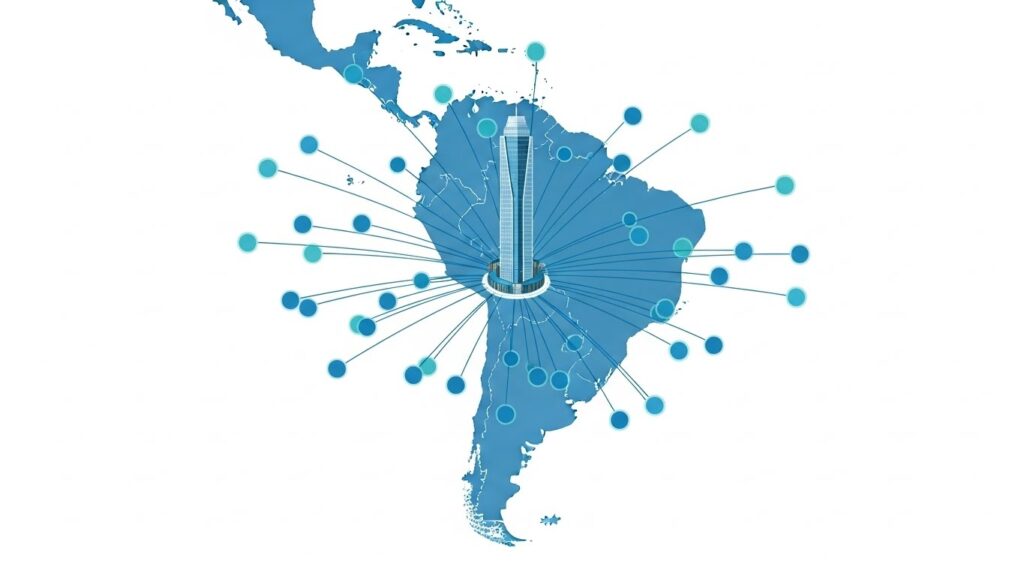
B3 tokenization positions Brazil as Latin America’s blockchain innovation leader. The region demonstrates growing institutional crypto adoption despite regulatory uncertainty in some jurisdictions.
Brazil maintains one of Latin America’s most active regulated crypto markets. The country approved cryptocurrency regulation in 2022, providing legal framework for exchanges, custody providers, and investment products. This regulatory clarity enabled institutional participation unavailable in jurisdictions lacking comprehensive crypto rules.
B3’s blockchain initiatives build on Brazil’s crypto adoption trajectory. The exchange’s 2021 crypto ETF launch preceded similar products in United States by over two years, demonstrating regulatory willingness to approve innovative financial products.
The 600,000 investor base holding crypto-linked products through B3 represents significant institutional penetration. For context, United States spot Bitcoin ETFs launched in January 2024 attracted substantial inflows but serve fraction of total U.S. investor population. B3’s crypto product adoption demonstrates mainstream acceptance within Brazilian retail and institutional segments.
Latin American tokenization extends beyond Brazil. Argentina explored blockchain-based government bond issuance. Mexico approved crypto regulations enabling institutional participation. Colombia maintains active cryptocurrency trading despite regulatory ambiguity. However, no jurisdiction matches Brazil’s comprehensive exchange-level blockchain integration.
Regional competition may accelerate adoption. Stock exchanges in Mexico, Argentina, Chile, and Colombia likely monitor B3’s tokenization deployment closely. Successful implementation could trigger competitive response as exchanges seek to match B3’s technological capabilities and attract digital asset trading volume.
Economic factors also drive Latin American blockchain interest. Many regional currencies experience significant inflation, creating demand for dollar-pegged stablecoins and cryptocurrency hedging instruments. B3’s real-pegged stablecoin provides blockchain settlement capability while maintaining domestic currency denomination.
Cross-border payment inefficiencies in Latin America create additional blockchain use cases. Traditional regional payment systems suffer from high costs and multi-day settlement. Blockchain-based settlement could streamline cross-border equity trading and portfolio rebalancing for Latin American investors.
600,000 Investors $2.4B Assets
B3’s existing crypto product adoption provides foundation for tokenization platform success. The exchange manages approximately $2.4 billion in crypto-linked assets across 600,000 investor accounts, demonstrating institutional distribution capability.
This investor base includes retail individuals, family offices, and institutional allocators. Brazil’s regulatory framework enables pension funds and asset managers to hold crypto-linked products, expanding potential market beyond retail-only adoption seen in some jurisdictions.
Itaú Unibanco, Brazil’s largest private bank, recently recommended 1-3% Bitcoin allocation for client portfolios. This institutional endorsement from major financial institution signals growing mainstream acceptance of digital assets in Brazilian wealth management.
The $2.4 billion asset base grows rapidly. B3 added four new Valour crypto ETPs in December 2025, expanding available investment options. Continuous product innovation maintains momentum as institutional demand increases.
Tokenization platform enables more sophisticated strategies than passive crypto ETFs. Institutional investors could combine tokenized equity holdings with cryptocurrency derivatives, using B3 stablecoin for efficient portfolio rebalancing across asset classes.
The unified infrastructure approach reduces friction for institutional adoption. Rather than maintaining separate accounts for traditional securities, tokenized assets, and cryptocurrency products, institutions access all instruments through single B3 relationship with consolidated custody and reporting.
Global institutional trends support B3’s timing. Major asset managers including BlackRock and Franklin Templeton launched tokenized funds in 2024-2025, validating institutional demand for blockchain-based financial products. B3 positions Brazil to capture regional institutional allocation as global trends expand into emerging markets.
Regulatory clarity provides competitive advantage. While some Latin American jurisdictions maintain ambiguous crypto rules, Brazil’s comprehensive framework enables institutions to allocate capital without regulatory risk concerns. This positions B3 to attract regional capital seeking regulated digital asset exposure.
Frequently Asked Questions
What is B3 tokenization platform?
B3 tokenization platform enables Brazilian stock exchange to issue and trade blockchain-based tokens representing traditional assets. Announced December 17, 2025 for 2026 launch, the platform uses unified liquidity pool architecture where tokenized and traditional assets share same order book, eliminating fragmentation between on-chain and off-chain trading.
What is B3 stablecoin?
B3 stablecoin is Brazilian real-pegged digital token serving as settlement asset for tokenized trades on B3 platform. Launching 2026, the stablecoin enables instant clearing for blockchain-based transactions within B3’s closed ecosystem, providing alternative to traditional T+2 settlement cycles while maintaining regulatory compliance under CVM oversight.
How does B3 unified liquidity pool work?
B3 unified liquidity pool connects tokenized assets directly to traditional central limit order book. Token buyers automatically match against traditional stock sellers at identical prices without either party knowing counterparty’s settlement method. This architecture provides tokenized instruments immediate access to full liquidity of Brazil’s established capital markets.
What cryptocurrency products does B3 offer?
B3 currently offers crypto ETFs tracking Bitcoin, Ethereum, Solana, and crypto indices serving 600,000 investors with $2.4 billion assets under management. The exchange listed first crypto ETF April 2021, years before United States approval. B3 develops weekly BTC/ETH/SOL options and event-based contracts pending CVM regulatory approval.
How does B3 tokenization relate to Brazil Drex CBDC?
B3 tokenization provides alternative infrastructure after Brazil’s central bank retired Drex blockchain platform in 2025. B3’s real-pegged stablecoin fills gap left by narrowed CBDC pilot, offering exchange-operated blockchain settlement specifically for securities markets rather than broad payment system requirements of central bank digital currency.
When will B3 tokenization platform launch?
B3 tokenization platform and Brazilian real stablecoin target 2026 launch following December 17, 2025 announcement. Initial deployment focuses on tokenized equities with unified liquidity pool integration. Weekly cryptocurrency options launch subject to CVM regulatory approval timeline, with B3 continuing to expand crypto-linked product offerings.
Related Resources
Explore more institutional blockchain and tokenization developments:
- JPMorgan MONY Ethereum Fund: $100M Tokenized Launch – Compare B3’s stock exchange tokenization with JPMorgan’s institutional money market fund approach
- DTCC SEC Tokenization Approval: Canton Network Integration – Learn how U.S. market infrastructure provider tokenizes Treasuries on Canton Network similar to B3’s unified liquidity model
- SBI Ripple Asia Doppler Finance: XRP RWA Infrastructure – Discover Asia-Pacific institutional RWA tokenization paralleling Latin American blockchain adoption
- BlackRock BUIDL Fund Analysis: $1.8B Tokenized Treasuries – Understand global tokenized fund market context for B3’s institutional positioning
- R3 Solana Partnership: Banks Blockchain Integration – See how traditional banking infrastructure connects with public blockchains globally
Sources
- Brazilian Stock Exchange B3 to Launch Tokenization Platform and Stablecoin – CoinDesk
- Brazil’s Main Stock Exchange Plans to Roll Out Tokenization Platform and Stablecoin in 2026 – Crypto Briefing
- Brazil’s B3 to Launch Tokenization Platform and Real-Pegged Stablecoin in 2026 – FinanceFeeds
- Bitcoin Bulls Test B3’s Tokenized RWA and Stablecoin Bet – Bitcoin Ethereum News
- Brazilian Stock Exchange B3 to Launch Own Tokenization Platform and Stablecoin – Yahoo Finance
- Brazil Goes Full Crypto: B3’s Tokenization and Stablecoin Could Shake Up 2026 Markets – Hokanews