







Table of Contents
- Joby Aviation Dubai Q1 2026 Commercial Launch
- eVTOL Market Projections: $6.53B by 2031
- Institutional Investment Flows: Pension Funds Enter eVTOL
- Honda Hybrid Prototype: March 2026 Flight Testing
- India $1B Air Ambulance Fleet Deployment
- Vertiport Infrastructure Build-Out Accelerates
- Impact on Traditional Private Aviation
- Investment Thesis: Why Institutions Are Betting Big
Introduction
The eVTOL market 2026 represents a watershed moment as Joby Aviation completed the world’s first point-to-point electric air taxi flight in Dubai during November 2025. The 17-minute piloted journey from Margham test facility to Al Maktoum International Airport confirmed commercial readiness for passenger service launching Q1 2026. The eVTOL market 2026 has shifted from prototype demonstrations to revenue-generating operations.
Dubai’s Roads and Transport Authority announced the DXV vertiport adjacent to Dubai International Airport reached 60% completion, on track for Q1 2026 opening. This infrastructure milestone, combined with Joby’s six-year exclusive operating agreement, positions Dubai as the global launchpad for commercial urban air mobility at scale.
Markets and Markets projects the eVTOL market 2026 trajectory will reach $6.53 billion by 2031, growing from $0.76 billion in 2024 at 35.3% CAGR. Institutional capital is flowing in at unprecedented levels as pension funds, sovereign wealth funds, and family offices recognize eVTOL technology has crossed the threshold from speculation to imminent commercial deployment.
Planning urban-to-resort transfers in 2026? While eVTOL services launch in Dubai and Abu Dhabi, traditional helicopter charters remain the proven solution for Swiss Alps access, FBO transfers, and time-sensitive executive travel across Europe.
Joby Aviation Dubai Q1 2026 Commercial Launch
Joby Aviation’s Dubai deployment represents the most advanced eVTOL commercialization effort globally. The company announced three additional vertiport locations beyond Dubai International Airport: Dubai Mall, Atlantis the Royal, and American University of Dubai.
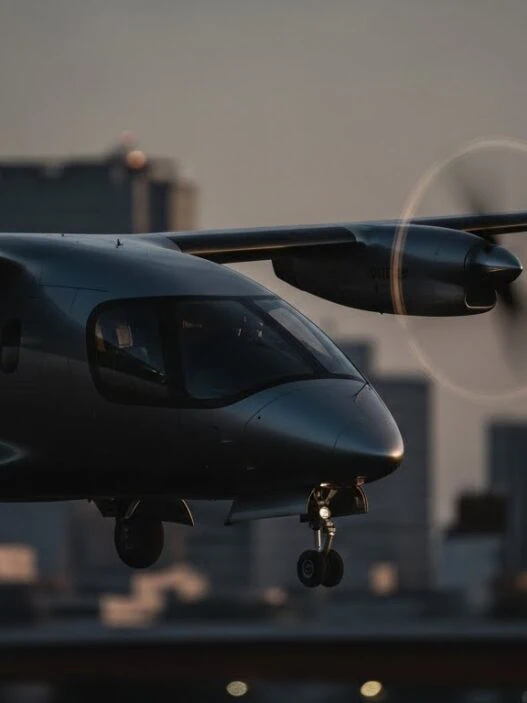
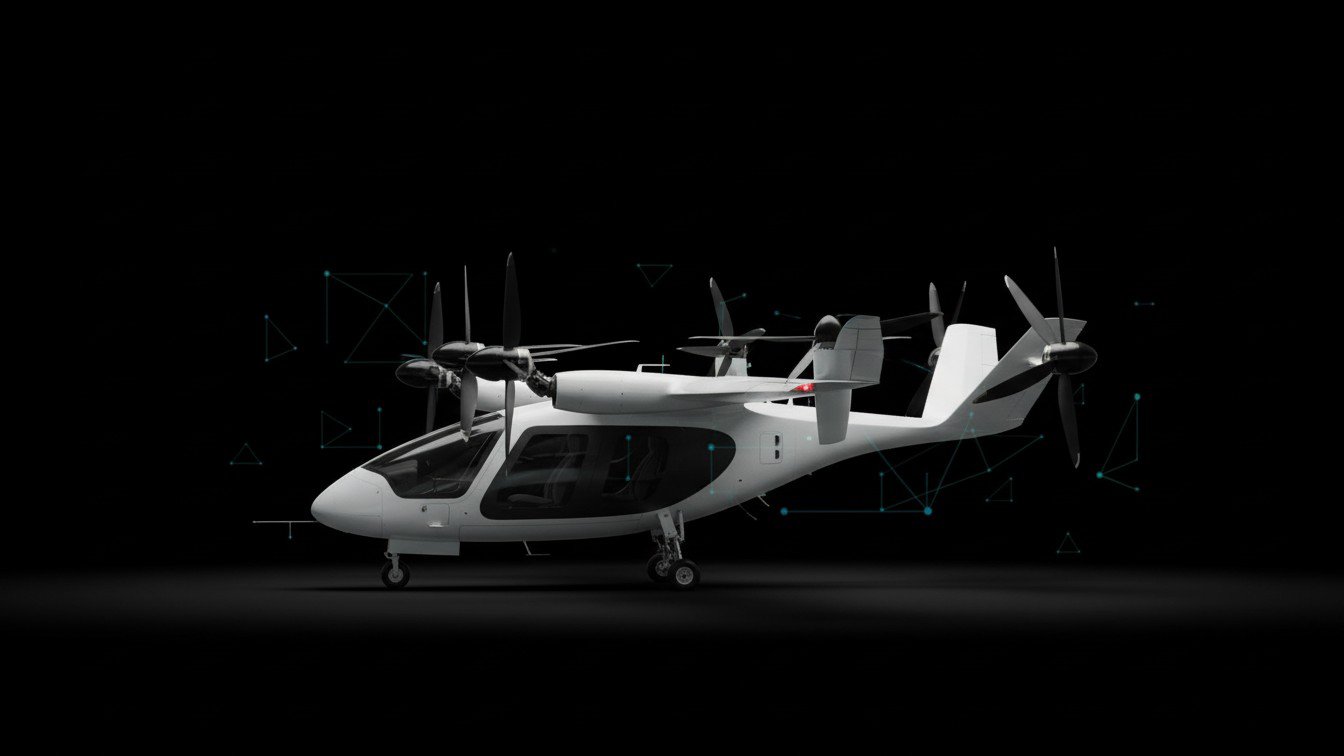
These strategic sites enable high-speed, emissions-free connections between Dubai’s most high-profile destinations. The DXB to Palm Jumeirah route, for example, will take 12 minutes versus 45 minutes by car. Joby’s S4 aircraft transports a pilot and four passengers at speeds up to 200 mph with minimal noise and zero operating emissions.
Skyports Infrastructure, responsible for building the vertiports, designed the DXV facility for high capacity operations. The central vertiport can facilitate 42,000 aircraft movements annually, serving approximately 170,000 passengers per year. The four-floor terminal spanning 3,100 square meters incorporates automated check-in, advanced security screening, premium lounges, and multi-deck parking.
His Excellency Mattar Al Tayer, Director General of Dubai’s Roads and Transport Authority, confirmed that “RTA is steadily progressing towards the commercial launch of the aerial taxi service in 2026, solidifying Dubai’s position as the city of the future and a global hub for innovative and sustainable urban mobility solutions.”
JoeBen Bevirt, Joby’s founder and CEO, stated: “From flight demonstrations to infrastructure, we’re making incredible progress on all fronts as we look ahead to launching commercial passenger service in Dubai next year. We’ve been able to streamline development of the world’s first air taxi service and are closer than ever to making urban air transport an everyday reality.”
eVTOL Market 2026 Projections: $6.53B by 2031
Multiple market research firms have converged on similar eVTOL market 2026 projections, signaling institutional confidence in commercial viability. Markets and Markets values the eVTOL aircraft market at $0.76 billion in 2024, projecting growth to $4.67 billion by 2030 at 35.3% CAGR, reaching $6.53 billion in 2031.
Alternative projections show even more aggressive growth trajectories. Motor Watt forecasts the eVTOL market will reach $87.6 billion by 2026, growing at 37.2% CAGR from $4.2 billion in early 2025. This represents one of the most significant transformations in aviation history, driven by battery technology breakthroughs, regulatory approvals, and urban congestion solutions.
The geographic distribution shows North America dominating with 42% market share in 2023, projected to grow at 36.2% CAGR through 2030. Asia-Pacific, led by China, shows the fastest growth at 42.7% CAGR as government-backed urban air mobility initiatives accelerate eVTOL company emergence.
Procurement volume projections indicate 2,157 units in 2031 growing to 5,280 units by 2035. EHang and Autoflight have already achieved type certification, while Joby and Archer delivered their first aircraft in 2024. As key programs near final certification stages, OEMs are preparing for commercial production and widespread adoption.
The market segmentation by lift technology shows vectored thrust leading with 64% share in 2024. By propulsion type, hydrogen-electric segments are projected to grow fastest during the forecast period, addressing range limitations of battery-only systems. This aligns with Honda’s hybrid-electric approach targeting 400 km range versus 100-150 km for pure-electric competitors.
Institutional Investment Flows: Pension Funds Enter eVTOL
The eVTOL market 2026 institutional investment landscape has transformed from venture capital speculation to pension fund allocations and sovereign wealth participation. North America and Europe raised approximately $1.3 billion in air mobility investment in 2024 despite broader economic headwinds.
Joby Aviation secured over $3 billion in total funding, including approximately $900 million from Toyota. This automotive giant’s investment validates eVTOL technology maturity and manufacturing scalability. Toyota brings battery production expertise and automotive-scale manufacturing processes that address eVTOL’s critical challenge: transitioning from prototype to high-volume production.
Institutional investors are focusing on infrastructure alongside aircraft manufacturers. The eVTOL charging facilities market is projected to surge from $275 million in 2025 to $4,433.1 million by 2035, representing critical enabling infrastructure. Beta Technologies, Joby Aviation, Kansai Electric Power Company, Electro.Aero, and AeroVolt are investing heavily in high-power charging systems and aviation safety certification.
Pension funds and family offices are attracted to eVTOL’s dual characteristics: disruptive technology upside combined with essential infrastructure downside protection. Vertiport real estate, charging infrastructure, and air traffic management systems offer stable, regulated revenue streams while aircraft operations provide growth exposure.
The institutional thesis centers on urban congestion economics. Traffic congestion reached $375 billion annual impact in 2024 across the world’s top 20 metropolises. Average commute times are increasing 12% annually in major cities. This deteriorating situation creates inelastic demand for alternative transportation, with 73% of urban planners now including eVTOL infrastructure in five-year development plans.
Honda Hybrid Prototype: March 2026 Flight Testing
Honda’s emergence from stealth mode at Dubai Airshow 2025 revealed an eVTOL development program far more advanced than previously known. The Japanese automotive and aerospace conglomerate completed over 400 flight tests with subscale demonstrators while competitors focused on fundraising announcements.
Honda plans to finish building its first full-scale prototype by end of 2025, with first flight scheduled for March 2026. The aircraft features hybrid-electric propulsion from the outset, targeting 400 km (249 miles) range—nearly ten times what most battery-only eVTOLs achieve. This fundamental difference positions Honda for intercity missions that battery-electric competitors cannot serve.
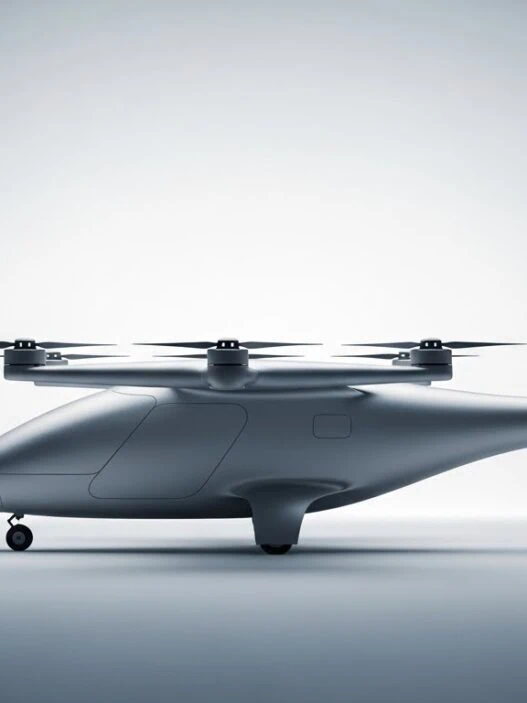
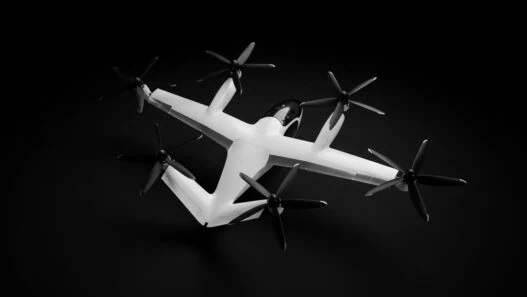
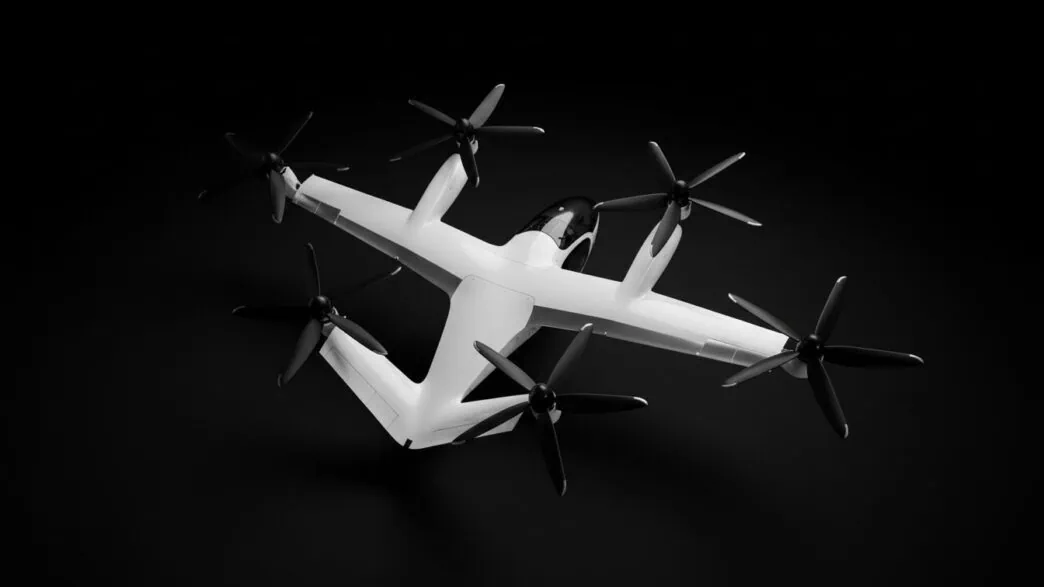
The lift-and-cruise configuration uses eight boom-mounted lifting propellers for takeoff and landing, plus two rear pusher propulsors for forward flight. Forward-swept wings at the front and aft-swept wings at the rear provide improved stability during the critical hover-to-forward-flight transition.
Honda’s compact turbogenerator weighs under 220 lbs (100 kg) and produces 250-300 kW output. Susumu Mashio, Honda’s eVTOL Vice President, explained that battery technology is unlikely to advance quickly enough to support the intercity range Honda is targeting. The hybrid system introduces certification challenges since the FAA has not yet fully certified a hybrid-electric eVTOL, but Honda is drawing on HondaJet program lessons regarding redundancy and safety.
The first full-scale aircraft will be remotely piloted. Mashio emphasized that “human life is very precious” and the company wants to ensure everything is perfect before putting pilots onboard. Type certification is targeted for the early 2030s, with Honda prioritizing technical refinement and regulatory certainty over speed-to-market.
India $1B Air Ambulance Fleet Deployment
India represents one of the most promising eVTOL markets globally, driven by acute urban mobility challenges, strong government backing for smart city development, and ambitious aviation electrification programs. Multiple partnerships announced in 2024-2025 position India for significant eVTOL deployment by 2026-2027.
SkyDrive Inc., a leading Japanese eVTOL manufacturer, partnered with JetSetGo Aviation Services to investigate new business models in Gujarat and other Indian regions. JetSetGo, one of India’s largest private jet operators, pre-ordered 50 units of the “SKYDRIVE” aircraft, which will be SkyDrive’s first commercially approved eVTOL.
Eve Air Mobility signed a letter of intent with Kenya Airways subsidiary Fahari Aviation to deliver 40 eVTOLs for operations in Kenya, with the project expected to deliver in 2026. This African deployment demonstrates emerging market adoption patterns that parallel India’s urban air mobility trajectory.
India’s air ambulance opportunity represents particularly compelling economics. The country’s healthcare access challenges, combined with urban congestion preventing rapid ground ambulance response, create strong demand for medical emergency eVTOL services. A $1 billion air ambulance fleet deployment across major metros could revolutionize emergency medical services while providing eVTOL manufacturers with stable, government-backed revenue.
The procurement volume for India is projected to grow significantly through 2030 as the country develops vertiport infrastructure at major hospitals, airports, and urban hubs. Government incentives for sustainable transportation and zero-emission aviation align with eVTOL’s environmental benefits, accelerating regulatory approval timelines.
Vertiport Infrastructure Build-Out Accelerates

Vertiport development represents a critical bottleneck for eVTOL scaling, but 2025-2026 has seen unprecedented infrastructure investment. As of Q1 2025, only 45 vertiports were operational globally. By end of 2026, this number is projected to exceed 200 as commercial services launch in Dubai, Los Angeles, Paris, and select Chinese cities.
Dubai’s vertiport network, the world’s first commercial system, sets the template for global deployment. The DXV central node designed by Skyports Infrastructure demonstrates the scale required: two takeoff and landing areas, fast-charging infrastructure, safety equipment to highest global aviation standards, and passenger terminal with automated processing.
The passenger experience design prioritizes frictionless travel: automated electronic check-in, advanced security screening, premium lounges, and briefing rooms. Multi-deck parking ensures seamless air-to-ground transfers, while proximity to Emirates metro station supports intermodal connectivity. This integration with existing transportation infrastructure is critical for eVTOL commercial success.
Los Angeles represents the major U.S. deployment, with Archer Aviation developing network nodes connecting LAX to SoFi Stadium, downtown, and other high-traffic corridors. The 10-20 minute flight times versus 60-90 minute car journeys in Los Angeles traffic demonstrate eVTOL’s value proposition for specific urban-to-destination routes.
Paris is targeting eVTOL operations for major events and tourism applications, while Chinese cities including Guangzhou and Hefei have already launched limited commercial flights with EHang’s autonomous eVTOL. China’s regulatory environment, with CAAC providing full certification suite, enables faster commercial deployment than Western markets.
The eVTOL charging facilities market growth from $275 million in 2025 to $4,433.1 million by 2035 reflects infrastructure investment requirements. High-power charging systems, standardized connectors, fast-charging protocols, and intelligent energy management systems are essential for rapid turnaround times that make air taxi economics viable.
Impact on Traditional Private Aviation
The eVTOL market 2026 emergence creates both competitive threats and complementary opportunities for traditional private aviation. Ultra-high-net-worth individuals currently using helicopters for urban-to-resort transfers represent the primary customer segment eVTOLs will address.
Helicopter charter in Dubai costs approximately $1,200-2,000 per hour. Joby Aviation has not disclosed exact pricing but industry analysts expect initial air taxi fares around $250-400 per seat for 20-30 minute flights. At four passengers plus pilot, this translates to $1,000-1,600 per flight versus $600-1,000 for equivalent helicopter transfer.
The cost parity suggests eVTOLs won’t significantly undercut helicopter pricing initially. Instead, the value proposition centers on distributed vertiport infrastructure, zero emissions for environmentally-conscious travelers, and quieter operations enabling urban deployments where helicopters face noise restrictions.
Traditional private jet operators face minimal near-term disruption. Battery-electric eVTOLs’ 100-150 km range restricts them to urban mobility and short airport transfers. Fixed-wing turboprops exceeding 1,500 km range and jets offering transcontinental capability serve entirely different mission profiles.
The hybrid opportunity exists in integrated services. Private jet operators could offer eVTOL connections for the urban-to-airport segment, solving the “last mile” problem for international travelers. A seamless booking covering private jet intercontinental flight plus eVTOL ground-to-airport transfer creates differentiated service offerings.
Fractional ownership and membership programs may evolve to include eVTOL access alongside traditional aircraft. NetJets, VistaJet, and Wheels Up could partner with eVTOL operators to provide comprehensive air mobility solutions. This convergence of traditional aviation with emerging eVTOL technology defines the future competitive landscape.
eVTOL Market 2026 Investment Thesis: Why Institutions Bet Big
The institutional investment thesis for eVTOL market 2026 centers on several converging factors that reduce risk while maintaining upside potential. First, regulatory clarity has improved dramatically. FAA Type Inspection Authorization for Joby and Archer expected in 2026, combined with UAE GCAA’s supportive framework, provides certification visibility.
Second, technology de-risking through operational validation. Joby’s Dubai flights, Archer’s Abu Dhabi testing, and EHang’s Chinese commercial operations demonstrate eVTOL aircraft can operate safely in real-world conditions. Over 400 Honda subscale test flights further validate flight control systems and autonomous capabilities.
Third, infrastructure investment offers downside protection. Vertiports, charging stations, and air traffic management systems generate regulated utility-like returns regardless of which aircraft manufacturer ultimately dominates. This separates infrastructure investors from aircraft OEM selection risk.
Fourth, urban congestion economics create inelastic demand. The $375 billion annual economic impact of traffic congestion continues worsening. eVTOL provides the only scalable solution for three-dimensional urban mobility that bypasses ground infrastructure constraints.
Fifth, environmental regulations favor electric aviation. Stringent emissions requirements and corporate sustainability commitments make eVTOL attractive for companies seeking carbon-neutral transportation solutions. Zero operating emissions combined with renewable energy charging infrastructure positions eVTOL as essential to aviation decarbonization.
The risk factors remain substantial: certification delays could push commercial service beyond 2026, battery technology limitations constrain range and payload, public acceptance of autonomous or piloted eVTOL flights is unproven at scale, and infrastructure build-out requires billions in capital before revenue generation.
However, institutional investors with 10-20 year time horizons view 2026 commercial launches as proof-of-concept validation. Dubai and Los Angeles deployments will generate real operational data on passenger demand, pricing elasticity, safety performance, and infrastructure utilization. This data enables refinement of business models before broader global deployment in 2027-2030.
Conclusion
The eVTOL market 2026 represents aviation’s most significant transformation since jet propulsion. Joby Aviation’s Dubai commercial launch in Q1 2026, combined with Archer’s Abu Dhabi operations and Honda’s March 2026 prototype flight, transitions the industry from prototype demonstrations to revenue-generating passenger service.
Institutional investment flows totaling over $1.3 billion in 2024 alone demonstrate sophisticated capital recognizes eVTOL technology has crossed the viability threshold. Markets projecting $6.53 billion market size by 2031 and $87.6 billion by broader definitions reflect confidence in urban air mobility’s essential role in future transportation infrastructure.
The geographic concentration in UAE markets provides regulatory sandboxes that accelerate deployment timelines beyond Western bureaucratic processes. Dubai’s six-year exclusive agreement with Joby and Abu Dhabi’s multi-party collaboration with Archer create controlled environments for operational refinement before global scaling.
Traditional private aviation faces complementary opportunities rather than existential threats. eVTOL’s urban mobility focus addresses different mission profiles than intercontinental private jets or regional helicopters. Integrated service offerings combining eVTOL urban segments with conventional aircraft long-haul flights represent the logical evolution.
The critical question for 2026 isn’t whether eVTOL technology works—Dubai test flights and Chinese commercial operations confirm technical viability. The question is whether passenger demand, pricing economics, and operational reliability meet projections. Q1 2026 Dubai launch will provide the first real-world commercial data to answer these questions definitively.
Related Resources
- eVTOL Market 2025 Analysis: Industry Trends & Manufacturer Rankings
- eVTOL Vertiports Global Map 2025: Infrastructure Development Tracker
- Helicopter Charter Price Switzerland: Complete 2025 Cost Guide
- Private Jet Membership Programs: NetJets vs VistaJet Comparison
Frequently Asked Questions
When will Joby Aviation start commercial service in Dubai?
Joby Aviation targets Q1 2026 for commercial passenger service in Dubai. The DXV vertiport at Dubai International Airport is 60% complete and on track for Q1 2026 opening. Three additional vertiports at Dubai Mall, Atlantis the Royal, and American University of Dubai will complete the initial network.
How large is the eVTOL market projected to be in 2026?
Markets and Markets projects the eVTOL aircraft market will reach $4.67 billion by 2030, growing at 35.3% CAGR from $0.76 billion in 2024, reaching $6.53 billion in 2031. Alternative forecasts project $87.6 billion by 2026 when including broader urban air mobility infrastructure and services.
What institutional investors are funding eVTOL development?
Major institutional investors include Toyota ($900 million in Joby Aviation), pension funds allocating to infrastructure, and sovereign wealth funds supporting UAE deployments. North America and Europe raised approximately $1.3 billion in air mobility investment in 2024, representing transition from venture capital to institutional capital.
How does Honda’s hybrid eVTOL differ from battery-electric competitors?
Honda’s hybrid-electric eVTOL targets 400 km (249 miles) range using a compact turbogenerator, approximately 4-10x the range of battery-only competitors like Joby (161 km) and Archer (20-50 miles typical operations). The hybrid approach addresses intercity missions that pure-electric aircraft cannot serve.
What is India’s role in eVTOL market development?
India represents a major emerging eVTOL market driven by urban mobility challenges and government support for sustainable aviation. SkyDrive partnered with JetSetGo for 50 aircraft pre-orders, while air ambulance applications could deploy $1 billion in eVTOL fleets addressing healthcare access gaps across major metros.
Will eVTOLs replace traditional helicopters and private jets?
eVTOLs address different mission profiles than traditional aircraft. Battery-electric eVTOLs’ 100-150 km range restricts them to urban mobility and short transfers, complementing rather than replacing private jets (transcontinental) and helicopters (regional). Integrated services combining eVTOL urban segments with conventional aircraft long-haul flights represent the likely evolution.
Sources
- Markets and Markets: eVTOL Aircraft Market Size Share Industry Report 2025-2035
- Motor Watt: eVTOL Market Size 2025 Growth Investment Industry Forecast
- Joby Aviation: Dubai Air Taxi Network Takes Flight Press Release
- IEEE Spectrum: First Air Taxi Service to Launch in Dubai 2026
- Skyports Infrastructure: World’s First Commercial Vertiport DXV Construction Milestone
- AeroTime: Honda Targets Early 2026 First Flight eVTOL Prototype
- BIS Research: Electric VTOL Aircraft Market Global Regional Analysis 2023-2032
- Stratview Research: eVTOL Market Size Trends Growth Forecast 2040
- Fortune Business Insights: eVTOL Aircraft Market Size Industry Share Report 2032
- Cervicorn Consulting: eVTOL Aircraft Market Size to Reach USD 40.63 Billion by 2034