








Crypto travel payments have triggered a fundamental cultural shift in how people move money across borders for bookings and experiences. While traditional travelers lose 5 to 7 percent of their travel budget to foreign transaction fees, currency conversion markups, and ATM charges, a growing community of crypto-native travelers operates with near-zero friction through stablecoin settlements and blockchain-based booking platforms powered by crypto travel payments.
Visa crypto card spending jumped 525 percent in 2025 according to Cryptonomist data analysis, climbing from $14.6 million in January to $91.3 million by December. This acceleration reflects more than adoption statistics for crypto travel payments. It signals the emergence of what travelers now call the Crypto Bag culture—a borderless wealth philosophy that treats seed phrases as passports and stablecoin wallets as superior travel infrastructure compared to traditional banking rails.
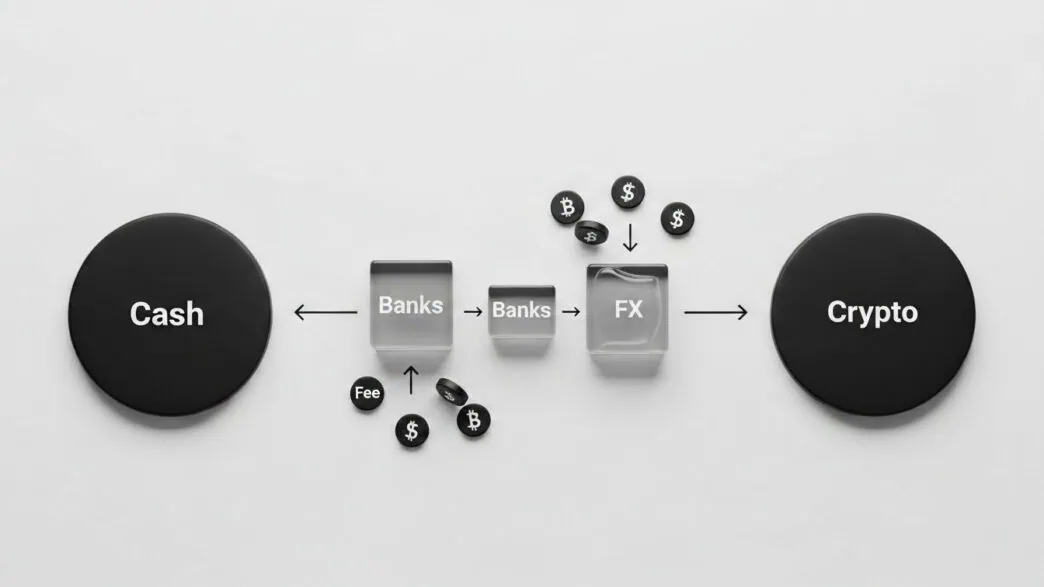
The contrast between Cash Bag and Crypto Bag approaches extends beyond transaction costs into fundamental questions about financial sovereignty, privacy, and time efficiency during international travel. Understanding this cultural divide reveals why crypto travel payments are reshaping luxury aviation, hotel bookings, and cross-border commerce in ways that traditional payment networks cannot match.
Book Travel with Crypto Payments
Pay for private jets, helicopters, and luxury yachts using crypto travel payments with 70+ cryptocurrencies. Sphera AI accepts Bitcoin, Ethereum, USDC and stablecoins. Earn PVCX token rewards on every booking.Start Crypto Travel Payments
Table of Contents
- Cash Bag Paradigm: The Hidden Costs of Traditional Travel Banking
- Crypto Bag Revolution: Borderless Wealth Philosophy
- Real Cost Breakdown: $50,000 Trip Comparison
- The Cultural Shift: From Status Symbols to Digital Sovereignty
- Stablecoin Travel Infrastructure 2026
- The Crypto Traveler Identity: Community and Signals
- How to Transition: From Cash Bag to Crypto Bag
- Frequently Asked Questions
Cash Bag Paradigm: The Hidden Costs of Traditional Travel Banking
The Cash Bag approach represents traditional travel payment infrastructure built on credit cards, bank wires, and currency exchange services. This system extracts significant value from every international transaction through multiple fee layers that travelers often fail to calculate accurately before trips. Crypto travel payments eliminate these hidden costs entirely through blockchain settlement.
Foreign transaction fees range from 1 to 3 percent on credit card purchases according to Bankrate’s foreign transaction fee analysis. These charges apply automatically whenever cards process payments outside the United States or in foreign currencies. Most major credit card issuers split fees between the card network and issuing bank, creating combined charges that reduce purchasing power by up to 3 percent on every swipe—costs that crypto travel payments eliminate.
Currency conversion adds another cost layer. Airport exchange desks and hotel currency services typically charge 3 to 5 percent markups above mid-market rates. ATM withdrawals trigger dual fees from both home banks and foreign ATM operators, often totaling $5 to $10 per transaction regardless of withdrawal amount. Smart travelers switching to crypto travel payments avoid these extractive fees completely.
The Compounding Effect on Extended Travel
Short trips mask these costs through small absolute dollar amounts. A weekend getaway with $2,000 in spending loses $100 to $140 through various fees—noticeable but not devastating. Extended international travel or business trips amplify the impact dramatically, making crypto travel payments increasingly attractive for frequent travelers.
Consider a digital nomad spending three months in Southeast Asia with $10,000 monthly expenses. Traditional banking infrastructure extracts $500 to $700 monthly through foreign transaction fees, ATM charges, and currency conversion markups. Over three months, this totals $1,500 to $2,100 lost to payment friction rather than actual travel experiences. Crypto travel payments reduce these costs to under $100 through stablecoin settlements.
The Cash Bag system also imposes temporal constraints that crypto travel payments eliminate entirely. Bank holidays, weekend closures, and wire transfer delays create situations where travelers cannot access funds despite having adequate account balances. International wire transfers require 2 to 5 business days for settlement, preventing same-day bookings or last-minute itinerary changes that crypto travel payments enable through instant blockchain settlements.
Privacy and Surveillance Considerations
Traditional banking creates comprehensive transaction trails that governments, financial institutions, and data brokers can access through various legal and technical mechanisms. Every hotel booking, restaurant meal, and transportation payment generates records that reveal detailed travel patterns, spending habits, and personal preferences. Crypto travel payments provide pseudonymous transaction privacy that traditional banking cannot match.
High-net-worth individuals face particular scrutiny through suspicious activity reporting requirements that trigger when transaction patterns deviate from historical norms. Large cash withdrawals, multiple international wire transfers, or unusual spending in certain countries can prompt bank holds, account freezes, or mandatory source-of-funds explanations that delay or disrupt travel plans. Crypto travel payments operate outside these surveillance systems while maintaining full legal compliance.
The Cash Bag paradigm treats privacy as suspicious rather than fundamental. Banks position monitoring as security rather than acknowledging the surveillance implications of comprehensive transaction tracking across international borders. Crypto travel payments return financial privacy to travelers through blockchain’s pseudonymous architecture.
Crypto Bag Revolution: Borderless Wealth Philosophy
The Crypto Bag approach fundamentally reimagines travel bookings through blockchain infrastructure that eliminates intermediaries, reduces settlement times to minutes, and operates 24/7/365 without geographical constraints or business hour limitations. Crypto travel payments represent this borderless financial revolution in action.
Stablecoin transaction volume reached $46 trillion in 2025 according to Andreessen Horowitz crypto trends analysis. This figure exceeds Visa’s global payment volume by 119 percent and Mastercard by 200 percent, demonstrating that stablecoins powering crypto travel payments have achieved mainstream payment infrastructure scale despite limited consumer awareness outside crypto-native communities.
Crypto travel payments operate on radically different economic models compared to traditional banking. Transaction fees on Layer 2 networks like Polygon, Arbitrum, or Base typically cost under $0.50 regardless of payment size. A $50 hotel deposit and a $50,000 yacht charter both settle for similar nominal fees measured in cents rather than percentage-based charges that traditional banks impose. This cost structure makes crypto travel payments superior for all transaction sizes.
The 24/7 Liquidity Advantage of Crypto Travel Payments
Traditional banking operates on business day schedules with weekend and holiday closures that create multi-day settlement gaps. International wire transfers initiated on Friday afternoon may not complete until the following Tuesday or Wednesday depending on time zones and holiday calendars in origin and destination countries. Crypto travel payments eliminate these temporal barriers completely.
Blockchain networks powering crypto travel payments process transactions continuously without regard to weekends, bank holidays, or geographical boundaries. A traveler booking a last-minute flight on Sunday evening completes payment settlement in 2 to 15 minutes depending on network choice and gas fee selection. This temporal flexibility enables spontaneous travel decisions that Cash Bag infrastructure cannot support but crypto travel payments handle seamlessly.
The travel industry processed over $11 trillion in annual transactions according to PhocusWire cryptocurrency travel analysis. Reducing payment processing fees from 2 to 3 percent down to under 0.1 percent through blockchain settlement and crypto travel payments could save the industry $270 billion annually. These savings create room for better pricing, enhanced services, or improved profit margins depending on competitive dynamics.
Privacy Through Pseudonymity in Crypto Travel Payments
Blockchain transactions powering crypto travel payments occur between wallet addresses rather than identity-linked bank accounts. This pseudonymous structure provides meaningful privacy advantages while maintaining public transaction records on distributed ledgers that anyone can audit. Crypto travel payments balance transparency with personal privacy in ways traditional banking cannot.
A traveler can book hotels, flights, and experiences through crypto travel payments without revealing name, passport number, nationality, or other personal identifiers beyond what service providers require for legal compliance. Payment history remains linked to wallet addresses rather than personally identifiable information in centralized databases vulnerable to breaches or subpoenas when using crypto travel payments.
This privacy model in crypto travel payments proves particularly valuable for high-net-worth individuals, business executives, and public figures who prefer minimizing transaction trails that reveal travel patterns, spending habits, or relationship networks to potential adversaries, competitors, or media organizations. Crypto travel payments provide financial sovereignty without sacrificing booking convenience.

Real Cost Breakdown: $50,000 Trip Comparison
Concrete numbers reveal the economic impact of payment infrastructure choices across meaningful travel budgets. A hypothetical but realistic $50,000 extended international trip demonstrates how Cash Bag and Crypto Bag approaches diverge in final costs, with crypto travel payments delivering substantial savings.
Cash Bag Total Costs Without Crypto Travel Payments
Starting with $50,000 in planned travel expenses processed through traditional banking infrastructure without crypto travel payments:
Foreign transaction fees at 2.5 percent average across credit card purchases: $1,250 in charges. Currency conversion markups on $15,000 converted through airport kiosks and hotel services at 4 percent average: $600 in hidden costs. ATM withdrawal fees across 25 transactions averaging $8 per withdrawal: $200 in access charges. Wire transfer fees for larger hotel deposits and yacht bookings at $45 per transfer across 5 transactions: $225 in intermediary fees. These costs vanish when using crypto travel payments instead.
Total Cash Bag costs without crypto travel payments: $2,275 extracted from the $50,000 budget, representing 4.55 percent of total spending lost to payment infrastructure rather than actual travel services or experiences.
Crypto Bag Total Costs Using Crypto Travel Payments
The same $50,000 budget processed through crypto travel payments and blockchain settlement:
On-ramp fees converting fiat to USDC for crypto travel payments at 0.5 percent one-time cost: $250 for full budget conversion. Network transaction fees for crypto travel payments across 50 separate bookings averaging $0.30 per transaction: $15 in gas costs. Off-ramp fees converting unused stablecoins back to fiat after crypto travel payments at 0.5 percent: $125 on remaining balance. Exchange rate optimization through mid-market rates with zero markup when using crypto travel payments: $0 in conversion losses.
Total Crypto Bag costs using crypto travel payments: $390 in infrastructure fees, representing 0.78 percent of total spending. Net savings from crypto travel payments: $1,885 compared to Cash Bag approach, or 3.77 percent of total budget retained for actual travel rather than payment friction.
The Compounding Effect Over Time with Crypto Travel Payments
Frequent travelers amplify these savings through crypto travel payments across multiple trips annually. A digital nomad or business executive spending $200,000 yearly on international travel saves $7,540 annually by adopting crypto travel payments instead of traditional banking infrastructure.
Over a decade, savings from crypto travel payments compound to $75,400 in retained wealth that can fund additional experiences, build investment portfolios, or simply remain in the traveler’s control rather than extracted by financial intermediaries who don’t use crypto travel payments.
The calculation assumes conservative estimates with 2.5 percent foreign transaction fees rather than the 3 percent many cards charge, 4 percent currency conversion rather than 5 to 7 percent common at airports, and efficient crypto on/off-ramping at 0.5 percent rather than less favorable exchange services. Real-world savings from crypto travel payments often exceed these conservative projections.
| Cost Factor | Cash Bag (No Crypto Payments) | Crypto Bag (Crypto Travel Payments) |
|---|---|---|
| Foreign Transaction Fees | 2.5 percent | 0 percent |
| Currency Conversion | 3-5 percent markup | Mid-market rate |
| ATM Withdrawals | $5-10 per transaction | $0.30 network fee |
| Settlement Time | T+2 to T+5 days | T+2 to T+15 minutes |
| Availability | Business hours only | 24/7/365 |
| Transaction Limits | Bank-imposed daily caps | Wallet balance only |
| Total Cost ($50K trip) | $2,275 | $390 |
The Cultural Shift: From Status Symbols to Digital Sovereignty
The Cash Bag versus Crypto Bag divide extends beyond transaction economics into identity expression and value signaling within travel communities. Traditional luxury travel culture emphasizes visible consumption through recognizable brands, premium cards, and expensive accessories that communicate wealth and status to observers. Crypto travel payments represent a philosophical rejection of this consumption-based status signaling.
The old paradigm equates status with Rolex watches, black American Express cards, Louis Vuitton luggage, and five-star hotel loyalty tiers. These signals depend on third-party brands to convey wealth and sophistication through borrowed prestige rather than independent capability demonstrated through crypto travel payments and financial sovereignty.
Crypto Bag culture inverts this relationship. Status derives from sovereignty rather than consumption, privacy rather than display, technical competence rather than brand affiliation. The new flex involves cold wallet security, multi-chain portfolio diversification, and seed phrase backup strategies rather than luxury goods that depreciate immediately after purchase. Crypto travel payments embody this sovereignty-first philosophy.
The New Status Signals in Crypto Travel Payments Culture
Crypto-native travelers communicate identity through subtle technical markers that remain invisible to mainstream observers but instantly recognizable within digital asset communities using crypto travel payments. Hardware wallet keychains, blockchain conference badges, and casual references to gas optimization strategies signal membership in the Crypto Bag culture more effectively than traditional luxury markers.
The ultimate status symbol becomes the seed phrase itself—12 or 24 words that represent complete financial sovereignty independent of any bank, government, or financial institution. This mnemonic phrase enables global travel with unlimited funds accessible through any internet connection without requiring permission, approval, or documentation from intermediaries. Crypto travel payments turn this sovereignty into practical booking capability.
Crypto travel communities celebrate stories of borderless movement facilitated by digital assets and crypto travel payments. A traveler visiting three countries in one day using only smartphone and hardware wallet demonstrates sovereignty that no amount of traditional luxury can match. The ability to book and settle significant transactions in minutes on Sunday night while traditional banks remain closed represents practical freedom that transcends material consumption enabled through crypto travel payments.
From Possession to Capability Through Crypto Travel Payments
The philosophical shift moves from “what I own” to “what I can do” as the fundamental marker of wealth and status. A watch communicates past purchasing decisions. A seed phrase represents current capability to move value globally at any moment without intermediary permission through crypto travel payments.
This capability focus attracts entrepreneurial and technical communities who value autonomy, privacy, and efficiency over social signaling through branded consumption. The overlap between crypto adoption and digital nomad culture reflects shared values around location independence, financial sovereignty, and rejection of traditional status hierarchies. Crypto travel payments enable this lifestyle practically.
Gen Z shows particularly strong affinity for crypto travel payments, with 44 percent making cryptocurrency purchases according to Visa survey data on holiday spending trends. This demographic grew up with smartphones, understands digital-native financial infrastructure intuitively through crypto travel payments, and shows little loyalty to banking institutions their parents’ generation trusted by default.

Stablecoin Travel Infrastructure 2026
Stablecoin adoption powering crypto travel payments has evolved from niche cryptocurrency applications into mainstream payment infrastructure that rivals or exceeds traditional financial networks in transaction volume and settlement speed. This infrastructure enables the Crypto Bag travel culture through practical everyday usability rather than speculative volatility.
Travel companies accepting crypto travel payments reported 38 percent growth in booking volume during 2025 according to CoinsPaid travel payment analysis. Stablecoins accounted for over 40 percent of these crypto travel payments, reflecting traveler preference for price-stable assets that eliminate volatility risk between booking and trip dates.
Major travel platforms now integrate crypto travel payments as standard options alongside credit cards and bank transfers. Travala processed over $100 million in booking revenue during 2024, with $80 million settled through crypto travel payments representing 80 percent year-over-year growth. The platform reports that users making crypto travel payments spend 2.5 times more per booking and maintain 3 times higher lifetime value compared to traditional payment users.
The B2B Settlement Revolution Through Crypto Travel Payments
Business-to-business travel payments face even more friction through traditional banking than consumer bookings. Corporate travel requires invoice processing, payment approvals, wire transfers, and reconciliation across multiple currencies and time zones. These processes typically require 30 to 90 days for complete settlement. Crypto travel payments eliminate most friction through instant blockchain settlement.
Stablecoin B2B payments underlying crypto travel payments eliminate most of this friction through instant settlement, transparent pricing, and programmable payment terms embedded in smart contracts. Monthly B2B stablecoin payment volume for crypto travel payments surged 30 times to $3 billion during 2025 according to industry data, demonstrating rapid institutional adoption once infrastructure matured beyond early experimental phase.
Hotels, airlines, and tour operators benefit from immediate liquidity rather than waiting weeks or months for payment clearing when accepting crypto travel payments. This acceleration improves cash flow management, reduces working capital requirements, and eliminates currency exposure risk that traditional cross-border payments impose through multi-day settlement windows. Crypto travel payments deliver operational efficiency gains that directly improve profit margins.
Travel Companies Leading Crypto Travel Payments Adoption
CheapAir has accepted crypto travel payments since 2013, making it one of the longest-running crypto travel services. The platform now supports multiple cryptocurrencies for flights, hotels, and rental cars across major booking networks through comprehensive crypto travel payments integration.
Alternative Airlines enables booking across 600 airlines using crypto travel payments with over 100 different cryptocurrencies including Bitcoin, Ethereum, Ripple, and Tether. This broad crypto support removes barriers for travelers holding diverse digital asset portfolios who want spending options without converting to specific tokens when making crypto travel payments.
Destinia allows crypto travel payments for flights and hotels worldwide. AirBaltic accepts eight different cryptocurrencies directly through its website rather than requiring third-party payment processors for crypto travel payments. Emirates partners with crypto payment providers to enable digital asset settlement for premium cabin bookings through integrated crypto travel payments infrastructure.
The crypto travel infrastructure extends beyond booking platforms into supporting services. Crypto-friendly travel insurance, currency-agnostic SIM cards, and blockchain-based luggage tracking demonstrate how digital asset adoption spreads across adjacent travel services once critical mass develops in core booking functions powered by crypto travel payments.
Join the Crypto Travel Payments Revolution
Book private jets, helicopters, and yachts with Bitcoin, Ethereum, and 70+ cryptocurrencies through crypto travel payments. Sphera AI delivers instant quotes and settlement. Start your borderless travel journey with crypto travel payments.Get Crypto Quote Now
The Crypto Traveler Identity: Community and Signals
Crypto Bag travelers using crypto travel payments form distinct communities with shared values, communication patterns, and identity markers that transcend traditional demographics. These communities organize around Telegram channels, Discord servers, and Twitter spaces rather than traditional travel forums or loyalty program tiers, united by their adoption of crypto travel payments.
The crypto traveler identity emphasizes technical competence in crypto travel payments, financial privacy, and rejection of intermediary dependence. Community members share alpha on favorable crypto exchange rates, travel booking platforms with lowest fees for crypto travel payments, and strategies for optimizing transaction costs across different blockchain networks powering crypto travel payments.
The Digital Nomad Overlap with Crypto Travel Payments
Strong overlap exists between crypto adoption and digital nomad communities using crypto travel payments. Both groups value location independence, reject traditional career paths, and embrace technology as enabler of alternative lifestyles. Digital nomads working remotely while traveling often receive income in cryptocurrency, making crypto travel payments natural extension of existing financial infrastructure.
Cryptocurrency ownership reached 659 million people globally in 2025, representing roughly 8.2 percent of world population. This crypto-native demographic increasingly demands travel services that accept crypto travel payments without forcing conversion back to fiat currencies through expensive on-ramps and off-ramps.
Crypto traveler communities using crypto travel payments develop shared language and inside references that signal membership. Terms like “traveling light” reference carrying only hardware wallets rather than cash or cards when using crypto travel payments. “My wallet is my passport” expresses financial sovereignty philosophy. “Seed not Swiss” contrasts cryptographic key security with traditional Swiss bank account privacy enabled through crypto travel payments.
The Community Network Effect Around Crypto Travel Payments
As more travelers adopt crypto travel payments, network effects strengthen the ecosystem through demonstrated use cases, shared knowledge, and social proof that reduces perceived risk for newcomers. Early adopters who successfully navigated crypto travel logistics share experiences that help others transition from Cash Bag to Crypto Bag approaches using crypto travel payments.
Crypto travel communities curate lists of verified service providers accepting crypto travel payments, warn about scams and poor experiences, and celebrate businesses that deliver excellent crypto payment experiences. This distributed knowledge network operates faster and more accurately than traditional review platforms that suffer from fake reviews and gaming attempts.
Physical meetups at blockchain conferences, crypto-friendly hotels, and digital nomad hubs create in-person connections that reinforce online community bonds around crypto travel payments. These gatherings enable direct peer-to-peer knowledge transfer about travel strategies, security practices, and emerging crypto travel services before they achieve mainstream awareness of crypto travel payments capabilities.

How to Transition: From Cash Bag to Crypto Bag
Adopting crypto travel payments requires technical setup and mindset shifts that differ significantly from traditional banking experiences. The transition process involves four core phases: wallet creation, funding, spending through crypto travel payments, and security practices.
Phase One: Stablecoin Wallet Setup for Crypto Travel Payments
Begin with mobile wallet applications that prioritize user experience over advanced features for crypto travel payments. Coinbase Wallet, MetaMask, or Trust Wallet provide good starting points for crypto newcomers wanting to use crypto travel payments. These applications manage private keys, connect to decentralized applications, and support multiple blockchain networks from single interfaces optimized for crypto travel payments.
Download wallet software only from official app stores or verified websites when setting up crypto travel payments infrastructure. Phishing scams target crypto users through fake wallet applications that steal private keys and drain funds. Verify developer identity, check download numbers, and review recent ratings before installation of any wallet for crypto travel payments.
Create new wallet and immediately backup seed phrase using physical paper storage in secure location when establishing crypto travel payments capability. Never photograph seed phrases, store them in cloud services, or share them with anyone for any reason when using crypto travel payments. The seed phrase represents complete control over wallet funds with no recovery mechanism if lost or compromised.
Start with small test amounts to understand transaction mechanics without risking significant funds during learning phase of crypto travel payments. Send $50 worth of stablecoins to wallet, then practice sending small amounts between addresses to confirm understanding of gas fees, network selection, and confirmation times for crypto travel payments.
Phase Two: Funding Strategy for Crypto Travel Payments
On-ramp services connect traditional banking to cryptocurrency through regulated exchanges that comply with know-your-customer requirements for crypto travel payments. Coinbase, Kraken, or Binance enable purchasing stablecoins like USDC or USDT using credit cards, bank transfers, or wire deposits to fund crypto travel payments.
Compare fees across multiple exchanges before funding wallet for crypto travel payments. Rates vary significantly depending on payment method, transaction size, and exchange competitive positioning. Credit card purchases typically cost 2 to 4 percent while bank transfers reduce fees to under 1 percent at major exchanges when funding crypto travel payments.
Consider funding wallet well before travel dates to eliminate last-minute conversion stress when planning crypto travel payments. Stablecoins maintain value between funding and spending dates, unlike traditional currency exchange that locks in rates at conversion time. This flexibility makes crypto travel payments superior for advance trip planning.
Diversify across multiple stablecoins to reduce counterparty risk when using crypto travel payments. Hold mix of USDC, USDT, and DAI rather than concentrating entirely in single token. This diversification protects against individual stablecoin depegging events while maintaining stable value for travel planning through crypto travel payments.
Phase Three: Travel Booking Integration with Crypto Travel Payments
Research crypto-accepting travel platforms before attempting bookings with crypto travel payments. Travala, CheapAir, Alternative Airlines, and Destinia all support crypto travel payments with varying fee structures and currency options. Compare offerings across platforms to find best rates and widest crypto acceptance for crypto travel payments.
Start with small bookings to verify payment process works smoothly before committing to expensive reservations using crypto travel payments. Book hostel night or short domestic flight using crypto to confirm you understand checkout process, gas fee estimation, and confirmation timing for crypto travel payments.
Maintain backup payment methods during transition period to crypto travel payments. Keep credit card available as fallback option until comfortable with crypto payment mechanics and confident in platform reliability. This redundancy prevents travel disruptions if technical issues arise during learning phase of crypto travel payments.
Document successful transactions and save confirmation details when using crypto travel payments. Unlike traditional banking with automatic record-keeping, crypto users bear responsibility for tracking their own transaction history through blockchain explorers and personal records of crypto travel payments.
Phase Four: Security Practices for Crypto Travel Payments
Upgrade to hardware wallet for amounts exceeding $10,000 or for extended travel with significant balances in crypto travel payments. Ledger or Trezor devices provide enhanced security through offline private key storage that malware cannot compromise through internet connections when using crypto travel payments.
Practice operational security when accessing wallets in public locations for crypto travel payments. Avoid entering seed phrases or making large transactions over public WiFi networks that attackers might monitor when conducting crypto travel payments. Use VPN services or mobile hotspots when handling sensitive operations during travel with crypto travel payments.
Establish backup wallet as recovery option if primary device fails, gets lost, or suffers theft when using crypto travel payments. Store backup seed phrase in different physical location from primary phrase to prevent single-point-of-failure scenarios that could compromise crypto travel payments access.
Test recovery process using small test wallet before relying on backup procedures for meaningful amounts in crypto travel payments. Confirm you can successfully restore wallet access using only seed phrase without original device or application installation for crypto travel payments.
Frequently Asked Questions
How much money do you save using crypto travel payments instead of credit cards?
Crypto travel payments typically save 3 to 5 percent compared to traditional banking. Foreign transaction fees, currency conversion markups, and ATM charges extracted by Cash Bag infrastructure average 5 to 7 percent of total travel spending. Crypto travel payments reduce these costs to under 1 percent through stablecoin settlements and blockchain transactions. On a $50,000 extended trip, crypto travel payments translate to $1,885 in retained value.
Which cryptocurrencies work best for travel bookings?
Stablecoins like USDC, USDT, and DAI provide optimal experiences for crypto travel payments through price stability and wide acceptance. These dollar-pegged tokens eliminate volatility risk between booking and travel dates while settling crypto travel payments in minutes rather than days. Bitcoin and Ethereum remain accepted for crypto travel payments by many platforms but introduce price fluctuation concerns for travelers booking weeks or months in advance.
Do major airlines and hotels actually accept crypto travel payments?
Major travel companies increasingly accept crypto travel payments through third-party payment processors even if not advertising directly. Emirates, AirBaltic, and various hotel chains enable crypto travel payments through partners like CoinsPaid and Travala. Over 11.5 percent of travel agencies currently accept crypto travel payments according to industry surveys, with 75 percent of merchants planning crypto adoption within two years.
Is it safe to travel with only crypto travel payments instead of cash and cards?
Traveling using only crypto travel payments requires technical competence and backup planning but provides viable alternative to traditional payment methods. Maintain small fiat currency emergency fund for situations requiring cash alongside crypto travel payments. Keep backup wallet seed phrase in secure separate location from primary device when using crypto travel payments. Research destination crypto acceptance before arrival to confirm adequate payment infrastructure exists for your crypto travel payments needs.
What happens if I lose my phone with my crypto wallet during travel?
Seed phrase backup enables complete wallet recovery on new device regardless of original phone status when using crypto travel payments. Download wallet application on replacement phone, select restore option, enter seed phrase, and regain full access to funds for crypto travel payments. This recovery mechanism works across different devices and wallet applications, providing superior protection compared to traditional banking that requires identity verification and account recovery processes to restore crypto travel payments access.
How do taxes work with crypto travel payments?
Cryptocurrency spending through crypto travel payments may trigger taxable events depending on jurisdiction. In United States, using crypto to purchase travel services constitutes disposal of property that requires capital gains reporting if crypto appreciated since acquisition when making crypto travel payments. Consult tax professionals familiar with digital asset regulations in your country. Many crypto-native travelers use tax software like CoinTracker or TokenTax to automatically calculate obligations from blockchain transaction history of crypto travel payments.
Related Resources
Explore these additional guides for comprehensive Web3 travel and blockchain payment insights:
- BlackRock Tokenized Assets BUIDL Guide: RWA Investment Strategy
- AI Travel Planner 2026: Luxury Aviation Smart Booking Guide
- Hyperliquid DEX Review 2025: Perpetual Trading Platform Analysis
- R3 Solana Partnership: How Traditional Banks Adopt Blockchain
Conclusion
The Cash Bag versus Crypto Bag divide represents more than payment method preferences. It reflects fundamental philosophical differences about financial sovereignty, privacy expectations, and acceptable friction levels in global commerce enabled through crypto travel payments.
Traditional banking infrastructure evolved for domestic transactions within single currency zones. International travel exposes the limitations, costs, and temporal constraints of systems designed for different use cases. Foreign transaction fees, currency conversion markups, settlement delays, and privacy erosion all stem from legacy architecture poorly suited to modern borderless lifestyles that crypto travel payments address directly.
Crypto travel payments eliminate most Cash Bag friction through blockchain settlement, stablecoin price stability, and 24/7 liquidity access. The 525 percent growth in Visa crypto card spending during 2025 demonstrates mainstream adoption trajectory that extends far beyond early adopter niche for crypto travel payments.
Stablecoin transaction volumes powering crypto travel payments now exceed traditional payment networks in absolute dollar terms while offering superior settlement speed, lower costs, and enhanced privacy. Travel companies report that crypto users making crypto travel payments spend more per booking and maintain higher lifetime value, creating business incentives for crypto payment acceptance beyond philosophical alignment with financial sovereignty principles.
The cultural shift from status through consumption toward sovereignty through capability attracts younger demographics who grew up with smartphones and understand digital-native infrastructure intuitively through crypto travel payments. Gen Z adoption rates suggest crypto travel payments will become default infrastructure rather than alternative option as this cohort represents growing percentage of total travel spending.
Technical barriers to entry continue falling through improved wallet user experience for crypto travel payments, clearer regulatory frameworks, and expanding merchant acceptance networks. The transition from Cash Bag to Crypto Bag approaches requires learning new mental models and security practices but delivers immediate cost savings and long-term capability advantages through crypto travel payments.
Platforms like PrivateCharterX demonstrate how luxury travel services integrate crypto travel payments as standard options alongside traditional banking. Accepting 70 plus cryptocurrencies for private aviation bookings signals market recognition that crypto-native travelers represent meaningful customer segment with specific payment infrastructure expectations around crypto travel payments.
The borderless wealth philosophy underlying Crypto Bag culture emphasizes capability over consumption, privacy over surveillance, and sovereignty over intermediary dependence through crypto travel payments. These values resonate with digital nomads, entrepreneurs, and privacy-conscious travelers who reject legacy financial systems designed for different era and different assumptions about individual agency that crypto travel payments restore.
As blockchain infrastructure matures and more travelers experience frictionless international payments through stablecoins and crypto travel payments, the Cash Bag paradigm will increasingly appear unnecessarily expensive, slow, and intrusive compared to available alternatives. This transition mirrors earlier shifts from cash to cards and cards to mobile payments—each generation adopts infrastructure that better serves their needs and values through innovations like crypto travel payments.
The future of travel payments favors systems that respect user privacy, minimize transaction costs, operate continuously without business hour limitations, and settle instantly across borders through crypto travel payments. Blockchain technology delivers all these attributes while traditional banking architecture struggles with each dimension. Understanding this capability gap explains why adoption of crypto travel payments accelerates despite regulatory uncertainty and mainstream skepticism.
Sources
- Cryptonomist: Visa Crypto Card Growth Drives 2025 Stablecoin Surge
- Andreessen Horowitz: 6 Trends for 2026 – Stablecoins, Payments, and Real-World Assets
- Bankrate: A Guide to Foreign Transaction Fees
- Visa: Survey Finds AI and Crypto Poised to Transform U.S. Holiday Spending
- CoinsPaid Media: Crypto Payments Volume in Travel Surges by 38 Percent YoY
- PhocusWire: The Rise of Cryptocurrency in Travel
- CoinsPaid: Why Travel Agencies Are Accepting Crypto
- U.S. News: Watch Out for Bank Foreign Transaction Fees When You Travel Abroad
- Wise: Foreign Transaction Fee – Meaning and When It Applies
- SQ Magazine: Cryptocurrency Payment Adoption by Merchants Statistics 2025