






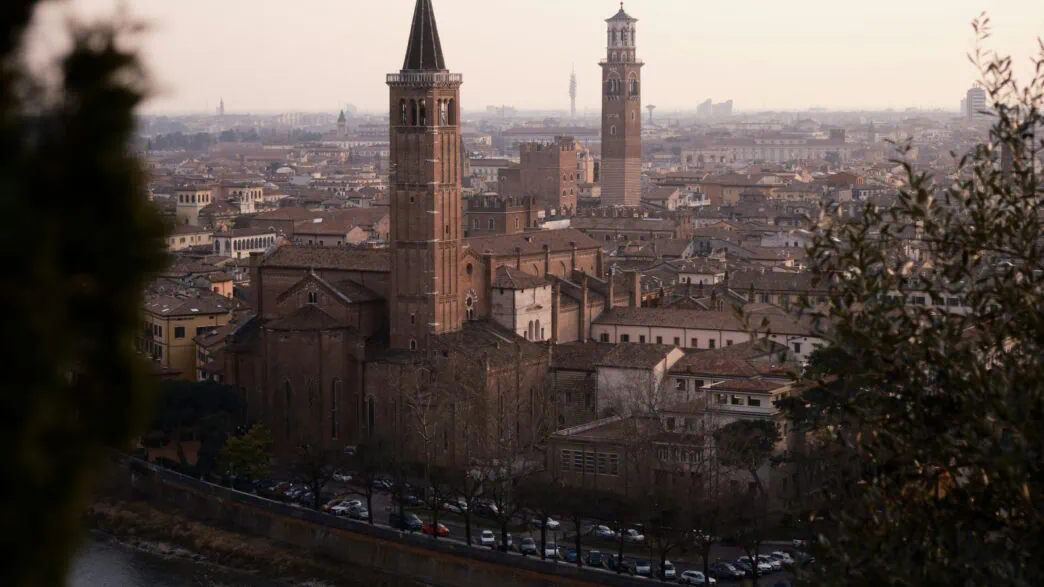
Verona Italy captivates through legendary romantic association—Shakespeare’s Romeo and Juliet immortalized this Veneto city as ultimate love story setting, drawing millions seeking Juliet’s famous balcony and romantic atmosphere. Yet Verona transcends single literary connection through spectacular Roman Arena di Verona (30 AD amphitheater hosting summer opera season), UNESCO World Heritage historic center, proximity to Valpolicella wine region (Amarone DOCG), and strategic positioning 120 kilometers from Venice, 30 kilometers from Lake Garda, and 160 kilometers from Milan. This city of 260,000 combines authentic Italian urban life with substantial tourism infrastructure, creating destination balancing cultural depth, romantic atmosphere, and practical northern Italy gateway functions.
For romantic travelers seeking Shakespeare pilgrimage and couple-focused atmosphere, opera enthusiasts attending Arena di Verona legendary summer season (June-September), wine lovers exploring Valpolicella-Amarone-Soave regions, cultural tourists discovering UNESCO Venetian heritage beyond Venice itself, day-trippers from Milan or Venice, and sophisticated travelers appreciating authentic mid-size Italian cities avoiding over-tourism, Verona Italy delivers experiences combining iconic attractions, genuine Italian character, and comprehensive services impossible in overcrowded destinations. The Venetian Republic ruled Verona 1405-1797, creating architectural and cultural legacy visible throughout the historic center’s elegant palazzos, fortifications, and civic monuments.
This comprehensive Verona Italy travel guide provides essential intelligence for planning visits in 2026, covering arrival from Milan-Venice-Bergamo, navigating the compact historic center, exploring all Romeo and Juliet sites (not just famous balcony—house, tomb, and locations throughout city), attending Arena di Verona opera with ticket strategies and seating guidance, wine tourism in Valpolicella region including Amarone tours, discovering Castelvecchio castle and medieval bridges, selecting hotels from budget to romantic boutiques, experiencing Veronese cuisine and wine culture, day trips to Venice-Lake Garda-Mantova, helicopter access for luxury travelers, costs and budgeting, and practical tips for maximizing Verona’s romantic atmosphere and cultural offerings.
For official Verona information and events, visit Verona Tourism official portal. Arena di Verona opera season and tickets appear on Arena di Verona official website.
Verona Italy at a Glance
- Location: Veneto region, Northern Italy
- Population: 260,000 (city), 500,000 (metro area)
- UNESCO: World Heritage City (inscribed 2000)
- Famous For: Romeo & Juliet, Arena opera
- River: Adige (loops through historic center)
- Arena di Verona: Roman amphitheater 30 AD
- Distance Venice: 120km / 90min train
- Distance Lake Garda: 30km / 30min drive
- Distance Milan: 160km / 90min train
- Character: Romantic + Cultural + Authentic

Table of Contents
- Verona Italy Overview
- Getting to Verona from Milan, Venice & Beyond
- Romeo & Juliet Complete Guide
- Arena di Verona: Opera & Roman Heritage
- Historic Center & Piazza delle Erbe
- Castelvecchio Castle & Bridges
- Churches & Religious Sites
- Valpolicella Wine Tours & Amarone
- Best Hotels in Verona Italy
- Dining & Veronese Cuisine
- Day Trips: Venice, Lake Garda, Mantova
- Arena Opera: Tickets, Seating & Tips
- Helicopter & Executive Transport
- Romance Travel: Proposals & Weddings
- Costs & Budgeting
- Practical Tips
- Frequently Asked Questions
Verona Italy Overview: City of Love & Opera
Verona Italy evolved from Roman Verona (Arena amphitheater 30 AD testifying to ancient importance) through medieval prosperity as free commune, domination by Scaliger dynasty (1260-1387 creating many castles and palaces), Venetian Republic rule (1405-1797 establishing architectural legacy), Austrian control (1797-1866), to modern identity balancing authentic Italian city life with substantial Romeo and Juliet tourism. The UNESCO World Heritage inscription (2000) recognizes “urban structure and architecture” representing 2,000 years of artistic and cultural development creating remarkably intact historic center.
Why Verona Differs from Venice
Despite sharing Venetian Republic heritage and proximity (120km), Verona Italy operates with fundamentally different character from Venice. Venice exists primarily as tourism-museum city where authentic residential life largely disappeared, replaced by hotels, restaurants, and tourist infrastructure. Verona maintains working Italian city character—locals shopping in markets, students attending university, families living in historic center, businesses beyond pure tourism—creating authentic atmosphere impossible in Venice’s over-touristed reality.
The scale differs dramatically—Verona’s 260,000 residents versus Venice’s 50,000 creates vibrant urban energy versus Venice’s emptying evening streets after day-trippers depart. The accessibility proves easier—Verona sits on major rail lines with straightforward navigation versus Venice’s water-taxi complexity and higher costs. The pricing runs 30-50% below Venice equivalents across hotels, dining, and activities. Yet Verona delivers comparable architectural beauty, cultural depth, and romantic atmosphere without overwhelming crowds or tourist-trap establishments dominating Venice. For comprehensive Venice comparison (forthcoming guide), Verona often provides superior value and authentic experiences for travelers not specifically requiring Venice’s unique water-city character.
Romeo & Juliet Legacy
Shakespeare’s “Romeo and Juliet” (written 1594-1596) transformed Verona Italy into global symbol of romantic love, though the story itself derives from earlier Italian sources (Luigi da Porto’s 1530 novella set in Verona). Whether historical basis exists remains debated—no definitive proof of actual Cappelletti (Capulet) and Montecchi (Montague) families feuding in medieval Verona, though family names appear in historical records. Regardless of historical accuracy, the literary association created tourism industry generating millions of annual visitors seeking Juliet’s balcony, writing love letters, and experiencing Verona’s romantic atmosphere.
The city embraced this identity—maintaining “Juliet’s House” museum, responding to thousands of letters addressed to Juliet annually (volunteers answer as “Juliet’s secretaries”), hosting Romeo and Juliet-themed weddings, and generally cultivating romantic destination reputation. Critics dismiss this as manufactured tourism, yet the phenomenon creates genuine romantic atmosphere as self-fulfilling prophecy—couples arrive expecting romance, streets fill with lovers, atmosphere delivers authentic romantic experiences regardless of Shakespeare’s fictional origins.

Getting to Verona Italy from Milan, Venice & Airports
Verona Italy sits on major Milan-Venice rail corridor providing excellent train connections, while Verona Villafranca Airport (VRN) offers limited flights, and highway access enables driving from surrounding cities and lakes. Understanding transport options enables selecting appropriate arrival methods for specific origins and priorities.
Train to Verona from Milan & Venice
Milan to Verona – High-speed Frecciarossa trains operate Milano Centrale to Verona Porta Nuova station requiring 60-90 minutes (€20-40 one-way depending on advance booking and train type). Regional trains require 90-120 minutes at lower fares (€15-25) but with slower service. The hourly frequency enables flexible scheduling. Venice to Verona – Freccia trains require 60-80 minutes (€18-35), regional trains 90-120 minutes (€12-20). The route operates hourly throughout the day. For comprehensive Milan travel guide including Verona day trips, see our detailed Milan Italy complete guide.
Bergamo to Verona – Regional trains require 75-90 minutes with connection typically in Brescia or Milan (€12-20). Direct buses operate less frequently (2 hours, €15-20). For comprehensive Bergamo coverage, see our detailed Bergamo Italy complete guide.
Verona Porta Nuova station sits 15-minute walk south of historic center or accessible via city bus (Line 11, 12, 13, €1.50 single ticket). Many hotels lie within walking distance. Taxis charge €10-15 for station-center transfers. The compact historic center enables walking-based sightseeing once reaching accommodation.
Verona Villafranca Airport
Verona Airport (Valerio Catullo Airport, VRN) sits 12 kilometers southwest of city center, handling primarily European flights with limited international connections. Airlines include Alitalia, Ryanair, Lufthansa, and others serving European destinations. AeroExpress bus operates airport-Porta Nuova station every 20 minutes (20-25 minutes, €6 one-way). Taxis charge €25-35 fixed rate (20 minutes). Car rentals available for regional exploration though unnecessary for Verona city visits given walkable historic center.
Many visitors use Milan Malpensa (MXP, 160km, 90-minute train via Milan), Venice Marco Polo (VCE, 130km, train via Venice), or Bergamo Orio al Serio (BGY, 100km, complex train connections) accessing cheaper flights or better international connections than limited Verona airport offerings. Compare total door-to-door time and costs including ground transport when evaluating airport options.
Drive to Verona & Regional Access
Verona Italy sits at A4 motorway intersection providing Milan-Venice highway access plus A22 running north to Brenner Pass (Austria). Milan-Verona: 160km via A4 (100 minutes, tolls €12-15). Venice-Verona: 120km via A4 (75 minutes, tolls €8-10). Lake Garda-Verona: 30km (30 minutes, minimal tolls). The highways enable convenient regional driving though Verona historic center operates limited traffic zone (ZTL) restricting non-resident vehicles—hotels coordinate parking permits or direct to authorized garages (€20-30 daily).
Helicopter Charter for Luxury Travelers
Helicopter charter provides rapid Verona connections—Milan-Verona 40 minutes (€8,000-12,000 per flight, 4-6 passengers), Venice-Verona 30 minutes (€6,000-10,000), Lake Como-Verona 45 minutes (€10,000-15,000), Zurich-Verona 90 minutes (€20,000-30,000). Services launch from Verona heliport or coordinate hotel rooftop landings for ultra-luxury properties with facilities. The aerial routes showcase dramatic Alpine-to-plain transitions and provide time-efficient multi-city Italian itineraries impossible via ground transport. For comprehensive helicopter charter pricing, see our detailed helicopter charter guide.
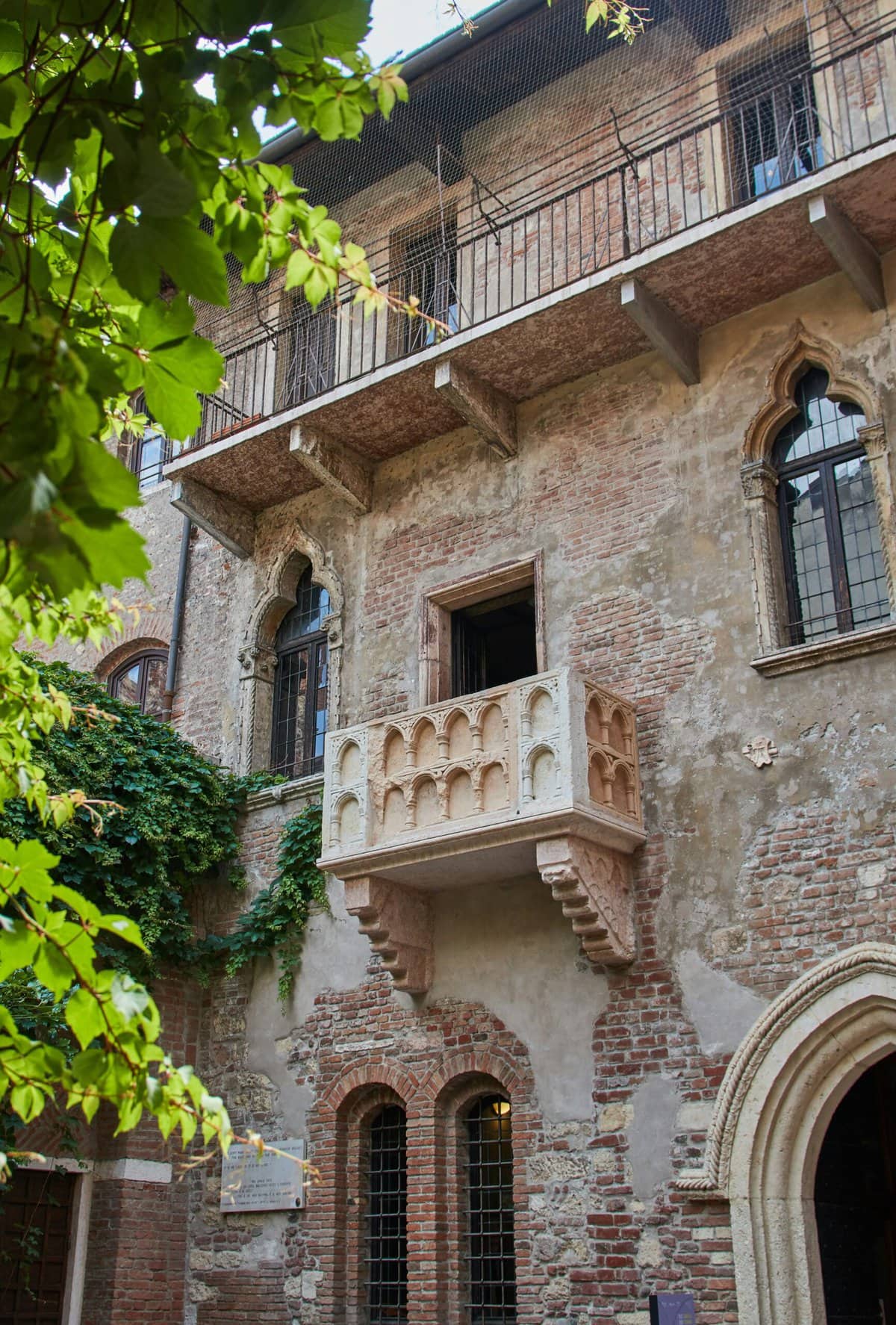
Romeo & Juliet Verona: Complete Guide to All Sites
Romeo and Juliet tourism represents Verona Italy’s primary draw—millions visit Juliet’s famous balcony annually, though the complete Romeo and Juliet experience extends beyond single courtyard to multiple sites throughout the city. Understanding all locations enables comprehensive Shakespeare pilgrimage while avoiding tourist-trap disappointments from inflated expectations versus reality.
Juliet’s House & Famous Balcony
Casa di Giulietta (Juliet’s House), 13th-century building at Via Cappello 23, operates as Verona’s most-visited attraction despite tenuous historical connection—no proof Capulet family owned this property, and the famous balcony itself was added 1930s to satisfy tourist expectations created by Shakespeare’s play. Regardless of authenticity concerns, the site functions as romantic pilgrimage destination attracting couples worldwide seeking balcony photos, touching Juliet bronze statue (rubbing right breast supposedly brings luck in love—polished shine testifies to millions following tradition), and leaving love messages covering courtyard walls.
Museum admission €6 (courtyard free, balcony viewing requires ticket) includes access to period rooms, costumes from various film adaptations, and balcony itself enabling “Romeo, Romeo” photo opportunities. Expect massive crowds (particularly July-August, 10am-5pm peak)—early morning visits (8-9am) or late afternoon (after 5pm courtyard free access) provide better experiences. The balcony prohibits more than 2-3 people simultaneously for photos, creating lengthy waits peak season. Overall: cheesy tourist attraction but undeniably atmospheric and essential Romeo and Juliet experience despite historical fabrication. Check hours and buy advance tickets at official Casa di Giulietta website.
Juliet’s Tomb
Tomba di Giulietta occupies former Capuchin monastery at Via del Pontiere 35, south of historic center (20-minute walk or city bus from center). The crypt houses stone sarcophagus identified as Juliet’s tomb—again, zero historical evidence but romantic pilgrimage site nonetheless. The location proves far less crowded than Juliet’s House, creating more contemplative atmosphere appropriate for tragic love story ending. Museum includes small exhibition on Shakespeare and Romeo and Juliet literary history. Admission €4.50, combined ticket with Juliet’s House available (€10). The quieter setting provides better emotional connection for those genuinely moved by story versus selfie-focused Juliet’s House crowds.
Romeo’s House
Casa di Romeo, private residence at Via Arche Scaligere, remains closed to public but viewable from street. The medieval building features characteristic architecture and proximity to Scaliger family tombs creating atmospheric exterior viewing. The site attracts fewer tourists than Juliet’s House, enabling uncrowded photos and sense of discovering “off-beaten-path” Romeo and Juliet location despite sitting in city center. Combined with Scaliger Tombs adjacent (Gothic funerary monuments to Verona’s ruling family, free exterior viewing, €3 interior museum), Romeo’s House creates worthwhile 15-minute stop on comprehensive Verona walking tour.
Letters to Juliet
Verona Italy receives thousands of letters addressed to Juliet annually from worldwide correspondents seeking romantic advice, sharing heartbreak, or simply participating in phenomenon. Volunteer organization “Club di Giulietta” responds as “Juliet’s secretaries,” providing personal replies and maintaining tradition. The 2010 film “Letters to Juliet” popularized this aspect, though the letter tradition dates decades prior. Visitors can leave notes in Juliet’s House courtyard (covering every available wall surface) or mail letters to: Juliet, Verona, Italy (postal service delivers to appropriate office). Whether receiving response depends on luck and secretary workload, but the romantic gesture itself provides experience beyond mere tourist activity.

Arena di Verona: Roman Amphitheater & Opera Capital
Arena di Verona, Roman amphitheater built 30 AD, ranks as Verona Italy’s architectural masterpiece—third-largest Roman amphitheater surviving (after Rome Colosseum and Capua), with exceptionally preserved structure enabling continuing use as spectacular opera venue hosting legendary summer season (late June-early September). Understanding Arena’s history, architecture, and opera tradition proves essential for Verona visits whether attending performances or simply appreciating remarkable monument.
Roman Architecture & History
The Arena originally held 30,000 spectators (current capacity reduced to 15,000 for modern comfort and safety), measuring 152 meters long by 123 meters wide with 44 tiers of marble seats rising around elliptical performance space. Built to host gladiatorial contests, animal hunts, and public spectacles, the amphitheater represents Roman engineering achievement—massive stone construction without modern technology, acoustic design enabling natural sound amplification, and durability surviving 2,000 years. Unlike Rome’s Colosseum, Verona Arena remains largely intact—1117 earthquake destroyed outer ring facade but internal structure survived, enabling comprehensive architectural appreciation impossible at more ruined contemporaries.
The Arena occupies Piazza Bra, Verona’s largest square, creating dramatic urban presence and easy historic center access. Daytime visits (€10, open Tuesday-Sunday 8:30am-7:30pm, closed opera performance days) enable climbing seats, walking arena floor, appreciating construction details, and imagining gladiatorial spectacles. The stone seats lack back support—bring cushion or rent (€1) for comfortable viewing. The steep tiers create challenging climbing for mobility-limited visitors though lower sections remain accessible.
Arena di Verona Opera Season
Arena di Verona opera season (Opera Festival, late June-early September) represents Europe’s most spectacular outdoor opera venue—massive scale accommodating 15,000 spectators, Roman architecture providing dramatic backdrop, and warm Verona summer evenings creating unforgettable atmospheric experiences. The season typically presents 4-5 productions alternating throughout summer—Aida (Verdi’s Egyptian epic remains Arena tradition and most-performed work), plus other grand operas suited to outdoor amphitheater scale (Carmen, Tosca, Nabucco, La Traviata frequently programmed).
Productions emphasize spectacle over intimate drama—massive sets, hundreds of performers, elaborate lighting effects, and grand staging exploiting Arena’s scale. Purists critique Arena performances lacking acoustic intimacy of enclosed opera houses, but the visual magnificence and atmospheric setting provide unique experiences impossible elsewhere. Summer evening performances begin 9pm (allowing daylight transition to sunset lighting during first act creating magical atmosphere), concluding near midnight. The season attracts 500,000+ attendees including opera enthusiasts, first-time opera-goers drawn by setting, and tourists seeking quintessential Verona cultural experience.
Arena Opera Tickets & Seating Guide
Covered comprehensively in dedicated section below. Brief summary: tickets range €25-€300 depending on seat category and production. **Numbered seats** (poltronissime, €200-€300; poltrone €100-€200) provide individual assigned seats with backs, best views, and comfort justifying premium pricing for multi-hour performances. **Unnumbered seats** (gradinata sections €25-€60) offer stone benches without backs or assignments—first-come basis creating early arrival requirements but dramatically lower costs enabling accessible Arena opera experiences. Book months ahead for popular performances (Aida particularly), consider less-known productions for better availability and lower prices, bring cushions and light jackets (evening temperatures drop despite summer season), and embrace unique experience accepting trade-offs (hard seats, weather exposure) versus enclosed opera house perfection.

Verona Historic Center & Piazza delle Erbe
Verona Italy’s UNESCO World Heritage historic center encompasses compact area along Adige River bend, creating walkable district combining Roman remains, medieval palaces, Renaissance architecture, and Venetian monuments. The pedestrian-friendly layout enables comprehensive exploration within 1-2 days, though atmosphere rewards multi-day stays beyond rushed sightseeing schedules.
Piazza delle Erbe: Medieval Heart
Piazza delle Erbe (Herbs Square) operates as Verona’s social and commercial center since Roman forum era—market stalls selling produce, souvenirs, local products line the elongated square daily, outdoor cafés provide people-watching venues, and surrounding medieval buildings create atmospheric backdrop. Key monuments include Torre dei Lamberti (84-meter medieval tower, €8 admission, panoramic views after 238-step climb or elevator option), Madonna Verona fountain (Roman statue atop medieval fountain), Palazzo Maffei (Baroque palace with statues of Greek gods crowning facade), and Casa dei Mercanti (medieval merchants’ house).
The square functions as Verona living room—locals shopping at market, tourists photographing architecture, students gathering at cafés, and evening passeggiata social ritual filling space with animated crowds. The atmosphere peaks evening and weekends when Veronese emerge for social promenading. Café prices reflect tourist location (€5-8 espresso, €10-15 drinks) but prime people-watching justifies premiums for outdoor terrace seating. Allow 30-60 minutes for thorough piazza appreciation including tower climb and market browsing.
Piazza dei Signori & Scaliger Palaces
Adjacent Piazza dei Signori (Lords’ Square) provides more formal contrast to market atmosphere of Piazza delle Erbe—elegant Renaissance square surrounded by Scaliger dynasty palaces including Palazzo della Ragione (medieval town hall with Renaissance modifications), Loggia del Consiglio (Venetian-era council chamber with frescoed facade), and Dante statue (Verona hosted exiled Dante early 14th century, inspiring statue placement and naming area “Piazza Dante”). The interconnected squares create atmospheric medieval center enabling understanding Verona’s evolution from Roman forum through medieval commune to Venetian sophistication.
Via Mazzini Shopping Street
Via Mazzini connects Piazza Bra (Arena) to Piazza delle Erbe, creating primary pedestrian shopping street featuring Italian fashion chains (Zara, Benetton, Intimissimi), international brands (H&M, Nike), jewelry shops, bookstores, cafés, and gelaterias. The street provides practical shopping needs alongside atmospheric walking through elegant arcaded buildings. Evening passeggiata transforms Via Mazzini into slow-moving parade of well-dressed Veronese demonstrating Italian fashion sense and social culture. The street enables efficient transit between Arena and historic center while providing shopping and people-watching opportunities.
Castelvecchio & Medieval Bridges
Castelvecchio (Old Castle) represents Verona Italy’s premier medieval monument—massive fortress built 1354-1376 by Scaliger dynasty lord Cangrande II della Scala, featuring fortified bridge (Ponte Scaligero) crossing Adige River, seven towers, thick defensive walls, and inner courtyard creating impregnable stronghold during Verona’s independent era. The castle now houses Castelvecchio Museum displaying medieval through Renaissance art, while the bridge and fortifications provide dramatic architectural experience and river views.
Castelvecchio Museum
Museum collections emphasize Veronese school painting (Pisanello, Stefano da Verona, others), medieval sculptures, weapons and armor, decorative arts, and Venetian-era works. The building renovation (1956-1964 by architect Carlo Scarpa) exemplifies sensitive museum design integrating contemporary interventions with historic architecture without pastiche or destruction of medieval character. Key highlights include Cangrande I statue (original equestrian monument from Cangrande’s tomb, replica outdoors), Pisanello paintings, and comprehensive survey of Veronese artistic development.
Admission €6 (€8 combined ticket with Torre dei Lamberti). Open Tuesday-Sunday 8:30am-7:30pm, Mondays 1:30-7:30pm. Plan 90 minutes for thorough visit. The castle location on Adige’s west bank requires 10-minute walk from historic center but rewards with fewer crowds than central attractions and comprehensive architectural appreciation beyond museum collections themselves—the castle’s massive scale, defensive sophistication, and dramatic setting create impressive monument regardless of museum interest.
Ponte Scaligero: Fortified Medieval Bridge
Ponte Scaligero, fortress bridge connecting castle to opposite riverbank, displays medieval military architecture—fortified walkway enabling protected Adige crossing and retreat route if castle besieged. World War II German forces destroyed the bridge (1945) to delay Allied advance, with painstaking reconstruction 1949-1951 using original materials recovered from river creating accurate restoration. The bridge operates as pedestrian walkway providing spectacular castle and river views, romantic sunset photography location, and architectural marvel demonstrating Scaliger engineering achievement. Free access enables casual walking versus museum admission requirement.
Ponte Pietra: Ancient Roman Bridge
Ponte Pietra (Stone Bridge) represents Verona’s oldest surviving bridge—Roman origins (100 BC) with medieval reconstructions creating hybrid character. The five-arch bridge features Roman stonework combined with medieval brick repairs testifying to centuries of flooding damage, warfare destruction, and rebuilding maintaining continuous Adige crossing. Like Ponte Scaligero, World War II destruction required complete reconstruction (using salvaged original materials where possible), creating current bridge substantially maintaining historic appearance. The bridge provides access to Teatro Romano (Roman theater) and San Pietro Castle viewpoint on hillside overlooking historic center. Free pedestrian crossing enables appreciating 2,000-year bridge history and river views.

Churches & Religious Heritage
Verona Italy maintains rich religious architectural heritage—Romanesque, Gothic, and Renaissance churches throughout historic center showcase artistic and spiritual development. Understanding key churches enables appreciating beyond Romeo and Juliet or Arena focus creating comprehensive cultural visit.
Verona Cathedral (Duomo)
Cattedrale di Santa Maria Matricolare (Verona Cathedral) combines 12th-century Romanesque facade with Gothic-Renaissance interior modifications creating elegant architectural synthesis. Key features include Titian painting “Assumption of the Virgin” (1530s masterwork), elaborate marble rood screen, Renaissance chapel decorations, and archaeological excavations revealing earlier churches underlying current structure. The cathedral occupies quieter location northeast of central tourist zones, creating peaceful atmosphere versus crowded Arena-Juliet’s House areas. Free admission (donations appreciated), open daily. Allow 30-45 minutes for thorough visit.
Basilica of San Zeno Maggiore
Basilica di San Zeno Maggiore ranks among northern Italy’s finest Romanesque churches—massive bronze doors (11th-12th centuries) featuring biblical scenes, spectacular rose window (13th century), Gothic-Renaissance additions to Romanesque core, and Andrea Mantegna’s altarpiece “Madonna and Saints” (1456-1459) creating comprehensive artistic and architectural experience. The basilica sits west of historic center requiring 15-20 minute walk or bus (Line 31, 32, 33) but rewards with exceptional artistic quality and fewer crowds than central churches. Admission €3, open Monday-Saturday 8:30am-6pm, Sunday 12:30-6pm. Plan 45-60 minutes for thorough appreciation.
Church of Sant’Anastasia
Chiesa di Sant’Anastasia, largest church in Verona Italy, showcases Gothic architecture (13th-15th centuries) with notable features including Pisanello frescoes “St. George and the Princess” (1433-1438), carved holy water stoups supported by hunchback figures, and soaring Gothic nave creating impressive spatial experience. The church sits near Piazza delle Erbe enabling easy inclusion in historic center walking tours. Admission €3, combined church pass available visiting multiple Verona churches (€6). Open Monday-Saturday 10am-6pm, Sunday 1-6pm.
Valpolicella Wine Tours & Amarone from Verona
Valpolicella wine region, 20 kilometers north of Verona Italy, produces prestigious Italian wines including Amarone della Valpolicella DOCG (powerful dry red from dried grapes), Valpolicella Ripasso (mid-level red with added character), and Recioto della Valpolicella DOCG (sweet dessert wine). Understanding Valpolicella wine tourism and organizing tours from Verona enables experiencing beyond urban sightseeing to Italy’s renowned wine culture.
Amarone Wine: Valpolicella’s Prestige
Amarone della Valpolicella represents Italy’s most distinctive wine-making method—grapes (primarily Corvina, Rondinella, Molinara varieties) dry 3-4 months post-harvest on bamboo racks (appassimento process), concentrating sugars and flavors before fermentation creating powerful 15-16% alcohol wines with rich, intense character. The resulting wines rank among Italy’s most expensive and prestigious (€30-200+ bottles depending on producer and vintage), comparing favorably to Brunello di Montalcino and Barolo as Italy’s elite reds. Amarone pairs with substantial dishes—game, aged cheeses, braised meats—reflecting Valpolicella’s cooler northern Italian climate versus Mediterranean cuisine of southern regions.
Valpolicella Ripasso provides more accessible introduction—regular Valpolicella wine refermented on Amarone grape skins (adding complexity and body at fraction of full Amarone cost, €15-30 bottles). Recioto della Valpolicella produces sweet dessert wine from same dried grape process but halting fermentation earlier maintaining residual sugar—rare style worth trying for dessert wine enthusiasts (€25-50 bottles).
Organized Wine Tours from Verona
Multiple tour operators provide half-day (€80-150 per person) or full-day (€150-250) Valpolicella wine tours from Verona including transport, winery visits with tastings, lunch at agriturismo or winery restaurant, and guide commentary. Tours typically visit 2-3 wineries ranging from family estates to larger commercial producers, enabling comparing styles and understanding regional diversity. The organized tours eliminate driving concerns (Valpolicella roads wind through hills creating challenging navigation), provide expert guidance, and enable wine consumption without designated driver limitations. Book through Verona tourism office, hotel concierges, or online platforms (GetYourGuide, Viator, specialized wine tour companies).
Self-Drive Wine Touring
Self-drive enables flexible timing, spontaneous stops, and independence from group schedules. However, challenges include: winding narrow roads requiring confident driving, winery visits needing advance reservations (many family estates lack walk-in tasting rooms), and designated driver necessity limiting tasting participation. The strategy works best for serious wine enthusiasts prioritizing specific producers, groups with designated driver volunteering, or those combining with overnight Valpolicella accommodation enabling evening wine consumption without driving. Wineries to consider: **Allegrini**, **Masi**, **Bertani** (large established producers with professional tasting facilities), **Quintarelli**, **Dal Forno Romano** (prestigious small producers requiring advance booking and often sold-out), **numerous family estates** (authentic experiences though limited English and walk-in access).
Soave Wine Region East of Verona
Soave, white wine region 30 kilometers east of Verona Italy, produces Soave DOC and Soave Superiore DOCG from Garganega grapes creating crisp, mineral whites (€8-25 bottles) pairing excellently with lake fish, risotto, and lighter Italian cuisine. While less prestigious than Valpolicella reds, Soave whites provide refreshing summer drinking and value alternatives to expensive Amarone for budget-conscious wine tourism. Some tour operators combine Valpolicella and Soave in full-day itineraries enabling red and white wine comparisons, though most focus exclusively on Valpolicella’s greater fame and tourist demand.

Best Hotels in Verona Italy: Romantic to Budget
Verona Italy hotel scene emphasizes romantic properties catering to couples (Romeo and Juliet association creating natural romantic positioning), along with practical business hotels and budget options enabling comprehensive accommodation spectrum. Understanding hotel categories enables selecting lodging matching specific priorities from ultimate romance to economical stays.
Romantic Luxury: Due Torri Hotel
Due Torri Hotel Baglioni occupies 14th-century palazzo steps from Piazza delle Erbe, delivering five-star luxury in historic setting ideal for romantic Verona visits. The 89-room property combines period details (frescoes, antiques, Venetian decor) with contemporary comfort, Michelin-recommended restaurant, rooftop terrace bar, and intimate scale versus large chain hotels. Rates: €250-500 doubles (shoulder seasons), €350-700 (summer peak/Arena opera season). Due Torri attracts couples seeking ultimate Verona romantic experience, opera attendees prioritizing central location and luxury, and sophisticated travelers appreciating historic palazzo accommodation over modern design hotels.
Romantic Mid-Range: Hotel Accademia
Hotel Accademia provides romantic atmosphere at more accessible pricing—29-room property in 16th-century building near Piazza delle Erbe featuring period details, garden courtyard, personal service, and charming historic character. Rates: €120-220 doubles depending on season and room category. Accademia suits couples wanting romantic Verona experience without luxury hotel premiums, travelers balancing atmosphere and value, and those prioritizing intimate boutique scale over comprehensive resort facilities.
Business Comfort: NH Collection Palazzo Verona
NH Collection delivers reliable four-star business hotel comfort in modern property near train station (Porta Nuova). The 160-room hotel emphasizes functionality—soundproofed rooms, business center, meeting facilities, efficient service, and convenient transport access. Rates: €100-180 doubles. Suits business travelers, those making brief Verona stops, and pragmatic tourists prioritizing value and location convenience over romantic atmosphere or historic character. The modern comfort and professional standards provide respite for travelers fatigued by rustic B&Bs or characterful-but-basic budget properties.
Budget Value: B&B Hotels Verona
Multiple B&B Hotel locations provide budget accommodation (€50-90 doubles) with basic comfort—clean modern rooms, WiFi, breakfast, and straightforward amenities without frills. Locations near train station and peripheral areas offer cheaper alternatives to expensive historic center properties. Suits budget travelers, those making brief stops, or visitors prioritizing activity budgets over accommodation comfort. The savings (€50-150 nightly versus romantic boutiques) fund restaurants, wine tours, opera tickets, or extended trips—strategic choice for travelers whose hotel functions purely as sleeping base versus destination-within-destination romantic fantasy.
Accommodation Strategy
Choose **romantic luxury/mid-range** (€120-500) for: anniversary celebrations, proposals, honeymoons, couples prioritizing Verona romantic experience, Arena opera attendance combining with luxury weekend, justifying premium accommodation as integral experience element. Choose **business/practical** (€80-180) for: solo travelers or friends versus couples, brief stops combining Verona with other Italian destinations, business travel, or pragmatic tourists focusing budgets on activities over sleeping quarters. Choose **budget** (€50-90) for: backpackers, extended trips requiring economical daily rates, young travelers, or anyone whose accommodation standards prioritize only cleanliness and basic comfort over atmosphere. Most romantic Verona visitors find mid-range boutiques (€120-220) providing optimal balance—adequate atmosphere and historic character without extreme luxury pricing.
Marcus Ganahl
Dining & Veronese Cuisine
Verona Italy dining emphasizes Veneto regional cuisine—risotto (less common than further east toward Venice but present), polenta (reflecting mountain influences north toward Alps), horsemeat dishes (traditional Verona specialty unusual elsewhere), lake and river fish, and substantial meat preparations. Understanding regional specialties and restaurant scene enables authentic culinary experiences beyond generic Italian menus.
Traditional Veronese Specialties
**Pastissada de caval** (horse stew) represents Verona’s most distinctive dish—slow-braised horsemeat with wine and spices, traditionally served with polenta creating hearty preparation reflecting agricultural past. Modern sensibilities make horsemeat controversial, but the dish remains authentic Veronese tradition worth trying for adventurous diners (most upscale traditional restaurants offer it). **Risotto all’Amarone** utilizes prestigious Valpolicella wine creating rich preparation showcasing local products. **Polenta e osei** (polenta with small birds—now typically replaced with other meats) provides another traditional mountain-influenced dish. **Bollito misto** (mixed boiled meats with various sauces) represents hearty Veneto-wide tradition appearing on Verona menus.
The Veronese incorporate local wines extensively—Amarone reductions in sauces, Soave with fish, and Valpolicella accompanying meats creating cuisine-wine integration fundamental to regional dining culture. Traditional trattorias maintain these preparations, while contemporary restaurants reinterpret classics with modern techniques creating “tradizione contemporanea” balancing heritage and innovation.
Restaurants in Historic Center
**Ristorante 12 Apostoli** delivers refined traditional Veronese cuisine in elegant historic setting (since 1750)—horsemeat specialties, Amarone risotto, seasonal preparations, and professional service create upscale traditional experience (€45-75 per person, closed Monday). **Osteria Sottoriva** provides authentic atmosphere along medieval Via Sottoriva’s arcade—traditional dishes, Valpolicella by the glass, rustic charm, and fair pricing (€30-50 per person). **Trattoria al Pompiere** combines traditional cooking with good value near Piazza dei Signori (€25-40 per person, generous portions, local clientele signaling quality).
Wine Bars & Enotecas
**Enoteca Cangrande** emphasizes Valpolicella and Veneto wines with small plates (cicchetti style) enabling casual wine-focused dining (€25-40 per person plus wines by glass €5-12). **Bottega Vini** combines wine bar with traditional cuisine in atmospheric centuries-old osteria near Arena (€30-50 per person). The wine bar culture enables exploring Amarone, Valpolicella, Soave without committing to full winery tours or expensive bottle purchases, creating accessible wine education through by-the-glass tastings accompanied by appropriate food pairings.
Day Trips from Verona Italy
Verona Italy’s strategic positioning enables extensive day trip possibilities—Venice romantic canals, Lake Garda resort towns, Mantova Renaissance palaces, and beyond creating comprehensive northern Italy exploration from single base. Understanding day trip options maximizes Verona’s gateway positioning.
Venice Day Trip from Verona
Venice sits 120 kilometers east (70-90 minute train €18-35 depending on service, hourly departures) enabling practical Verona-based day trips to Italy’s most unique city. The strategy particularly suits budget travelers avoiding Venice’s expensive accommodation (€150-400+ Venice hotels versus €80-180 Verona equivalents), couples basing romantic Verona adding Venice sightseeing, or those whose Venice interest focuses on specific attractions (St. Mark’s, Doge’s Palace, Grand Canal) versus multi-day immersion. Morning train departure, full Venice day (8-10 hours), evening return creates practical itinerary though exhausting pace rushing major Venice highlights into compressed schedule.
Lake Garda from Verona
Lake Garda’s southern shore sits 30 kilometers west (30-40 minute drive or 40-60 minute train to Peschiera del Garda or Desenzano del Garda). The day trip enables experiencing Italy’s largest lake—resort towns (Sirmione medieval peninsula castle, Bardolino wine production town, Lazise picturesque harbor), swimming in summer, boat trips, and Mediterranean atmosphere contrasting with inland Verona. The proximity makes Garda easily accessible day trip from Verona base or alternative overnight accommodation enabling Verona-Garda-Venice triangular routing versus concentrating all nights single location.
Mantova (Mantua) Renaissance City
Mantova, 40 kilometers south (30-40 minute train €6-10), provides UNESCO World Heritage Renaissance city day trip—Palazzo Ducale (Gonzaga family palace with hundreds of rooms and Andrea Mantegna frescoes), Palazzo Te (suburban pleasure villa with spectacular Giulio Romano frescoes), medieval center with lake-surrounded setting, and authentic Italian city atmosphere lacking pure tourism focus. The compact size enables thorough 4-6 hour visit including palaces, lunch, wandering creating comprehensive Renaissance experience complementing Verona’s Roman-medieval-Venetian character. Often overlooked versus Venice or lakes, Mantova rewards cultural travelers prioritizing artistic depth over famous names.
Bassano del Grappa & Vicenza
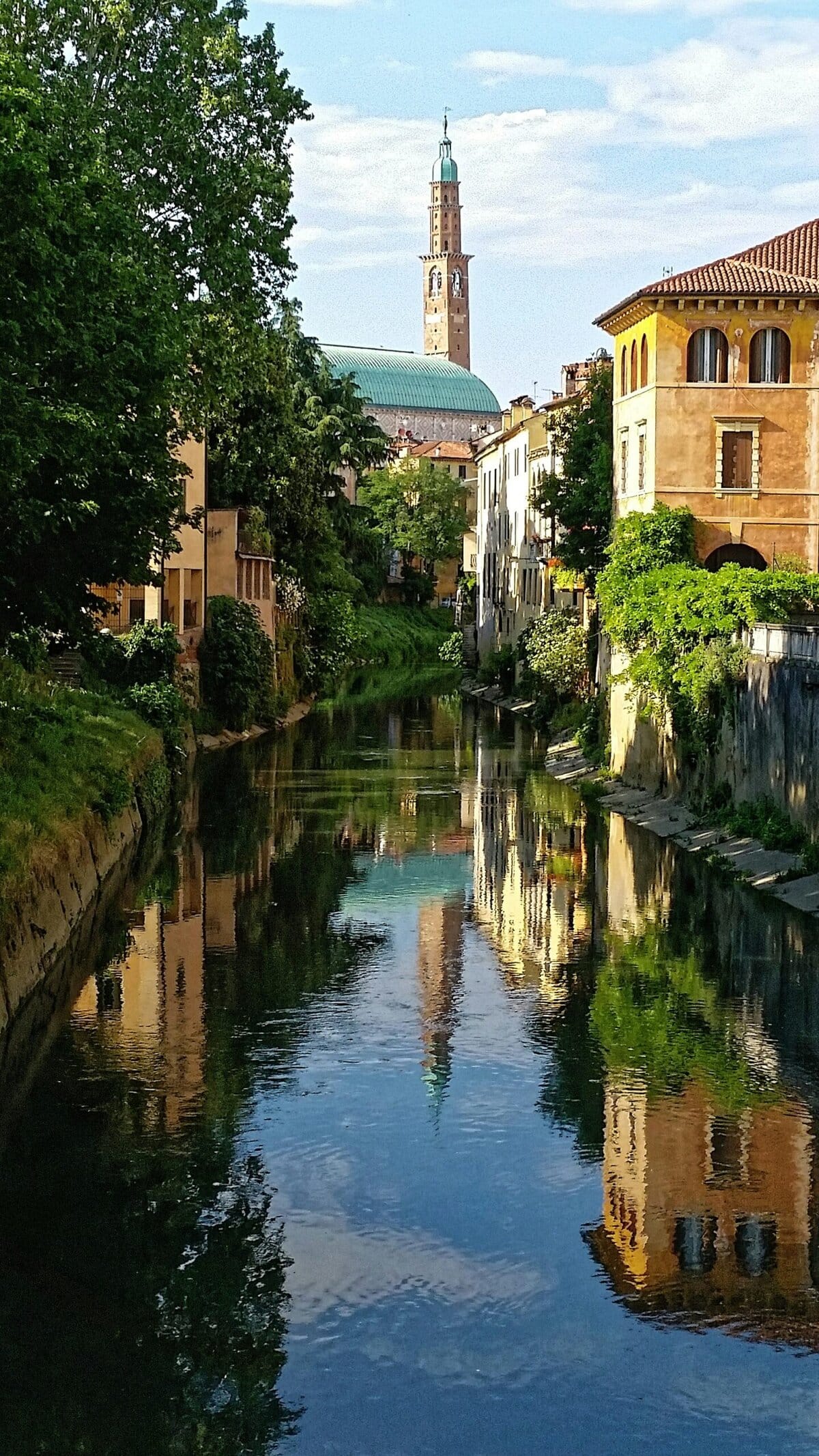
The Veneto region offers additional day trips: **Bassano del Grappa** (90km, picturesque town with covered bridge, grappa distilleries, ceramics, mountain access), **Vicenza** (60km, Palladio architecture UNESCO site including Teatro Olimpico and suburban villas), **Padova** (90km, university city with Giotto frescoes at Scrovegni Chapel and St. Anthony Basilica). These destinations suit those extending Verona stays beyond 3-4 days or specifically interested in architecture, art, or comprehensive Veneto exploration versus hitting only major highlights (Venice, Garda).
Arena di Verona Opera: Complete Ticket & Seating Guide
Attending Arena di Verona opera represents quintessential Verona Italy cultural experience—massive Roman amphitheater, warm summer evenings under stars, spectacular productions, and opera tradition dating 1913. Understanding ticketing, seating categories, and practical tips enables maximizing this unique experience while avoiding rookie mistakes creating discomfort or disappointment.
Opera Season Schedule & Productions
Arena opera season typically operates late June through early September (approximately 10-12 weeks) with 4-5 productions alternating throughout summer. Aida (Verdi’s Egyptian epic) performs most frequently as Arena tradition—massive scale suits outdoor amphitheater, processions and choruses create spectacle, and cultural familiarity enables first-timer appreciation without extensive opera knowledge. Other common productions include **Carmen**, **Nabucco**, **La Traviata**, **Tosca**, and occasionally less-known works. Performances begin 9pm (allowing sunset lighting transition), conclude 11:30pm-midnight. Season schedule published December-January for following summer, advance booking opening simultaneously.
Ticket Categories & Pricing
**Numbered Seats (Poltronissime, Poltrone)**: Individual assigned seats with backs, ranging €200-€300 (Poltronissime Gold, premium central location, perfect views) to €100-€200 (Poltrone, still numbered comfortable seats though slightly less central). These provide Arena’s most comfortable experience—reserved seating eliminating early arrival requirements, back support for 3+ hour performances, optimal views and acoustics. Premium pricing reflects comfort and convenience justified for special occasions, opera enthusiasts, or those prioritizing comfort over budget.
**Unnumbered Sections (Gradinata)**: Stone bench seating without backs or assignments, tiered pricing €25-€60 depending on section height and centrality. These create accessible Arena experiences—dramatically lower costs versus numbered seats, though requiring stone bench tolerance, early arrival securing positions (gates open 2 hours before performance, seating first-come basis), and bringing cushions plus back support pillows. The trade-offs (discomfort, arrival timing) enable €25 opera experiences versus €200+ numbered seats—worthwhile for budget travelers, students, or those prioritizing attendance over optimal comfort.
**Availability**: Popular performances (Aida particularly, weekend performances, July-August peak season) sell out months ahead. Book 3-6 months advance for guaranteed availability and seat choice. Less popular operas and weeknight performances offer better last-minute availability and potential discounts. Official tickets through Arena di Verona website, authorized sellers, or Verona ticket office (Via Dietro Anfiteatro, near Arena). Avoid unofficial ticket sellers, “discount” websites potentially providing invalid tickets, and inflated secondary market prices unless official sources sold out justifying premiums.
Practical Opera Attendance Tips
**Seating**: Numbered seats require purchasing cushions (€5-7 from vendors outside Arena or bringing own) as even seats with backs have minimal padding. Unnumbered requires cushions plus back support pillows/folding chair backs creating tolerable 3-hour stone bench sitting. Clothing: Summer evening temperatures cool despite warm days—bring light jacket or pashmina. Evening starts warm but midnight conclusions require layers. Casual smart dress appropriate (no shorts or flip-flops though enforcement varies). Arrival timing: Numbered seats can arrive closer to performance start (30-45 minutes enabling dinner before opera). Unnumbered must arrive when gates open (2 hours before) securing acceptable positions—later arrival relegates to poor views or cramped spots.
**Food and drink**: Vendors sell sandwiches, snacks, wine (€8-15) inside Arena during intervals. Outside food permitted—many bring picnic dinners eaten during intervals. **Weather**: Performances proceed rain or shine—ponchos recommended if forecast threatens though summer rain less common. Extreme weather occasionally postpones but rarely cancels. **Language**: Operas performed Italian (original language) without subtitles/supertitles—read synopsis beforehand enabling following plot despite language barriers. Famous operas (Aida, Carmen) have simple plots manageable without detailed comprehension. **Photography**: Allowed without flash during performances—brings cameras for dramatic illuminated Arena shots, though focusing on experience over documentation recommended given setting’s immersive power.
Helicopter & Executive Transport from Verona
Despite Verona Italy’s romantic positioning, the city provides comprehensive executive transport services—helicopter charter, luxury chauffeurs, and corporate ground transport—serving business travelers, ultra-wealthy tourists, and those combining efficiency with luxury impossible via trains and buses.
Helicopter Charter Routes
Verona-Milan: 40 minutes (€8,000-12,000 per flight, 4-6 passengers), enabling morning Milan business meetings with afternoon Verona opera attendance or romantic weekend. Verona-Venice: 30 minutes (€6,000-10,000), creating practical same-day dual-city visits impossible via ground transport time constraints. Verona-Lake Como: 45 minutes (€10,000-15,000), connecting romantic Verona with luxury Como lakeside. Verona-Lake Garda: 15 minutes (€3,000-5,000), providing rapid lake access and dramatic aerial perspectives. Zurich-Verona: 90 minutes (€20,000-30,000), enabling Swiss-Italian executive connections or luxury multi-country tours.
Helicopter services launch from Verona Boscomantico heliport or coordinate hotel rooftop landings for properties with facilities. The aerial routes showcase dramatic Veneto plain, Alps, and lakes creating experiential value beyond pure transport efficiency. For comprehensive helicopter charter pricing and booking, see our detailed helicopter charter guide.
Executive Ground Transport
Luxury chauffeur services operate Mercedes S-Class, BMW 7-Series, Maserati, and armored vehicles from Verona to Milan, Venice, lakes, and throughout northern Italy. Daily rates: €400-700 depending on vehicle, distance, services. The chauffeurs provide professional drivers navigating complex Italian traffic, enable productive work during journeys, and deliver door-to-door convenience impossible via public transport. Wine tour private chauffeurs enable full-day Valpolicella exploration without designated driver limitations—visit multiple wineries, enjoy tastings fully, return safely to Verona accommodations (€300-500 daily including guide services). For detailed chauffeur options, see our comprehensive executive chauffeur service guide.
T. Selin Erkan
Verona Romance Travel: Proposals, Weddings & Couples
Verona Italy’s Romeo and Juliet association naturally positions the city as romantic destination—couples worldwide choose Verona for proposals, honeymoons, anniversary celebrations, and romantic getaways. Understanding romantic tourism infrastructure and special services enables maximizing Verona’s love-focused appeal.
Proposals in Verona
Popular proposal locations include: **Juliet’s Balcony** (though crowded daytime, after-hours private access arranged through Casa di Giulietta for fee enables exclusive romantic moment), **Castel San Pietro viewpoint** (hilltop above Teatro Romano providing sunset Verona panoramas, accessible via stairs or funicular), **Castelvecchio Bridge** (fortified bridge at sunset creates dramatic backdrop), **private gondola Adige River** (Venice-style gondolas operate Verona’s river offering unique proposal setting). Professional photographers specialize in proposal documentation (€300-600 packages including hidden positioning, surprise capture, romantic location coordination).
Weddings in Verona
Verona hosts destination weddings capitalizing on Romeo and Juliet romantic associations. Civil ceremonies occur at **Palazzo Barbieri** (city hall) or **Juliet’s Tomb** (atmospheric crypt venue €500-1,000 venue fees). Religious ceremonies require Catholic church coordination (various Verona churches accommodate foreign weddings with advance planning). Reception venues include historic palazzos, Valpolicella villa estates, and upscale hotels. Total Verona wedding costs €15,000-50,000 for 80-150 guests including venue, catering, photography, planning, flowers, music, and guest accommodation—less expensive than northern European or US weddings while providing Italian romantic setting and quality cuisine. Specialized wedding planners coordinate complex logistics including legal requirements for foreign marriages in Italy, vendor management, and guest transportation.
Romantic Couples Activities
Beyond Juliet’s Balcony photos, romantic Verona experiences include: **sunset Adige River walks** (traffic-free riverside paths create atmospheric evening strolls), **wine tasting courses** (learning together about Valpolicella and Amarone), **cooking classes** (hands-on pasta making with romantic partner plus dinner enjoying creations), **Arena opera attendance** (ultimate romantic Verona date), **couples spa treatments** (luxury hotels offer packages), and **romantic dinners** at candlelit trattorias throughout historic center. The city’s compact walkability, atmospheric medieval streets, and limited car traffic create naturally romantic ambiance beyond manufactured couples activities—simply wandering Verona hand-in-hand delivers authentic romantic experiences justifying the city’s love-focused reputation.
Costs & Budgeting for Verona Italy
Verona Italy costs run 20-40% below Venice for equivalent quality, moderately below Milan, and comparable to Florence, positioning Verona as mid-range Italian destination balancing value with quality. Understanding realistic budget requirements enables appropriate financial planning.
Accommodation Costs
Romantic luxury: €250-500 doubles (Due Torri, other five-star boutiques). Romantic mid-range: €120-220 doubles (Accademia, similar historic properties). Business/practical four-star: €100-180 doubles. Budget: €50-90 doubles. Weekly accommodation (6 nights couple): €1,500-3,000 romantic luxury, €720-1,320 mid-range, €600-1,080 practical, €300-540 budget. Arena opera season and summer weekends command 20-40% premiums versus shoulder seasons (April-May, September-October) and midweek.
Dining & Food Costs
Restaurant lunch: €15-30 per person. Dinner mid-range: €25-50 per person. Upscale traditional: €40-75 per person. Pizza: €8-15. Gelato: €3-5. Coffee bar: €1.20-1.50, table €3-6. Aperitivo: €8-12 including snacks. Supermarket self-catering: €15-25 daily for two. Weekly meal costs: €300-500 per person restaurant dining, €100-150 additional snacks/wine/coffee.
Activities & Transport Costs
Arena opera tickets: €25-€300 depending on seating. Juliet’s House: €6. Castelvecchio Museum: €6. Torre dei Lamberti: €8. Churches: €3 each or €6 combined pass. Wine tour half-day: €80-150. Train Verona-Venice: €36-70 round-trip couple. Train Verona-Milan: €40-80 couple. Valpolicella wine tour: €150-250.
Total Verona Week Budget Examples
Budget Conscious (Budget Hotel, Self-Catering Mix, Free Activities)
– Budget hotel (6 nights): €360 (couple, €180 each)
– Meals mix restaurants/self-catering: €600 (couple, €300 each)
– Transport/basic activities: €100 (couple, €50 each)
– Arena opera unnumbered seats: €50 (couple, €25 each)
Total: €555 (~USD 610) per person
Comfortable Mid-Range (Historic Hotel, Restaurants, Activities)
– Mid-range romantic hotel (6 nights): €1,000 (couple, €500 each)
– Restaurant dining: €1,000 (couple, €500 each)
– Activities/museums: €120 (couple, €60 each)
– Arena opera poltrone seats: €400 (couple, €200 each)
– Wine tour: €300 (couple, €150 each)
Total: €1,410 (~USD 1,550) per person
Romantic Luxury (Five-Star, Fine Dining, Premium Experiences)
– Due Torri hotel (6 nights): €2,400 (couple, €1,200 each)
– Fine dining & wine: €1,600 (couple, €800 each)
– Arena poltronissime opera: €600 (couple, €300 each)
– Private wine tour helicopter: €5,000 (couple, €2,500 each)
– Activities/extras: €400 (couple, €200 each)
Total: €5,000 (~USD 5,500) per person
Practical Tips for Verona Italy
How Long to Spend in Verona
Minimum 2-3 days covers Verona highlights: Romeo and Juliet sites (half-day), Arena and historic center (full day), Castelvecchio (half-day), plus atmospheric wandering and meals. Adding Arena opera (evening), wine tour (full-day), and leisurely pace justifies 4-5 days. Using Verona as base for Venice or Lake Garda day trips extends to 6-7 days. Most visitors find 3-4 days providing comprehensive yet unhurried Verona experience balancing sightseeing, atmosphere absorption, and avoiding exhaustion from over-scheduled itineraries.
Best Time to Visit Verona Italy
**Opera season (late June-early September)** delivers Arena’s legendary performances but commands premium pricing (30-50% hotel increases), maximum crowds, and hot weather (28-35°C). **Spring (April-May)** provides optimal balance—mild weather (15-25°C), moderate crowds, reasonable rates, and full services. **Fall (September-October)** offers similar advantages with warm weather, fewer tourists than summer, wine harvest atmosphere. **Winter (November-March)** brings lowest rates and minimal crowds but potential gray weather and reduced outdoor appeal—suitable for budget travelers, opera off-season explorers, or those combining with winter sports in nearby mountains.
Verona vs Venice: Which to Choose?
Choose Verona for: Romeo and Juliet interest, Arena opera attendance, wine tourism (Valpolicella), authentic Italian city atmosphere, lower costs (30-50% below Venice), easy navigation (compact walkable historic center), and using as base for northern Italy exploration. Choose Venice for: unique water-city experience impossible elsewhere, grand canal and gondola riding, St. Mark’s and Doge’s Palace, island-hopping (Murano, Burano), and accepting premium costs for once-in-lifetime experiences justifying expenses. Many visitors combine both—Venice 2-3 days plus Verona 2-3 days creating comprehensive Veneto experience balancing Venice’s unique character with Verona’s authenticity and value.
Frequently Asked Questions: Verona Italy
Is Verona Italy worth visiting?
Absolutely yes, particularly for: romantic travelers (Romeo and Juliet pilgrimage, couples atmosphere), opera enthusiasts (Arena legendary summer season), wine lovers (Valpolicella-Amarone tours), cultural tourists (UNESCO heritage, Roman-medieval architecture), and those seeking authentic mid-size Italian cities avoiding Venice’s overwhelming tourism. However, Verona appeals less to: those uninterested in Romeo and Juliet or opera (primary draws), beach seekers (landlocked), or travelers who’ve exhausted Italian city tourism after Florence-Rome-Venice. Assess whether Verona’s specific strengths—romantic atmosphere, Arena opera, wine region, strategic positioning—align with your interests and Italian travel priorities.
How many days do you need in Verona Italy?
Verona Italy requires 2-3 days minimum for city highlights: Romeo and Juliet sites (Casa di Giulietta, tomb, historic center, 4-6 hours), Arena di Verona and Piazza Bra (2-3 hours), Castelvecchio (2 hours), historic center wandering (Piazza delle Erbe, churches, bridges, 3-4 hours), plus meals and atmosphere absorption. Adding Arena opera evening (+1 evening), Valpolicella wine tour (+1 day), leisurely pace without rushed schedules justifies 4-5 days. Using Verona as base for Venice or Lake Garda day trips extends to 6-7 days creating comprehensive Veneto exploration. Most visitors find 3 days providing satisfying Verona experience balancing major attractions with atmospheric enjoyment.
Where is Juliet’s balcony in Verona Italy?
Juliet’s balcony (Casa di Giulietta) sits at Via Cappello 23 in Verona historic center, 5-minute walk from Piazza delle Erbe. The 13th-century building operates as museum with famous balcony accessible via museum admission (€6) or viewable from courtyard (free access). The balcony itself was added 1930s to satisfy tourist expectations despite no historical proof connecting property to Capulet family or Romeo and Juliet story. Nonetheless, the site attracts millions annually making it Verona’s most-visited attraction. Expect crowds peak season (July-August, 10am-5pm)—early morning or late afternoon visits provide better experiences. Official website: Casa di Giulietta.
Can you visit Verona from Milan as a day trip?
Yes. Milan-Verona high-speed trains require 60-90 minutes (€20-40 round-trip, hourly departures) enabling practical day trips. The journey allows 6-8 hours Verona time covering main highlights: Juliet’s balcony, Arena di Verona exterior, Piazza delle Erbe, Castelvecchio, basic historic center wandering, plus meals. However, day trips miss evening atmosphere, Arena opera attendance (performances begin 9pm), and leisurely pace enabling full Verona appreciation. Consider reverse strategy—base affordable Verona hotels (€100-180 versus Milan’s €200-400), day-trip to Milan for culture/shopping, sleep in romantic atmospheric Verona.
Is Verona better than Venice?
“Better” depends on priorities. Verona advantages: authentic Italian city atmosphere versus Venice museum-city, 30-50% lower costs (hotels, dining, activities), easier navigation (compact walkable historic center versus water-taxi complexity), Romeo and Juliet romantic focus, Arena opera, wine tourism, and using as budget base for Venice day trips. Venice advantages: unique water-city experience impossible anywhere else, grand canal and gondolas, St. Mark’s and Doge’s Palace architectural splendor, romantic canal atmosphere, and once-in-lifetime uniqueness justifying premium costs. For budget travelers, authentic Italian life seekers, opera/wine enthusiasts, or Romeo and Juliet fans, Verona often provides superior value and satisfaction. For those specifically wanting water-city uniqueness, Venice’s drawbacks become acceptable trade-offs for unmatched character.
How much are Arena di Verona opera tickets?
Arena di Verona opera tickets range €25-€300 depending on seating category. Numbered seats with backs: Poltronissime Gold (premium central) €200-€300, Poltrone (comfortable numbered seats) €100-€200. Unnumbered stone benches: Gradinata sections €25-€60 depending on section and centrality. Popular performances (Aida, weekends, July-August) sell out months ahead requiring 3-6 months advance booking. Less popular operas offer better last-minute availability and potential discounts. Buy official tickets through Arena di Verona website, avoid unofficial sellers and inflated secondary markets unless official channels sold out justifying premiums.
What wine is Verona famous for?
Verona Italy’s Valpolicella region produces Amarone della Valpolicella DOCG—prestigious powerful dry red wine made from dried grapes (appassimento method) creating 15-16% alcohol, rich intense character, and €30-200+ bottle prices ranking among Italy’s most expensive wines. Valpolicella Ripasso provides more accessible option—regular Valpolicella refermented on Amarone grape skins adding complexity at fraction of cost (€15-30). Recioto della Valpolicella DOCG produces sweet dessert wine from same dried grape process. East of Verona, Soave region produces crisp mineral white wines from Garganega grapes (€8-25). Wine tours from Verona enable exploring Valpolicella vineyards, tasting Amarone at source, and understanding distinctive production methods.
Can you do Lake Garda from Verona as a day trip?
Yes, easily. Lake Garda’s southern shore sits 30 kilometers west (30-40 minute drive, 40-60 minute train to Peschiera or Desenzano). The proximity enables comfortable day trips visiting Garda resort towns (Sirmione medieval castle, Bardolino wine town, Lazise harbor), swimming summer season, boat trips, and Mediterranean lakeside atmosphere. Full-day excursions provide comprehensive Garda experience, half-days enable sampling largest Italian lake without entire day commitment. Many travelers split accommodations—3 nights Verona (culture, opera, wine tours) plus 2 nights Lake Garda (resort relaxation, lake activities)—creating varied Veneto experience versus concentrating all nights single location.

Conclusion: Experiencing Verona’s Romantic & Cultural Richness
Verona Italy rewards travelers who appreciate its dual character—romantic destination capitalizing on Romeo and Juliet literary associations, combined with substantial cultural depth through Arena di Verona opera, UNESCO historic center, Valpolicella wine region, and authentic Italian city life beyond pure tourism. Success requires approaching Verona both as romantic experience (embracing couples atmosphere, atmospheric wandering, opera attendance) and cultural destination (appreciating Roman-medieval-Venetian heritage, wine tourism, strategic positioning enabling Venice and lakes exploration).
The combination of accessibility (90 minutes from Milan or Venice), comprehensive romantic infrastructure (couples hotels, atmospheric restaurants, proposal services, wedding venues), Arena opera legendary status, wine tourism proximity, and authentic Italian character creates Verona’s unique positioning. Whether seeking Romeo and Juliet pilgrimage, attending Arena summer opera season, exploring Valpolicella-Amarone wine regions, using as Venice alternative or northern Italy base, or simply experiencing sophisticated mid-size Italian city, Verona delivers quality experiences balancing tourist infrastructure with genuine Italian life impossible in over-touristed destinations.
Book accommodation considering romantic priorities versus budget constraints—mid-range historic boutiques (€120-220) provide optimal atmosphere-value balance for most romantic travelers. Reserve Arena opera tickets 3-6 months ahead for popular performances and preferred seating. Consider shoulder seasons (April-May, September-October) for optimal weather-crowds-pricing balance versus summer opera season premiums. Plan Valpolicella wine tours enabling Amarone appreciation at source. Above all, embrace Verona’s romantic atmosphere—regardless of Romeo and Juliet’s fictional status, the city’s beauty, Arena spectacle, wine culture, and couples-focused ambiance create authentic romantic experiences justifying the love-focused reputation. Benvenuti a Verona—welcome to the city of Romeo and Juliet.
Related Guides: