



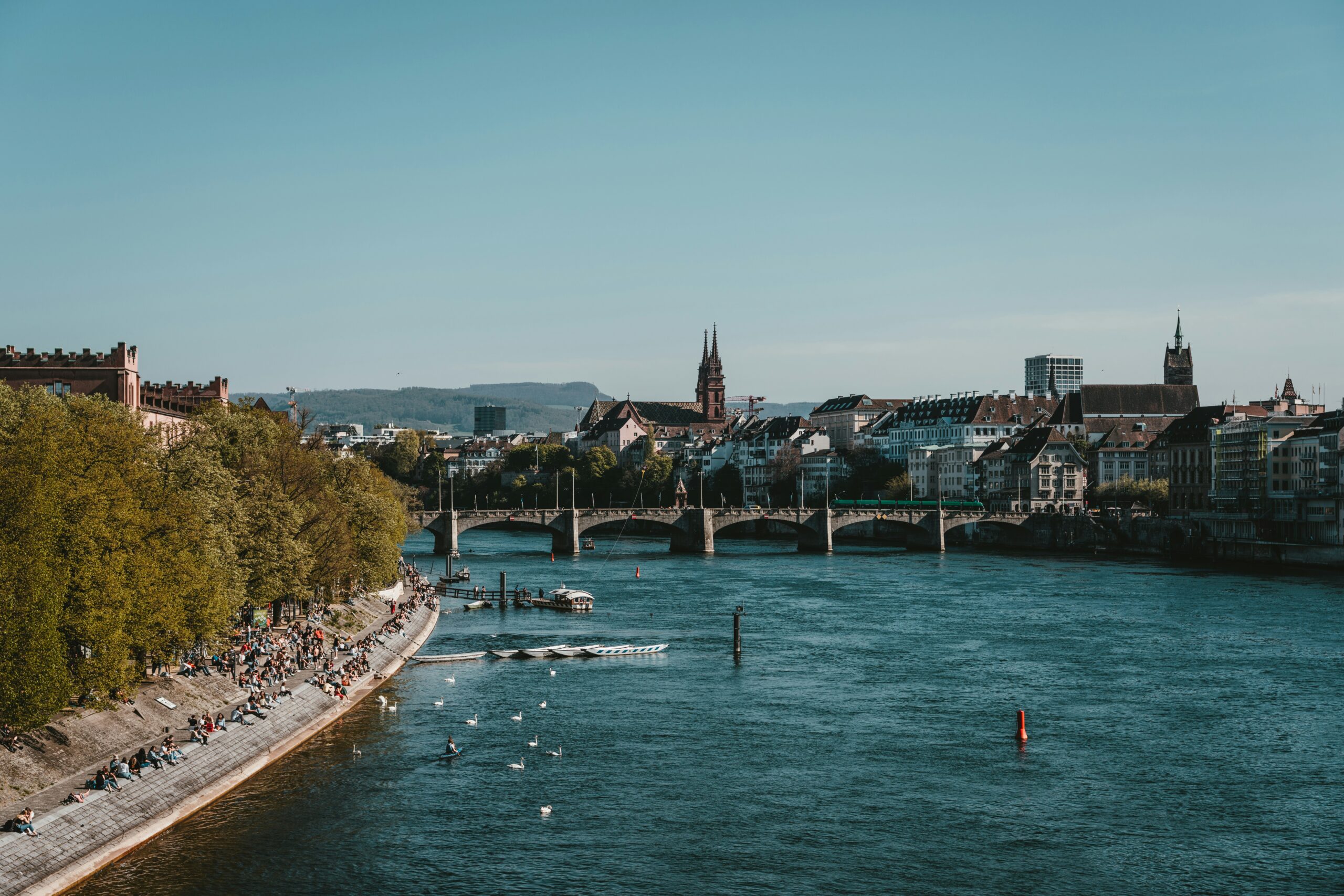
Basel Switzerland occupies unique position as Switzerland’s tri-country city, where Swiss, German, and French borders converge at the Rhine River. This sophisticated cultural capital of 180,000 hosts Art Basel—the world’s premier contemporary art fair attracting ultra-wealthy collectors, gallery owners, and cultural elite each June. The city combines medieval old town character, world-class museums (40+ institutions including Fondation Beyeler and Kunstmuseum), and global pharmaceutical headquarters (Roche, Novartis) creating distinctive blend of culture, commerce, and strategic European positioning impossible to replicate elsewhere in Switzerland.
For art collectors and cultural enthusiasts attending Art Basel or exploring museum-quality collections, pharmaceutical executives conducting business at Roche or Novartis, business travelers requiring tri-country access to Switzerland-Germany-France, and sophisticated travelers seeking Switzerland’s most culturally rich city, Basel Switzerland delivers exceptional experiences combining Swiss quality with German efficiency and French cultural sensibility. The Rhine River flowing through the city center creates transportation corridor connecting Basel to German and Dutch industrial regions, while the EuroAirport serves all three countries with single facility straddling Swiss-French border.
This comprehensive guide provides essential intelligence for planning Basel Switzerland visits in 2026, covering tri-country transport logistics including EuroAirport access, navigating between Switzerland-Germany-France, Art Basel and museum scene, pharmaceutical business infrastructure, medieval old town exploration, Rhine River culture, luxury hotels, French-German-Swiss dining, day trips to Alsace and Black Forest, costs and budgeting, and practical tips for experiencing Switzerland’s cultural capital. Whether visiting for Art Basel, pharma business, or discovering Switzerland’s most European city, this guide delivers actionable information for successful Basel experiences.
For official Basel information and events, visit Basel Tourism. Art Basel details appear on Art Basel official site.
Basel Switzerland at a Glance
- Location: Northwestern Switzerland, tri-country border
- Population: 180,000 (city), 550,000 (metro area)
- Languages: German (official), French, English widely spoken
- River: Rhine River (flows through city center)
- Borders: Germany (east), France (west)
- Airport: EuroAirport Basel-Mulhouse-Freiburg (4km)
- Claim to Fame: Art Basel, pharmaceutical capital
- Distance Zurich: 85km / 55min train
- Distance Geneva: 260km / 2h50 train
- Museums: 40+ world-class institutions
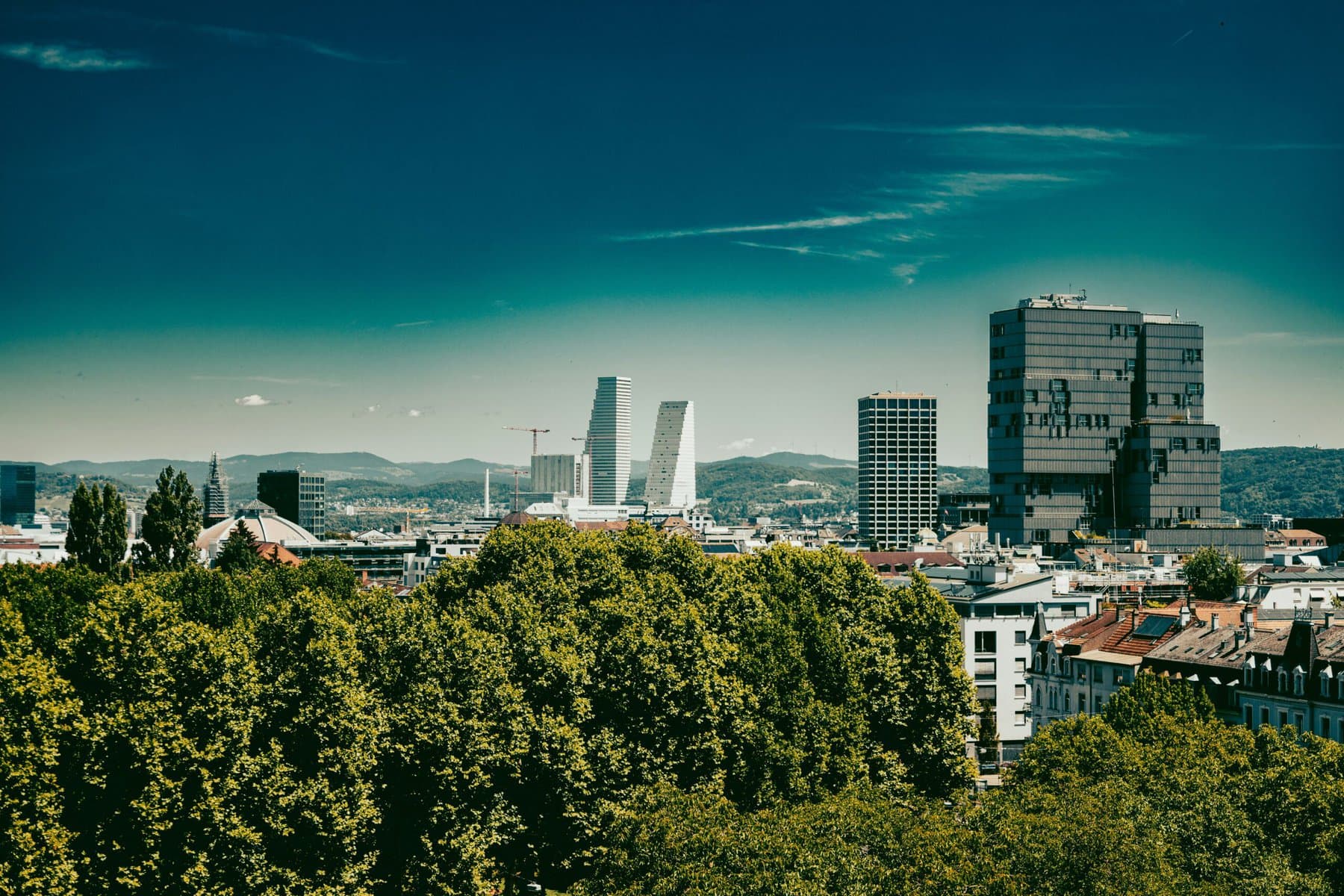
Table of Contents
- Basel Switzerland Overview
- Getting to Basel: EuroAirport & Trains
- Tri-Country: Switzerland-Germany-France
- Art Basel & Museums
- Pharmaceutical Capital: Roche & Novartis
- Medieval Old Town & Basel Minster
- Rhine River Culture
- Best Hotels in Basel
- Dining: Swiss-German-French Fusion
- Day Trips: Alsace, Black Forest, Jura
- Costs & Budgeting
- Frequently Asked Questions
Basel Switzerland Overview: The Tri-Country Cultural Capital
Basel Switzerland evolved as critical Rhine River crossing point where trade routes converged, creating wealth that built the medieval city and funded centuries of cultural patronage. The University of Basel, founded 1460, represents Switzerland’s oldest university and established intellectual traditions attracting humanist scholars including Erasmus. Today Basel operates as Switzerland’s third-largest city and cultural capital, hosting more museums per capita than any Swiss city and maintaining strong connections to neighboring Germany and France creating unique European hybrid character.
Why Basel Differs from Zurich & Geneva
Basel Switzerland occupies distinct position among major Swiss cities. Zurich dominates finance and German-Swiss business culture. Geneva specializes in international diplomacy and private banking with French-Swiss sophistication. Basel focuses on pharmaceutical industry, contemporary art, and tri-country European positioning. The German language and culture create closer affinity to Germany than to French Switzerland, while the border location enables seamless movement between three countries within minutes.
The city’s cultural emphasis—40+ museums, Art Basel, thriving gallery scene, architecture culture—exceeds Zurich’s business focus or Geneva’s diplomatic character. Basel’s pharmaceutical giants (Roche, Novartis employ 20,000+ locally) create science-focused business ecosystem versus Zurich’s banking or Geneva’s NGO concentration. The Rhine River provides different geographic identity from Lake Zurich or Lake Geneva—industrial waterway connecting to northern Europe versus contained alpine lakes. For comprehensive Zurich comparison, see our detailed Zurich Switzerland complete guide.
Swiss-German-French Hybrid Character
Basel Switzerland’s tri-country position creates cultural hybrid impossible elsewhere in Switzerland. The Swiss-German dialect (Baseldytsch) sounds closer to neighboring Alsatian German than to Zurich’s Züritüütsch. French influence appears in cuisine, wine culture (proximity to Alsace), and architectural styles. German efficiency manifests in punctual trains, organized systems, and business culture. This combination creates Basel’s distinct personality—Swiss reliability meeting German thoroughness with French cultural refinement.
The cross-border workforce includes 34,000+ French and German nationals commuting daily to Basel jobs, creating truly international urban area. Many Basel residents live in cheaper French or German suburbs, shop across borders for better prices, and navigate tri-country logistics routinely. The EuroAirport operates under tri-national treaty enabling access from all three countries. This integration creates Basel’s unique European character versus other Swiss cities’ more insular positioning.

Getting to Basel Switzerland: EuroAirport, Trains & Transport
Basel Switzerland benefits from excellent European transport connections via EuroAirport Basel-Mulhouse-Freiburg (unique tri-national airport), direct trains from Zurich and Frankfurt, and Rhine River water transport. Understanding access options including the unusual airport situation enables selecting appropriate methods for specific origins and priorities.
EuroAirport: The Tri-National Airport
EuroAirport Basel-Mulhouse-Freiburg (IATA codes: BSL/MLH/EAP) operates under unique tri-national treaty, sitting entirely on French territory but with Swiss and French sectors providing passport-free access to both countries. The airport serves 9+ million passengers annually with flights to 100+ destinations across Europe and select intercontinental routes (primarily Middle East via connecting hubs). Major carriers include easyJet (hub), Swiss International (Lufthansa group), and various European airlines.
The airport’s unusual structure enables exiting to either Switzerland or France without immigration checks (both Schengen Area). The Swiss sector connects directly to Basel Switzerland via frequent bus service (Bus 50, 15 minutes, CHF 4.50) or taxi (10 minutes, CHF 35-50). The French sector serves Mulhouse and Alsace region. Private aviation and business jet services operate from dedicated FBO facilities serving all three countries. For comprehensive private jet information, explore our detailed private jet charter guide.
EuroAirport pros include European connectivity and proximity to Basel (4km). However, limited intercontinental flights mean long-haul travelers often route through Zurich (85km, 55 minutes by train) or Frankfurt (Germany, 250km, 3 hours by train). The airport lacks train station—only bus connections—making Zurich sometimes more convenient despite greater distance when arriving from outside Europe.
Train Connections: Zurich & European Network
Basel Switzerland operates as major European rail hub with excellent connections throughout Switzerland and to neighboring countries. Zurich-Basel trains operate 4-6 times hourly requiring 55 minutes (CHF 60-80 round-trip first class). The route provides fastest Zurich Airport access for Basel visitors—total journey Zurich Airport to Basel city center: 70 minutes including airport-station connection. Book through SBB Swiss Railways.
International trains connect Basel to Frankfurt (Germany, 3 hours), Paris (3h 15min via TGV), Milan (4h 15min), and Amsterdam (overnight). Basel SBB station provides Swiss railways hub, while Basel Badischer Bahnhof (German railways station, operated by DB but on Swiss territory) serves German destinations including frequent service to Freiburg (Black Forest, 45 minutes). This dual-station system reflects Basel’s border position enabling optimal connections to both Swiss and German rail networks.
Drive to Basel from Zurich & Beyond
The 85-kilometer drive from Zurich to Basel Switzerland requires 60-75 minutes via A1/A2 motorways (Swiss motorway vignette CHF 40 required). The drive provides flexibility for exploring beyond Basel—Alsace wine routes (France), Black Forest (Germany), or Swiss countryside. However, Basel’s compact size, excellent public transport, and parking challenges (CHF 3-5 per hour, limited availability) make cars unnecessary for city visits. Most visitors parking at hotels leave vehicles stationary throughout Basel stays.
Executive Ground Transport from Zurich to Basel operates via luxury chauffeur services (CHF 400-600 one-way, Mercedes S-Class or similar). The 60-minute journey enables productive work while professional drivers navigate motorway and Basel’s complex street system. Some services accept cryptocurrency payment. For detailed chauffeur options, see our comprehensive Zurich chauffeur service guide.
Helicopter Charter: Rhine Corridor Access
Helicopter charter enables rapid movement along the Rhine corridor and access to neighboring regions. Zurich-Basel helicopter requires 25 minutes (CHF 6,000-10,000 per flight, 4-6 passengers). Basel-Strasbourg (France): 20 minutes. Basel-Freiburg (Germany): 15 minutes. Geneva-Basel: 40 minutes (CHF 10,000-15,000). These routes suit time-sensitive executives or those combining Basel with multiple European destinations. For comprehensive helicopter information, see our detailed helicopter charter price guide for Switzerland.
Within Basel: Efficient Public Transport
Basel Switzerland operates comprehensive tram and bus network (BVB/BLT) covering the city and cross-border suburbs. The system uses zones with single tickets CHF 3.80 (1 zone, sufficient for most city travel), day passes CHF 9. Trams operate high frequency (5-10 minutes) and Swiss punctuality. Hotel guest cards often include free public transport during stays. Taxis remain available but expensive (CHF 6.50 base plus CHF 3.80/km)—public transport proves more practical and economical for most journeys.

Tri-Country Experience: Switzerland-Germany-France Borders
Basel Switzerland’s tri-country position creates unique phenomenon—three countries accessible within minutes, enabling cross-border shopping, dining, and cultural experiences impossible elsewhere in Switzerland. Understanding the borders, practicalities, and opportunities enables maximizing this distinctive geographic situation.
Dreiländereck: The Tri-Country Monument
The Dreiländereck (Three Countries Corner) monument marks the point where Switzerland, Germany, and France meet on the Rhine River. Located in Basel’s harbor area, the monument consists of a pillar planted in the river, with observation platform accessible from the Swiss side. While the exact tri-point sits mid-river (inaccessible), the monument provides symbolic location and starting point for exploring the border region.
The area includes riverside walks, harbor facilities, and the Rhine ferry landing. Visitors can technically visit all three countries within minutes—standing on Swiss bank, crossing to German side via footbridge (passport not required, Schengen Area), and viewing French territory across the river. The monument attracts tourists for photos and symbolic “three countries” experience, though serious tri-country exploration requires venturing into actual German and French towns versus just standing at borders.
Crossing to Germany: Weil am Rhein
Weil am Rhein, Germany (population 30,000) sits immediately across the Rhine from Basel Switzerland, reachable via tram (15 minutes from Basel center) or 5-minute walk across the bridge. The German town provides different shopping options (lower prices than Switzerland, different product selection), dining alternatives, and access to German culture while maintaining Basel proximity.
The Vitra Campus in Weil am Rhein attracts architecture and design enthusiasts—furniture company headquarters featuring buildings by Frank Gehry, Zaha Hadid, Tadao Ando, and other architectural stars. The campus operates as open-air architecture museum with guided tours available (CHF 25-35 adults). The nearby Vitra Design Museum hosts rotating exhibitions on design, architecture, and contemporary culture. Combined with Basel’s architectural richness, the Vitra Campus creates comprehensive design destination.
Crossing to France: Alsace Region
The French Alsace region begins immediately west of Basel Switzerland, offering wine villages, half-timbered medieval towns, and French culinary traditions. Mulhouse (15 minutes by car, 30 minutes by train) provides French city character with automobile museums, textile heritage, and lower prices than Basel. Colmar (60km, 60 minutes drive) ranks among France’s most picturesque towns—perfectly preserved medieval center, wine routes access, and quintessential Alsatian atmosphere.
Day trips to Alsace wine routes enable discovering Riesling, Gewürztraminer, and Pinot Gris from hillside vineyards with German-French hybrid character. The villages—Riquewihr, Eguisheim, Kaysersberg—showcase half-timbered architecture, winding cobblestone streets, and wine tasting opportunities impossible in Switzerland. French prices (lower than Swiss) make Alsace dining and wine purchases attractive for Basel-based visitors willing to cross the border.
Practical Border Considerations
All three countries (Switzerland, Germany, France) belong to Schengen Area enabling passport-free movement—no border checks or immigration formalities required. However, practical considerations exist: Switzerland uses Swiss Franc (CHF), Germany and France use Euro (EUR). Currency exchange or multi-currency cards prove necessary. Swiss motorway requires vignette (CHF 40), while German autobahns remain toll-free and French autoroutes charge per-kilometer tolls.
Mobile phone roaming has improved since EU roaming reforms, though Switzerland (non-EU) creates potential charges—verify roaming plans before extensive cross-border mobile use. Shopping in Germany/France for Swiss residents requires customs declaration for significant purchases (CHF 300 limit per day duty-free). The practical differences remind visitors that despite open borders, three distinct countries with separate systems operate in immediate proximity.

Art Basel: World Premier Contemporary Art Fair & Museum Scene
Basel Switzerland claims title as art capital through Art Basel fair, 40+ museums including world-class institutions, vibrant contemporary gallery scene, and centuries-old tradition of cultural patronage. Understanding Basel’s art ecosystem proves essential for collectors, cultural enthusiasts, and anyone visiting during Art Basel week when the city transforms into global art marketplace.
Art Basel Fair: The Ultimate Art Market
Art Basel, held annually in June (2026 dates June 11-14 preview, June 15-21 public), represents contemporary art’s most prestigious marketplace. The fair attracts 280+ galleries from 35 countries displaying works by 4,000+ artists, with price ranges from CHF 5,000 emerging artist pieces to CHF 50+ million museum-quality masterworks. Attendance reaches 90,000+ including ultra-wealthy collectors, museum directors, curators, dealers, and art enthusiasts from worldwide.
The fair occupies Messe Basel convention center, organized into sectors: Galleries (established galleries showing established and mid-career artists), Unlimited (large-scale installations and sculptures), Feature (solo and two-artist presentations), Statements (emerging galleries and artists), Edition (limited editions and multiples), and various curated sections. VIP Preview days (June 11-14) require invitations through galleries or VIP services—these days see most major sales before public opening.
Art Basel generates extraordinary economic impact—hotel rooms book 12-18 months ahead at premium rates (300-500% normal), restaurants require reservations weeks prior, and the entire city operates on art schedule. Galleries, museums, and cultural institutions coordinate special exhibitions, events, and programming coinciding with Art Basel. Satellite fairs (Liste, Volta, Photo Basel) provide alternatives to main fair, creating week-long art immersion. Official tickets: CHF 60-80 per day, CHF 110 multi-day passes. Book through Art Basel website.
Fondation Beyeler: Switzerland’s Most-Visited Museum
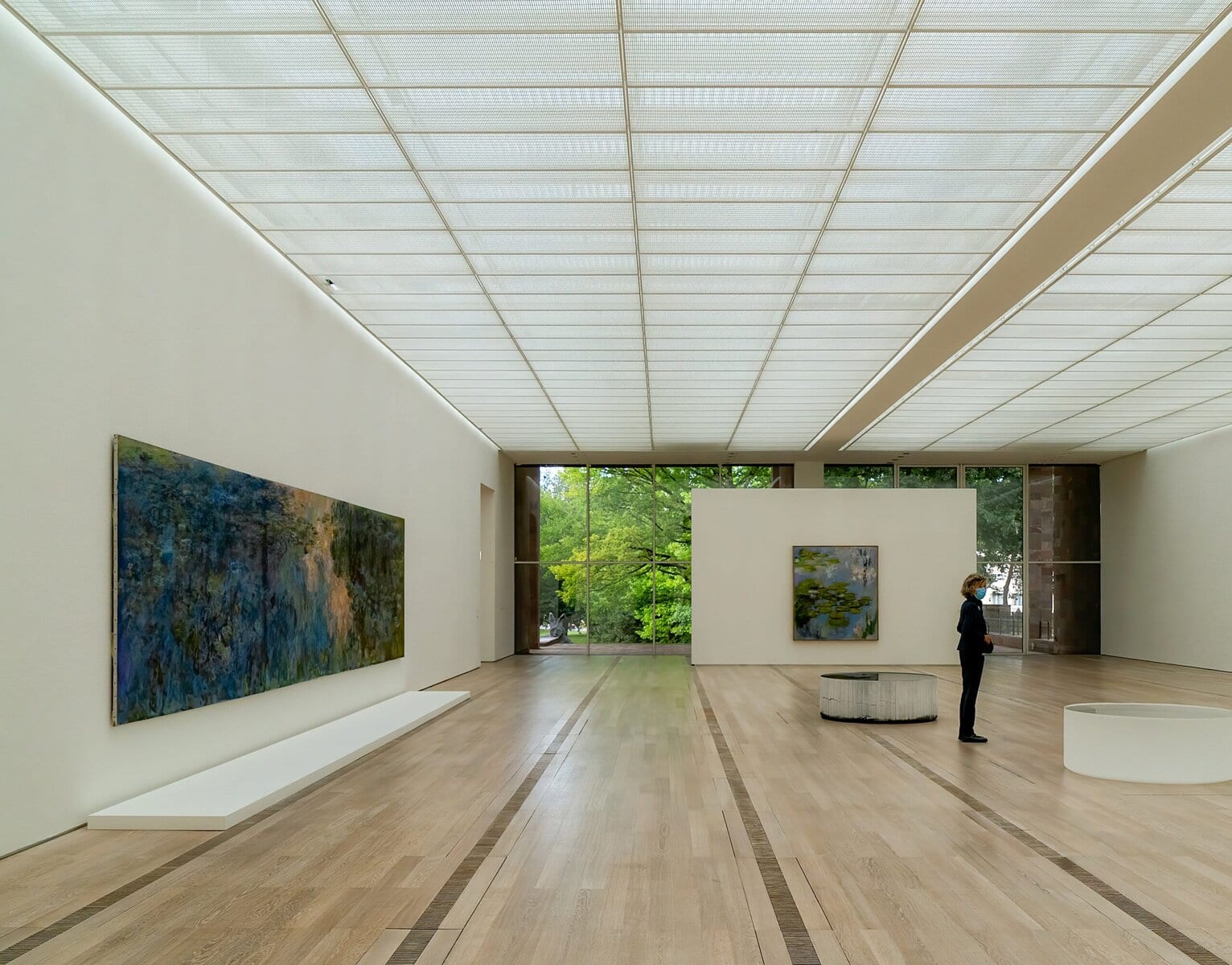
Fondation Beyeler, located in Riehen suburb (10 minutes from Basel center by tram), ranks as Switzerland’s most-visited art museum and one of Europe’s finest modern art collections. The museum showcases art collector couple Ernst and Hildy Beyeler’s collection including Monet, Cézanne, Picasso, Warhol, Rothko, and major 20th-century masters. The Renzo Piano-designed building integrates architecture with surrounding landscape and natural light, creating serene viewing environment.
The permanent collection emphasizes late 19th and 20th-century art, with rotating special exhibitions bringing international touring shows or thematic presentations. Recent exhibitions included major retrospectives on major artists and movements. The museum restaurant and garden provide lunch or coffee with cultural atmosphere (CHF 25-45 per person). Admission CHF 30 adults, CHF 20 students. Plan 2-3 hours for thorough visit. Open daily 10am-6pm (Wednesday until 8pm). Book tickets and check exhibitions at Fondation Beyeler.
Kunstmuseum Basel & Museum Quarter
Kunstmuseum Basel (Basel Art Museum) holds one of Europe’s oldest public art collections, with strengths in medieval art, Renaissance masters (Holbein), German Expressionism, and contemporary works. The main building occupies historic structure in city center, while the modern extension (opened 2016) provides contemporary gallery space. Combined admission CHF 20 adults provides access to all locations. The surrounding streets concentrate multiple museums creating cultural district enabling museum-hopping.
Other significant Basel museums include Schaulager (contemporary art storage/exhibition space, appointment required), Museum Tinguely (kinetic artist Jean Tinguely’s works in riverside building), Museum der Kulturen (ethnographic collection), and Vitra Design Museum (architecture/design, technically across border in German Weil am Rhein). Basel’s museum density enables weeks of cultural exploration for serious art enthusiasts, or selective visits for casual tourists.
Commercial Gallery Scene
Basel Switzerland maintains vibrant contemporary gallery ecosystem beyond Art Basel week—permanent galleries showing cutting-edge contemporary art, photography, sculpture, and emerging practices. The concentration includes international gallery branches (Gagosian, Hauser & Wirth, others) alongside local dealers. Gallery District around Totentanz and surrounding streets enables gallery-hopping similar to Chelsea in New York or Mayfair in London. Most galleries welcome visitors (free admission), with serious collectors encouraged to schedule appointments for extended viewings and conversations with dealers.
Pharmaceutical Capital: Roche, Novartis & Life Sciences Hub
Basel Switzerland operates as global pharmaceutical capital, hosting headquarters of Roche (world’s largest biotech company) and Novartis (top pharmaceutical firm), plus extensive related industries, research institutions, and service providers. The pharma concentration creates business ecosystem generating 15% of Basel’s economic output and employing 20,000+ locally. Understanding Basel’s pharmaceutical character proves relevant for business visitors, industry professionals, and anyone seeking to comprehend the city beyond cultural tourism.
Roche: Biotech Giant
F. Hoffmann-La Roche AG, founded Basel 1896, evolved into world’s largest biotech company with CHF 63+ billion annual revenue and 100,000+ employees globally. The Basel headquarters campus occupies prominent Rhine riverfront location, featuring distinctive office towers including Building 1 (Roche Tower, 178m, Switzerland’s tallest building completed 2015) designed by Herzog & de Meuron. The campus represents major Basel landmark visible throughout the city.
Roche specializes in pharmaceuticals (oncology, immunology, infectious diseases, ophthalmology, neuroscience) and diagnostics (laboratory equipment, tests, personalized healthcare). The company’s research drives significant medical advances while creating high-skilled employment and extensive business-to-business ecosystem supporting Basel’s prosperity. Roche campus tours occasionally operate for industry professionals or educational groups (advance coordination required through corporate communications).
Novartis: Pharmaceutical Innovation
Novartis AG, Basel-headquartered pharmaceutical company, employs 7,500+ locally and 110,000+ globally with CHF 50+ billion annual revenue. The Novartis Campus showcases architectural ambition—buildings designed by Frank Gehry, Alvaro Siza, SANAA, Diener & Diener, and other renowned architects creating campus-as-architecture-exhibition. The investment in design reflects corporate culture emphasizing innovation, aesthetics, and environment quality.
Novartis focuses on innovative medicines (cardiovascular, oncology, immunology, neuroscience, ophthalmology), generic medicines (Sandoz division), and eye care (Alcon division). The company’s presence alongside Roche creates pharmaceutical cluster generating synergies—specialized suppliers, research talent, regulatory expertise, and business services unavailable in locations lacking this concentration.
Pharma Business Ecosystem
Basel Switzerland’s pharmaceutical giants attract extensive related industries: contract research organizations, specialty chemical suppliers, laboratory equipment manufacturers, medical device companies, and professional services (legal, regulatory, clinical trials). The University of Basel and affiliated research institutions provide talent pipeline and collaboration opportunities. Regional governments (Swiss, German, French) coordinate to maintain pharmaceutical industry competitiveness through education, regulation, and infrastructure investment.
Business travelers engaging with Basel pharma ecosystem benefit from the city’s specialized infrastructure—hotels understanding pharma meeting requirements, convention facilities hosting medical conferences, specialized translators and interpreters, and discrete services catering to highly regulated industry requiring confidentiality. The pharma calendar influences Basel business patterns—major conferences and company meetings create demand spikes requiring advance hotel booking.

Olia Bondarenko
Medieval Old Town & Basel Minster
Basel Switzerland’s old town (Altstadt) preserves medieval character with cobblestone streets, guild houses, fountains, and the dominating red sandstone Basel Minster cathedral. The old town divides into Grossbasel (Greater Basel, south Rhine bank where city originated) and Kleinbasel (Lesser Basel, north bank developed later). Understanding old town geography and key landmarks enables atmospheric exploration of Basel’s historic core.
Basel Minster: Red Sandstone Cathedral
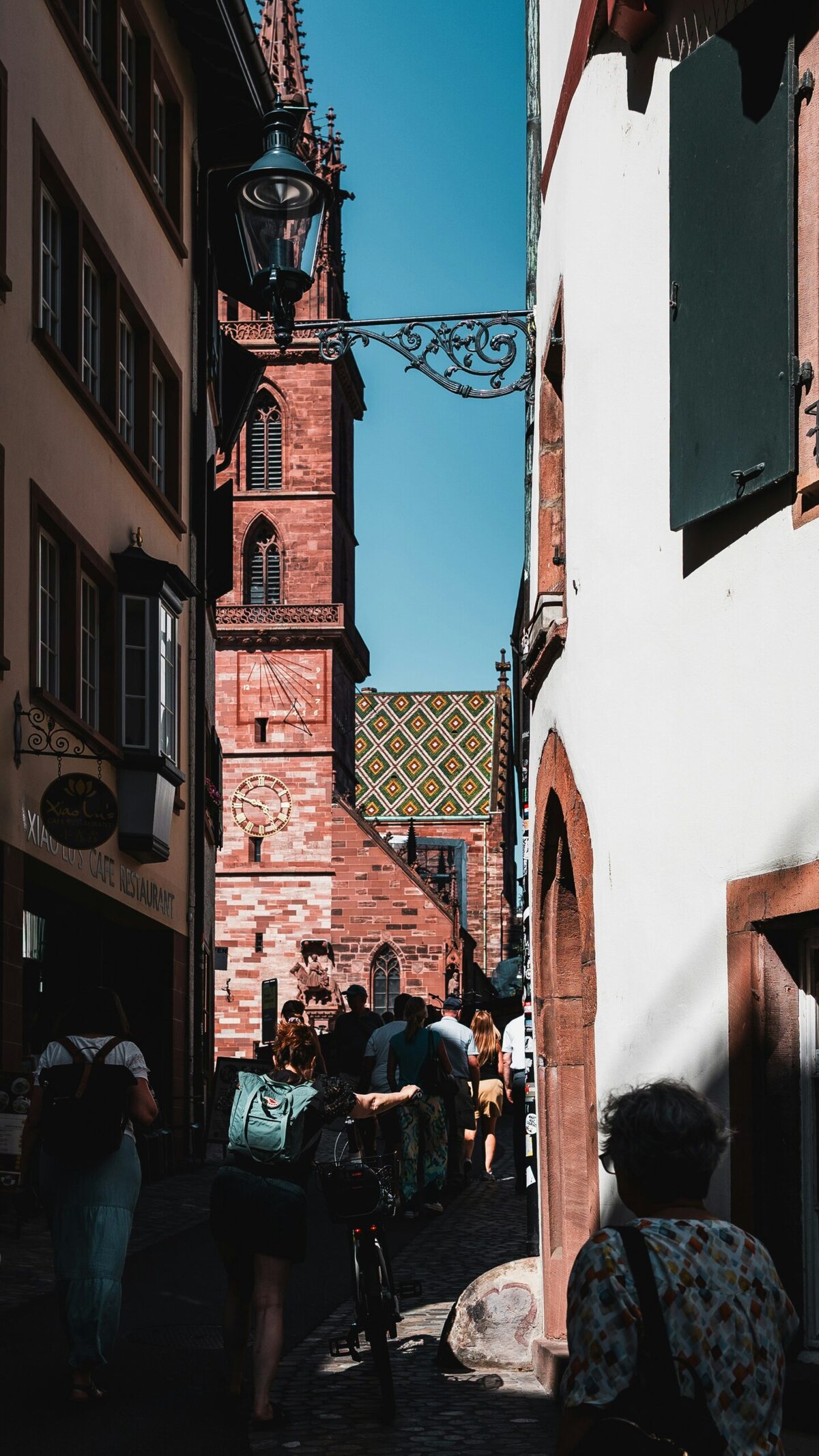
Basel Minster (Basler Münster), constructed red sandstone cathedral overlooking the Rhine, dominates the old town skyline. The Gothic building combines Romanesque foundations (11th century) with Gothic reconstruction following 1356 earthquake. Key features include elaborate main portal sculptures, red sandstone facade, twin towers (accessible via steep climb, CHF 5, panoramic views), and gothic cloister. The cathedral converted to Protestant during Reformation, creating simple interior emphasizing architecture over Catholic decorations.
The Münsterplatz (Cathedral Square) surrounding the church provides atmospheric space with regular markets, outdoor cafés, and views over Rhine River and Rhine valley. The square operates as old town social center where locals and tourists mix in democratic public space. Guided cathedral tours explain architectural and historical significance (various languages, CHF 15-20). The cathedral hosts concerts throughout the year showcasing the building’s excellent acoustics. Free admission to cathedral (donations appreciated), open daily with hours varying seasonally.
Marktplatz & Rathaus: City Center
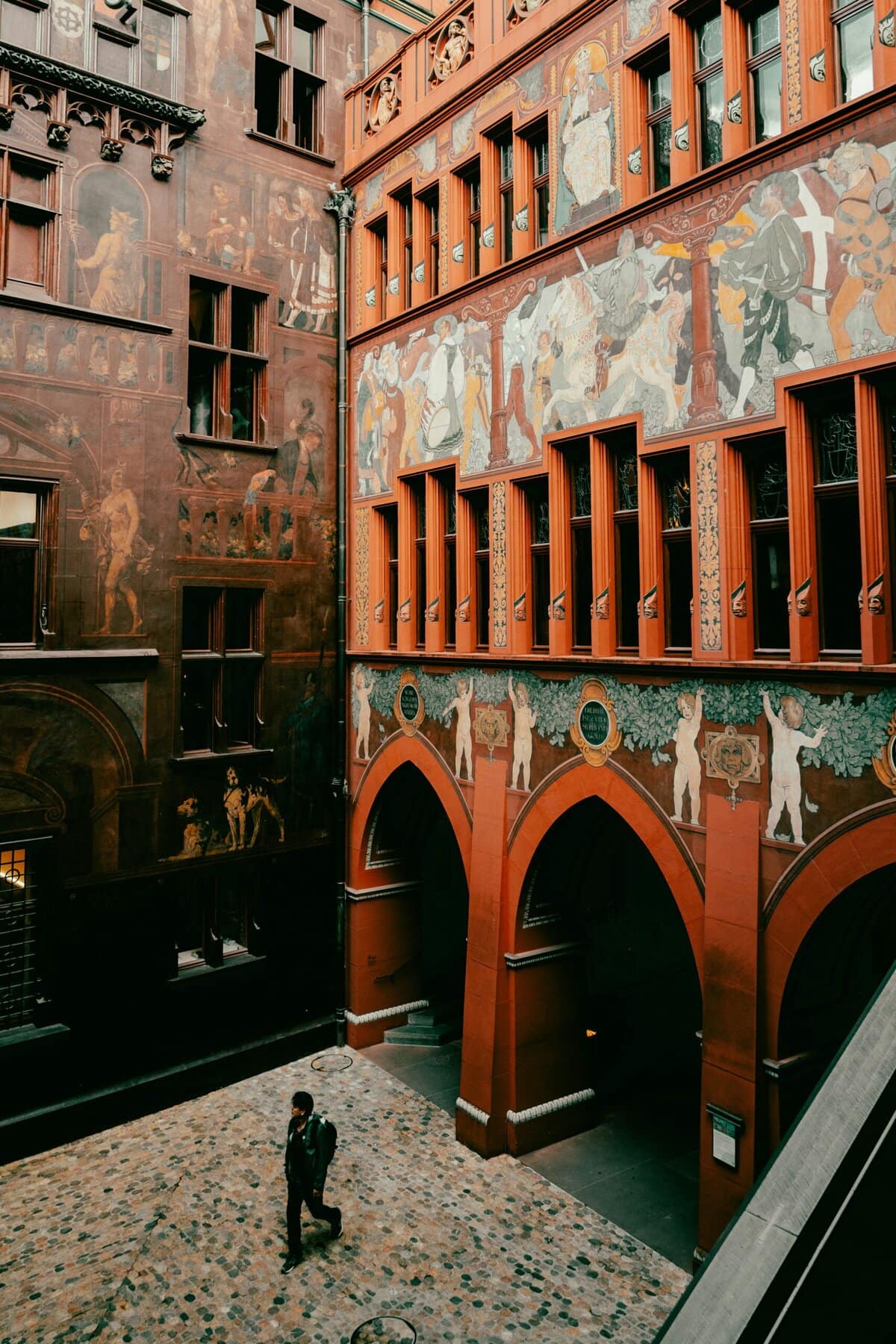
Marktplatz serves as Basel Switzerland’s main square, hosting daily markets (morning, Monday-Saturday) selling produce, flowers, cheese, and regional specialties. The square’s red sandstone Rathaus (Town Hall), built 1504-1514, features elaborate painted facade, gilded decorations, and distinctive tower creating iconic Basel landmark. The building houses cantonal government and welcomes visitors to inner courtyard (free access to courtyard, government chambers not publicly accessible).
The Marktplatz operates as Basel’s commercial and social heart—trams converge here, locals shop at market stalls, tourists photograph the Rathaus, and the square hosts events and demonstrations. The nearby shopping streets (Freie Strasse, Gerbergasse) provide pedestrian zones combining Swiss and international retailers in historic buildings. The old town’s compact size enables walking between major landmarks—Marktplatz to Basel Minster: 5 minutes, Marktplatz to Rhine: 3 minutes.
Old Town Walking & Hidden Corners
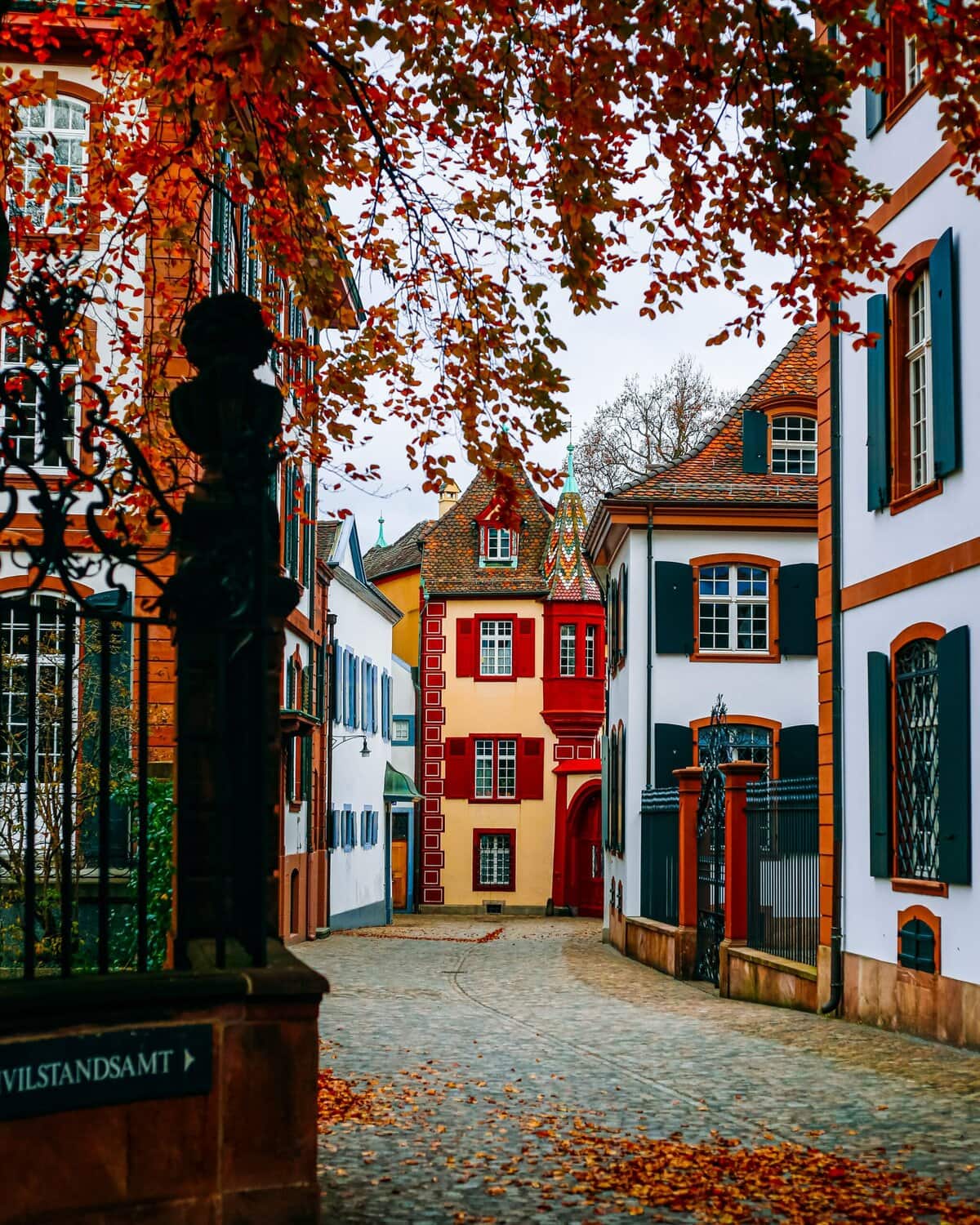
Basel’s old town rewards aimless wandering—narrow alleyways revealing unexpected courtyards, fountains around every corner (Basel claims 200+ public fountains), guild houses with painted facades, and atmospheric restaurants in medieval cellars. The Spalentor gate, medieval city gate from 1370, provides photo opportunity and connection to Basel’s fortification history. The atmospheric streets including Spalenberg (winding medieval street with boutiques and cafés) and Leonhardsberg (steep street climbing from Rhine to old town heights) showcase Basel’s topographic character built on hillside above river.
Allow minimum 2-3 hours for old town exploration including Basel Minster, Marktplatz, and wandering atmospheric streets. Morning visits enable experiencing market activity, afternoon brings fewer crowds, evening showcases illuminated buildings and lively restaurant scene. The old town operates as mostly pedestrian zone though some streets permit limited vehicle access—watch for trams and occasional delivery vehicles when walking.
Rhine River Culture & Swimming
The Rhine River flowing through Basel Switzerland creates defining geographic feature and cultural focal point. The river divides old town south bank (Grossbasel) from newer north bank (Kleinbasel), serves as industrial waterway connecting Basel to North Sea via Germany and Netherlands, and provides recreational resource for swimming, walking, and social gathering. Understanding Rhine culture enables experiencing Basel beyond museums and old town.
Rhine Swimming: Basel Summer Tradition
Rhine swimming (“Rheinschwimmen”) represents quintessential Basel summer activity—locals and visitors float downstream in the Rhine current carrying waterproof bags (Wickelfisch—literally “wrapped fish”) containing clothes and valuables. The tradition operates May-September when water temperatures reach tolerable levels (15-20°C—cold but manageable). Popular entry points include upstream old town locations with exit points downstream—typical float requires 15-30 minutes depending on current and distance.
The swimming requires competence—Rhine current flows 2-3 meters per second, river reaches 10+ meter depths mid-channel, and boat traffic (cargo barges) creates wake waves. However, thousands of Basel residents swim the Rhine regularly, creating democratic summer activity mixing students, families, business people cooling off during lunch breaks, and tourists seeking authentic Basel experience. Public changing areas exist at popular entry/exit points. The waterproof bags (CHF 15-25, available at sports shops and museums) have become Basel souvenirs—distinctive blue bags appearing worldwide as travelers share the tradition.
Rhine Ferry Crossings
Four traditional Rhine ferries operate between Grossbasel and Kleinbasel, providing atmospheric transport and Basel cultural experience. The ferries attach to overhead cables spanning the river, using Rhine current for propulsion—no motor, purely current-driven crossing angled to move ferry across while flowing downstream. The crossing requires 2-3 minutes, costs CHF 2 per person (or included in public transport tickets), operates year-round (weather permitting), and functions as legitimate transport versus pure tourist attraction.
The ferries represent Basel tradition dating centuries, originally providing sole Rhine crossings before bridges. Today they operate alongside modern bridges but maintain popularity for atmospheric crossing, photo opportunities, and simply enjoying Rhine and city views from water level. Ferry operators (traditionally families inheriting positions) maintain distinctive Basel character and conversational nature greeting regular passengers.
Rhine Promenades & Riverside Life
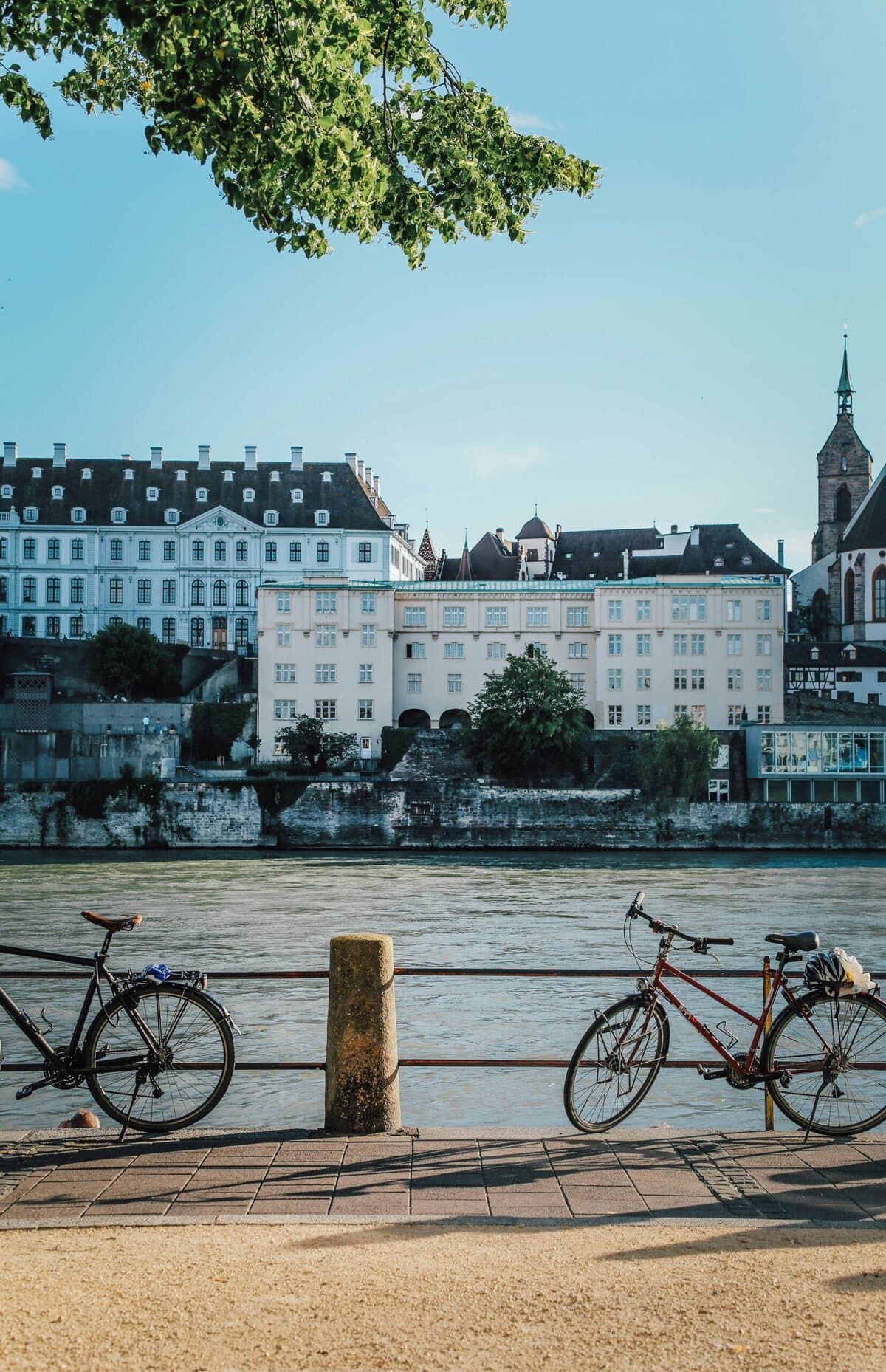
Both Rhine banks feature promenades enabling riverside walking, running, and cycling. The Grossbasel (south) side includes Rheinpromenade St. Alban and Schifflände with restaurants, bars, and cafés occupying buildings directly on river. The Kleinbasel (north) side provides longer continuous walking/cycling paths stretching kilometers upstream and downstream. Bars and restaurants with Rhine-view terraces create vibrant summertime scene—locals gather for after-work drinks, dinner with river views, and social atmosphere blending Basel residents with international visitors.
The riverside promenades operate as democratic public spaces where Basel’s economic stratification temporarily disappears—everyone enjoys the Rhine regardless of wealth. Summer evenings particularly showcase this character—families picnicking, students swimming, business people unwinding, and tourists absorbing atmosphere all sharing the riverbank. The Rhine provides Basel with natural amenity creating quality of life beyond what city infrastructure alone could deliver.
Best Hotels in Basel Switzerland
Basel Switzerland hotel scene emphasizes business hotels serving pharmaceutical executives and convention attendees, art-focused properties catering to Art Basel visitors, and historic grand hotels maintaining traditional standards. Understanding hotel positioning enables selecting accommodations matching specific purposes—Art Basel week, pharma business, or cultural tourism.
Les Trois Rois (The Three Kings): Grand Hotel on Rhine
Grand Hotel Les Trois Rois represents Basel Switzerland’s ultimate luxury address—historic hotel (origins 1681, current building 1844) occupying prime Rhine riverfront location. The 101-room property combines Belle Époque elegance with comprehensive modern five-star amenities including Michelin-starred restaurant (Cheval Blanc by Peter Knogl, three Michelin stars), spa, and impeccable service. The Rhine-view rooms and suites provide spectacular perspectives on river, bridges, and old town.
Rates range CHF 400-900 doubles (normal periods) to CHF 1,000-2,500+ (Art Basel week). The property attracts establishment wealth—art collectors during Art Basel, pharmaceutical executives, sophisticated travelers seeking Basel’s finest hospitality. The Trois Rois suits those prioritizing location, heritage, and comprehensive luxury willing to pay significant premiums particularly during Art Basel. Book well ahead for Art Basel week (12-18 months optimal). Reserve through Les Trois Rois.
Nomad Design & Lifestyle Hotel: Contemporary Urban
Nomad Basel delivers design-forward boutique hotel emphasizing contemporary aesthetics, curated art collection, and urban sophistication. The 61-room property occupies former bank building near train station, featuring bold interiors, restaurant focusing on regional cuisine, and cultural programming appealing to creative travelers. Rates range CHF 250-450 doubles, CHF 600-1,200 (Art Basel week). Nomad attracts younger luxury travelers (35-55), art enthusiasts, and those preferring design-conscious accommodation over traditional grand hotel formality.
Hotel Basel: Business-Focused Luxury
Hotel Basel (formerly Swissôtel Le Plaza) provides business hotel luxury near train station and convention center. The 238-room property emphasizes functionality, meeting facilities, professional services, and efficiency over heritage or design statements. Rates range CHF 200-400 doubles, CHF 500-900 (Art Basel/major conventions). Hotel Basel suits pharmaceutical executives, conference attendees, and business travelers prioritizing convenience and reliability over atmospheric character or Rhine views.
Hotel Krafft Basel: Boutique Riverside
Hotel Krafft occupies historic Rhine-side building combining boutique scale (60 rooms) with four-star comfort and excellent location. The property features river-view rooms, restaurant with Rhine terrace, and personal service distinguishing from larger business hotels. Rates range CHF 180-350 doubles, CHF 450-800 (Art Basel). Krafft provides reliable quality at more accessible pricing than Les Trois Rois, suiting travelers seeking Rhine location without five-star luxury premiums.
Art Basel Week Accommodation Strategy
Art Basel week (June) sees hotel rates increase 300-500% with minimum stays (4-7 nights) universally required. Book 12-18 months ahead for best availability and relatively lower rates (though still extreme). Alternative strategies: stay outside Basel in suburbs or German/French border towns (15-30 minutes commute), apartment rentals (CHF 300-800+ nightly for Art Basel week), or combining Basel with other Swiss cities making day trips for specific Art Basel events. The accommodation challenge represents single biggest obstacle for Art Basel visitors beyond wealthy collectors with permanent reservations.
Dining in Basel: Swiss-German-French Fusion
Basel Switzerland dining scene reflects tri-country influences combining Swiss quality, German heartiness, and French culinary sophistication. The concentration includes multiple Michelin-starred establishments, excellent traditional Swiss-German restaurants, and innovative contemporary dining. Understanding Basel’s culinary landscape enables memorable meals spanning budget levels and cuisine styles.
Michelin-Starred Excellence
Cheval Blanc by Peter Knogl (Les Trois Rois) holds three Michelin stars—Basel’s only three-star establishment and one of Switzerland’s finest restaurants. Chef Peter Knogl delivers creative French-influenced cuisine emphasizing seasonal ingredients, technical mastery, and refined service. Tasting menus CHF 345-425, wine pairings CHF 195-295 additional. The restaurant accommodates 34 guests creating intimate atmosphere. Reservations essential months ahead particularly during Art Basel. Dress: business formal or elegant evening wear.
Stucki Bruderholz holds two Michelin stars, serving modern European cuisine in villa setting on Basel’s outskirts. Chef Tanja Grandits emphasizes aromatic cuisine with distinctive spice combinations and artistic presentations. Tasting menu CHF 265, wine pairing CHF 160. Kunsthalle Basel Restaurant (one Michelin star) combines contemporary art museum setting with refined dining. Additional one-star establishments include several quality restaurants throughout Basel and surrounding region.
Traditional Basel Cuisine
Zum Isaak delivers authentic Basel specialties in atmospheric old town guild house setting. Signature Basel dishes include Basler Mehlsuppe (flour soup, traditional carnival dish), Zwibelwähe (onion tart), Basler Läckerli (spiced cookies), and Käsewähe (cheese tart). Prices CHF 30-60 per person. Restaurant Schlüsselzunft provides another excellent traditional option in historic guild building overlooking Rhine, emphasizing regional Swiss-German preparations and local wines. CHF 40-75 per person.
Basel cuisine reflects German influence—heartier, more meat-focused than French-Swiss cooking, with emphasis on sausages, pork, and potato preparations. The proximity to Alsace brings wine culture—Basel restaurants feature excellent selections from Alsatian producers alongside Swiss wines. Traditional Basel dishes appear on most menus though modern interpretations increasingly replace pure tradition.
Rhine-Side Dining & Contemporary Options
The Rhine promenades concentrate numerous restaurants with river-view terraces creating prime summer dining. Restaurant Chez Donati specializes in Italian cuisine with Rhine views. Noohn provides pan-Asian fusion in contemporary design setting. Volkshaus Basel delivers brasserie cuisine in renovated historic building with cultural programming (concerts, events) creating lively atmosphere.
The range spans casual (CHF 20-35 per person) to refined (CHF 50-90), with most establishments emphasizing seasonal ingredients, professional service, and reliable quality reflecting Swiss standards. Reservations advisable for dinner particularly weekends and Art Basel period when restaurants book weeks ahead.
Cross-Border Dining: Germany & France
Basel’s tri-country position enables exploring German and French dining across borders. German restaurants in Weil am Rhein provide traditional German cuisine (schnitzel, spätzle, hearty portions) at lower prices than Basel. French restaurants in nearby Alsace serve authentic French cooking—choucroute (sauerkraut with meats), tarte flambée (Alsatian pizza), and extensive wine lists featuring local Riesling and Gewürztraminer. The 15-minute journey to France or Germany transforms dining options and price points, creating unique tri-country culinary exploration impossible elsewhere in Switzerland.
Basil Minhaj
Day Trips from Basel Switzerland: Alsace, Black Forest & Beyond
Basel Switzerland’s tri-country position enables extensive day trip possibilities combining Swiss, French (Alsace), and German (Black Forest, Freiburg) destinations. Understanding options enables maximizing limited vacation time while experiencing regional diversity beyond Basel proper.
Colmar & Alsace Wine Route (France)
Colmar, France (60km south, 60 minutes drive or 90 minutes train-bus), ranks among France’s most picturesque towns with perfectly preserved medieval old town featuring half-timbered houses, canals, and flower-lined streets. The town provides gateway to Alsace wine route—hillside vineyards producing Riesling, Gewürztraminer, Pinot Gris, and Crémant sparkling wines. Day trips combine Colmar old town exploration with visits to nearby wine villages (Riquewihr, Eguisheim, Kaysersberg) offering tastings, atmospheric streets, and French wine culture.
Organized wine tours from Basel operate regularly (CHF 120-180 per person for full-day including transport, winery visits, lunch). Self-drive enables flexibility though designated drivers required. Train-bus combinations prove feasible but time-consuming versus direct car access. The French prices (lower than Swiss), wine quality, and atmospheric medieval towns create memorable excursions from Basel base.
Black Forest & Freiburg (Germany)
The Black Forest (Schwarzwald), Germany’s famous forested mountain region, begins immediately east of Basel Switzerland. Freiburg im Breisgau (60km northeast, 60 minutes drive or train) provides charming university city with medieval old town, cathedral, and gateway to Black Forest hiking and villages. Day trips enable experiencing German culture, forest landscapes, traditional villages with cuckoo clocks and Black Forest cake, and the contrast between German and Swiss character despite geographic proximity.
Driving enables accessing remote Black Forest areas, scenic routes, and flexible timing versus fixed train schedules. The Feldberg (1,493m, Black Forest’s highest peak) provides hiking, viewpoints, and year-round mountain activities. Titisee lake offers swimming, walking, and tourist infrastructure. The region’s traditional character, German gemütlichkeit (cozy atmosphere), and accessibility from Basel create popular excursions particularly for Germans and Swiss seeking forest atmosphere and German traditions.
Zurich: Swiss Financial Capital
Zurich, 85km east (55 minutes train), enables day trips for shopping at Bahnhofstrasse (Zurich’s luxury shopping street), museum visits (Kunsthaus, Swiss National Museum), or experiencing Switzerland’s largest city and financial capital. The frequent train service (4-6 hourly) makes Zurich practical for targeted activities—business meetings, specific shopping, museum exhibitions—versus attempting comprehensive Zurich exploration requiring multi-day stays. For comprehensive Zurich coverage, see our detailed Zurich Switzerland complete guide.
Lucerne & Central Switzerland
Lucerne, 100km southeast (75 minutes train), combines medieval covered bridges, lake setting, mountain access (Pilatus, Rigi), and quintessential Swiss postcard scenery. Day trips from Basel enable experiencing Central Switzerland’s Alpine beauty and traditional character, though the journey investment (2.5 hours round-trip train) suits those specifically motivated by Lucerne interest or combining with other Central Switzerland destinations.
Costs & Budgeting for Basel Switzerland
Basel Switzerland operates at Swiss price levels comparable to Zurich, though costs run 10-15% below Geneva due to less extreme luxury market. Understanding realistic budget requirements enables appropriate trip planning, with Art Basel week creating extraordinary cost multiplier affecting all categories.
Accommodation Costs
Normal periods: Five-star luxury (Les Trois Rois): CHF 400-900 doubles. Four-star business hotels: CHF 180-350 doubles. Budget/three-star: CHF 90-180 doubles. Art Basel week: All rates increase 300-500%—five-star CHF 1,500-3,000+, four-star CHF 600-1,200, budget CHF 300-600. Minimum stays 4-7 nights during Art Basel. Weekly accommodation (6 nights couple, normal periods): CHF 2,400-5,400 five-star, CHF 1,080-2,100 four-star, CHF 540-1,080 budget.
Dining & Entertainment
Restaurant lunch: CHF 18-45 per person. Dinner mid-range: CHF 35-75 per person. Michelin/fine dining: CHF 120-350 per person with wine. Rhine-side casual: CHF 25-50. Supermarket self-catering: CHF 25-40 daily for two. Weekly meal costs: CHF 350-600 per person restaurant dining, CHF 150-250 additional drinks/coffee/snacks. Art Basel week restaurant reservations require weeks advance notice; some establishments raise prices 20-30% during fair.
Transport & Activities
Train Zurich-Basel: CHF 120-160 round-trip couple first class. EuroAirport bus: CHF 9 round-trip. Basel public transport day pass: CHF 9. Art Basel tickets: CHF 60-110. Fondation Beyeler: CHF 30. Museum pass (CHF 30, includes 40+ museums for 1 day): excellent value for museum enthusiasts. Alsace wine tour: CHF 120-180. Helicopter Zurich-Basel: CHF 12,000-20,000 round-trip (aircraft, 4-6 passengers).
Total Basel Week Budget Examples
Moderate Comfort (Normal Period, Four-Star, Train)
– Train Zurich-Basel: CHF 160 (2 people)
– Four-star hotel (6 nights): CHF 1,500
– Meals (restaurants + some self-catering): CHF 1,200
– Transport/museums: CHF 400
Total: CHF 3,260 (~USD 3,700) couple
Art Basel Week (Five-Star)
– Train/transfer: CHF 200
– Les Trois Rois (6 nights): CHF 10,800
– Fine dining Art Basel week: CHF 2,400
– Art Basel VIP access: CHF 800
– Activities/events: CHF 1,000
Total: CHF 15,200 (~USD 17,100) couple
Frequently Asked Questions: Basel Switzerland
What does Basel Switzerland mean by tri-country?
Basel Switzerland sits at the point where Switzerland, Germany, and France meet, with the city’s suburbs extending into all three countries. The Rhine River forms part of the Switzerland-Germany border, while the western Basel suburbs reach into French Alsace. This unique geography enables visiting three countries within minutes—trams cross into Germany, 15-minute drives reach France, and the EuroAirport operates under tri-national treaty. The configuration creates Switzerland’s most European city with German and French influences shaping culture, dining, and character alongside Swiss traditions. No other Swiss city offers this immediate tri-country access.
When is Art Basel and how much do tickets cost?
Art Basel 2026 dates: VIP Preview June 11-14 (invitation-only through galleries or VIP services), Public days June 15-21. Tickets cost CHF 60-80 per day, CHF 110 for multi-day passes purchased online. VIP Preview access requires invitation or specialized VIP service packages (CHF 1,000-5,000+ including preview access, lounge access, guided tours, and exclusive events). The fair operates at Messe Basel convention center. Hotels require 12-18 months advance booking for Art Basel week at 300-500% normal rates with minimum stays 4-7 nights. Budget CHF 15,000-25,000+ couple for Art Basel week including accommodation, fair access, dining, and activities.
Can you visit Basel from Zurich as a day trip?
Yes. Zurich-Basel requires 55 minutes by train with 4-6 trains hourly (CHF 60-80 round-trip first class). The short journey and frequent service make Basel practical for day trips targeting specific activities—museum visits, old town exploration, Rhine swimming (summer), or business meetings. However, comprehensive Basel exploration including museums, old town, Rhine culture, and potentially cross-border excursions justifies 2-3 days minimum. Day trips work for focused purposes versus attempting to experience everything Basel offers. For comprehensive Zurich coverage, see our detailed Zurich Switzerland complete guide.
Is Basel expensive compared to other Swiss cities?
Basel Switzerland operates at Swiss price levels comparable to Zurich, though 10-15% below Geneva. A week for two people runs CHF 3,000-4,000 for moderate comfort, CHF 8,000-12,000 for luxury (normal periods). However, Art Basel week multiplies costs 3-5x—accommodation alone reaches CHF 6,000-18,000 for week. The tri-country position enables reducing costs through cross-border shopping (Germany/France cheaper), dining in Alsace or German towns (20-30% savings), and strategic choices. Budget travelers find Basel accessible outside Art Basel week, impossible during the fair without significant resources.
What language do they speak in Basel Switzerland?
Basel Switzerland’s official language is German, with local Swiss-German dialect (Baseldytsch) spoken among residents. The dialect differs significantly from standard German and even from Zurich Swiss-German, creating distinct local identity. However, the business environment, tourist services, hotels, and restaurants accommodate English speakers easily—Basel’s international pharmaceutical companies and Art Basel create strongly multilingual environment. French appears given proximity to Alsace, while the university and international population bring diverse languages. Travelers can operate in English though learning basic German courtesies improves interactions.
Can you swim in the Rhine River at Basel?
Yes. Rhine swimming represents quintessential Basel summer tradition—locals and visitors float downstream in Rhine current carrying waterproof bags containing clothes/valuables. The activity operates May-September when water temperatures reach tolerable levels (15-20°C). However, Rhine swimming requires swimming competence—strong current (2-3 meters/second), 10+ meter depths, and boat traffic create legitimate safety considerations. Thousands swim the Rhine safely each summer but respect for river conditions proves essential. Follow locals’ example—enter at designated points, exit at appropriate downstream locations, never swim alone, and avoid alcohol before swimming.
What is Basel known for?
Basel Switzerland gained recognition for: Art Basel (world’s premier contemporary art fair), pharmaceutical capital (Roche, Novartis headquarters), tri-country position (Switzerland-Germany-France borders), Rhine River culture including swimming tradition, 40+ museums (highest density in Switzerland), medieval old town and Basel Minster cathedral, and architectural excellence (Vitra Campus, Roche Tower, Novartis Campus). The combination creates Switzerland’s most cultural city with strong European integration, pharmaceutical industry concentration, and sophisticated international character distinguishing Basel from other Swiss cities’ more insular positioning.
Is Basel better than Zurich for tourists?
Basel Switzerland and Zurich serve different tourist interests. Choose Basel for: Art Basel and museum culture, tri-country European experience, pharmaceutical industry insight, Rhine River character, medieval old town architecture, and cross-border excursions to Alsace/Black Forest. Choose Zurich for: Swiss financial capital experience, luxury shopping (Bahnhofstrasse), Alpine excursions access, Lake Zurich setting, more comprehensive tourist infrastructure, and broader international connections. Basel operates as cultural capital; Zurich as business hub. Many visitors combine both given 55-minute train connection. Basel rewards culturally-focused travelers; Zurich suits those seeking Switzerland’s economic heart. For comprehensive Zurich comparison, see our detailed Zurich Switzerland complete guide.
How do you get from Basel to Germany and France?
Basel Switzerland enables seamless access to both Germany and France. To Germany: Tram 8 crosses Rhine to Weil am Rhein (15 minutes, included in Basel transport tickets), or 5-minute walk across bridge. Trains to Freiburg depart from Basel Bad station (45 minutes). To France: Tram 3 extends to French Saint-Louis (20 minutes). EuroAirport sits on French territory with direct bus connections. Trains to Mulhouse (French station, 30 minutes) or drive 10-15 minutes to French Alsace villages. No border checks or passport control (Schengen Area) though Switzerland-France/Germany remain separate customs territories requiring declaration for significant purchases. The ease of cross-border movement creates unique tri-country lifestyle impossible elsewhere in Switzerland.

Conclusion: Experiencing Switzerland’s Cultural & Tri-Country Capital
Basel Switzerland rewards travelers who appreciate its unique combination—contemporary art capital meeting pharmaceutical industry hub, medieval Swiss character meeting German-French European integration, and Rhine River culture creating distinctive identity among Swiss cities. Success requires approaching Basel on its own terms rather than expecting Zurich-with-museums or Geneva-on-Rhine. Those who invest effort understanding Basel’s specific character—cultural excellence, European positioning, pharmaceutical economy, tri-country access—discover Swiss experiences impossible to replicate elsewhere.
The combination of Art Basel prestige, museum density, pharmaceutical business ecosystem, and strategic tri-country position creates appeal to specific travelers: art collectors and cultural enthusiasts, pharmaceutical industry professionals, cross-border business requiring Switzerland-Germany-France access, and sophisticated travelers seeking Switzerland’s most European city. Basel delivers these specific benefits exceptionally well while offering less appeal to those seeking Alpine skiing, traditional Swiss mountain culture, or Switzerland’s most famous natural landmarks located elsewhere.
Book accommodations well ahead particularly for Art Basel week (12-18 months optimal) when the city operates at capacity and premium pricing. Research museum exhibitions and Art Basel satellite programming to maximize cultural experiences. Embrace the tri-country positioning—venture into Alsace for wine and French cuisine, explore Black Forest for German traditions, and appreciate Basel’s hybrid character synthesizing Swiss-German-French influences. Above all, recognize Basel Switzerland as cultural capital where contemporary art meets pharmaceutical innovation in unique tri-country setting defining Switzerland’s most European city. Willkommen in Basel—welcome to Switzerland’s art and cultural capital.
Related Guides: