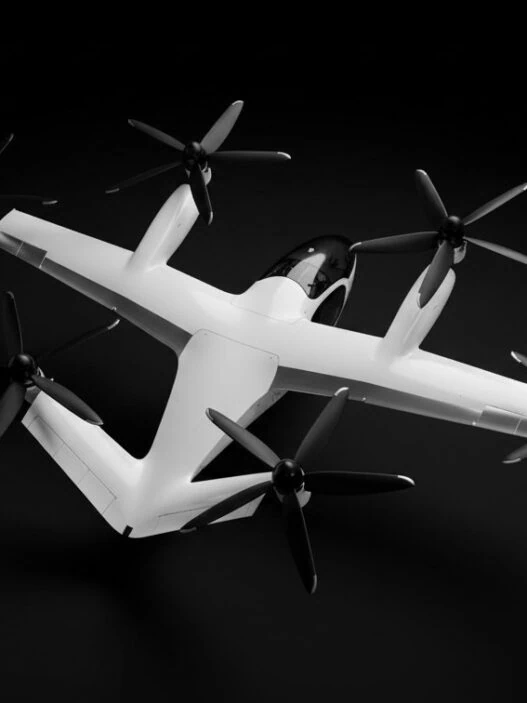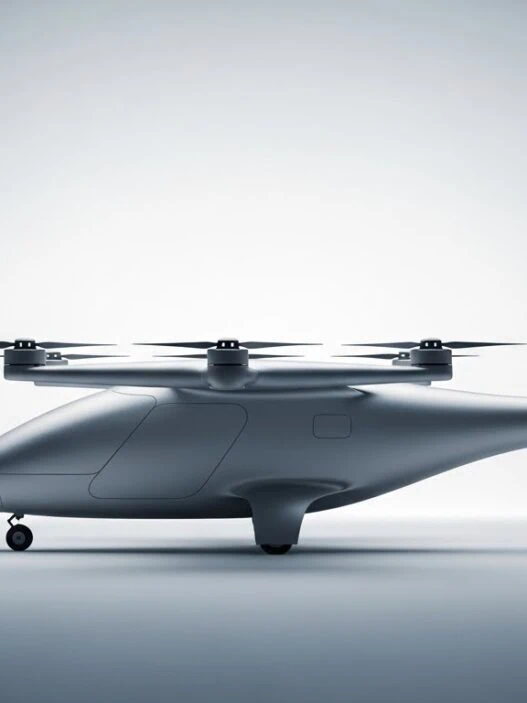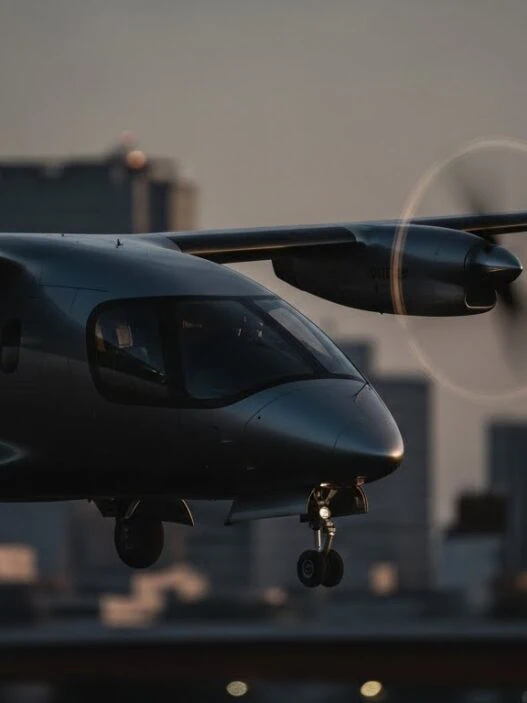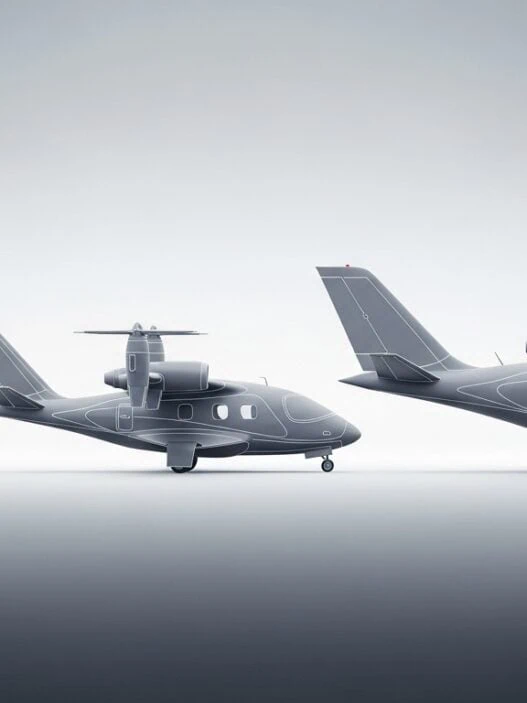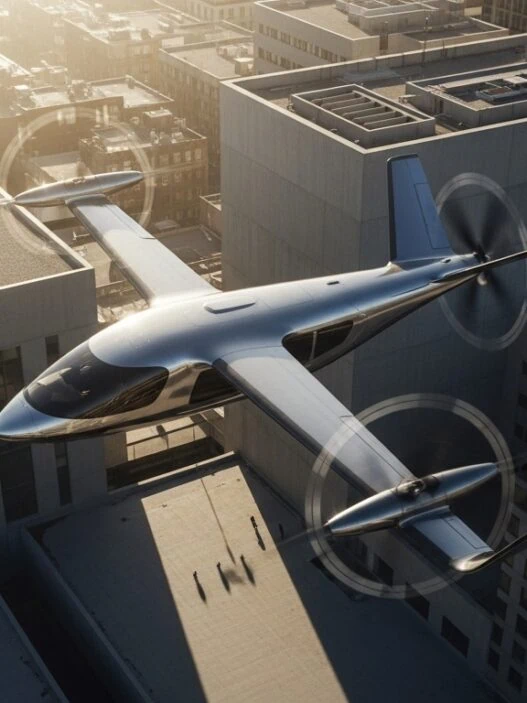










In November 2025, the Federal Aviation Administration granted Joby Aviation Type Inspection Authorization, marking the industry’s first progression to Stage 4 of the five-stage eVTOL certification process. This milestone positions Joby Aviation for potential Type Certification in late 2025 or early 2026, enabling commercial air taxi operations to launch as early as 2026. With the FAA processing four concurrent eVTOL certification applications from Joby, Archer Aviation, Beta Technologies, and Wisk Aero, the race to certified commercial flying taxis has entered its decisive phase.
The eVTOL certification timeline determines when urban air mobility transitions from prototype demonstrations to revenue-generating passenger service. Certification delays have historically plagued the industry, with Lilium declaring insolvency in November 2024 after failing to secure timely EASA approval, while Eve Air Mobility pushed commercial launch targets from 2026 to 2028. Understanding certification stages, regulatory requirements, and manufacturer progress reveals which companies will achieve first-mover advantage in the $90 billion urban air mobility market.
According to eVTOL manufacturer rankings, certification timelines now represent the primary differentiator between industry leaders and companies facing potential bankruptcy.
Explore Future Mobility & RWA Aviation
Urban air mobility roadmap, tokenized aircraft ownership, and institutional blockchain aviation. For investors and early adopters.Learn More About PrivateCharterX
Table of Contents
- FAA 5-Stage Certification Process
- Joby Aviation Certification Status
- Archer Aviation Timeline
- Beta Technologies & Wisk Aero
- EASA European Certification
- Lilium & Eve Air Mobility Delays
- Commercial Launch Predictions
- eVTOL Certification FAQs
FAA 5-Stage Certification Process
The Federal Aviation Administration established a five-stage certification framework specifically for electric vertical takeoff and landing aircraft, recognizing that eVTOL technology represents an entirely new category requiring unique airworthiness standards.
Stage 1: Application Acceptance
Manufacturers submit Type Certification applications demonstrating compliance pathways for airframe design, propulsion systems, flight controls, and safety redundancies. The FAA evaluates whether proposed certification bases adequately address novel eVTOL configurations including distributed electric propulsion, energy storage systems, and autonomous flight capabilities.
Joby Aviation, Archer Aviation, Beta Technologies, and Wisk Aero all achieved Stage 1 acceptance between 2021-2023, establishing their certification bases and compliance frameworks. The FAA typically requires 6-12 months to accept applications after manufacturers submit initial documentation.
Stage 2: Certification Basis Established
The FAA finalizes special conditions, exemptions, and equivalent safety findings necessary for eVTOL aircraft that fall outside existing Part 23 small airplane or Part 27 rotorcraft regulations. This stage addresses certification challenges including electric propulsion reliability, battery safety protocols, low-altitude urban operations, and reduced pilot workload requirements.
All four US eVTOL manufacturers completed Stage 2 by early 2024, receiving FAA approval for their certification plans including means of compliance demonstrations and testing requirements.
Stage 3: Compliance Testing & Verification
Manufacturers conduct extensive ground testing, system safety analyses, and flight test campaigns demonstrating compliance with established airworthiness standards. The FAA witnesses critical tests including structural loads verification, propulsion system endurance runs, autorotation capability demonstrations, and failure mode testing.
Stage 3 represents the most time-intensive phase, typically requiring 18-30 months of coordinated testing between manufacturers and FAA certification engineers. Joby Aviation accumulated over 1,500 test flights through 2025, while Archer Aviation completed 400+ flights validating flight envelope expansion and transition corridor mapping.
Stage 4: Type Inspection Authorization
Upon completing compliance demonstration testing, the FAA issues Type Inspection Authorization enabling manufacturers to begin conformity inspections verifying production aircraft match certified design specifications. This milestone signals the FAA’s confidence that the aircraft design meets airworthiness standards pending final production conformity validation.
Joby Aviation became the first eVTOL manufacturer to reach Stage 4 in November 2025, positioning the company for Type Certificate issuance in late 2025 or early 2026 pending final production aircraft conformity inspections.
Stage 5: Type Certificate Issuance
The FAA issues the Type Certificate authorizing serial production and commercial operations after validating production conformity, establishing continued airworthiness requirements, and approving operational limitations. Manufacturers must also secure Production Certificate approval and establish FAA-approved maintenance programs before commercial revenue flights commence.
No eVTOL manufacturer has yet achieved Stage 5, though Joby Aviation’s Type Inspection Authorization positions them for potential certification in 2025-2026 timeframe.

Joby Aviation Certification Status
Joby Aviation leads global eVTOL certification efforts following the FAA’s November 2025 Type Inspection Authorization, marking the industry’s first progression to Stage 4 of the certification process.
Type Inspection Authorization Milestone
The FAA’s Type Inspection Authorization grants Joby permission to begin conformity inspections on production-representative aircraft, verifying that serial aircraft match the certified design validated through extensive flight testing. This milestone followed Joby’s completion of over 1,500 test flights accumulating 33,000+ miles of flight operations including cross-country demonstrations and extended endurance testing.
Joby’s certification basis addresses five-seat electric VTOL operations with distributed electric propulsion consisting of six tilting propellers powered by lithium-ion battery systems. The aircraft achieves 150-mile range at 200 mph cruise speed with acoustic signature under 65 decibels during overflight, meeting urban noise requirements critical for city center vertiport operations.
Production Conformity Timeline
Following Type Inspection Authorization, Joby must demonstrate that production aircraft manufactured at its Pilot Production Line in Marina, California conform to the FAA-approved type design. This process typically requires 6-12 months of coordinated inspections between manufacturers and FAA certification engineers.
Joby announced plans to build 20-30 conforming production aircraft during 2025-2026, with the first conformity aircraft entering final assembly in late 2025. The company targets Type Certificate issuance in late 2025 or early 2026, enabling commercial air taxi launch in partnership with Delta Air Lines across New York and Los Angeles markets.
Pilot Training & Operations
Concurrent with Type Certification, Joby is developing FAA-approved pilot training programs and operational procedures required for Part 135 air carrier certification. The company established a flight training facility in Marina, California and recruited former military pilots to develop standardized training curricula addressing eVTOL-specific operational considerations.
Joby aims to secure Part 135 Air Carrier Certificate approval concurrent with Type Certification, enabling immediate commercial launch upon receiving regulatory clearances rather than delaying operations for subsequent approvals.
Archer Aviation Timeline
Archer Aviation follows Joby as the second eVTOL manufacturer approaching Type Inspection Authorization, with the company targeting late 2025 or early 2026 Stage 4 progression based on accelerated flight testing throughout 2025.
Midnight Aircraft Testing Progress
Archer’s Midnight eVTOL completed over 400 test flights through November 2025, demonstrating full transition envelope from vertical takeoff through wing-borne cruise and vertical landing. The four-passenger aircraft achieved 100-mile range at 150 mph cruise speed with targeted acoustic signature under 45 decibels during approach, positioning Archer for dense urban operations including Manhattan heliport conversions.
The company’s flight test campaign validated distributed electric propulsion reliability across twelve independent motors, battery thermal management under varied environmental conditions, and fly-by-wire flight control system redundancy meeting Part 23 equivalent safety standards.
Certification Pathway Strategy
Archer pursues a phased certification approach targeting initial Type Certificate for piloted operations followed by subsequent amendments enabling autonomous flight capabilities. This strategy accelerates time-to-market by deferring complex autonomous system certification while establishing revenue-generating commercial operations with human pilots.
The company submitted updated means of compliance documentation to the FAA in mid-2025 addressing battery safety protocols, emergency landing procedures, and continued safe flight and landing requirements following propulsion system failures. Archer expects Type Inspection Authorization in late 2025 or early 2026 based on current testing progress.
Production Scaling Plans
Archer partnered with Stellantis to establish high-rate manufacturing capabilities targeting 650 annual aircraft production by 2028. The company’s manufacturing facility in Covington, Georgia features automotive-grade assembly processes adapted for eVTOL production including automated fuselage bonding, integrated wiring harness installation, and final assembly quality control protocols.
Initial production will support United Airlines’ 200-aircraft purchase commitment with options for 300 additional units, positioning Archer for rapid commercial scaling upon achieving FAA certification.

Beta Technologies & Wisk Aero
Beta Technologies and Wisk Aero represent alternative eVTOL certification pathways targeting cargo operations and autonomous passenger transport respectively.
Beta Technologies CX300 Cargo
Beta Technologies pursues parallel certification tracks for its ALIA eVTOL platform including conventional takeoff and landing variant (CX300) and vertical takeoff variant (VX300). The company’s initial focus on cargo operations accelerates certification by avoiding complex passenger safety requirements while establishing operational history and airworthiness data.
The CX300 completed FAA Stage 3 compliance testing in 2025 including 350+ test flights demonstrating 250-mile range with 1,400-pound cargo payload. Beta secured United Parcel Service as launch customer with 150-aircraft commitment supporting time-sensitive cargo delivery across regional distribution networks.
The company targets 2026 Type Certification for cargo variant followed by passenger certification amendment in 2027-2028 timeframe after accumulating operational experience and safety data.
Wisk Aero Autonomous Operations
Wisk Aero, backed by Boeing, develops fully autonomous eVTOL aircraft eliminating pilot requirements through supervised autonomous flight systems. The company’s Generation 6 aircraft targets four-passenger capacity with 90-mile range operating entirely under autonomous control from departure through arrival.
Wisk’s certification pathway addresses unprecedented autonomous operations challenges including detect-and-avoid systems, remote supervision protocols, and failure mode management without onboard pilot intervention. The FAA established special conditions for Wisk’s autonomous operations in 2024, defining equivalent safety requirements comparable to piloted aircraft.
The company completed FAA Stage 2 in 2025 and projects Type Certification in 2027-2028 timeframe pending autonomous system validation and operational safety case approval.
EASA European Certification
The European Union Aviation Safety Agency established parallel eVTOL certification standards through SC-VTOL Special Condition framework addressing electric vertical takeoff operations across EU member states.
Lilium Bankruptcy & EASA Delays
Lilium’s November 2024 bankruptcy filing exemplifies certification timeline risks, as the German manufacturer failed to secure EASA Type Certification approval necessary for European commercial operations. The company exhausted $1.8 billion in capital across seven years without achieving regulatory approval, ultimately entering insolvency proceedings in Germany.
EASA certification delays stemmed from novel jet-powered distributed electric propulsion architecture requiring extensive safety validation beyond conventional eVTOL configurations. Lilium’s thirty-six ducted electric jet engines presented unique certification challenges including thrust vectoring reliability, emergency landing capabilities, and noise certification compliance.
The bankruptcy highlights critical importance of certification timeline management and capital efficiency, as manufacturers face existential risks when regulatory approval extends beyond projected timeframes.
Volocopter & Vertical Aerospace Progress
Volocopter pursues EASA certification for its VoloCity two-seat eVTOL targeting Paris Olympics demonstration operations, though commercial certification timelines extended into 2026-2027 following testing delays. The company completed Phase 3 design verification testing in 2025 but faces additional compliance demonstrations before EASA Type Certificate issuance.
Vertical Aerospace’s VX4 certification efforts stalled following July 2024 prototype crash during testing in the UK, requiring extensive redesign and recertification of flight control systems. The company targets 2027 EASA approval pending successful flight test campaign restart.
Lilium & Eve Air Mobility Delays
Certification timeline extensions have created severe financial pressure across the eVTOL industry, with Lilium’s bankruptcy and Eve Air Mobility’s delayed launch exemplifying market consequences.
Lilium Insolvency Analysis
Lilium declared insolvency in November 2024 after German government denied $107 million loan guarantee necessary to fund continued certification efforts. The company burned through $1.8 billion across development and testing phases without securing EASA Type Certification approval, ultimately running out of capital before achieving commercial operations.
The bankruptcy demonstrates that technology development timelines alone cannot sustain eVTOL companies without regulatory approval enabling revenue generation. Lilium’s advanced jet-propulsion technology proved insufficient to overcome certification regulatory hurdles and capital requirements.
Eve Air Mobility Timeline Extension
Eve Air Mobility, majority-owned by Embraer, extended commercial launch projections from 2026 to 2028 citing ANAC Brazilian certification timeline requirements and concurrent FAA approval complexities. The company’s 2,900-aircraft order book worth $14.5 billion depends on achieving multi-jurisdiction certification across Brazil, United States, and Europe.
Eve’s certification strategy leverages Embraer’s aviation regulatory expertise but faces challenges inherent to novel lift-and-cruise eVTOL configuration requiring extensive safety validation. The company maintains $500 million capital reserves to fund extended certification timeline through 2028 commercial launch target.
Commercial Launch Predictions
eVTOL certification timelines determine commercial air taxi launch dates across major metropolitan markets globally.
2025-2026: First Certified Operations
Joby Aviation represents the likely first certified eVTOL operator achieving commercial launch in late 2025 or early 2026 following Type Certificate issuance. Initial operations will launch across New York and Los Angeles markets through Delta Air Lines partnership, connecting airports to city centers and eliminating ground transportation delays.
Archer Aviation follows in 2026 timeframe supporting United Airlines’ route network across San Francisco, Los Angeles, and Chicago metropolitan areas. The company’s Midnight aircraft will operate from existing heliport infrastructure adapted for eVTOL operations.
2027-2028: Industry Expansion
Beta Technologies cargo operations scale across UPS distribution network in 2026-2027, with passenger variant certification following in 2027-2028. Eve Air Mobility targets 2028 commercial launch across Brazilian markets pending ANAC and FAA certification approval.
European operations remain uncertain following Lilium bankruptcy, with Volocopter representing the most advanced EASA certification candidate for 2027 commercial launch pending successful compliance demonstration completion.
2028-2030: Autonomous & High-Volume
Wisk Aero’s autonomous certification could enable 2028-2029 commercial operations eliminating pilot costs and enabling higher utilization rates through 24/7 operations. Autonomous eVTOL represents the industry’s ultimate economic model supporting $3-4 per passenger-mile operating costs versus $9-12 for piloted aircraft.
High-volume production scaling reaches 500+ annual aircraft deliveries by 2028-2029 as Joby and Archer ramp manufacturing supporting rapid market expansion across top-50 global metropolitan areas.

eVTOL Certification FAQs
When will eVTOL aircraft be certified?
Joby Aviation is expected to receive FAA Type Certification in late 2025 or early 2026 following November 2025 Type Inspection Authorization. Archer Aviation follows in 2026 timeframe.
What are the 5 stages of FAA eVTOL certification?
The five stages are: Application Acceptance, Certification Basis Established, Compliance Testing, Type Inspection Authorization, and Type Certificate Issuance. Joby Aviation reached Stage 4 in November 2025.
Why did Lilium go bankrupt?
Lilium declared insolvency in November 2024 after failing to secure EASA Type Certification and exhausting $1.8 billion in capital. Certification delays prevented revenue generation necessary to sustain operations.
How long does eVTOL certification take?
eVTOL certification typically requires 4-6 years from application acceptance to Type Certificate issuance. Joby Aviation’s timeline spans 2020 application through projected 2025-2026 certification.
What is Type Inspection Authorization?
Type Inspection Authorization (Stage 4) grants manufacturers permission to begin production conformity inspections, signaling FAA confidence that aircraft design meets airworthiness standards pending final validation.
When will commercial eVTOL flights begin?
Commercial eVTOL air taxi operations are expected to launch in late 2025 or early 2026 with Joby Aviation in New York and Los Angeles, followed by Archer Aviation in 2026 across additional US markets.
Book Your Private Jet Flight
Instant quotes for private jets, helicopters, and luxury transfers. Bitcoin, Ethereum, and 70+ cryptocurrencies accepted. Sphera AI powered booking.Get Instant Quote
SOURCES
- Federal Aviation Administration – eVTOL Certification Framework
- Joby Aviation – Type Inspection Authorization Announcement
- Archer Aviation – Certification Progress Updates
- PrivateCharterX – eVTOL Manufacturers Ranking 2025
- PrivateCharterX – eVTOL vs Helicopter Cost Comparison
- PrivateCharterX – Urban Air Mobility Market Analysis
- EASA – VTOL Certification Standards
- Beta Technologies – Certification Updates
- Wisk Aero – Autonomous Certification Progress
- Eve Air Mobility – Certification Timeline