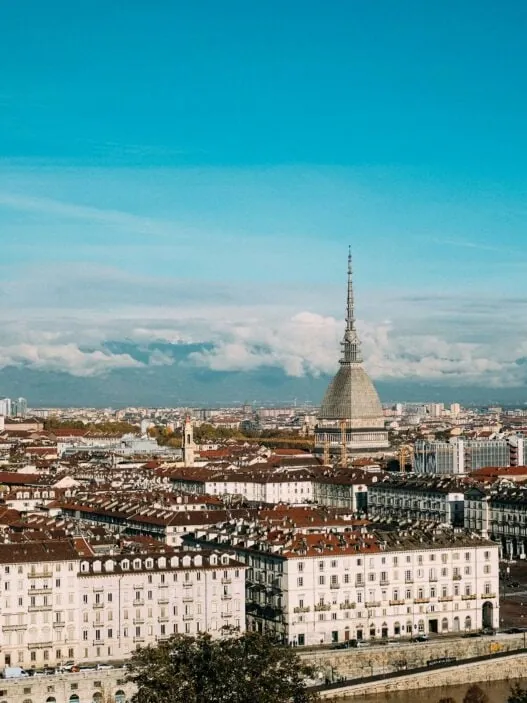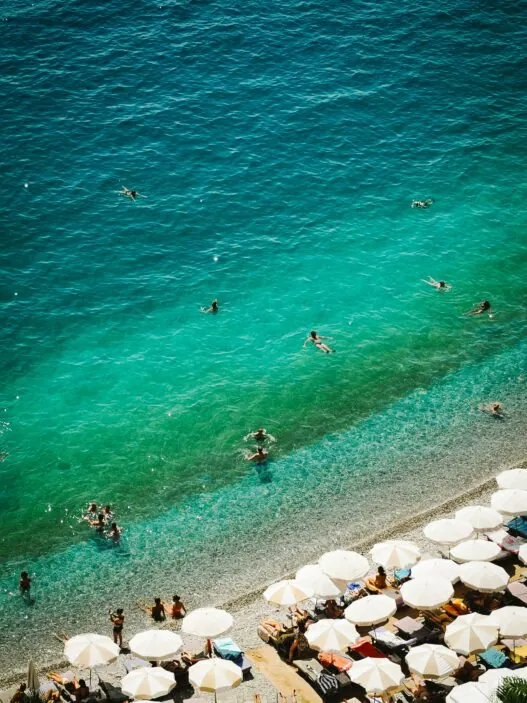





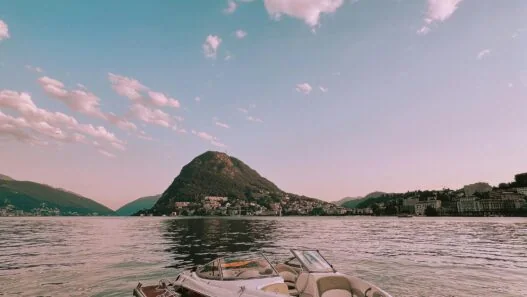
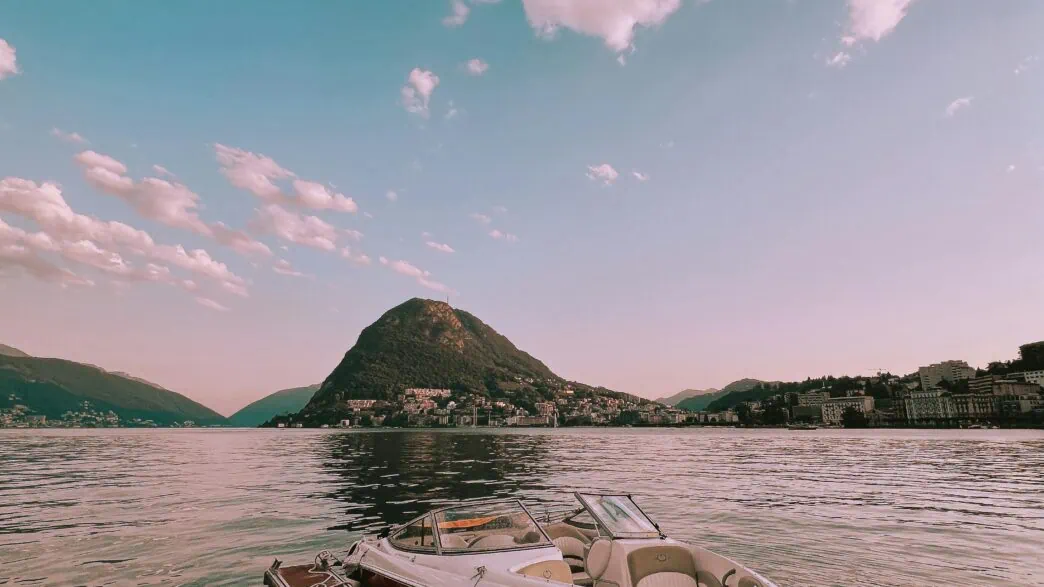
Lugano Switzerland occupies unique position as the largest Italian-speaking city in Switzerland, combining Mediterranean climate, dramatic lakeside setting, and Swiss efficiency with Italian style and lifestyle. Situated on the northern shore of Lake Lugano in the canton of Ticino, this city of 63,000 provides gateway to both Swiss Alps and Italian lakes region including nearby Lake Como. Palm trees line lakeside promenades, outdoor cafés operate year-round, and the atmosphere reflects Italy more than stereotypical German-speaking Switzerland—yet banking privacy, political stability, and Swiss infrastructure remain thoroughly present.
For business executives managing wealth in Swiss private banks while preferring Mediterranean lifestyle, luxury travelers seeking lakeside elegance over Alpine skiing, and those requiring convenient access to Milan (90 minutes), Lake Como (30 minutes by helicopter), and Italian business centers, Lugano Switzerland delivers exceptional combination impossible to replicate elsewhere. The city attracts substantial Italian, German, and international residents seeking Swiss quality of life with Italian cultural flavor. Winter temperatures average 3-8°C while summers reach 25-30°C—mild year-round conditions enabling outdoor dining, lakeside walking, and Mediterranean-style living unknown in Zurich or Geneva.
This comprehensive guide provides essential intelligence for planning Lugano Switzerland visits in 2026, covering transport from Zurich and Milan via the spectacular Gotthard Base Tunnel, helicopter access to Lake Como and Italian cities, luxury lakeside hotels, Italian-Swiss dining culture, day trips throughout Ticino and Northern Italy, costs and budgeting, and practical tips for experiencing Switzerland’s Italian soul. Whether visiting for private banking, Lake Como property access, or simply discovering Switzerland’s Mediterranean side, this guide delivers actionable information for successful Lugano experiences.
For official Lugano information and current events, visit Lugano Region Tourism. Canton Ticino coverage appears on Ticino Tourism.
Lugano Switzerland at a Glance
- Location: Canton Ticino, Southern Switzerland
- Population: 63,000 (city), 150,000 (urban area)
- Language: Italian (official), German/English widely spoken
- Elevation: 273m (lake level)
- Climate: Mediterranean – mildest in Switzerland
- Lake: Lake Lugano (48.7 km²)
- Airport: Lugano Airport (LUG, 5km from city)
- Distance Zurich: 220km / 2h train via Gotthard
- Distance Milan: 80km / 90min drive or train
- Helicopter: Lake Como 15min, Milan 30min
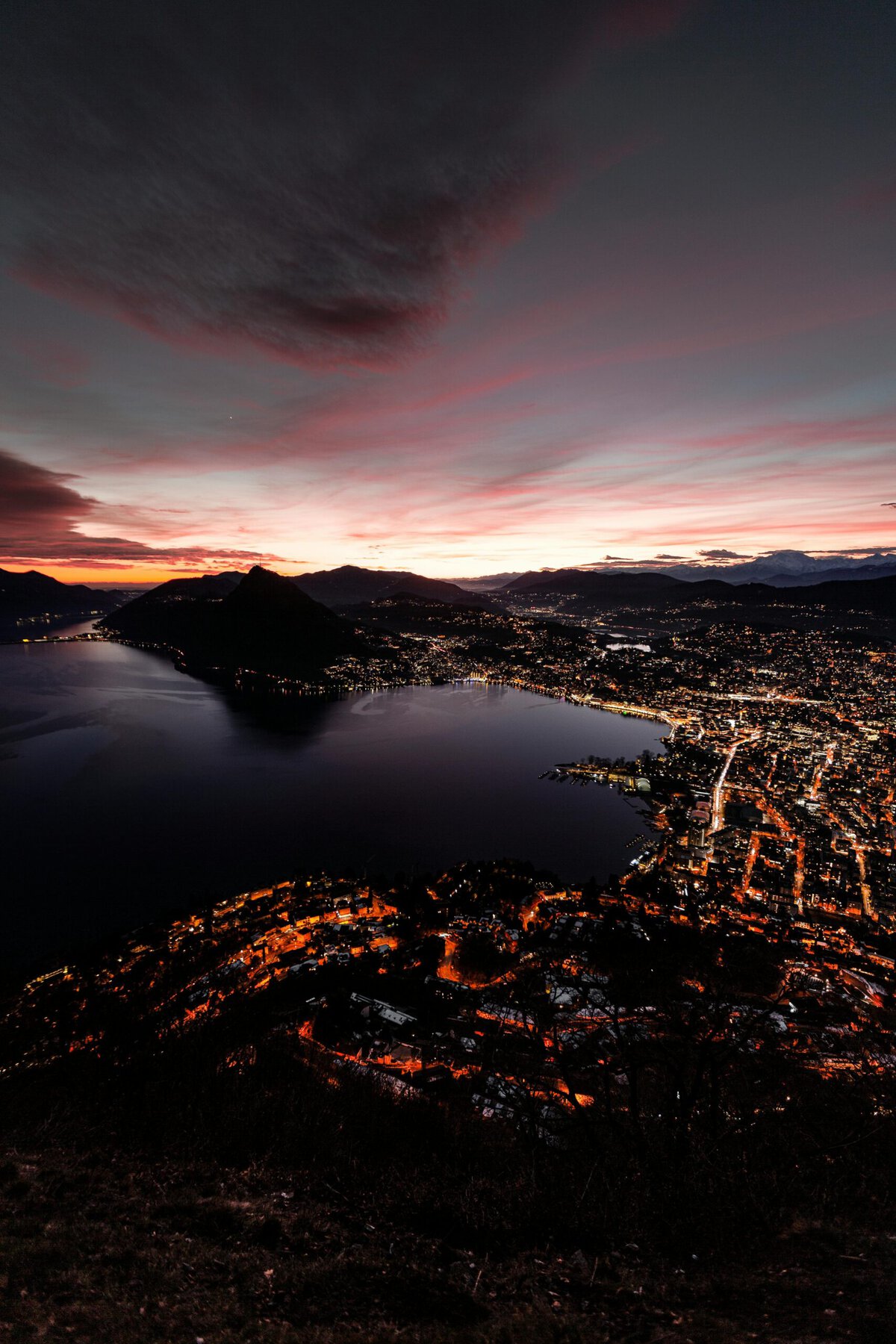
Table of Contents
- Lugano Switzerland Overview
- Getting to Lugano: Train, Helicopter & Car
- Lake Lugano & Waterfront
- Monte San Salvatore & Monte Brè
- Best Hotels in Lugano Switzerland
- Italian-Swiss Dining & Restaurants
- Private Banking in Lugano
- Lake Como & Italian Lakes Access
- Day Trips from Lugano
- Costs & Budgeting
- Practical Tips
- Frequently Asked Questions
Lugano Switzerland Overview: Switzerland’s Italian Soul
Lugano Switzerland represents Switzerland’s third financial center after Zurich and Geneva, specializing in Italian and international private banking while maintaining distinctly different character from its German and French-speaking counterparts. The city developed as trading center given its position on historic north-south routes crossing the Alps, with modern importance arriving in the 20th century as Italian and European wealth sought Swiss banking combined with Mediterranean lifestyle. Today Lugano manages substantial assets for Italian clients, hosts regional headquarters for luxury brands, and attracts international residents seeking Swiss quality with Italian flavor.
Why Lugano Differs from Zurich & Geneva
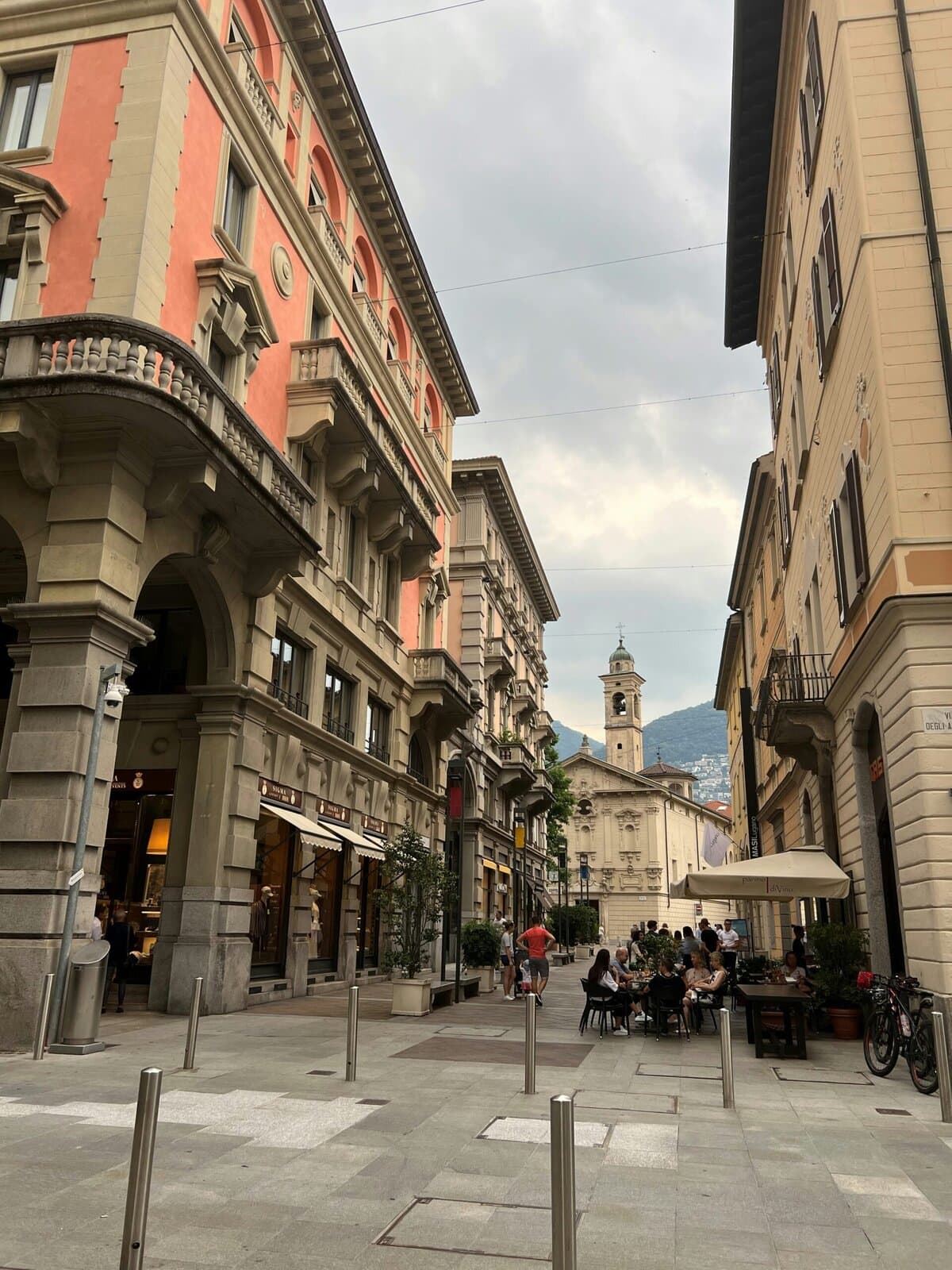
Lugano Switzerland operates under fundamentally different cultural framework than German or French Switzerland. The Italian language creates immediate distinction, with Swiss-Italian (Ticinese dialect) spoken locally while standard Italian enables communication with neighboring Italy. The lifestyle emphasizes outdoor living, lengthy meals, evening passeggiata (promenade walks), and Mediterranean social culture versus Germanic punctuality or French formality. Architecture reflects Italian influence—piazzas rather than plazas, gelaterias alongside Swiss cafés, and ochre-painted buildings versus Alpine chalets.
The climate enables year-round outdoor culture impossible in Zurich or Geneva. Winter temperatures rarely drop below freezing, allowing palm trees, subtropical plants, and outdoor dining through December-February. Summer heat reaches Italian levels (25-30°C regularly), transforming Lake Lugano into genuine beach destination with swimming, boat parties, and Mediterranean atmosphere. This creates Switzerland’s only location combining full Swiss infrastructure, banking, and political stability with true Mediterranean lifestyle. For comprehensive Zurich comparison, see our detailed Zurich Switzerland complete guide.
Italian Switzerland: Ticino Canton Identity
Lugano serves as economic capital of Canton Ticino, Switzerland’s only entirely Italian-speaking canton. The region’s history includes centuries under Milan’s control before joining Switzerland in early 1800s, creating cultural identity distinct from both Italy and German Switzerland. Ticinese pride themselves on maintaining Italian cultural traditions (family emphasis, culinary excellence, social warmth) while benefiting from Swiss systems (infrastructure, education, efficiency). This hybrid creates unique character—neither fully Swiss nor fully Italian but rather distinctly Ticinese.
The canton’s 350,000 residents include significant cross-border workers (60,000+ daily commute from Italy), international residents attracted by tax advantages and lifestyle, and native Ticinese families living here for generations. Major employers include universities, luxury retailers (Ermenegildo Zegna, Bulgari, others maintaining regional offices), private banks serving Italian wealth, and pharmaceutical companies. Tourism contributes significantly, with Germans and Swiss-Germans comprising largest visitor groups seeking Mediterranean escape within Switzerland.
Getting to Lugano Switzerland: Train, Helicopter & All Transport Options
Lugano Switzerland benefits from excellent transport connections despite alpine and lakeside geography. The city sits on the main north-south rail corridor through the Alps via the spectacular Gotthard Base Tunnel (world’s longest railway tunnel at 57 kilometers), enabling fast train connections to Zurich. Lugano Airport serves private aviation and limited commercial flights. Proximity to Milan (80km) creates additional access options via Italian airports and highways. Understanding transport options enables selecting appropriate methods for specific priorities—scenic travel, time efficiency, or luxury service.
Zurich to Lugano: Primary Swiss Connection
Most international travelers reach Lugano Switzerland via Zurich Airport, continuing south through the Alps via train or car. The journey showcases Switzerland’s engineering achievement through the Gotthard route, with the base tunnel enabling year-round reliable service through mountains that historically closed winters.
Gotthard Base Tunnel Train – Swiss Federal Railways operates hourly direct service Zurich-Lugano requiring 2 hours 10 minutes via the Gotthard Base Tunnel (opened 2016). The base tunnel route travels under the Alps at nearly flat gradient versus the historic mountain railway with its spiral tunnels and steep grades. First-class tickets cost CHF 110-140 round-trip, offering comfortable seating, WiFi, and productive work environment. The tunnel section itself (57km, 20 minutes transit time) features no scenery—just tunnel walls—though the approach and exit provide Alpine views. Book through SBB Swiss Railways for best availability.
Some travelers prefer the historic Gotthard Panorama route via the old mountain railway for maximum scenery, though this adds 60-90 minutes travel time. The panoramic route showcases dramatic Alpine landscape including the famous Wassen church appearing multiple times as the train spirals through mountains. This appeals to tourists prioritizing journey over destination, less practical for business travelers or those with limited time.
Drive Zurich to Lugano – The 220-kilometer drive requires 2.5-3 hours via A2 motorway through the Gotthard Road Tunnel (17km) or over Gotthard Pass (summer only, spectacularly scenic). Swiss motorway vignette (CHF 40 annual) required. The Gotthard Road Tunnel often experiences heavy traffic and delays, particularly summer weekends and holiday periods when northern Europeans drive to Italian beaches. Winter mountain passes close November-May, making the road tunnel the only year-round option before the opening of the second Gotthard Road Tunnel planned for 2030s.
Executive Ground Transport – Luxury chauffeur services operate Zurich-Lugano routes in Mercedes S-Class, BMW 7-Series, or similar vehicles with professional drivers. Pricing ranges CHF 1,000-1,500 one-way. The 2.5-hour journey enables productive work or relaxation while drivers navigate the motorway and tunnel. Some services now accept cryptocurrency payment including Bitcoin and Ethereum. For detailed chauffeur options, see our comprehensive Zurich chauffeur service guide.
Milan to Lugano: Italian Connection
Lugano Switzerland sits just 50 kilometers from Milan city center, connected via motorway and train service. This proximity creates regular cross-border movement for business, shopping, and cultural access to Milan’s world-class offerings.
Train Milan-Lugano – EuroCity trains operate hourly Milan Centrale to Lugano requiring 60-75 minutes (CHF 30-40 one-way). Swiss Travel Pass covers this route within Switzerland but not the Italian portion—verify ticket requirements. The route provides scenic journey through Lombardy lakes region and Swiss mountains. Regional trains also operate at lower frequencies and slower speeds but half the cost.
Drive Milan-Lugano – The 80-kilometer drive requires 90 minutes via A9 motorway (Italian autostrada) to Como, then lakeside roads or A2 motorway into Switzerland. Italian autostrada tolls apply (approximately EUR 5-8), Swiss motorway vignette required once crossing border. Traffic around Milan can cause significant delays, particularly weekday rush hours. The drive offers more flexibility than train but parking in Lugano proves expensive and difficult in city center.
Lugano Airport: Private Aviation Hub
Lugano Airport (LUG), located 5 kilometers west of city center in Agno, serves private aviation and limited commercial flights. The airport handles business jets regularly, with FBO facilities providing executive terminal services, customs clearance, and ground transport coordination. Light jets (Citation CJ3, Phenom 300) and midsize aircraft serve Lugano frequently. Runway length (1,465m) limits larger jets—super-midsize and heavy jets typically use Milan Malpensa instead.
Commercial flights connect Lugano to Zurich (50 minutes, Swiss operates 3-4 daily), Geneva (seasonal), and limited other European cities. However, most travelers find train service more convenient and economical than short commercial flights. The airport’s primary value lies in private aviation access, enabling direct flights from London (1h 45min), Paris (1h 15min), and other European business centers. For comprehensive private jet information, explore our detailed private jet charter guide.
Helicopter Charter: Lake Como & Alps Access
Helicopter charter enables rapid access between Lugano Switzerland and surrounding destinations including Lake Como (15 minutes), Milan (30 minutes), St. Moritz (45 minutes), and Zurich (50 minutes). The dramatic lakeside and Alpine scenery makes helicopter flights particularly spectacular, with routes crossing lakes, valleys, and mountain passes impossible to fully appreciate from ground level.
Lugano-Como helicopter flights cost CHF 3,000-5,000 per flight (4-6 passengers). Lugano-Milan: CHF 6,000-10,000. Lugano-Zurich: CHF 10,000-15,000. These prices vary by aircraft type, season, and operator. Popular helicopters include Airbus H125 and AgustaWestland AW109. Lugano’s heliport sits near the airport, enabling seamless private jet-helicopter connections for international executives. For comprehensive Swiss helicopter charter information, see our detailed helicopter charter price guide for Switzerland.
Lake Lugano & Waterfront Promenade
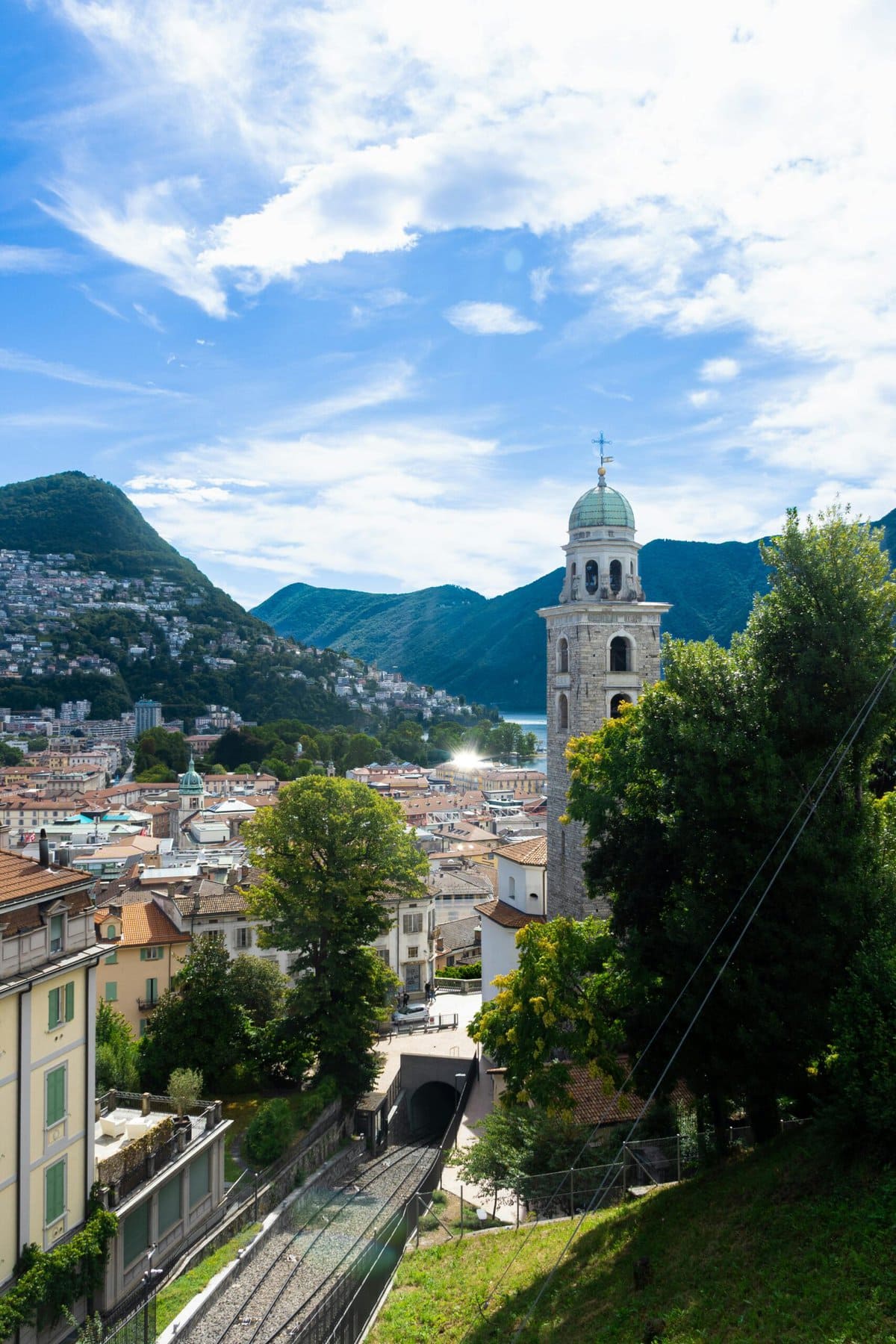
Lake Lugano (Lago di Lugano, also called Ceresio) provides Lugano Switzerland’s defining feature—48.7 square kilometers of glacial lake straddling the Swiss-Italian border with dramatic mountain surroundings. The lake’s irregular shape creates multiple bays, peninsulas, and scenic viewpoints, while the mild climate enables year-round lakeside activities. Understanding the lake and waterfront areas proves essential for experiencing Lugano’s Mediterranean character.
Lugano’s Lakeside Promenade
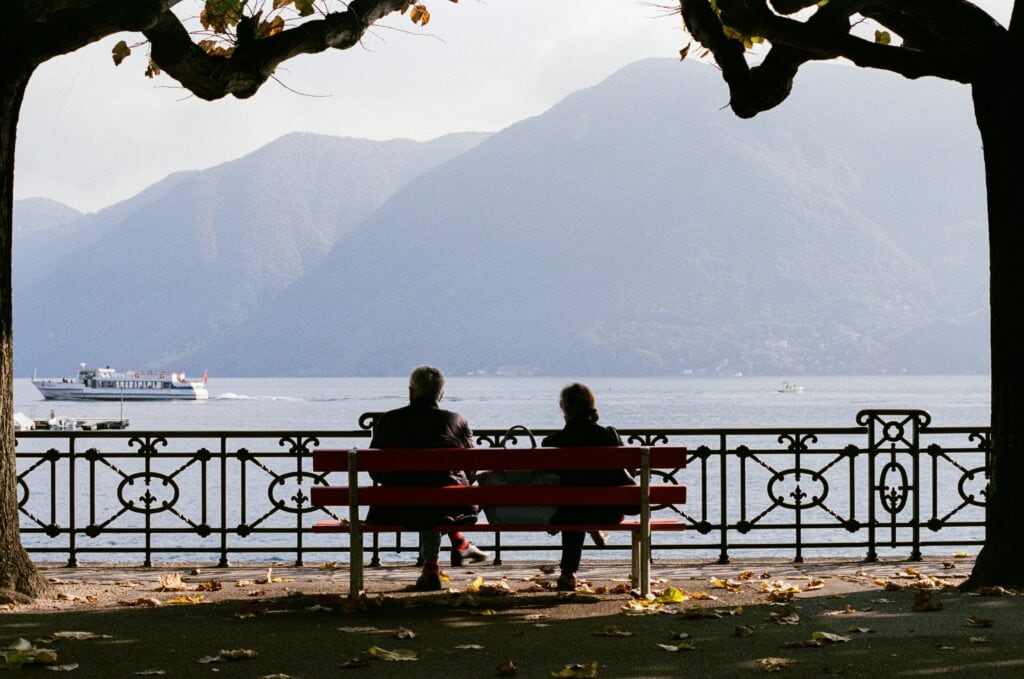
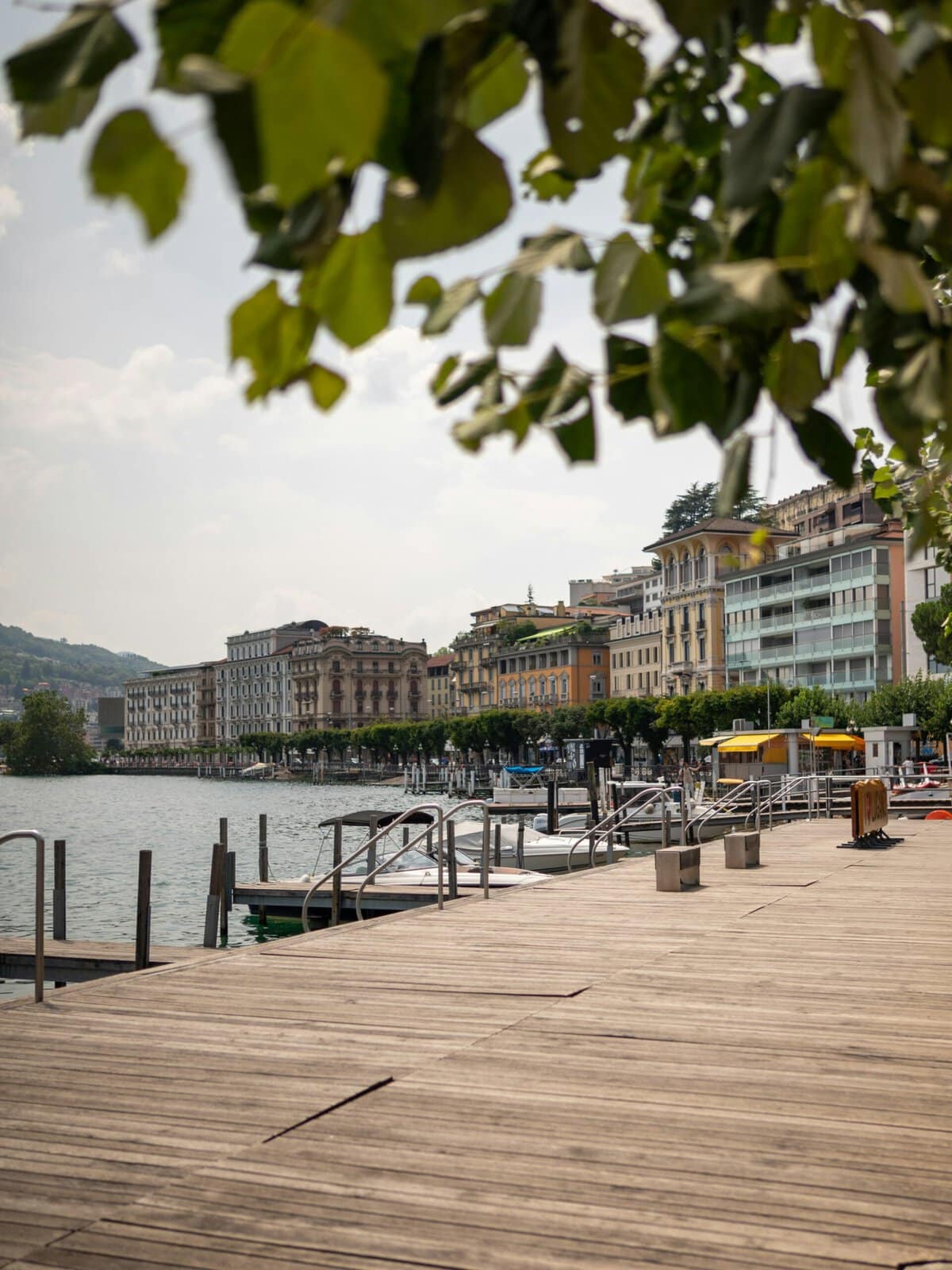
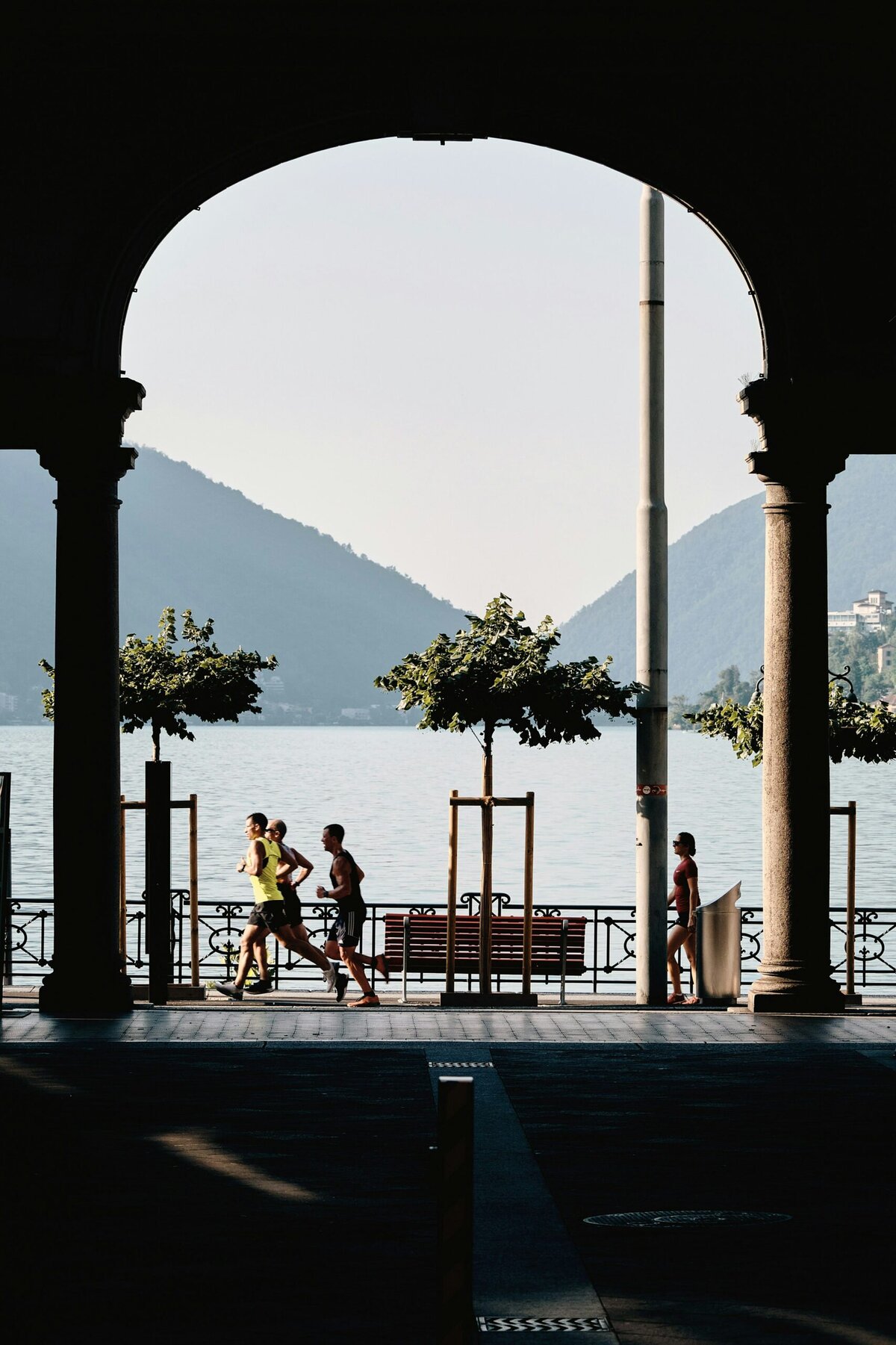
The lakeside promenade (lungolago) stretches approximately 3 kilometers from Paradiso suburb through central Lugano to Cassarate, providing car-free walking and cycling route lined with palm trees, subtropical plants, and lake views. The promenade operates as Lugano’s social heart—locals and tourists stroll here during evening passeggiata, outdoor cafés serve drinks and gelato, and the Mediterranean atmosphere peaks on warm summer evenings.
Key promenade landmarks include Piazza della Riforma (main square hosting markets and events), Parco Ciani (lakeside park with botanical gardens, sculptures, and Villa Ciani cultural center), and the Lido public swimming area. Benches at regular intervals enable rest while watching boats, mountains, and lake life. The promenade accessibility makes it suitable for all ages and mobility levels—flat, smooth surface, frequent cafés for breaks, and consistent scenic beauty.
Lake Activities & Boat Service
Lake Lugano offers swimming, boating, and water sports from May through September when water temperatures reach 20-24°C. Public beaches (lidos) provide lake access, changing facilities, and swimming areas for CHF 8-12 daily entry. Private boat clubs and hotels maintain exclusive lakefront areas for members and guests. The lake supports sailing, stand-up paddleboarding, kayaking, and pedal boats—rentals available from multiple lakeside locations CHF 25-50 per hour depending on craft.
Public boat service (Società Navigazione del Lago di Lugano) operates passenger ferries connecting Lugano to lakeside villages including Gandria, Morcote, and Melide. These boats enable scenic transport while providing different perspective on the lake and mountains. Day passes (CHF 35-45) allow unlimited boat travel, facilitating village exploration without car logistics. Boat service operates March-November with reduced winter schedules. Dinner cruises and private boat charters provide additional options for special occasions or group outings.
Swimming & Lidos
Lugano Switzerland’s mild climate enables swimming season extending May-September, longer than possible in northern Swiss lakes. The main public swimming areas include Lido Comunale (public beach with pools, diving boards, and facilities), Lido Riva Caccia (smaller but less crowded), and various hotel and club private beaches. Lake water quality meets strict Swiss standards with regular testing—clean, clear, and safe for swimming.
The swimming culture reflects Italian influence—families arrive early afternoon, stay through evening, and socialize extensively. Sunbathing, swimming, and lake socializing operate as legitimate summer activities versus the Protestant work ethic sometimes observed in German Switzerland. Expect crowds on summer weekends—arriving before 10am or after 4pm provides better space and parking. Bring towels, sun protection (strong UV at this latitude despite mild temperatures), and cash for entry fees and refreshments.
Monte San Salvatore & Monte Brè: Lugano’s Mountains
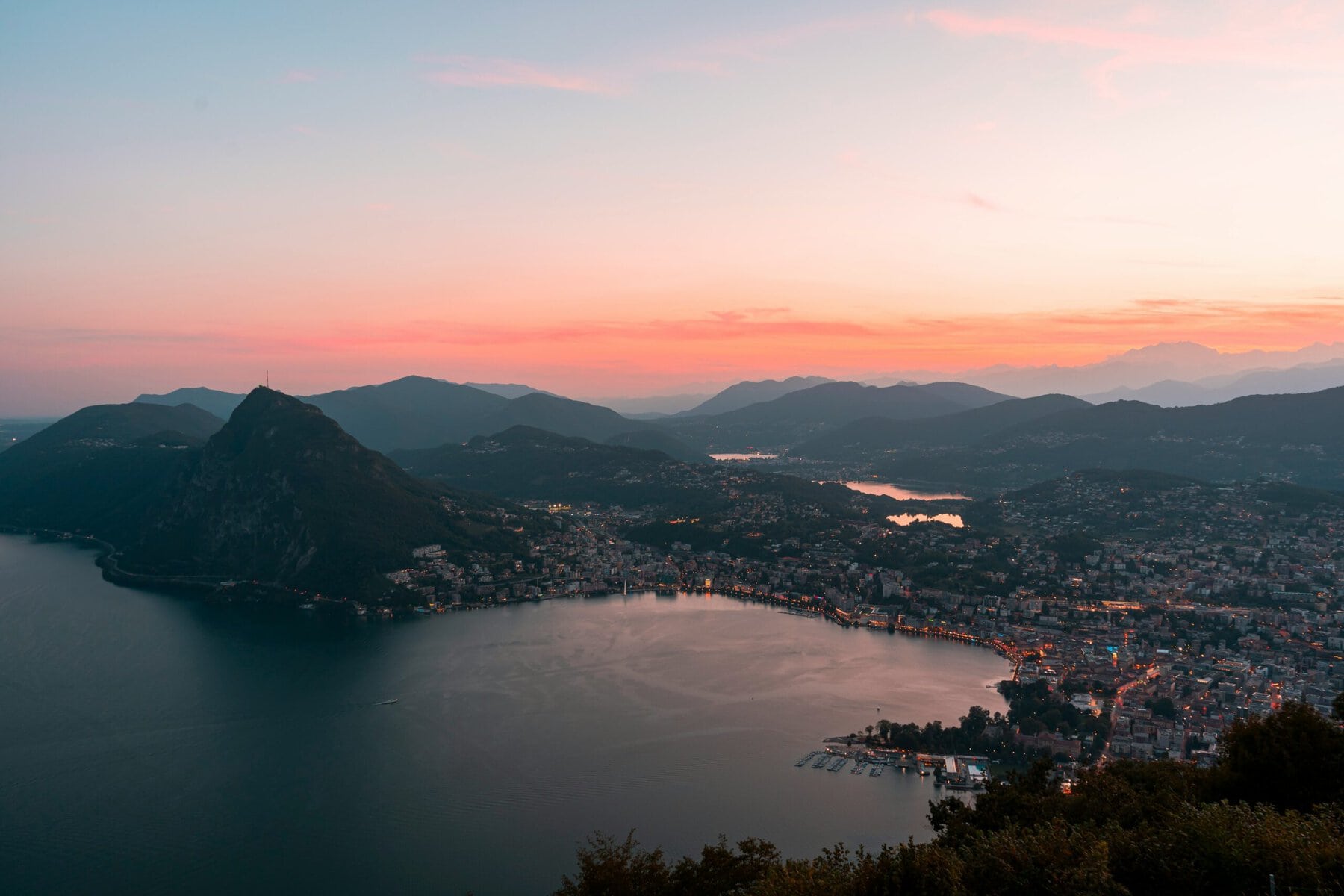
Lugano Switzerland sits at the convergence of lake and mountains, with Monte San Salvatore (912m) and Monte Brè (925m) flanking the city and providing spectacular viewpoints accessed via funicular railways. These mountains offer hiking, panoramic dining, and arguably Switzerland’s finest views combining lake, city, Italian plains, and Alpine peaks. Understanding both mountains enables selecting appropriate choices for available time and interests.
Monte San Salvatore: The Classic View
Monte San Salvatore rises directly south of Lugano, accessed via funicular from Paradiso suburb (15-minute walk from city center or short bus ride). The funicular, opened 1890, climbs 600 vertical meters in 12 minutes, delivering passengers to 912m summit. The panorama encompasses Lake Lugano, the city, Italian Lombardy plains extending to Milan on clear days, and Alpine peaks including Monte Rosa and Matterhorn visible 100+ kilometers north.
The summit facilities include restaurant, viewing platforms, small museum, and well-marked hiking trails. The Sentiero Panoramico (panoramic path) descends through forest and Alpine meadows to Morcote village on the lakeshore (90 minutes, moderate difficulty, spectacular views). This enables hiking descent with boat return to Lugano, creating full-day scenic excursion. Funicular operation: March-November (closed winters). Round-trip CHF 30 adults, CHF 15 children. Book through Monte San Salvatore.
Monte Brè: The Sunny Mountain
Monte Brè rises east of Lugano, accessed via funicular from Cassarate neighborhood. The mountain claims “Switzerland’s sunniest mountain” with south-facing exposure creating microclimate enabling subtropical vegetation impossible on shaded slopes. The funicular delivers to Brè village (925m), a preserved historic settlement with car-free streets, traditional Ticinese architecture, and spectacular lake views.
The summit area includes Wilhelm Schmid Museum (local artist), several restaurants, and hiking trails including ridge walk to Aldesago (60 minutes, easy) and descent to Gandria lakeside village (90 minutes, moderate). The trails traverse areas with chestnuts, oleanders, and Mediterranean plants creating botanical interest alongside scenic views. Monte Brè suits those seeking quieter atmosphere than popular San Salvatore, though views arguably measure slightly less dramatic. Funicular operation: Year-round (weather permitting). Round-trip CHF 25 adults, CHF 13 children.
Hiking & Mountain Activities
Both mountains provide hiking beyond the basic funicular-summit-return option. Serious hikers tackle the full San Salvatore-Brè traverse (6 hours, demanding but spectacular), various vineyard trails through Ticino’s wine regions, and connections to longer routes including the Trans Swiss Trail. The mild climate enables hiking nearly year-round, though summer heat (30°C+) makes early morning or late afternoon preferred for comfort. Always carry water, sun protection, and trail maps—Swiss mountain rules apply despite Mediterranean feel, and weather changes rapidly at altitude.
Best Hotels in Lugano Switzerland
Lugano Switzerland hotel scene emphasizes lakeside elegance, Italian style, and Mediterranean atmosphere versus Alpine grand hotels or ultra-modern design properties. The hotels range from Belle Époque classics to contemporary lakeside resorts, with most concentrating along the promenade and in Paradiso suburb. Understanding hotel positioning, locations, and character enables selecting accommodations matching specific preferences for business, leisure, or extended stays.
Villa Principe Leopoldo: Hillside Luxury
Villa Principe Leopoldo & Residence occupies unique hilltop position above Lugano Switzerland with panoramic lake and mountain views impossible from lakeside hotels. The five-star property combines historic villa (1868) with modern additions, offering 76 rooms and suites, Michelin-starred Principe Leopoldo restaurant, extensive spa, pools, and helicopter landing pad for VIP arrivals. The elevated location provides privacy, tranquility, and spectacular views but requires taxi service for city center access (5 minutes, CHF 20-30).
Rates range CHF 400-700 for doubles (summer) to CHF 250-500 (winter). Suites cost CHF 800-2,000+. The property attracts executives combining business with leisure, wealthy couples seeking romantic retreat, and those who specifically value the panoramic setting over walkable city center location. The hotel’s three helipads enable seamless helicopter arrivals from Zurich, Milan, or Lake Como—unusual amenity signaling the clientele. The Michelin star and executive reputation make this Lugano’s premier luxury address.
Grand Hotel Villa Castagnola: Belle Époque Lakeside
Grand Hotel Villa Castagnola represents Lugano Switzerland’s classic Belle Époque lakeside luxury, opened 1885 and maintaining traditional grand hotel character. The 78-room property sits directly on the lake in Castagnola neighborhood, offering lakeside gardens, private beach, multiple restaurants, and quintessential Swiss-Italian hospitality. The hotel attracts repeat guests returning for generations, creating club-like atmosphere of familiar faces and traditions.
Rates range CHF 300-500 doubles (summer) to CHF 200-400 (winter). Lake-view rooms command CHF 100-150 premiums. The property emphasizes half-board dining (included in most rates), reducing but not eliminating food costs. Villa Castagnola suits traditionalists appreciating grand hotel culture, families seeking comprehensive resort facilities, and those prioritizing lakeside access and swimming over city center walkability. The 20-minute walk to city center (or short bus ride) creates peaceful location away from tourist crowds.
Hotel Splendide Royal: Central Lakeside
Hotel Splendide Royal delivers five-star luxury in prime lakeside location just off Piazza della Riforma, combining convenient city center access with lake views and resort facilities. The 95-room property features rooftop pool and bar with panoramic views, spa, multiple dining options, and professional business services. The central location enables walking to shops, restaurants, and attractions while maintaining quiet lakeside atmosphere.
Rates range CHF 350-600 doubles depending on views and season. The Splendide Royal attracts business travelers requiring city center convenience, couples wanting both resort amenities and urban access, and those who prioritize location flexibility over maximum luxury or isolation. The hotel provides solid five-star standards without the heritage character of Villa Castagnola or hilltop exclusivity of Principe Leopoldo—reliable choice for those seeking quality and convenience.
Lugano Dante Center Swiss Quality Hotel: Business Focus
Lugano Dante provides four-star business hotel comfort near the train station and city center at more accessible pricing. The 90-room property emphasizes functionality, reliable WiFi, meeting facilities, and location convenience over luxury amenities or lake views. Rates range CHF 150-250 doubles, representing significant savings versus five-star lakeside properties while maintaining Swiss quality standards.
Dante suits business travelers prioritizing train station proximity and practical accommodation over resort facilities, budget-conscious tourists who prefer spending on dining and activities over luxury hotels, and those making brief Lugano stops versus extended stays. The hotel doesn’t compete with lakeside properties for ambiance but delivers reliable comfort and good value—smart choice for pragmatic travelers whose budgets don’t justify CHF 400+ nightly rates.
Italian-Swiss Dining & Restaurants in Lugano Switzerland
Lugano Switzerland dining culture reflects Italian traditions with Swiss quality standards—lengthy meals emphasizing fresh ingredients, regional specialties, and social connection over fast service. The cuisine combines Ticinese traditions (risotto, polenta, game, lake fish) with broader Italian offerings (pasta, pizza, seafood) and Swiss precision in execution. Understanding dining culture and restaurant options enables memorable meals and authentic Ticinese experiences.
Michelin-Starred & Fine Dining
Principe Leopoldo Restaurant (Villa Principe Leopoldo) holds one Michelin star, serving creative Mediterranean-influenced cuisine emphasizing seasonal ingredients and technical precision. Chef Domenico Ruberto delivers tasting menus CHF 180-240, wine pairings CHF 100-150 additional. The panoramic terrace provides Lake Lugano views creating memorable dining experience. Reservations essential, particularly summer weekends. Dress: smart casual minimum.
I Due Sud (Hotel Splendide Royal) specializes in Mediterranean cuisine with emphasis on Southern Italian and Greek preparations. While lacking Michelin star, the quality approaches fine dining levels with beautiful lakeside setting. Tasting menu CHF 120-150. Locanda Orico (Cureglia) combines rustic Ticinese atmosphere with refined modern cooking—local favorite for authentic regional cuisine in cozy village setting CHF 80-120 per person.
Traditional Ticinese Cuisine
Grotto della Salute delivers authentic Ticinese grotto experience—rustic stone buildings, shaded gardens, hearty portions of traditional dishes. Specialties include brasato (braised beef), polenta variations, and local cheeses. Prices CHF 40-70 per person. Ristorante Galleria Arté al Lago combines Ticinese specialties with lakeside terrace atmosphere, emphasizing local lake fish (pesce persico – perch), risottos, and seasonal game. CHF 50-90 per person.
Ticinese cuisine emphasizes risotto (prepared with local wines, porcini mushrooms, or lake fish), polenta (with braised meats, wild boar, or melted cheese), and various preparations of chestnuts (flour, bread, desserts). The cooking reflects mountain and Mediterranean influences—heartier than Northern Italian cuisine but lighter than Swiss-German fare. Local wines from Merlot grapes dominate—Ticino produces excellent Merlots rivaling Italian quality at Swiss prices.
Italian Classics & Pizza
Lugano Switzerland offers extensive Italian dining beyond Ticinese specialties. Ristorante Pizzeria Tango serves excellent Neapolitan-style pizza in lively atmosphere CHF 18-28 per pizza. Orologio emphasizes Puglia cuisine from Southern Italy with fresh seafood and handmade pasta CHF 35-60 per person. Cantinetta Bindella delivers Tuscan specialties including steaks, pastas, and Italian wine list.
The Italian pizza culture means many restaurants serve pizza alongside full menus, with quality often excellent versus the separate pizza parlors versus fine dining divide common elsewhere. Late dining (9-10pm dinners normal) reflects Italian culture, while outdoor seating operates nearly year-round given mild climate. Aperitivo culture (6-8pm drinks with light snacks) provides another Italian tradition observed widely in Lugano.
Lakeside Dining & Gelato
The promenade concentration of lakeside restaurants creates tough competition pushing quality upward. Al Portone offers traditional Italian cuisine with prime lakeside terrace. Bottegone del Vino emphasizes wine bar atmosphere with cicchetti (Venetian small plates) and extensive Italian wine selection. Seven Lugano provides contemporary fusion cuisine in stylish design setting.
Gelaterias appear every 100 meters along the promenade—competition ensures quality. Vanini ranks as local favorite for artisanal gelato using natural ingredients and seasonal flavors. Amarena and Manor Gourmet provide additional excellent options. Gelato costs CHF 4-6 for two scoops—expected summer expenditure when strolling the promenade.
Private Banking & Wealth Management in Lugano Switzerland
Lugano Switzerland operates as Switzerland’s third financial center specializing in Italian and international private banking. The city manages substantial assets for Italian clients seeking Swiss banking combined with Italian language and cultural affinity, while also serving international wealth from Latin America, Middle East, and Asia. Understanding Lugano’s banking landscape proves essential for wealth management clients and financial professionals.
Major Lugano Private Banks
BSI (Banca della Svizzera Italiana), founded 1873, historically dominated Lugano banking before absorption into EFG International following compliance challenges. EFG Bank now operates significant Lugano presence managing CHF 150+ billion globally with strong Ticino operations. Banca Zarattini remains significant independent private bank focusing on Italian and international clients. Cornèr Banca specializes in trading and wealth management services.
These institutions typically require minimum relationships of CHF 500,000 to CHF 2 million depending on services. The relationship model emphasizes personalized service, discretion, and understanding of Italian business culture and family dynamics. Many relationship managers are bilingual Italian-German or Italian-English, facilitating communication with international clients while maintaining Swiss banking standards.
Italian Client Focus
Lugano Switzerland’s proximity to Milan and Italian language create natural fit for Italian wealth. The banking sector evolved serving Italian industrialists, entrepreneurs, and wealthy families seeking Swiss political stability, banking privacy (now significantly reformed), and professional asset management. Despite reforms eliminating traditional Swiss banking secrecy for most clients, Lugano maintains advantages including currency diversification, political stability, asset protection, and professional wealth management versus Italian domestic banking.
Italian clients appreciate Lugano’s accessibility—90-minute drive or train from Milan enables regular in-person meetings versus flying to Zurich or Geneva. The cultural affinity means Italian clients avoid linguistic and cultural barriers present in German Switzerland. Relationship managers understand Italian business structures, family dynamics, and succession planning requirements specific to Italian context. For comprehensive Geneva private banking comparison, see our detailed Geneva Switzerland complete guide.
International Wealth Management
Beyond Italian clients, Lugano attracts Latin American wealth (particularly Brazilian and Argentine families seeking Swiss stability), Middle Eastern clients valuing Mediterranean climate alongside Swiss services, and Asian wealth following Switzerland’s reputation for banking excellence. The multilingual environment (Italian, German, English, increasingly Spanish and Portuguese) facilitates serving diverse international clientele. Some banks offer cryptocurrency custody and digital asset services, addressing emerging wealth sources seeking Swiss reliability combined with modern capabilities.
Lake Como & Italian Lakes Access from Lugano Switzerland
Lugano Switzerland’s position just 20 kilometers from Lake Como creates unique gateway enabling day trips, property access, and exploration of Northern Italy’s famous lakes region. Understanding transportation options and the Como connection proves essential for those combining Swiss residence or business with Italian lake lifestyle.
Helicopter to Lake Como
Helicopter charter provides fastest Lake Como access—15 minutes Lugano to Como (CHF 3,000-5,000 per flight, 4-6 passengers). Popular destinations include Como city, Bellagio (lake center “pearl”), Cernobbio (Villa d’Este luxury hotel), and Tremezzo. This enables morning Como meetings returning to Lugano for afternoon, or day trips to Como properties without lengthy ground transport. Many luxury hotels on Como maintain helipads or nearby landing areas, enabling door-to-door service. For comprehensive helicopter information, see our detailed helicopter charter price guide.
Drive to Lake Como
The 30-kilometer drive to Como city requires 45-60 minutes via Swiss-Italian border crossing at Chiasso, then Italian lakeside roads. No border controls exist (Schengen Area) though customs spot checks occasionally occur. Italian traffic, particularly summer weekends, can extend journey significantly. Parking in Como proves challenging and expensive—public lots charge EUR 2-4 per hour. The drive enables flexibility for exploring multiple Como locations and spontaneous stops, but helicopter proves more practical for luxury travelers prioritizing time efficiency.
Train to Lake Como
Regional trains connect Lugano Switzerland to Como San Giovanni station (45-60 minutes, CHF 15-20 one-way). The trains operate hourly with some services continuing to Milan. This provides budget-friendly Como access though station locations (both Lugano and Como) sit somewhat distant from prime lakeside areas requiring additional walking or local transport. Serious Como exploration benefits from car or helicopter versus train constraints.
Lake Como Villa Access
Many international residents maintain properties on Lake Como while basing in Lugano Switzerland for business, schooling, or Swiss advantages. The 20-kilometer proximity enables commuting lifestyle—Swiss residence for banking, schools, and infrastructure while enjoying Como lake property for weekends and entertaining. Helicopter makes this lifestyle practical, transforming potential 90-minute drive through traffic into 15-minute flight. Property owners should coordinate Swiss-Italian tax implications, residency questions, and cross-border logistics with specialized advisors.
Day Trips from Lugano Switzerland
Lugano Switzerland’s central location in Southern Switzerland and Northern Italy enables extensive day trip possibilities combining Swiss Alpine villages, Italian lake towns, and mountain destinations. Understanding options enables maximizing limited vacation time while experiencing the region’s diversity.
Morcote & Lake Lugano Villages
Morcote ranks as Ticino’s most picturesque village—historic center cascading down hillside to lakefront, arcaded walkways, baroque church, and atmospheric restaurants. Boat service from Lugano reaches Morcote in 30 minutes (CHF 15 one-way), enabling lunch and exploration before return. The village operates more as scenic attraction than activity center—2-3 hours suffices for thorough visit. Nearby Gandria provides another lake village option accessible by boat or hiking trail from Lugano (90 minutes lakeside walk).
Bellinzona: Swiss Castles
Bellinzona, 30 minutes north by train from Lugano Switzerland (CHF 20 round-trip), hosts three UNESCO World Heritage castles dominating the valley where trade routes historically converged. Castelgrande, Montebello, and Sasso Corbaro provide defensive architecture, museums, and panoramic views. The medieval old town includes arcaded streets, Saturday market, and restaurants. Bellinzona suits history enthusiasts and families, providing full-day excursion combining castles, shopping, and dining. The city operates as Ticino’s political capital, creating different character from tourist-focused Lugano.
Locarno & Lago Maggiore
Locarno, 60 minutes west by train (CHF 35 round-trip), sits on Lago Maggiore at Switzerland’s lowest elevation (193m). The town claims Switzerland’s warmest climate enabling palm-lined lakefront, outdoor cafés year-round, and Mediterranean atmosphere even exceeding Lugano. Key attractions include Piazza Grande (site of famous film festival each August), Madonna del Sasso pilgrimage church accessed via funicular, and boat services to Ascona and Brissago Islands. Locarno combines with Ascona (adjacent resort town) for full-day lake excursion.
St. Moritz & Alpine Switzerland
St. Moritz, 2.5-3 hours northeast by train or 45 minutes by helicopter (CHF 10,000-15,000), provides dramatic contrast to Mediterranean Lugano. The journey crosses multiple Alpine passes showcasing Switzerland’s geographic diversity—lakeside palms to glacier skiing within hours. Most visitors combine St. Moritz with multi-day stays rather than day trips, though helicopter makes daytrips technically possible for special occasions. For comprehensive St. Moritz coverage, see our detailed St. Moritz Switzerland winter guide.
Milan: Italian City Access
Milan lies 90 minutes south by train (CHF 30-40 one-way) or 30 minutes by helicopter (CHF 6,000-10,000). Day trips enable Milan shopping (Galleria Vittorio Emanuele, Via Montenapoleone luxury boutiques), Duomo cathedral visits, Leonardo da Vinci’s Last Supper viewing (advance reservations essential), and business meetings. The train schedule enables morning departure, full day in Milan, evening return—practical for those combining Lugano residence with Milan business or cultural access. However, serious Milan exploration warrants overnight stays given the city’s extensive offerings.
Costs & Budgeting for Lugano Switzerland
Lugano Switzerland operates at premium pricing reflecting Swiss standards, though costs generally run 15-25% below Zurich and Geneva due to lower demand and more Italian-influenced price consciousness. Understanding realistic budget requirements enables appropriate trip planning and prevents unpleasant surprises during visits.
Accommodation Costs
Five-star luxury (Villa Principe Leopoldo, Villa Castagnola): CHF 300-700 per night doubles (summer high season), CHF 200-500 (winter). Four-star hotels (Splendide Royal, numerous others): CHF 200-400 doubles. Three-star properties: CHF 100-200 doubles. Apartment rentals: CHF 150-400 nightly depending on size and location. Most hotels operate bed-and-breakfast with optional half-board, providing dining flexibility.
Weekly accommodation costs for couple (6 nights): CHF 1,800-4,200 five-star, CHF 1,200-2,400 four-star, CHF 600-1,200 budget hotels. Peak season (July-August, Christmas-New Year) commands 20-30% premiums versus shoulder seasons (April-June, September-November) offering best value. Minimum stays of 2-3 nights apply during peak periods.
Dining & Entertainment
Restaurant lunch: CHF 20-50 per person depending on establishment and location. Dinner mid-range restaurant: CHF 40-80 per person. Michelin/fine dining: CHF 120-200 per person with wine. Pizza: CHF 18-28. Gelato: CHF 4-6. Coffee/cappuccino: CHF 4-5. Supermarket self-catering: CHF 30-50 daily for two people. Weekly meal costs: CHF 420-700 per person for restaurant dining lunches and dinners, CHF 200-300 additional for drinks, coffee, gelato.
Transport Costs
Train Zurich-Lugano: CHF 220-280 round-trip couple first class. Car rental: CHF 60-100 daily plus CHF 1.50-2 per liter fuel. Parking Lugano: CHF 2-4 per hour, CHF 30-50 daily. Helicopter Zurich-Lugano: CHF 20,000-30,000 round-trip (aircraft). Monte San Salvatore funicular: CHF 30 round-trip adults. Lake boats: CHF 35-45 day pass. Local bus: CHF 3-5 per ride, CHF 10-15 day pass.
Total Lugano Week Budget Examples
Moderate Comfort (Four-Star, Train, Public Transport)
– Train Zurich-Lugano: CHF 280 (2 people)
– Hotel Splendide Royal (6 nights): CHF 2,100
– Meals (restaurants, some self-catering): CHF 1,400
– Transport/activities: CHF 300
Total: CHF 4,080 (~USD 4,600) couple
Luxury Experience (Five-Star, Helicopter, Fine Dining)
– Helicopter round-trip: CHF 25,000
– Villa Principe Leopoldo (6 nights): CHF 4,200
– Fine dining & Michelin: CHF 2,400
– Helicopter Lake Como day trip: CHF 4,000
– Activities: CHF 500
Total: CHF 36,100 (~USD 40,500) couple
Practical Tips for Lugano Switzerland

Language & Communication
Lugano Switzerland’s official language is Italian, with Swiss-Italian (Ticinese) dialect spoken locally. Standard Italian works fine for communication. English is widely spoken in hotels, restaurants serving tourists, and business contexts. German works given proximity to German Switzerland and many German-speaking visitors, though Italian remains preferred. Learning basic Italian courtesies (buongiorno, grazie, per favore) demonstrates respect and improves interactions. The multilingual environment means most service professionals speak 3-4 languages fluently.
Currency & Payments
Switzerland uses Swiss Franc (CHF). Credit cards accepted universally, ATMs widely available. Many establishments accept Euros but give change in CHF at unfavorable rates—using CHF or cards proves more economical. Tipping practices follow Swiss customs: service charges included in prices, rounding bills or 5-10% for exceptional service suffices. Some premium services including helicopter charter and luxury hotels now accept cryptocurrency payment (Bitcoin, Ethereum, stablecoins)—confirm options when booking high-value services.
Climate & What to Pack
Lugano Switzerland enjoys Mediterranean climate—mildest in Switzerland. Winters (December-February): 3-8°C, occasional snow (rare), rain more common. Pack layers, rain jacket, comfortable walking shoes. Spring/Fall (March-May, September-November): 12-20°C, variable weather, beautiful seasons. Pack layers, light jacket, mix of short and long sleeves. Summer (June-August): 25-30°C regularly, warm evenings. Pack summer clothing, swimwear, sun protection (strong UV despite mild feel), light layers for air-conditioned interiors. Rain possible any season—compact umbrella advisable year-round.
Italian vs Swiss Culture
Lugano operates on Italian time and social customs versus Swiss precision. Restaurants serve late (8-10pm dinners normal), shops close for lunch breaks (12:30-3pm common), and Sunday remains sacred for family rather than commerce (most shops closed). However, Swiss infrastructure, punctuality of trains, and efficiency persist—the hybrid creates unique character. Don’t expect Milan-level late nights or Swiss-German-level rigid schedules. Accept the relaxed pace as part of Lugano’s charm rather than frustration.
Frequently Asked Questions: Lugano Switzerland
Do they speak Italian in Lugano Switzerland?
Yes. Lugano Switzerland sits in Canton Ticino, Switzerland’s only entirely Italian-speaking canton. Italian is the official language, with local Swiss-Italian (Ticinese) dialect spoken among locals. Standard Italian works perfectly for communication. However, the multilingual Swiss environment means many residents also speak German (given cross-border commuters and German-Swiss tourists), English (international business), and often French. Business travelers and tourists can generally operate in English, though Italian knowledge enhances the experience and demonstrates cultural respect.
Is Lugano Switzerland expensive?
Yes, but less expensive than Zurich or Geneva. Lugano operates at Swiss price levels—restaurant meals CHF 20-50 lunch, CHF 40-80 dinner. Hotels CHF 200-600 nightly for quality accommodations. However, proximity to Italy creates price competition, and the less extreme luxury market (no palace hotels like St. Moritz) moderates costs. Budget travelers find Lugano more accessible than Zurich while maintaining Swiss quality. A week for two people runs CHF 4,000-5,000 for moderate comfort, CHF 30,000-40,000 for luxury. Expensive by global standards but reasonable within Swiss context.
Can you swim in Lake Lugano?
Absolutely. Lake Lugano provides excellent swimming May-September when water temperatures reach 20-24°C. Public swimming areas (lidos) offer lake access, facilities, and lifeguards for CHF 8-12 daily entry. The water quality meets strict Swiss standards with regular testing—clean, clear, and safe. Private beaches at hotels and clubs provide exclusive areas for guests. The swimming season and warm water temperatures exceed northern Swiss lakes (Zurich, Geneva, Lucerne) where water remains colder longer. Swimming forms central part of Lugano summer culture—locals and tourists alike spend afternoons at the lake.
How far is Lugano from Lake Como?
Lugano Switzerland sits approximately 20 kilometers (12 miles) from Lake Como’s northern shore. Como city lies 30 kilometers (18 miles) south. Travel times: helicopter 15 minutes (CHF 3,000-5,000), car 45-60 minutes (depending on traffic and border), train 45-60 minutes (CHF 15-20). The proximity creates practical day trip access or even commuting lifestyle—some residents maintain Lugano Switzerland base for business/banking while owning Como lake properties for weekends and entertaining. The two lakes operate almost as single region despite the international border.
Is Lugano worth visiting?
Lugano Switzerland merits visiting for specific interests rather than as Switzerland’s “must-see” destination. The city excels for: Italian culture and language within Switzerland, Mediterranean climate and lifestyle, private banking combining with lakeside living, Lake Como access without Italian residence, and alternative to German/French Switzerland’s character. Lugano appeals less to: those seeking traditional Swiss Alpine culture (better in Zermatt, Lucerne), serious winter sports (Lugano has no skiing), or major urban attractions (Zurich, Geneva offer more). Assess whether Lugano’s specific strengths—Italian Switzerland with Mediterranean lifestyle—align with your interests and objectives.
What is Lugano Switzerland known for?
Lugano Switzerland gained recognition for: Italian-speaking Swiss financial center (third after Zurich and Geneva), Mediterranean climate (warmest in Switzerland), Lake Lugano and promenade culture, gateway to Italian lakes region, private banking serving Italian and international wealth, proximity to Milan (90 minutes), palm trees and subtropical vegetation, and Swiss quality with Italian style. The city attracts those seeking alternatives to stereotypical German-speaking Switzerland while maintaining full Swiss infrastructure, banking, and political stability. Lugano represents Switzerland’s Italian soul—unique hybrid impossible to experience elsewhere.
Can you do a day trip from Lugano to Milan?
Yes. Milan sits 90 minutes from Lugano Switzerland by train (CHF 30-40 one-way, hourly departures) or 30 minutes by helicopter (CHF 6,000-10,000 per flight). The train schedule enables morning departure (7-8am), full day in Milan (9am-7pm), evening return—practical for shopping, business meetings, or cultural visits. However, serious Milan exploration warrants overnight stays given the city’s extensive offerings (fashion district, Duomo, Last Supper, museums, dining, nightlife). Day trips work for specific purposes (meetings, targeted shopping, seeing highlights) but can’t capture Milan’s full character. The easy access makes Milan practically a Lugano suburb for those with appropriate time and transport.
What’s better: Lugano or Locarno?
Lugano Switzerland and Locarno serve different purposes. Choose Lugano for: larger city infrastructure, private banking and business, better hotels and restaurants, international character, Milan access, and economic hub functions. Choose Locarno for: quieter atmosphere, even warmer climate (193m elevation), more relaxed pace, focus on tourism rather than business, proximity to valleys and mountains, and film festival culture (August). Lugano operates as Ticino’s economic capital; Locarno as resort destination. Many visitors experience both—easy train connection (60 minutes) enables combining within single Ticino trip. For comprehensive Swiss city comparisons, see our detailed Zurich Switzerland complete guide.
Does Lugano Switzerland have an airport?
Yes. Lugano Airport (LUG) sits 5 kilometers west of city center in Agno. The airport serves private aviation regularly with FBO facilities for business jets, plus limited commercial flights to Zurich (Swiss, 3-4 daily, 50 minutes) and seasonal European destinations. However, runway length (1,465m) limits larger aircraft—most business jets operate from Milan Malpensa instead when runway requirements exceed Lugano’s capabilities. The airport’s primary value lies in private aviation access and Swiss domestic connections rather than major international hub functionality. Train service to Zurich often proves more convenient than short commercial flights.
Can you use Euros in Lugano Switzerland?
Some Lugano Switzerland establishments accept Euros given proximity to Italy and Italian visitor volumes, but they give change in Swiss Francs at unfavorable exchange rates—using CHF or credit cards proves more economical. ATMs provide CHF withdrawal with reasonable exchange rates. The widespread Euro acceptance creates convenience but financial sense dictates using CHF when possible. Switzerland remains outside the Eurozone despite Schengen Area membership—the Swiss Franc’s strength and Swiss National Bank independence mean Euro adoption remains politically unlikely. Always confirm which currency pricing reflects when making purchases.
Conclusion: Discovering Switzerland’s Italian Soul
Lugano Switzerland rewards travelers who seek alternatives to stereotypical Swiss experiences—Italian culture and language, Mediterranean climate, lakeside elegance, and Italian lakes access while maintaining full Swiss infrastructure, banking, and quality standards. Success requires approaching Lugano on its own terms rather than expecting German Switzerland with palm trees or Italy with Swiss prices. Those who appreciate the unique hybrid—Italian lifestyle meeting Swiss reliability—discover destination impossible to replicate elsewhere in Europe.
The combination of private banking infrastructure, Lake Como proximity, Milan access, and year-round Mediterranean climate creates niche appeal to specific travelers: international executives managing wealth in Swiss banks while enjoying Italian lifestyle, Lake Como property owners basing in Switzerland for practical reasons, business travelers requiring both Milan and Swiss access, and sophisticated travelers who’ve exhausted typical Swiss and Italian destinations seeking new perspectives. Lugano delivers these specific benefits exceptionally well while offering less appeal to those seeking Alpine skiing, traditional Swiss culture, or major urban attractions.
Book accommodations considering seasonal patterns—summer (July-August) sees peak tourism and pricing, while shoulder seasons (April-June, September-October) offer ideal weather at lower costs. Research helicopter options for Como and Milan access if time efficiency justifies premium costs. Embrace the Italian pace—lengthy meals, evening strolls, and relaxed social culture—rather than rushing through Swiss-German-style efficiency expectations. Above all, appreciate Lugano Switzerland as Switzerland’s Italian soul, where Swiss quality meets Mediterranean living in unique combination defining this distinctive corner of the Alps. Benvenuti a Lugano—welcome to Italian Switzerland.
Related Guides: