








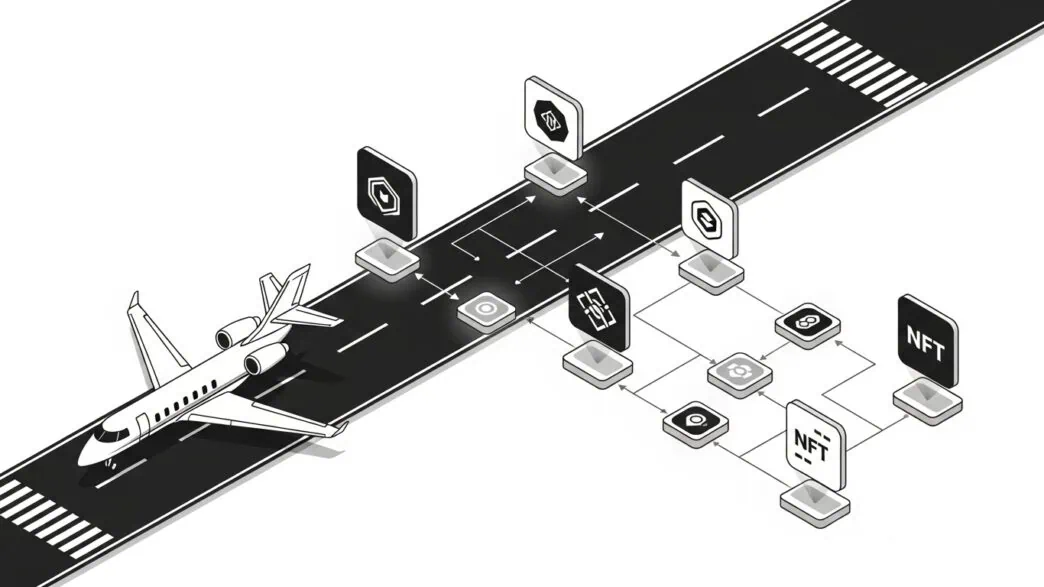
The aviation industry stands at a technological crossroads. While private aviation NFTs might sound like another digital trend, the underlying economic and technical fundamentals reveal a sophisticated transformation of how we access, own, and monetize luxury travel assets
The numbers tell a compelling story: the Aviation Blockchain Market is projected to grow from USD 1.45 billion in 2024 to USD 6.75 billion by 2033, representing a 19.5% CAGR. Simultaneously, the global private aircraft market is expected to reach USD 80.8 billion by 2034, growing at 6.7% CAGR from USD 26.6 billion in 2024.
This isn’t coincidence—it’s convergence.
The Technical Case for Aviation Blockchain Integration
Private aviation NFTs represent more than digital collectibles; they’re programmable access rights built on immutable blockchain infrastructure. The technical advantages are measurable and significant.
Blockchain technology offers enhanced security and data integrity, mitigating risks associated with cyber threats and data manipulation. For an industry where safety and verification are paramount, this technological foundation provides unprecedented transparency.
Economic Efficiency Through Decentralization
Traditional aviation membership models suffer from intermediary inefficiencies. Private aviation NFTs eliminate multiple layers of administrative overhead through smart contract automation.
Blockchain can improve efficiency by reducing time spent on routine inspections and maintenance, defeating mercenary parts resellers through comparing serial numbers against indelible, real-time ownership records.
The economic implications are substantial:
- Reduced transaction costs through automated verification
- Eliminated counterparty risk via blockchain immutability
- Streamlined compliance through transparent audit trails
Market Dynamics: Why Now?

The convergence of several macroeconomic factors creates an optimal environment for private aviation NFTs:
Growing UHNW Population
The wealthy population surpassed 625,000 people worldwide in 2025, controlling assets of USD 30 trillion and expanding 4% yearly. This demographic represents the natural early adopters for blockchain-based luxury assets.
Private Aviation Market Resilience
The global market for private jet rental services grew from $21.24 billion in 2024 to $24.28 billion in 2025, at a CAGR of 14.3%. This growth occurred despite economic uncertainties, demonstrating the sector’s recession-resistant characteristics.
Blockchain Technology Maturation
The projected number of blockchain transactions in aviation is expected to reach approximately 500 million annually by 2030, up from about 50 million in 2023.
PrivatecharterX’s Technical Architecture
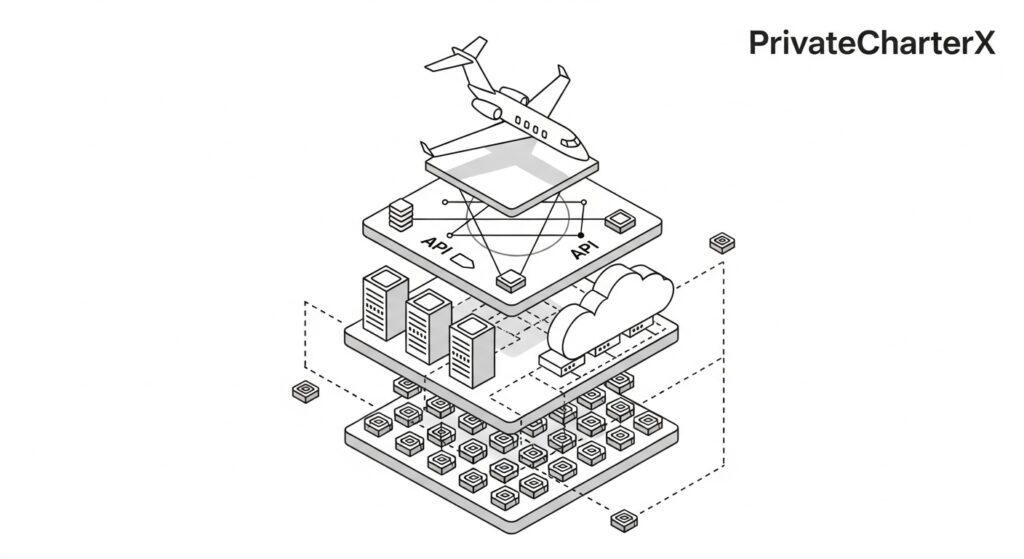
The PrivatecharterX NFT system demonstrates practical blockchain implementation with real economic utility. Unlike speculative digital assets, these private aviation NFTs are backed by tangible service infrastructure.
Limited Supply Economics
The collection is restricted to 100 digital member cards, creating artificial scarcity through programmatic enforcement. This isn’t arbitrary—it’s deliberate economic design based on network effects and exclusivity economics.
The mathematical relationship is straightforward:
Exclusivity Value = Total Market Demand / Fixed Supply
With growing private aviation demand and fixed NFT supply, value appreciation follows economic fundamentals rather than speculative sentiment.
Utility-First Design
Each private aviation NFT provides measurable benefits:
- Free Empty Leg Flight: Immediate value realization upon purchase
- 10% Permanent Discount: Ongoing cost reduction across all bookings
- Priority Access: First-mover advantage on discounted inventory
- Limousine Transfers: End-to-end service integration
- 24/7 Priority Support: Premium service tier access
- Token Ecosystem Access: Early participation in broader digital economy
- Rewards Program: Kilometer-based token accumulation
- VIP Event Access: Exclusive network participation
Technical Infrastructure Advantages
Blockchain Verification: Blockchain technology provides transparency, immutability, and enhanced data management, ensuring membership authenticity without traditional verification overhead.
Smart Contract Automation: Benefit distribution, discount application, and reward calculation occur automatically, reducing operational costs and human error.
Interoperability: NFT membership can integrate with partner services, creating ecosystem synergies impossible with traditional membership models.
Economic Analysis: ROI and Value Creation

The value proposition extends beyond luxury consumption into investment mechanics.
Cost-Benefit Analysis
For frequent private aviation users, the economic case is compelling:
| Annual Usage | Traditional Cost | NFT Membership Cost | Annual Savings |
|---|---|---|---|
| 10 flights | $200,000 | $180,000 + NFT | $20,000+ |
| 20 flights | $400,000 | $360,000 + NFT | $40,000+ |
| 50 flights | $1,000,000 | $900,000 + NFT | $100,000+ |
Assuming average flight cost of $20,000 and 10% discount
Secondary Market Dynamics
The private jet NFT can be traded on supported secondary markets. The new owner receives all attached permanent benefits, creating liquidity for what traditionally represents illiquid membership assets.
This tradability introduces several economic advantages:
- Exit flexibility for changing travel needs
- Price discovery through market mechanisms
- Investment diversification within luxury asset portfolios
Technical Security and Compliance
Aviation regulations demand the highest security standards. Private aviation NFTs leverage blockchain’s inherent security advantages while maintaining regulatory compliance.
The aviation industry operates under stringent regulations and standards, requiring any blockchain implementation to meet existing compliance frameworks.
The PrivatecharterX system addresses these requirements through:
- Regulatory Compliance: All partner operators maintain EASA Part ORO certifications
- Data Protection: Blockchain implementation respects privacy regulations while ensuring transparency
- Audit Trails: Immutable transaction records facilitate regulatory reporting
Future-Proofing Through Technology Integration
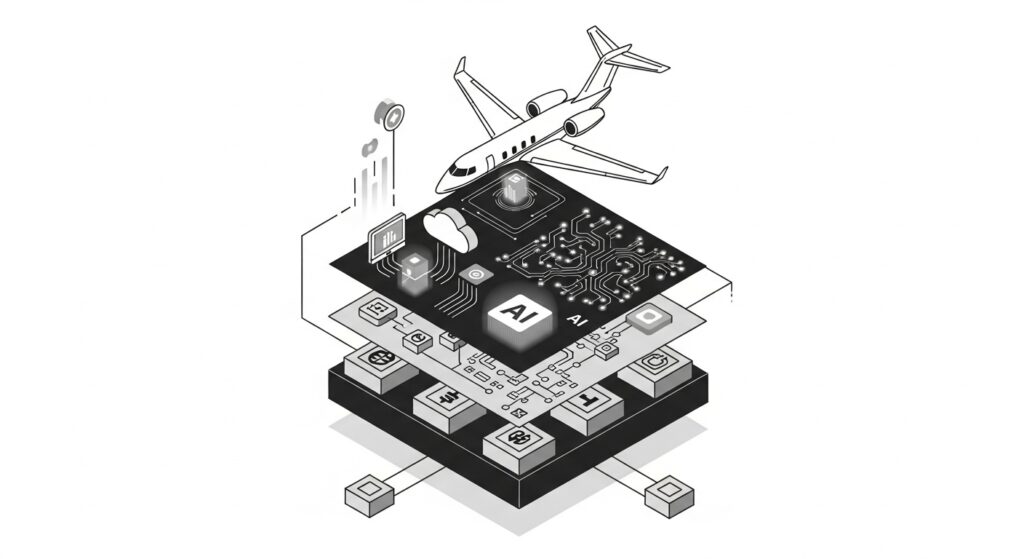
The private aviation NFTs model positions holders for technological advancement across multiple vectors:
Urban Air Mobility Integration
Companies like Joby Aviation and Lilium are prepared to introduce electric vertical takeoff and landing (eVTOL) aircraft into the market. NFT membership models can seamlessly integrate with emerging transportation technologies.
Sustainable Aviation Transition
The European Union is imposing gradual incorporation of sustainable aviation fuel (SAF), with a minimum of 2% SAF mandatory from 2025, rising to 70% by 2050. Blockchain tracking enables transparent sustainability reporting and carbon offset verification.
Artificial Intelligence Enhancement
Aviation blockchain platforms are increasingly incorporating AI for predictive maintenance, route optimization, and demand forecasting. Private aviation NFTs position holders at the forefront of these technological integrations.
Comparative Analysis: Traditional vs. Blockchain Models
| Aspect | Traditional Membership | Private Aviation NFTs |
|---|---|---|
| Verification | Paper/Digital certificates | Blockchain immutable records |
| Transferability | Complex legal processes | Instant marketplace trading |
| Benefit tracking | Manual accounting | Automated smart contracts |
| Secondary market | Limited/non-existent | Active digital marketplaces |
| Transparency | Opaque fee structures | Transparent blockchain transactions |
| Geographic limitations | Often region-specific | Global blockchain accessibility |
Investment Thesis: Technical and Economic Convergence
The investment case for private aviation NFTs rests on multiple converging factors:
Technology Adoption Curve
North America held a dominant market position in aviation blockchain, capturing more than 36.9% share and earning USD 349.9 million in revenue in 2024. Early adoption positioning provides competitive advantages as the technology matures.
Market Timing
North America is expected to see around 66% of new jet deliveries by the end of 2025, with 30% of survey respondents anticipating flying more in 2025. Growing demand meets technological innovation at an optimal intersection.
Regulatory Tailwinds
Rising adoption in ticketing, maintenance, and supply chain systems drives blockchain integration in aviation, with the U.S. and Japan leading innovation. Regulatory clarity and government support accelerate institutional adoption.
Risk Assessment and Mitigation
No investment operates without risk. Private aviation NFTs face several technical and market challenges:
Technology Risks
- Blockchain scalability limitations during high-demand periods
- Smart contract vulnerabilities requiring rigorous security auditing
- Interoperability challenges with legacy aviation systems
Market Risks
- Regulatory changes affecting blockchain or aviation industries
- Economic downturns impacting luxury travel demand
- Competition from traditional loyalty programs adopting blockchain
Mitigation Strategies
PrivatecharterX addresses these risks through:
- Diversified technology stack reducing single-point failures
- Regulatory compliance focus ensuring sustainable operations
- Real-world utility providing value independent of speculative markets
Technical Implementation: Behind the Scenes
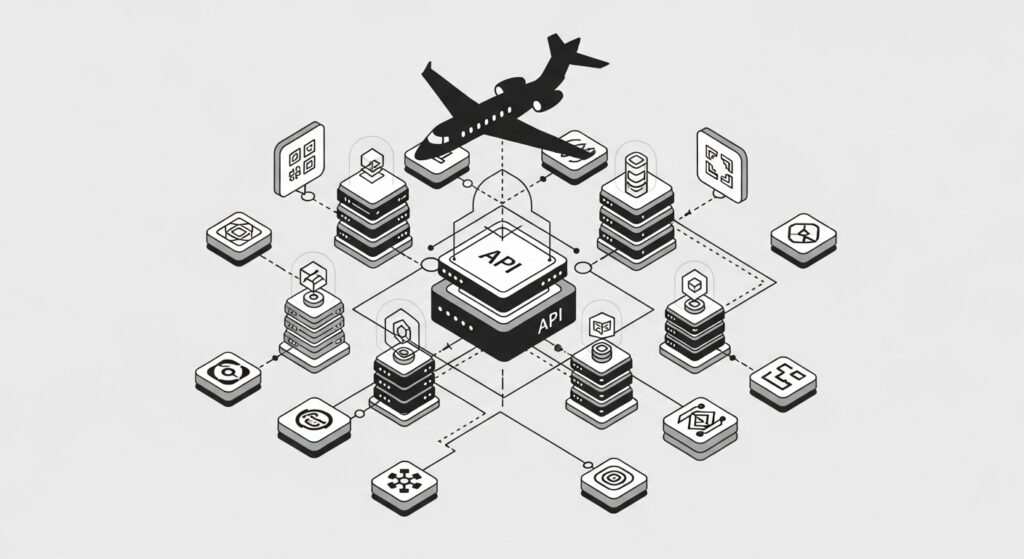
The technical architecture supporting private aviation NFTs involves several sophisticated components:
Smart Contract Design
Benefit distribution, discount calculation, and reward mechanisms operate through audited smart contracts, ensuring transparent and predictable execution.
Oracle Integration
Real-world data (flight completion, distance tracking, service delivery) connects to blockchain through secure oracle networks, maintaining data integrity while enabling automated benefit distribution.
Cross-Chain Compatibility
The system supports multiple blockchain networks, providing redundancy and user flexibility while maintaining unified benefit tracking.
Economic Modeling: Long-term Value Creation
The long-term value proposition extends beyond immediate utility into broader economic participation:
Network Effects
As adoption grows, private aviation NFTs benefit from network effects—each additional member increases the system’s value for existing holders through:
- Enhanced route availability through increased demand
- Improved service quality through operational scale
- Expanded partner network through market growth
Token Economy Integration
Future integration with broader token ecosystems creates additional value streams:
- Staking opportunities for additional rewards
- Governance participation in platform development
- Cross-platform utility extending beyond aviation
Conclusion: The Next Era Begins
Private aviation NFTs represent more than technological novelty—they embody a fundamental shift toward programmable, tradable access rights in luxury markets.
The convergence of blockchain maturation, private aviation growth, and evolving consumer preferences creates a unique opportunity window. The Aviation Blockchain Market is projected to grow at a CAGR of 21.52% to USD 3,806.16 million by 2030, while private aviation NFTs position early adopters at the intersection of these trends.
For sophisticated investors and frequent private aviation users, the value proposition combines immediate utility with long-term appreciation potential. The technology is mature, the market is growing, and the regulatory environment is increasingly supportive.
The next era of access and utility has arrived. The question isn’t whether blockchain will transform luxury travel—it’s whether you’ll participate in that transformation.
For detailed information about NFT membership benefits and how to get started, check out our NFT memberships overview and complete NFT membership guide.
Learn more about the future of luxury travel at Privatecharterx.