






Private jet first class comparisons have evolved dramatically in 2026. What was once a straightforward choice between budget and extravagance now involves complex calculations around time efficiency, hyper-personalization, wellness features, and artificial intelligence-powered booking systems that transform how executives and high-net-worth individuals evaluate luxury air travel options.
Business executives traveling from New York to Singapore face a revealing comparison. Six first-class seats on Singapore Airlines total approximately $120,000 round trip. A long-haul private charter on a heavy jet costs $300,000 to $400,000 for the same journey. The price gap appears substantial until you factor in schedule control, airport access, productivity gains, and group travel economics.
According to Gourmet Marketing’s 2026 travel trends analysis, hyper-personalized stays and experiences have become baseline expectations rather than premium differentiators. This shift fundamentally changes how travelers evaluate private jet charter versus first-class commercial flights.
Calculate Your Private Jet Cost with Sphera AI
Get instant quotes on private jets, helicopters, and luxury yachts. Compare costs for your specific route and group size. Earn PVCX token rewards on every booking.Talk to Sphera AI
Table of Contents
- Cost Comparison: Breaking Down 2026 Pricing
- Time Efficiency: The Real ROI for Business Travelers
- Hyper-Personalization and Wellness Features 2026
- Privacy, Productivity and Remote Work
- Sustainability Considerations
- Airport Experience and Route Flexibility
- When to Choose Private Jet vs First Class 2026
- Frequently Asked Questions
Cost Comparison: Breaking Down 2026 Pricing
The cost structure for private jet charter versus first class follows fundamentally different models. First-class tickets sell per passenger seat while private charters rent the entire aircraft regardless of passenger count.
For solo travelers, first class delivers clear cost advantages. Domestic first-class tickets range from $1,300 to $5,000 per person according to FlyUSA’s private jet comparison analysis. International first-class routes command $5,000 to $20,000 per person depending on airline, route length, and seasonal demand.
Private jet charter rates span $2,000 to $30,000 per flight hour. Aircraft size, distance, wait times, crew overnight fees, fuel stops, and airport handling fees all impact final costs. A transcontinental United States flight on a midsize jet typically costs $20,000 to $35,000 one way.
Group Travel Economics Shift the Calculation
The per-person cost advantage of private aviation emerges with larger groups. Consider a corporate team of eight executives flying coast-to-coast. Eight first-class seats at $4,000 each total $32,000. A midsize private jet for the same route costs approximately $25,000 to $30,000 for the entire aircraft.
When the private jet first class comparison includes multiple passengers, charter pricing becomes competitive or even advantageous. The calculation shifts further when considering door-to-door travel time, scheduling flexibility, and productivity during flight.
Gold Aviation’s 2025 value comparison study notes that shared charter models and private jet membership platforms create flexible options for smaller groups seeking private experiences without chartering entire aircraft.
AI-Powered Pricing Transparency
Artificial intelligence has transformed pricing transparency in private aviation. Platforms like Sphera AI provide instant cost comparisons across multiple operators, aircraft types, and routing options. Travelers input departure city, destination, passenger count, and travel dates to receive real-time pricing.
This technological advancement addresses a longstanding friction point in private jet first class comparisons. First-class pricing has always been transparent through airline booking systems. Private charter pricing historically required multiple phone calls and email exchanges. AI booking systems now deliver comparable transparency to commercial airline booking while maintaining the customization advantages of private aviation.
Time Efficiency: The Real ROI for Business Travelers
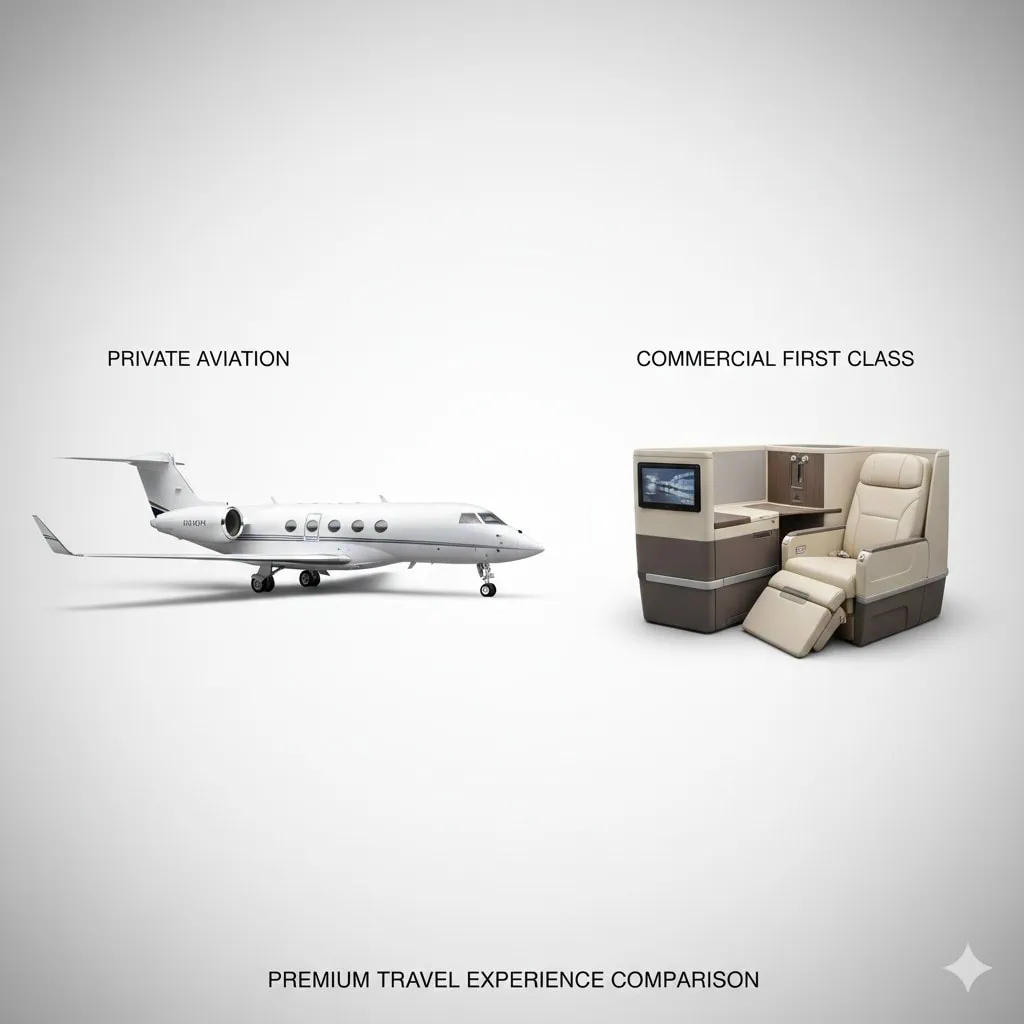
Time represents the most valuable commodity for executives and high-net-worth individuals. Ventura Air Services time efficiency analysis demonstrates that private charter passengers save approximately four to six hours during standard domestic journeys compared to first-class commercial travel.
First-class passengers still navigate commercial airport procedures. Airlines recommend arriving 90 to 120 minutes before departure for domestic flights and two to three hours for international routes. Priority boarding, TSA PreCheck, and lounge access reduce wait times but cannot eliminate them entirely.
Private aviation fundamentally restructures the airport experience. Passengers using fixed-base operator terminals arrive 15 to 30 minutes before departure. Security screening takes minutes rather than hours. Ground transportation often drives directly to the aircraft. Baggage transfers directly from vehicle to plane without check-in counters or claim carousels.
Airport Access Amplifies Time Advantages
Commercial airlines operate from approximately 500 major airports across the United States. Private aircraft access over 5,000 airports including regional facilities closer to final destinations. This expanded network eliminates ground transportation time between major commercial hubs and actual business locations.
A corporate executive traveling from Manhattan to a manufacturing facility in rural Pennsylvania faces revealing time comparisons. The first-class commercial route requires flying from JFK or Newark to Pittsburgh, then driving two hours to the destination. Total door-to-door time exceeds six hours.
A private jet departs from Teterboro Airport in New Jersey and lands at a regional airport fifteen minutes from the manufacturing facility. Total travel time drops to under two hours. The time savings compound when executives visit multiple locations across regions where commercial service proves limited or nonexistent.
Bleisure Travel and Work-From-Anywhere Scheduling
The blending of business and leisure travel has become standard practice rather than exception. Industry analysis from McKinsey’s future of travel report confirms that remote work has permanently changed travel behavior. Digital nomads, entrepreneurs, and corporate teams book longer stays combining professional obligations with leisure experiences.
Private jet first class comparisons now include scheduling flexibility as a primary consideration. Commercial airlines operate on fixed schedules determined by network economics and hub operations. Travelers adjust their schedules to match available flights even in first class.
Private charters invert this relationship. Departure times match traveler schedules rather than airline timetables. Last-minute itinerary changes accommodate unexpected business opportunities or personal preferences. The ability to extend stays, add destinations, or depart earlier than originally planned delivers tangible value to time-poor professionals.
Hyper-Personalization and Wellness Features 2026
Hyper-personalized experiences have transitioned from luxury differentiators to baseline expectations across high-end travel segments. The private jet first class equation increasingly factors customization depth and wellness amenities into value calculations.
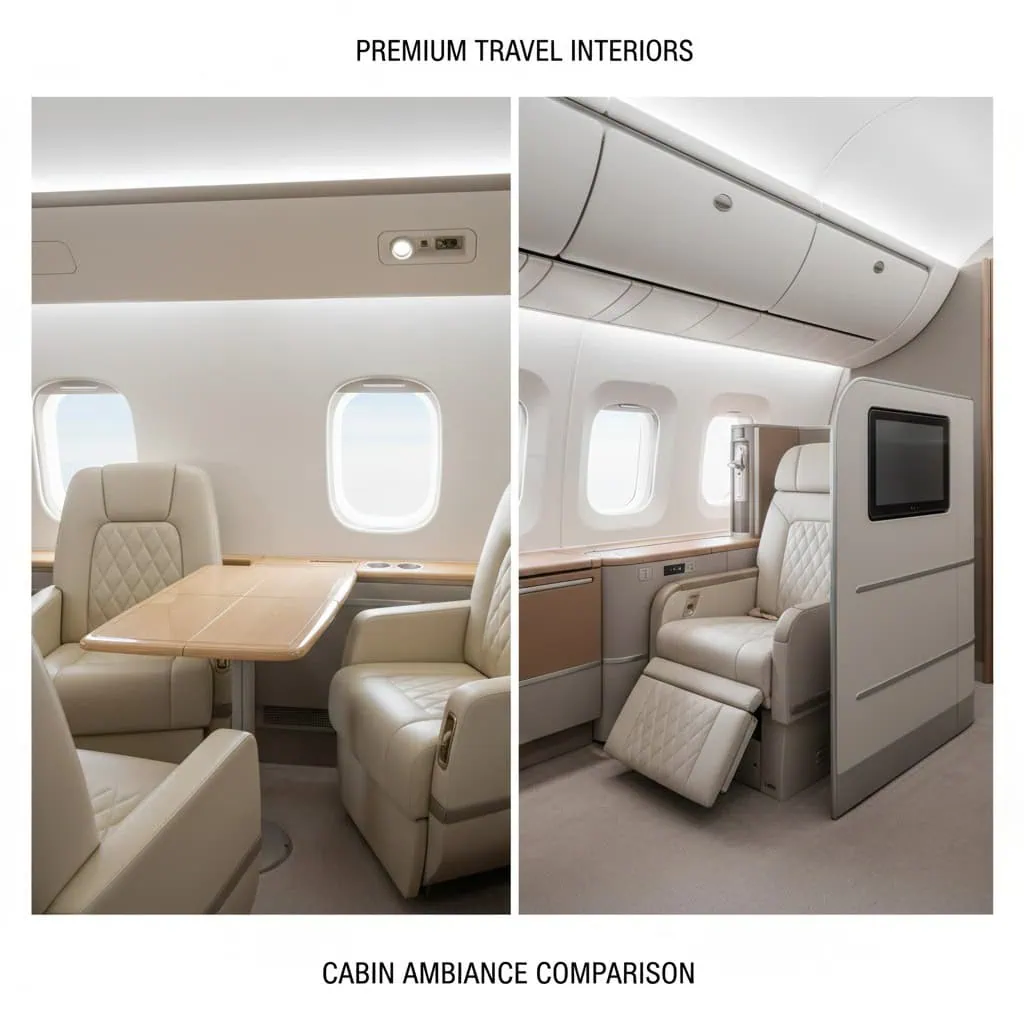
Private aviation offers complete cabin control. Passengers select seating configurations, temperature settings, lighting schemes, entertainment systems, and meal preferences without constraint. Aircraft can be configured as flying offices with conference tables and presentation equipment or as relaxation spaces with beds and spa-like amenities.
First-class cabins on premium carriers have elevated their personalization offerings significantly. Singapore Airlines Suites feature private rooms with double beds, while Emirates First Class offers onboard shower spas on select routes. These experiences represent the pinnacle of commercial aviation luxury.
The fundamental difference remains environmental control. First-class passengers enjoy exceptional service within standardized cabin configurations designed to serve all passengers. Private jet travelers customize every element specifically for their group’s preferences or individual requirements.
Wellness Tourism Integration
Wellness tourism is projected to surpass one trillion dollars globally in 2026 according to Forbes wellness tourism analysis. This growth drives demand for holistic health experiences extending from ground accommodations into air travel.
Private jets increasingly incorporate wellness-focused features. Sleep optimization programs include circadian lighting systems, premium bedding materials, and cabin pressurization settings that reduce altitude-related fatigue. Nutrition-focused catering emphasizes whole foods, hydration protocols, and meal timing aligned with destination time zones.
Some operators partner with wellness brands to offer biohacking amenities, meditation guidance, and recovery protocols designed specifically for air travel. These services address jet lag, stress management, and physical comfort during long-duration flights.
First-class commercial cabins incorporate wellness elements within operational constraints. Premium airlines provide quality bedding, thoughtful meal options, and spacious seating that supports better sleep. The standardized nature of commercial operations limits deep customization around individual wellness protocols or group-specific health requirements.
Privacy, Productivity and Remote Work
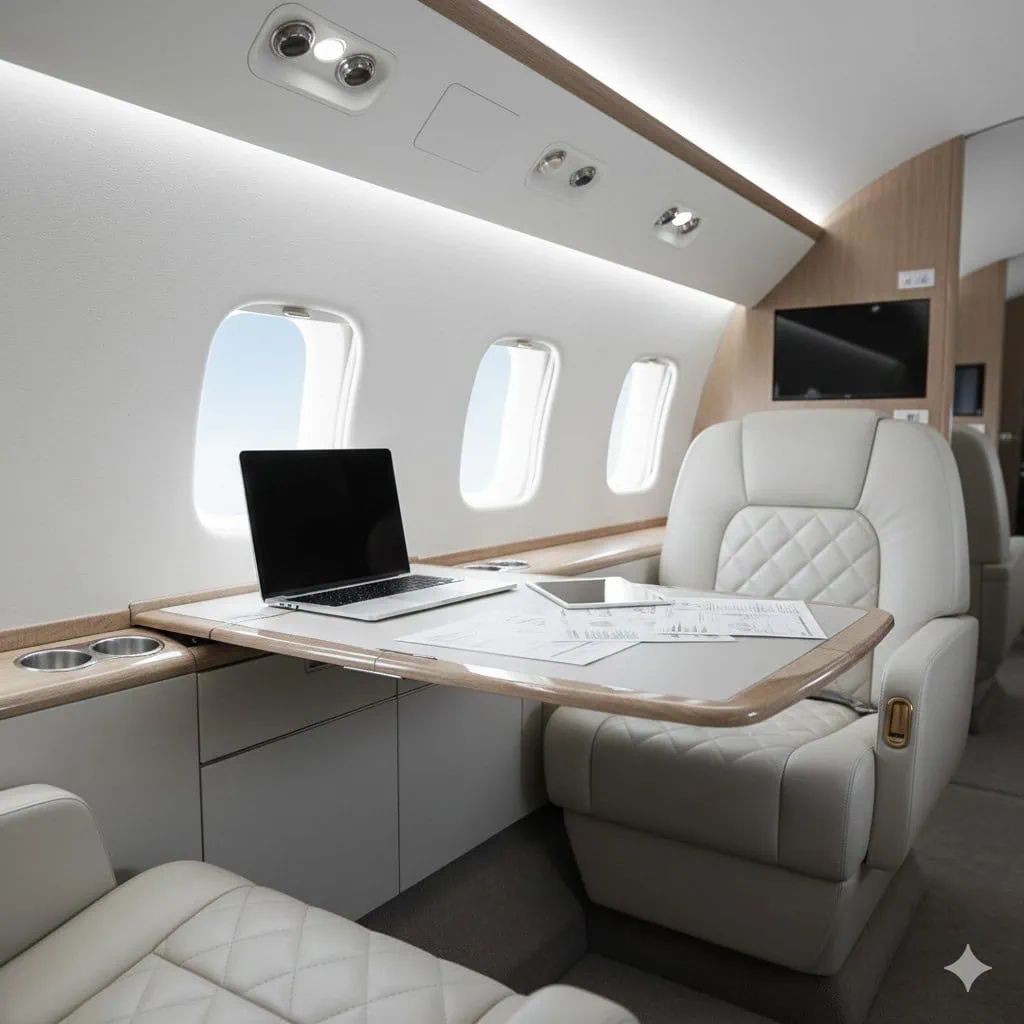
Privacy considerations extend beyond simple cabin exclusivity into productivity capabilities and confidential business requirements. The private jet first class comparison reveals fundamental differences in workspace functionality and communication security.
First-class cabins offer improved space and amenities compared to economy class but remain fundamentally public spaces. Passengers share cabins with other travelers. Noise levels fluctuate. Wi-Fi bandwidth distributes across all connected devices. Conducting sensitive video conferences or reviewing confidential documents requires discretion and careful timing.
Private jets function as flying offices with complete privacy guarantees. Corporate teams conduct board meetings, strategy sessions, and sensitive negotiations without concern for eavesdropping or information leaks. Conference call audio remains clear without ambient noise from other passengers.
Connectivity and Collaboration Technology
High-speed internet connectivity has become essential for remote work integration into air travel. First-class cabins typically provide broadband access, but bandwidth shares across passengers. Connection quality varies by aircraft, route, and passenger load. Video conferencing may face bandwidth limitations during peak usage periods.
Private aviation delivers dedicated satellite-based connectivity without shared bandwidth constraints. Business executives conduct video calls, access cloud-based applications, and transfer large files without degraded performance. This capability proves especially valuable over remote regions including ocean crossings where connection reliability matters most.
The work-from-anywhere lifestyle requires reliable connectivity as baseline infrastructure. Remote work travel analysis demonstrates that digital nomads and corporate teams increasingly prioritize connectivity quality when evaluating travel options. Private jet first class decisions factor internet performance alongside traditional comfort metrics.
Book Your Private Flight in Minutes
Talk to Sphera AI for instant quotes on private jets, helicopters, and luxury yachts. Compare routes, aircraft types, and pricing. Earn PVCX token rewards on every booking.Get Instant Quote
Sustainability Considerations
Environmental impact has emerged as a significant consideration in luxury travel decisions. The private jet first class sustainability comparison reveals stark differences in per-passenger carbon emissions alongside evolving mitigation strategies.
Private jets emit approximately 14 times more carbon dioxide per passenger than commercial aircraft according to environmental studies. This calculation reflects the fundamental inefficiency of operating large aircraft for small passenger counts. A private jet carrying four passengers uses similar fuel quantities as a commercial aircraft carrying 150 to 300 passengers.
First-class cabins on modern aircraft benefit from improved fuel efficiency, optimized flight planning, and shared emissions across hundreds of passengers. Airlines continue investing in next-generation aircraft that reduce per-passenger environmental impact through aerodynamic improvements and engine technology advances.
Carbon Offset Programs and Sustainable Aviation Fuel
The private aviation industry has responded to sustainability concerns through multiple initiatives. Carbon offset programs allow passengers to fund environmental projects that counterbalance flight emissions. These programs have evolved from optional add-ons to standard offerings integrated into booking processes.
Sustainable aviation fuel adoption represents a more fundamental approach to emissions reduction. SAF produces up to 80 percent lower lifecycle carbon emissions compared to conventional jet fuel. Private operators increasingly offer SAF options to environmentally conscious clients willing to pay premium fuel costs.
First-class commercial travel benefits from airline-wide sustainability initiatives including SAF adoption, fleet modernization, and operational efficiency programs. Major carriers have announced commitments to achieve net-zero emissions by 2050 through combination strategies addressing fuel, operations, and offset programs.
The sustainability question in private jet first class comparisons lacks simple answers. Private aviation delivers superior time efficiency and productivity benefits that may justify higher per-passenger emissions for specific business requirements. Travelers increasingly evaluate carbon impact alongside cost and convenience when making travel mode decisions.
Airport Experience and Route Flexibility
The airport experience fundamentally differentiates private jet charter from first-class commercial travel. Time efficiency calculations must include ground operations alongside flight duration for accurate door-to-door comparisons.
First-class passengers enjoy priority services throughout commercial airport facilities. Dedicated check-in counters, expedited security lanes, and premium lounges reduce wait times compared to economy class. Airlines like ANA and Lufthansa provide luxury lounge experiences with spa services, fine dining, and business facilities.
These premium services operate within constraints of commercial airport infrastructure. First-class passengers still navigate crowded terminals, wait through boarding processes, and coordinate with hundreds of other travelers using the same facilities. Security screening requirements apply regardless of ticket class.
Private Terminal Operations Transform the Experience
Private aviation bypasses commercial terminal constraints entirely through fixed-base operator facilities. FBOs provide dedicated terminals designed for rapid processing and premium service. Passengers drive directly to terminal buildings often located minutes from aircraft parking positions.
Security screening at private terminals serves solely charter passengers and crew. Processing takes minutes rather than hours. Ground transportation vehicles often drive directly to aircraft, eliminating walking distances through terminal buildings. Baggage handling occurs immediately without conveyor systems or claim areas.
The cumulative time savings reach four to six hours on typical domestic trips according to operational analysis. These savings multiply for travelers making multiple trips weekly or visiting locations poorly served by commercial aviation networks.
Route Network Advantages Enable Multi-City Efficiency
Commercial airline networks optimize for high-traffic routes between major metropolitan areas. Regional destinations require connections through hub airports. Multi-city itineraries involving secondary markets become complex and time-consuming even in first class.
Private aircraft access the full airport network including regional facilities serving smaller cities and rural areas. This capability enables multi-stop itineraries impossible via commercial aviation. A corporate team can visit manufacturing facilities in three different states during a single day through strategic routing and regional airport access.
The route flexibility advantage proves especially valuable for international travel to destinations with limited commercial service. Private jets land at airports closer to final destinations reducing ground transportation requirements and total journey time.
When to Choose Private Jet vs First Class 2026
The private jet first class decision framework involves multiple variables beyond simple cost comparison. Travelers must evaluate trip-specific requirements against the distinct advantages each option delivers.
Private Jet Advantages Apply When:
Group travel involves four or more passengers traveling together. Per-person costs approach or beat first-class pricing while delivering superior schedule control and privacy.
Time sensitivity requires maximizing productivity. Multi-city itineraries, tight meeting schedules, or same-day return trips justify premium costs through time savings and flexibility.
Destinations lack convenient commercial service. Regional airports, secondary markets, or locations requiring connections favor private aviation’s expanded route network.
Privacy requirements include confidential meetings, sensitive discussions, or security concerns. Complete cabin control eliminates information security risks inherent in shared commercial spaces.
Schedule flexibility proves essential. Last-minute travel, uncertain return timing, or potential itinerary changes benefit from departure control rather than fixed airline schedules.
First Class Advantages Apply When:
Solo travelers or couples prioritize cost efficiency. Per-person first-class pricing significantly undercuts private charter costs for small groups.
Long-haul international routes connect major hub cities. Premium carriers offer exceptional first-class products on high-traffic international routes including Singapore Airlines and Emirates.
Loyalty programs and corporate travel policies favor commercial aviation. Frequent flyer status, alliance benefits, and company booking requirements may mandate commercial options.
Sustainability concerns prioritize lower per-passenger emissions. First-class delivers luxury experience with significantly reduced environmental impact compared to private charter.
Budget constraints limit charter expenditure. First-class provides premium comfort and service at fraction of private aviation costs for individuals and small groups.
Hybrid Approaches Optimize Both Options
Sophisticated travelers increasingly adopt hybrid strategies combining both options based on trip-specific requirements. Private charters serve time-critical business travel and multi-city itineraries while first-class handles long-haul leisure routes and solo trips.
Private jet membership programs and shared charter platforms expand access to private aviation at reduced costs. These options bridge the gap between full charter and commercial first class creating middle-ground alternatives for frequent travelers.
The optimal choice varies by individual circumstances, trip requirements, and value priorities. Cost-per-hour calculations tell incomplete stories without factoring time savings, productivity gains, and experiential differences between options.
Frequently Asked Questions
Is private jet cheaper than first class for groups?
Private jets become cost-competitive with first class when groups include four to eight passengers. A midsize jet charter costing $25,000 to $30,000 for eight passengers equals $3,125 to $3,750 per person, comparable to premium first-class pricing. Larger groups see even better per-person economics while gaining schedule control and privacy benefits unavailable in commercial first class.
How much time do you save flying private vs first class?
Private charter passengers save approximately four to six hours on typical domestic trips according to operational studies. Time savings come from streamlined FBO terminal processing, direct aircraft access, regional airport routing, and flexible scheduling. International routes show similar proportional savings through faster ground operations and route optimization capabilities.
Can private jets access more airports than commercial airlines?
Private aircraft access over 5,000 airports across the United States compared to approximately 500 served by commercial carriers. This expanded network includes regional airports closer to final destinations, reducing ground transportation time. The airport access advantage enables multi-city itineraries impossible via commercial networks and direct routing to locations with limited airline service.
Which is better for business travel: private jet or first class?
Private jets deliver superior business travel value when time sensitivity, schedule flexibility, and privacy matter most. Corporate teams conducting confidential work, visiting multiple locations, or operating under tight schedules benefit from private aviation’s control and efficiency. Solo business travelers on hub-to-hub routes may find first class delivers sufficient comfort and service at lower cost.
Do private jets offer better privacy than first class 2026?
Private jets provide complete cabin privacy with exclusive aircraft access for your selected passengers. First-class cabins offer premium service within shared commercial spaces alongside other passengers. Private aviation enables confidential meetings, sensitive discussions, and security protocols impossible in commercial environments regardless of ticket class.
What is the environmental impact of private jets vs first class?
Private jets emit approximately 14 times more carbon dioxide per passenger than commercial aircraft due to lower passenger counts per flight. First-class benefits from shared emissions across hundreds of passengers on fuel-efficient modern aircraft. Private aviation operators increasingly offer sustainable aviation fuel options and carbon offset programs to address environmental concerns while maintaining operational advantages.
Related Resources
Explore these additional guides for comprehensive private aviation and luxury travel insights:
- Helicopter Charter Pricing in Switzerland: Complete Cost Guide
- Private Jet Membership Programs: NetJets vs VistaJet Comparison
- AI Travel Planner 2026: Luxury Aviation Smart Booking Guide
- eVTOL vs Helicopter Cost Comparison: Urban Air Mobility Economics
- Private Jet Cost Calculator: Estimate Your Charter Pricing
Conclusion
The private jet first class decision has evolved beyond simple luxury comparisons into complex evaluations of time value, productivity requirements, and experiential priorities. Neither option universally dominates across all travel scenarios.
First class delivers exceptional comfort and service at reasonable per-person costs for solo travelers and couples on major routes. Premium carriers continue elevating their products with innovative amenities, personalized service, and cutting-edge technology that rivals private aviation experiences on select routes.
Private jets provide unmatched schedule control, privacy, route flexibility, and time efficiency that justify premium costs for specific use cases. Group travel, time-critical business requirements, regional destinations, and confidential work all favor private aviation despite higher absolute costs.
The optimal approach increasingly involves strategic selection based on trip-specific requirements rather than blanket preferences. Sophisticated travelers evaluate each journey against decision frameworks considering passenger count, time sensitivity, destination accessibility, privacy needs, and budget constraints.
Technology continues reshaping both options. AI-powered booking platforms like Sphera AI deliver pricing transparency and instant comparisons previously unavailable in private aviation markets. Commercial airlines integrate similar technologies for enhanced personalization and seamless booking experiences.
As luxury travel markets mature in 2026, the private jet first class comparison reflects broader industry trends toward hyper-personalization, wellness integration, sustainability consciousness, and technology-enabled efficiency. Both options will continue evolving to meet rising expectations from increasingly sophisticated travelers who demand exceptional experiences aligned with their specific values and requirements.
Sources
- Gourmet Marketing: 19 Travel Trends Shaping 2026
- FlyUSA: Private Jet vs First Class Comparison Analysis
- Gold Aviation: Private Jet Charter vs First Class Value Analysis 2025
- Ventura Air Services: Private Jet vs First Class Time Efficiency Study
- McKinsey & Company: What is the Future of Travel
- Forbes: Global Wellness Tourism Surges Toward $1 Trillion Mark
- Singapore Airlines: First Class Suites
- Emirates: First Class Features
- NerdWallet: How Remote Work Has Changed Travel
- ANA: First Class Experience
- Lufthansa: First Class