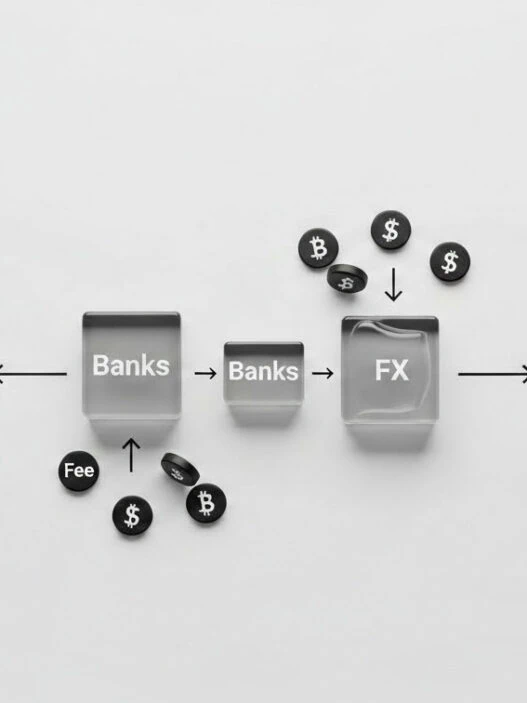










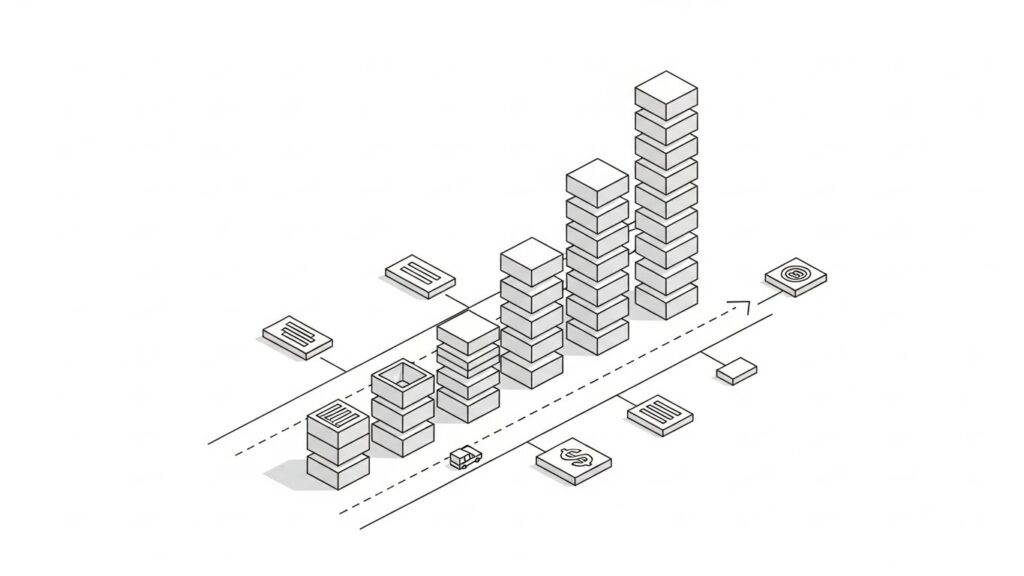
RWA market 2026 projections estimate $50 billion total tokenized real world assets based on current $30-33 billion December 2025 valuation representing 380% annual growth from $8.6 billion January 2025 baseline according to Q3 2025 market analysis. Private credit dominates with $17 billion tokenized assets while U.S. Treasury products command $8.2 billion market share demonstrating institutional appetite for blockchain-native yield-bearing instruments. This explosive growth trajectory positions real world assets as fastest-expanding digital asset category surpassing decentralized finance protocols and non-fungible token markets in total value locked.
Market forecasts for the RWA market 2026 anticipate continued institutional deployment through BlackRock, JPMorgan, Franklin Templeton, and Apollo transitioning from pilot programs to production-scale tokenization infrastructure. Standard Chartered predicts $30 trillion market capitalization by 2034 while Boston Consulting Group estimates $16 trillion by 2030 creating wide projection variance reflecting nascent market maturity. Regulatory clarity through GENIUS Act passage July 2025 and expanding blockchain infrastructure across Ethereum Layer-2 networks, Solana, and institutional platforms accelerate addressable market expansion beyond early adopter institutions toward mainstream financial services integration.
Table of Contents
- Current RWA Market State December 2025
- Primary Growth Drivers and Catalysts
- Market Category Breakdown and Distribution
- Institutional Adoption and Major Players
- Blockchain Infrastructure and Network Distribution
- Regulatory Framework Evolution 2025-2026
- 2026 Market Forecasts and Projections
- Challenges and Risk Factors
- RWA Applications in Luxury Travel and Aviation
- FAQ: Real World Asset Tokenization Market
Current RWA Market State December 2025
Tokenized real world asset market capitalization stands at $30-33 billion as of December 2025 according to multiple industry sources including RWA.xyz, Investax, and CoinDesk analysis. This valuation excludes $309 billion stablecoin market cap which technically represents tokenized fiat currency reserves. The non-stablecoin RWA sector expanded from $85 million in 2020 to current levels demonstrating 35,000% cumulative growth over five-year period establishing tokenization as proven institutional use case beyond cryptocurrency speculation.
Market composition concentrates heavily in two dominant categories: private credit tokenization commanding 56% market share ($17 billion) and U.S. Treasury products representing 27% share ($8.2 billion). Remaining market segments include real estate tokenization 6% ($1.8 billion), commodities 3% ($900 million), equity tokens 1% ($300 million), and carbon credits 1% ($300 million) with emerging categories including trade finance, intellectual property, and luxury assets gaining early traction.
Geographic distribution shows United States market leadership driven by regulatory clarity through GENIUS Act passage July 2025 and institutional infrastructure maturity. Singapore, Hong Kong, United Arab Emirates, and European Union jurisdictions follow through progressive digital securities frameworks and government-supported blockchain initiatives. Brazil, Japan, and Australia launched licensed RWA infrastructure 2025 expanding addressable market beyond traditional financial centers into emerging blockchain hubs.

Primary Growth Drivers and Catalysts
Interest Rate Environment and Yield Demand
Federal Reserve elevated interest rate policy 2022-2025 created favorable environment for fixed-income RWA products offering competitive yields versus near-zero rate environment 2020-2021. Tokenized U.S. Treasury funds deliver 3.5-4.8% annual percentage yields attracting institutional treasurers seeking blockchain-native cash management solutions. Private credit tokenization provides 8-14% yields on senior secured loans and real estate debt appealing to yield-focused allocators unable to access traditional private credit minimum investments.
Rate cycle positioning influences RWA adoption trajectory—declining rate environment 2026 may pressure absolute yield levels but relative attractiveness versus traditional savings accounts (0.39-0.62% national average) maintains compelling value proposition. Tokenization efficiency gains including automated interest distributions, 24/7 settlement, and fractional ownership economics justify management fees 0.15-0.50% versus traditional fund structures charging 0.50-2.00% expense ratios.
Regulatory Clarity and Legal Framework
GENIUS Act federal legislation July 2025 established comprehensive stablecoin regulatory framework reducing legal uncertainty impeding institutional participation. Securities and Exchange Commission issued April 2025 guidance clarifying “Covered Stablecoins” exempt from securities classification enabling compliant product launches without registration requirements. European Union Markets in Crypto-Assets (MiCA) regulation phased implementation throughout 2024-2025 created harmonized digital asset framework across 27 member states.
Additional regulatory progress includes Singapore Monetary Authority digital securities framework updates, Hong Kong Securities and Futures Commission tokenization guidelines, Dubai Financial Services Authority approval of first tokenized money market fund, and United Kingdom Digital Securities Sandbox program supporting pilot deployments. Japan Financial Services Agency approved first yen-backed stablecoin December 2025 with comprehensive crypto legislation bill planned 2026 launch.
Institutional Infrastructure Maturity
Blockchain custody solutions achieved institutional-grade security standards through partnerships with established custodians Bank of New York Mellon, State Street, and Northern Trust providing regulated asset safeguarding. Chainlink oracle network supplies verified off-chain data feeds enabling smart contracts accessing real-time pricing, identity verification, and compliance data required for regulated securities. Cross-chain interoperability protocols including LayerZero, Optimism Superchain, and Polkadot enable asset transfers across Ethereum, Polygon, Arbitrum, and Solana networks reducing blockchain lock-in risks.
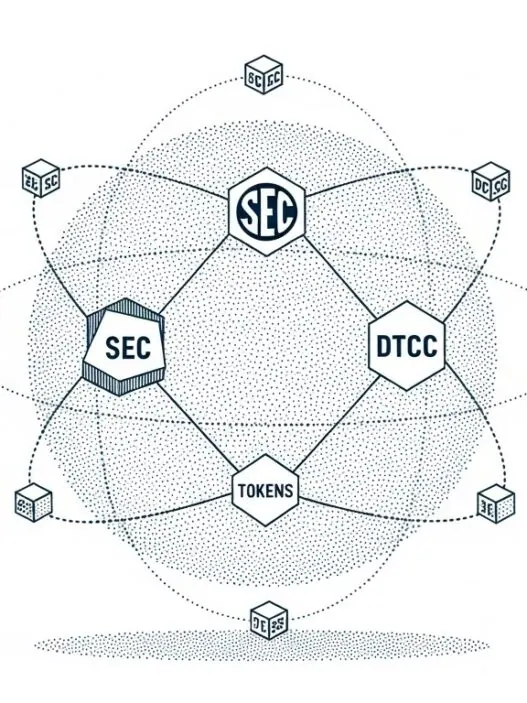
Transfer agent infrastructure developed specifically for tokenized securities handles shareholder record-keeping, dividend distributions, and regulatory reporting requirements. Securitize, Polymath, and Vertalo platforms provide compliant issuance infrastructure serving 200+ active tokenization projects December 2025. Traditional financial institutions deployed proprietary blockchain platforms—JPMorgan Onyx processes $2 trillion monthly Treasury repo transactions, Goldman Sachs Canton Network facilitates bilateral institutional settlement, and DTCC exploring tokenized securities post-trade infrastructure.
Market Category Breakdown and Distribution
| Asset Category | Market Size (Dec 2025) | Market Share | Key Examples | Avg Yield |
|---|---|---|---|---|
| Private Credit | $17.0B | 56% | Figure ($12B HELOCs), Maple Finance, Centrifuge | 8-14% |
| U.S. Treasuries | $8.2B | 27% | BlackRock BUIDL, Franklin BENJI, Ondo USDY | 3.5-4.8% |
| Real Estate | $1.8B | 6% | RealT, Converge, RedSwan | 6-10% |
| Commodities | $900M | 3% | Paxos Gold (PAXG), Tether Gold (XAUT) | 0% (price appreciation) |
| Equity Tokens | $600M | 2% | tZERO, INX, Blockchain Capital | Variable |
| Carbon Credits | $300M | 1% | Toucan Protocol, Flowcarbon | N/A |
| Other | $1.5B | 5% | Trade finance, IP, art, collectibles | Variable |
| TOTAL | $30.3B | 100% |
Data compiled from RWA.xyz, Investax Q3 2025 Report, Coinpedia Research December 2025.
Private Credit Dominance
Private credit tokenization leads market with $17 billion outstanding driven by institutional appetite for yield-bearing assets and operational efficiency gains. Figure Technologies tokenized $12 billion home equity lines of credit (HELOCs) representing largest single issuer by volume. Maple Finance deploys on-chain credit vaults funding corporate loans and structured finance. Centrifuge specializes in real-world asset-backed lending pools for supply chain finance, invoice factoring, and equipment leasing.
Credit tokenization addresses traditional market friction points including limited secondary liquidity, high minimum investments ($5-25 million typical), and lengthy capital call processes. Blockchain infrastructure enables fractional ownership reducing minimums to $10,000-$100,000 expanding investor base beyond institutional allocators to high-net-worth individuals and family offices. Smart contract automation handles interest payments, principal amortization, and covenant monitoring reducing administrative overhead versus traditional loan servicing.
U.S. Treasury Market Growth
Tokenized Treasury products surged 539% from January 2024 ($1.5 billion) to September 2025 ($8.2 billion) establishing government securities as second-largest RWA category. BlackRock USD Institutional Digital Liquidity Fund (BUIDL) commands $2.9 billion assets under management leading institutional adoption. Franklin Templeton OnChain U.S. Government Money Fund (BENJI) manages $851 million across seven blockchain networks demonstrating multi-chain distribution strategy.
Treasury tokenization appeals to decentralized autonomous organizations (DAOs), cryptocurrency protocols, and blockchain-native companies requiring yield on operational cash reserves without converting to traditional banking relationships. Products offer 24/7 transferability, instant settlement versus T+1 traditional funds, and composability with decentralized finance protocols for collateral applications. Circle USDC Yield (USYC) provides stablecoin-like user experience with Treasury yield pass-through attracting $1.3 billion assets within six months December 2025 launch.
Institutional Adoption and Major Players
Asset Manager Deployment
BlackRock launched BUIDL March 2025 establishing world’s largest asset manager as primary institutional tokenization advocate. Firm evaluating exchange-traded fund tokenization enabling fractional ETF ownership and 24/7 trading outside traditional market hours. Apollo Global Management partnered blockchain platforms deploying tokenized alternative investment funds targeting qualified purchasers. Hamilton Lane reduced private equity fund minimum investment from $5 million to $25,000 through tokenization democratizing access to institutional alternative investments.
Franklin Templeton operates longest-running tokenized money market fund (launched 2021) managing $851 million across Ethereum, Polygon, Arbitrum, Avalanche, Stellar, Aptos, and Polygon zkEVM demonstrating multi-network distribution. KKR exploring real estate tokenization through platform partnerships. Fidelity Digital Assets developed tokenized fund infrastructure though public product launches remain limited pending regulatory clarity for retail distribution.
Banking Sector Initiatives
JPMorgan Chase processes $2 trillion monthly transactions through Onyx blockchain platform including Treasury repo, cross-border payments, and tokenized collateral applications. JPM Coin deposit token launched June 2025 on Coinbase Base network enabling institutional clients instant dollar transfers without traditional banking rails. SoFi Technologies issued SoFiUSD stablecoin December 2025 as first U.S. national bank public blockchain stablecoin offering white-label infrastructure for partner financial institutions.
Goldman Sachs and BNY Mellon launched tokenized money market fund December 2025 targeting institutional treasurers. Deutsche Bank, Société Générale, and Santander exploring digital securities platforms. DBS Bank Singapore integrated tokenized money market funds as eligible collateral for margin lending demonstrating institutional plumbing integration. Bank of America, Citigroup, and Wells Fargo preparing consortium stablecoin initiatives pending GENIUS Act implementation finalizing operational frameworks.
Technology Platform Providers
Chainlink supplies oracle infrastructure connecting 200+ RWA projects to off-chain data feeds including price feeds, proof-of-reserve verifications, and compliance data. Ondo Finance manages $2.7 billion tokenized Treasury and credit products integrating with Aave lending protocol. Backed Finance offers tokenized equity baskets and commodities. Securitize administers largest tokenized fund offerings providing transfer agent and compliance services. Polymath focuses on regulated security token issuance for equity and debt securities.
Blockchain Infrastructure and Network Distribution
Ethereum Ecosystem Dominance
Ethereum mainnet and Layer-2 networks host majority tokenized RWA value with Arbitrum, Optimism, Polygon, and Base attracting institutional issuers through lower transaction costs versus mainnet while maintaining Ethereum security guarantees. BlackRock BUIDL deployed across Ethereum mainnet, Arbitrum, Avalanche, Optimism, and Polygon demonstrating multi-network strategy. Total Ethereum ecosystem hosts $15+ billion tokenized assets representing 50%+ market share December 2025.
Layer-2 scaling solutions reduce gas costs from $5-30 Ethereum mainnet transactions to $0.10-$1.00 enabling economically viable small-value transfers and frequent rebalancing operations. Arbitrum processes $3 billion RWA volume with Optimism and Polygon hosting $2 billion each. Base (Coinbase Layer-2) attracted institutional adoption through exchange integration and compliance infrastructure—JPM Coin deposit token launched exclusively on Base network June 2025.
Alternative Blockchain Networks
Provenance blockchain leads total value locked with $12.5 billion primarily Figure Technologies HELOC tokenization utilizing purpose-built financial services blockchain. Solana attracted $2 billion tokenized assets through high-throughput low-cost infrastructure appealing to high-frequency trading and payment applications. Stellar network hosts Franklin Templeton money market fund alongside stablecoin infrastructure. Avalanche, Aptos, and Sui emerging as institutional alternatives through dedicated subnets and customizable consensus mechanisms.
Permissioned blockchain networks process significant institutional volume outside public transparency. Canton Network (backed by Goldman Sachs, BNP Paribas, DTCC) processes $4+ trillion tokenized transactions including $2 trillion monthly Treasury repo flows according to RedStone analysis. These private networks prioritize bilateral settlement, counterparty controls, and regulatory compliance over public composability demonstrating institutional preference for hybrid public-permissioned architecture.
Cross-Chain Interoperability Developments
LayerZero protocol enables cross-chain asset transfers processing $3 billion bridged RWA volume 2025. Circle Cross-Chain Transfer Protocol (CCTP) provides native USDC transfers across Ethereum, Arbitrum, Optimism, Polygon, Avalanche, Solana, and Base without third-party bridges. Polkadot parachains and Cosmos IBC protocol offer inter-blockchain communication though RWA adoption remains limited compared to Ethereum Virtual Machine compatible chains. Chainlink Cross-Chain Interoperability Protocol (CCIP) supplies secure messaging infrastructure for tokenized asset transfers across networks.
Regulatory Framework Evolution 2025-2026
United States Legislative Progress
GENIUS Act (Guiding and Establishing National Innovation for US Stablecoins) passed July 2025 establishing federal regulatory framework for payment stablecoins issued by banks and trust companies. Legislation defines permissible reserve assets, redemption requirements, and supervisory standards creating regulatory certainty enabling institutional product launches. Securities and Exchange Commission April 2025 guidance confirmed qualified payment stablecoins outside securities regulation scope when meeting specific structural requirements including 1:1 fiat backing and redemption rights.
Project Crypto federal initiative coordinates regulatory agencies developing comprehensive digital asset framework spanning securities, commodities, banking, and tax treatment. Office of the Comptroller of Currency issued interpretive letters permitting national banks holding cryptocurrency custody, operating blockchain nodes, and issuing stablecoins under existing banking authorities. Commodity Futures Trading Commission approved multiple tokenized Treasury products as permissible commodity pool investments expanding qualified institutional investor access.
International Regulatory Developments
European Union Markets in Crypto-Assets (MiCA) regulation entered force June 2024 with phased implementation completing December 2025 creating harmonized licensing regime for crypto-asset service providers. Framework distinguishes asset-referenced tokens, e-money tokens, and utility tokens with tailored regulatory requirements. United Kingdom Financial Conduct Authority Digital Securities Sandbox supports pilot deployments testing regulatory approaches before full market implementation.
Singapore Monetary Authority updated Variable Capital Companies framework enabling tokenized fund structures. Hong Kong Securities and Futures Commission issued guidelines for tokenized securities trading platforms. Dubai Financial Services Authority approved region’s first tokenized money market fund issued by Qatar National Bank and DMZ Finance. Australia Reserve Bank Project Acacia selected industry participants testing 24 RWA tokenization use cases. Japan Financial Services Agency approved first yen-backed stablecoin with comprehensive crypto legislation bill expected 2026 addressing taxation, custody, and consumer protection.
Basel Committee and International Standards
Basel Committee on Banking Supervision issued final cryptoasset prudential treatment standards effective January 2025 establishing capital requirements for bank cryptoasset exposures. Framework distinguishes tokenized traditional assets (Group 1) subject to existing capital treatment versus unbacked cryptoassets (Group 2) requiring 1250% risk weight. Hong Kong Monetary Authority granted Basel flexibility allowing banks using stablecoins for settlement with reduced capital charges recognizing regulated stablecoin risk profile differs from speculative cryptocurrencies.
2026 Market Forecasts and Projections
Near-Term Growth Trajectory
Conservative forecast projects $45-50 billion tokenized RWA market cap December 2026 based on 50-65% annual growth rate from December 2025 baseline. This assumes continued institutional deployment, regulatory framework stability, and macroeconomic conditions supporting fixed-income asset demand. Bullish scenario estimates $60-75 billion driven by accelerated real estate tokenization, equity security adoption, and expanded geographic market access through emerging market blockchain infrastructure.
Category-specific projections anticipate U.S. Treasury products reaching $15-20 billion as institutional cash management adoption scales and retail-accessible products launch reducing current accredited investor restrictions. Private credit maintains dominant position growing to $25-30 billion through expanded asset originator partnerships and secondary market liquidity development. Real estate tokenization inflection toward $5-8 billion as government title registries explore blockchain integration and fractional ownership frameworks mature.
Long-Term Market Estimates
Industry forecasts vary dramatically reflecting nascent market uncertainty and differing methodological assumptions. Standard Chartered projects $30 trillion tokenized assets by 2034 with 14% deriving from trade finance tokenization. Boston Consulting Group estimates $16 trillion by 2030. McKinsey adopts conservative $4 trillion 2030 forecast. Security Token Market analysis suggests $50 trillion annual trading volume by 2030 assuming regulatory adoption and California real estate registry blockchain integration.
Projection variance stems from different assumptions regarding government infrastructure adoption rates, retail investor access expansion, and traditional asset class penetration percentages. HSBC and Northern Trust methodologies apply 5-10% blockchain adoption rates to total addressable asset classes ($300+ trillion global financial assets) generating trillion-dollar forecasts. Reality likely falls between conservative institutional-only scenarios and optimistic mass-market adoption projections depending on regulatory evolution, technology maturation, and demonstrated efficiency gains versus traditional infrastructure.
Catalyst Events and Risk Factors
Positive catalysts include major stock exchange listing tokenized securities (Nasdaq filed application December 2025), Fortune 500 corporation treasury allocation to tokenized Treasuries, California or Delaware blockchain title registry pilot, and retail brokerage platform integration enabling mainstream investor access. Survey data shows 80% Fortune 500 executives considering tokenization applications with operational efficiency and expanded investor access as primary motivations.
Risk factors threatening growth trajectory include regulatory reversal if stablecoin failures erode confidence, smart contract vulnerabilities enabling theft or loss events, macroeconomic recession reducing institutional risk appetite, and competing technologies such as central bank digital currencies capturing market share. Interest rate normalization toward 2% neutral rate reduces absolute yield attractiveness of fixed-income tokenized products though relative efficiency advantages versus traditional funds remain compelling value proposition.
Challenges and Risk Factors
Technical Infrastructure Limitations
Blockchain scalability constraints limit transaction throughput particularly Ethereum mainnet processing 15-30 transactions per second versus traditional financial infrastructure handling thousands per second. Layer-2 solutions improve throughput but introduce additional trust assumptions and complexity. Cross-chain interoperability remains fragmented—assets issued on Ethereum cannot natively interact with Solana or Stellar requiring bridge protocols introducing security vulnerabilities and capital inefficiency.
Smart contract risks persist despite extensive auditing—DeFi protocol exploits totaled $1.8 billion 2024 demonstrating ongoing vulnerabilities. Tokenized RWA products require robust smart contract design, formal verification processes, and insurance coverage against code failures. Oracle dependencies create single points of failure if price feeds manipulated or connectivity disrupted. Private key management remains challenging—institutional custody solutions mitigate but not eliminate risks of theft or loss.
Regulatory Uncertainty and Fragmentation
Global regulatory fragmentation creates compliance complexity for issuers operating across jurisdictions. United States federal framework coexists with state money transmission, securities, and consumer protection regulations. European Union MiCA regulation differs from United Kingdom, Singapore, and Hong Kong frameworks requiring separate licensing and operational adaptations. Emerging markets lack comprehensive digital asset regulations creating legal ambiguity deterring institutional participation.
Securities law classification uncertainty persists for certain tokenized products—when does tokenized real estate constitute security versus property interest? How do utility tokens with embedded economic rights fit existing frameworks? Evolving regulatory interpretations create business model risks if products deemed non-compliant retroactively. Tax treatment ambiguity particularly regarding token transfers, staking rewards, and cross-border transactions complicates investor decision-making and platform operations.
Market Liquidity and Secondary Trading
Secondary market liquidity remains limited for most tokenized RWA products restricting investor exit options. Accredited investor restrictions prevent retail market makers participation reducing orderbook depth. Fragmentation across multiple blockchain networks and trading venues prevents liquidity aggregation. Bid-ask spreads often 1-3% wider than traditional securities reflecting nascent market development and limited arbitrage activity.
Institutional investors require demonstrated liquidity before significant allocations—creating classic chicken-and-egg problem where limited liquidity prevents institutional participation which would provide liquidity. Some issuers operate redemption mechanisms bypassing secondary markets but these introduce operational burdens and potential capital call risks during stress periods. Development of automated market makers and on-chain liquidity pools may address constraints though regulatory treatment of these mechanisms remains uncertain.
RWA Applications in Luxury Travel and Aviation
Fractional Aircraft Ownership Tokenization
Private aviation fractional ownership programs increasingly explore blockchain tokenization enabling more efficient capital formation and secondary market liquidity. Traditional fractional ownership requires $100,000-$500,000 minimum investments with limited transferability and complex exit processes. Tokenization potentially reduces minimums to $10,000-$25,000 expanding investor base while smart contracts automate usage allocation, maintenance cost distribution, and depreciation calculations.
Early-stage platforms demonstrate proof-of-concept though regulatory compliance particularly regarding securities registration and aviation-specific regulations creates implementation complexity. Aircraft as physical assets require inspection, maintenance, and insurance verification through oracle systems connecting blockchain records to real-world asset condition. Title transfer mechanisms must integrate with Federal Aviation Administration registration systems in United States or equivalent international aviation authorities maintaining regulatory compliance.
Yacht Charter and Luxury Asset Tokenization
Superyacht tokenization enables fractional ownership of $10+ million vessels traditionally accessible only to ultra-high-net-worth individuals. Token holders receive proportional usage rights, charter revenue sharing, and potential appreciation exposure. Smart contracts manage booking calendars, maintenance assessments, and operating expense allocations. Secondary market trading provides liquidity absent in traditional yacht ownership requiring lengthy sale processes and broker intermediation.
Luxury real estate tokenization particularly destination properties in St. Moritz, Monaco, and Dubai enables fractional vacation home ownership with blockchain-managed reservation systems. Art and collectible tokenization provides similar fractional exposure to high-value assets with authentication and provenance tracking through non-fungible token integration. These luxury asset applications remain nascent with regulatory clarity, custody solutions, and investor education as primary adoption barriers.
Blockchain Payment Infrastructure for Premium Services
Cryptocurrency payment acceptance expanding among luxury travel providers through stablecoin infrastructure offering instant settlement, reduced payment processing fees (0.1-0.5% versus 2-3% credit card fees), and international transaction efficiency. PrivateCharterX platform accepts 70+ cryptocurrencies via CoinGate integration enabling global client base booking private jet charters, helicopter transfers, and luxury ground transportation with digital asset payments. USDC and USDT stablecoins dominate transaction volume providing price stability versus Bitcoin or Ethereum volatility.
Smart contract escrow arrangements provide trustless booking systems—funds locked until service delivery confirmed protecting both operators and clients. Loyalty programs tokenized through blockchain enable transferable reward points with secondary market value. NFT membership programs offer tiered access to empty leg flights, priority booking, and exclusive experiences. These applications demonstrate blockchain utility beyond pure asset tokenization creating operational efficiencies and enhanced customer experiences in luxury travel sector.
Blockchain-Enabled Luxury Travel
PrivateCharterX integrates real world asset tokenization principles through cryptocurrency payment acceptance and fractional ownership exploration. Platform demonstrates practical blockchain applications in premium aviation and ground transportation services.
FAQ: Real World Asset Tokenization Market
What is the current size of the RWA tokenization market?
Real world asset tokenization market reached $30-33 billion total value December 2025 excluding $309 billion stablecoin market cap. This represents 380% growth from $8.6 billion January 2025 with private credit ($17B) and U.S. Treasuries ($8.2B) dominating market composition. Market expanded from $85 million in 2020 demonstrating 35,000%+ five-year cumulative growth validating institutional adoption beyond experimental pilot programs.
Which institutions are leading RWA tokenization adoption?
BlackRock leads with $2.9 billion BUIDL fund, Franklin Templeton manages $851 million BENJI across seven blockchains, and Figure Technologies tokenized $12 billion HELOCs. JPMorgan processes $2 trillion monthly through Onyx platform, Goldman Sachs and BNY Mellon launched tokenized money market fund December 2025, and Apollo partnered blockchain platforms deploying alternative investment tokens. SoFi Technologies issued first national bank public blockchain stablecoin December 2025.
What are the projected growth rates for RWA tokenization through 2030?
Near-term forecasts project $50 billion market cap December 2026 representing 50-65% annual growth. Long-term projections vary dramatically: Standard Chartered estimates $30 trillion by 2034, Boston Consulting Group forecasts $16 trillion by 2030, McKinsey predicts conservative $4 trillion 2030. Wide variance reflects nascent market uncertainty and differing assumptions regarding regulatory adoption rates, retail investor access expansion, and traditional asset class blockchain penetration percentages.
What regulatory frameworks govern tokenized real world assets?
United States GENIUS Act passed July 2025 establishes federal stablecoin framework while SEC guidance clarifies securities treatment. European Union MiCA regulation creates harmonized licensing regime across 27 member states. Singapore, Hong Kong, Dubai, Japan, and Australia implemented progressive digital securities frameworks throughout 2024-2025. Basel Committee issued cryptoasset prudential standards effective January 2025 establishing bank capital requirements for tokenized asset exposures distinguishing traditional assets from unbacked cryptocurrencies.
How does tokenization improve upon traditional asset ownership?
Tokenization enables fractional ownership reducing minimum investments from millions to thousands, provides 24/7 trading versus limited market hours, automates dividend distributions and compliance through smart contracts, creates global investor access without geographic restrictions, and offers transparent blockchain audit trails. Operational efficiency gains include instant settlement versus T+1-T+2 traditional processes, reduced intermediary costs, and programmable asset features enabling complex financial structures through code rather than legal documentation.
What are primary risks facing RWA tokenization growth?
Technical risks include smart contract vulnerabilities, blockchain scalability constraints, and cross-chain interoperability limitations. Regulatory uncertainties encompass fragmented global frameworks, securities classification ambiguity, and tax treatment complexity. Market risks involve limited secondary liquidity, high bid-ask spreads, and accredited investor restrictions preventing retail participation. Additional concerns include oracle dependencies, private key custody challenges, and potential central bank digital currency competition capturing institutional market share.
Digital Asset Payment Solutions
PrivateCharterX accepts 70+ cryptocurrencies for private aviation, helicopter charter, and luxury ground transportation through institutional-grade payment infrastructure powered by CoinGate integration.
Related Resources
- Tokenized treasury funds ranking 2026 analyzing BlackRock BUIDL, Circle USYC, and Franklin BENJI market positions
- Stablecoin vs bank account yield 2026 comparing USDC, high-yield savings, and tokenized treasury returns
- BlackRock BUIDL fund institutional guide covering $2.9 billion Treasury tokenization deployment
- SoFi SoFiUSD stablecoin launch December 2025 as first national bank public blockchain issuance
- Private jet membership programs comparison exploring fractional ownership and blockchain applications
Sources
- Q3 2025 Real World Asset Tokenization Market Report – Investax October 2025
- Real World Asset Tokenization Reaches $30B in 2025 – Coinpedia September 20, 2025
- Real-World Asset Tokenization Use Cases in 2025 – XBTO October 15, 2025
- RWA Tokenization Market Grown 380% to $24B in 3 Years – CoinDesk June 26, 2025
- Asset Tokenization Statistics 2025: $65B TVL – CoinLaw August 19, 2025
- Real World Asset Tokenization in 2025: Market Leaders – Brickken October 3, 2025
- RWA Tokenization Going to Trillions Faster Than Experts Predict – CoinDesk February 7, 2025
- RWA Tokenization Expected to Reach $50B in 2025 – CoinGeek September 10, 2025