










Table of Contents
- SoFi Stablecoin SoFiUSD Launch December 2025
- First National Bank Public Blockchain Stablecoin
- Federal Reserve Cash Reserve Structure
- Ethereum ERC-20 Token Architecture
- White-Label Stablecoin Infrastructure
- GENIUS Act Regulatory Framework
- SoFi vs JPMorgan Stablecoin Strategy
- Stablecoin Market Competitive Dynamics
- Frequently Asked Questions
SoFi Stablecoin SoFiUSD Launch December 2025
SoFi stablecoin SoFiUSD launched December 18, 2025 as the first stablecoin issued by U.S. national bank on public blockchain. SoFi Technologies announced that SoFi Bank deployed the fully reserved dollar-pegged token on Ethereum, positioning itself as stablecoin infrastructure provider for banks, fintechs, and enterprise platforms.
The SoFi stablecoin SoFiUSD represents fundamental shift in banking approach to blockchain technology. Rather than private permissioned networks, SoFi deployed on public Ethereum mainnet, enabling 24/7 settlement with near-instant finality at fractional-cent pricing.
Anthony Noto, CEO of SoFi, framed the launch as technology infrastructure play. “Blockchain is a technology super cycle that will fundamentally change finance, not just in payments, but across every area of money,” Noto stated in official announcement.
The SoFi stablecoin SoFiUSD addresses specific pain points in traditional financial settlement. Companies struggle with slow settlement cycles, fragmented payment providers, and unverified reserve models. SoFi combines regulatory strength as OCC-regulated national bank with transparent blockchain technology.
SoFi stablecoin infrastructure enables white-label deployment. Banks and fintechs can issue branded stablecoins using SoFi’s regulatory framework, or integrate SoFiUSD directly into settlement flows. This B2B infrastructure approach distinguishes SoFi from consumer-focused stablecoin issuers.
First National Bank Public Blockchain Stablecoin
The SoFi stablecoin SoFiUSD marks first time U.S. national bank issued stablecoin on public, permissionless blockchain. This distinction matters significantly from regulatory and infrastructure perspective.
JPMorgan Chase operates JPM Coin, but on private permissioned network accessible only to approved institutional clients. Société Générale issued stablecoin on public blockchain, but operates under French banking regulations rather than U.S. OCC oversight.
SoFi’s national bank charter provides specific advantages. As OCC-regulated institution, SoFi Bank maintains Federal Reserve account enabling direct cash custody without intermediary credit risk. FDIC insurance covers underlying deposits, providing institutional-grade security framework.
The public blockchain deployment strategy reflects confidence in Ethereum infrastructure maturity. SoFi chose public mainnet over private network, accepting blockchain’s transparent, permissionless nature while maintaining regulatory compliance through reserve structure and reporting requirements.
Banking industry observers note this represents departure from cautious bank approach to crypto. Most banks explored blockchain through private consortiums or limited pilots. SoFi committed to production deployment on public infrastructure serving external clients.
The timing aligns with broader regulatory clarity. Office of Comptroller of Currency granted conditional approval for national banking charters to several stablecoin issuers in December 2025. This regulatory opening enabled SoFi to move from exploration to production.
SoFi Bank’s existing crypto infrastructure provided foundation. The bank launched consumer cryptocurrency trading in November 2025, offering 30 digital assets through checking and savings accounts. Stablecoin issuance extends this crypto integration from trading to settlement infrastructure.

Federal Reserve Cash Reserve Structure
The SoFi stablecoin SoFiUSD maintains 1:1 backing with cash reserves held directly at Federal Reserve. This reserve structure eliminates liquidity and credit risk present in many commercial stablecoin models.
Traditional stablecoins like USDT and USDC hold reserves across mix of cash, Treasury bills, and commercial paper. While these instruments provide yield, they introduce duration risk and counterparty exposure. Market stress events can create temporary liquidity mismatches.
SoFi stablecoin reserves remain entirely in cash at Federal Reserve account. This structure ensures immediate redemption capability without asset liquidation requirements. Token holders can convert to dollars instantly without waiting for Treasury bill maturity or commercial paper settlement.
The Federal Reserve account access represents unique advantage of national bank charter. Non-bank stablecoin issuers must hold reserves at commercial banks or trust companies, introducing intermediary risk. SoFi maintains direct relationship with Federal Reserve.
Cash-only reserves also simplify regulatory reporting. Under GENIUS Act requirements, SoFi must provide monthly attestation of reserve adequacy. Pure cash backing enables straightforward verification compared to complex portfolio of money market instruments.
SoFi plans to share “attractive yield” with stablecoin holders and infrastructure partners. As national bank, SoFi earns interest on Federal Reserve deposits. This interest can flow to partners and users while maintaining full reserve backing.
The reserve transparency represents competitive positioning. Financial technology analysts suggest SoFi stablecoin structure more closely resembles tokenized deposit than traditional stablecoin, potentially offering superior regulatory clarity and reserve assurance.
Ethereum ERC-20 Token Architecture
The SoFi stablecoin SoFiUSD launched as ERC-20 token on Ethereum mainnet. This standard token implementation ensures compatibility with existing decentralized finance protocols, wallets, and custody solutions.
ERC-20 represents most widely adopted token standard in blockchain ecosystem. Thousands of applications support ERC-20 tokens natively, enabling immediate integration without custom development. Wallet providers, exchanges, and DeFi protocols can accommodate SoFiUSD through existing infrastructure.
Ethereum mainnet provides established security and decentralization. The network secures over $500 billion in total value locked with proven track record since 2015. Proof-of-stake consensus reduces energy consumption while maintaining security guarantees.
SoFi plans multi-chain expansion beyond Ethereum. Initial deployment focused on single network for operational simplicity, but roadmap includes deployment to additional blockchains. This multi-chain approach mirrors strategies from BlackRock’s BUIDL fund, which operates across eight different blockchain networks.
Smart contract architecture enables programmable features unavailable in traditional banking rails. Automated compliance checks, instant settlement, and conditional transfers can execute without manual intermediary involvement.
The public blockchain deployment accepts transparency requirements. All SoFi stablecoin transactions record on public Ethereum ledger, viewable by regulators, auditors, and market participants. This transparency differs fundamentally from private banking systems.
Gas fees on Ethereum represent operational consideration. SoFi referenced “fractional-cent pricing” for transactions, likely implementing gas optimization strategies or layer-2 scaling solutions for high-frequency settlement applications.

White-Label Stablecoin Infrastructure
The SoFi stablecoin infrastructure enables white-label deployment for banks and fintechs. This B2B platform approach distinguishes SoFi from consumer-focused stablecoin issuers competing in retail markets.
White-label structure allows partners to issue branded stablecoins using SoFi’s regulatory framework and reserve custody. A regional bank could deploy “BankNameUSD” backed by SoFi’s Federal Reserve account, avoiding complexity of establishing own blockchain infrastructure and regulatory compliance.
Branded stablecoins remain interchangeable with SoFiUSD. This fungibility creates network effects, as all partner stablecoins share liquidity pool rather than fragmenting into isolated systems. Token holders can seamlessly transfer value between different branded versions.
The infrastructure platform monetizes through multiple channels. SoFi can charge for white-label issuance services, settlement transaction fees, and regulatory compliance support. Revenue model focuses on B2B services rather than consumer trading spreads.
Target customers include card networks seeking instant settlement, retailers managing cash flow, and software platforms requiring embedded payment capabilities. SoFi specifically mentioned integration with Galileo, its payment processing subsidiary serving fintechs globally.
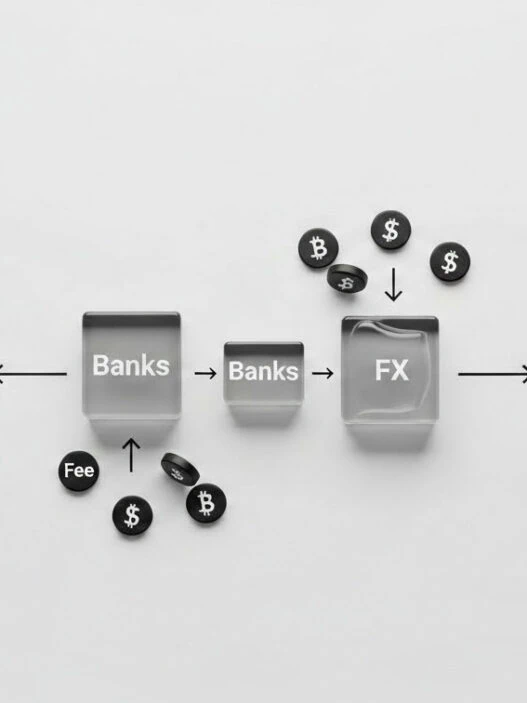
International remittance represents key use case. Traditional remittance services charge 5-7% fees with multi-day settlement. SoFi stablecoin enables near-instant cross-border transfers at fraction of cost, accessible 24/7 including weekends and holidays.
The platform also targets emerging market applications. For companies operating in countries with volatile currencies, SoFi plans SoFiUSD integration in debit and secured credit products, providing dollar-denominated balances without currency conversion risk.
This infrastructure approach mirrors successful strategy from payments industry. Similar to how JPMorgan provides institutional infrastructure for tokenized assets, SoFi positions as regulated backend enabling other institutions to offer blockchain-based services.
GENIUS Act Regulatory Framework
The SoFi stablecoin SoFiUSD operates under GENIUS Act regulatory framework enacted July 2025. This federal legislation established first comprehensive rules for payment stablecoins in United States.
GENIUS Act (Guiding and Establishing National Innovation for U.S. Stablecoins) permits insured depository institutions to issue stablecoins through approved structures. Law requires strict reserve backing, ongoing disclosure, and supervisory oversight from banking regulators.
As national bank, SoFi must provide certified reserve reporting demonstrating 1:1 backing. Monthly attestation reports from independent accounting firms verify reserve adequacy, similar to audit requirements for traditional bank deposits.
The legislation reversed years of regulatory uncertainty. Prior to GENIUS Act, banks faced ambiguous guidance about blockchain activities. Many institutions paused crypto initiatives awaiting clarity. Federal framework enabled production deployments.
Office of Comptroller of Currency issued updated interpretive letters following GENIUS Act passage. These clarifications explicitly permitted banks to engage in stablecoin issuance, custody, and tokenized deposit activities under appropriate risk management frameworks.
FDIC similarly updated guidance addressing how deposit insurance applies to tokenized bank liabilities. Agency clarified that blockchain-based representations of deposits maintain same insurance coverage as traditional deposits, provided proper accounting and custody controls exist.
Regulatory framework distinguishes between payment stablecoins and speculative crypto assets. Payment stablecoins designed for transaction settlement face different rules than tokens intended as investments. SoFi stablecoin qualifies as payment instrument under this taxonomy.
Compliance requirements include consumer protection standards, anti-money laundering controls, and cybersecurity safeguards. SoFi must maintain same operational standards for stablecoin activities as traditional banking services.
The regulatory clarity provides competitive moat. Non-bank stablecoin issuers face different regulatory frameworks varying by jurisdiction. Bank-issued stablecoins operate under established supervisory regime with clear rules and examiner oversight.

SoFi vs JPMorgan Stablecoin Strategy
The SoFi stablecoin SoFiUSD strategy differs fundamentally from JPMorgan’s JPM Coin approach. Both are bank-issued tokens, but network architecture and target markets diverge significantly.
JPMorgan operates JPM Coin on private permissioned blockchain accessible only to approved institutional clients. Transactions occur within closed network connecting JPMorgan’s corporate banking customers. Public cannot access or transact using JPM Coin.
SoFi deployed on public Ethereum mainnet, open to any participant. Anyone can hold, transfer, or integrate SoFiUSD into applications without JPMorgan-style permission requirements. This public infrastructure approach enables broader ecosystem participation.
The target market distinction matters equally. JPMorgan focuses on large corporate treasurers managing wholesale payment flows. Typical JPM Coin transaction involves million-dollar institutional transfers between multinational corporations.
SoFi targets mid-market institutions, fintechs, and embedded finance platforms. White-label infrastructure enables regional banks, payment processors, and software companies to deploy stablecoin capabilities without JPMorgan-scale resources.
Reserve structures also differ. JPMorgan maintains reserves across network of correspondent banking relationships. SoFi concentrates reserves at Federal Reserve account, simplifying custody chain and eliminating counterparty risk.
Settlement patterns reflect these strategic differences. JPM Coin optimizes for large-value institutional payments with complex compliance requirements. SoFi stablecoin architecture supports high-frequency small-value transactions typical in consumer and SME contexts.
Both approaches demonstrate bank recognition that blockchain settlement provides efficiency gains. The divergent strategies suggest multiple viable models for bank-issued digital currencies depending on target customer segment and risk tolerance.
Market observers note SoFi’s public blockchain strategy carries different risk profile. Public networks expose institutions to smart contract vulnerabilities, network congestion, and governance uncertainties absent in private systems. SoFi accepted these risks to access public blockchain network effects.
Stablecoin Market Competitive Dynamics
The SoFi stablecoin SoFiUSD launch intensifies competition in $310 billion stablecoin market. Bank-issued tokens challenge crypto-native stablecoins through regulatory credibility and reserve transparency.
Tether’s USDT dominates with $186 billion market capitalization, while Circle’s USDC holds approximately $78 billion. These non-bank issuers built massive market share before regulatory frameworks existed, establishing strong network effects.
Bank-issued stablecoins compete on regulatory assurance rather than first-mover advantage. Institutions prefer counterparties with banking licenses, examiner oversight, and FDIC insurance. SoFi positions stablecoin as safer alternative to unregulated competitors.
The white-label infrastructure creates different competitive dynamic. Rather than capturing consumer market share from USDT/USDC, SoFi enables banks and fintechs to deploy branded alternatives. This platform approach could fragment market or create interoperable stablecoin network.
Timing favors bank entry. GENIUS Act regulatory framework established level playing field where banks can leverage charter advantages. Prior regulatory uncertainty prevented banks from competing effectively against crypto-native issuers.
International expansion represents key battleground. Stablecoins increasingly serve as dollar settlement layer in emerging markets with volatile local currencies. Bank-issued tokens may appeal to institutions requiring compliance with anti-money laundering and sanctions requirements.
The institutional settlement market offers highest-value opportunity. Corporate treasurers, payment processors, and financial infrastructure providers prioritize regulatory certainty over decentralized ethos. Bank-issued stablecoins align better with institutional risk management frameworks.
DeFi integration remains open question. Crypto-native stablecoins achieved widespread adoption in decentralized finance protocols. Bank-issued tokens may face philosophical resistance from DeFi communities prioritizing decentralization over regulatory compliance.
Competition may ultimately prove complementary rather than zero-sum. Different stablecoin types serve distinct use cases and customer segments. Regulatory-focused institutions choose bank-issued tokens, while crypto-native users prefer permissionless alternatives.
Frequently Asked Questions
What is SoFi stablecoin SoFiUSD?
SoFi stablecoin SoFiUSD is fully reserved U.S. dollar-pegged token issued by SoFi Bank on Ethereum blockchain. Launched December 18, 2025, it represents first U.S. national bank stablecoin on public blockchain, backed 1:1 by cash at Federal Reserve with instant redemption capability.
How does SoFi stablecoin differ from USDT and USDC?
SoFi stablecoin is issued by OCC-regulated national bank with FDIC insurance and Federal Reserve custody, while USDT (Tether) and USDC (Circle) are non-bank issuers. SoFi maintains cash-only reserves at Federal Reserve versus mixed portfolios of Treasury bills and commercial paper used by crypto-native stablecoins.
What is white-label stablecoin infrastructure?
White-label infrastructure enables banks and fintechs to issue branded stablecoins using SoFi’s regulatory framework and reserve custody. Partners can deploy “BrandNameUSD” backed by SoFi Bank’s Federal Reserve account, avoiding complexity of establishing independent blockchain infrastructure and regulatory compliance.
Is SoFi stablecoin compliant with GENIUS Act?
Yes. SoFi stablecoin operates under GENIUS Act regulatory framework enacted July 2025, which established federal rules for payment stablecoins. As national bank, SoFi provides certified monthly reserve reporting and maintains compliance with OCC oversight requirements for stablecoin issuance.
Which blockchain supports SoFi stablecoin?
SoFi stablecoin launched as ERC-20 token on Ethereum mainnet December 18, 2025. SoFi plans multi-chain expansion beyond Ethereum, with roadmap including deployment to additional blockchains for broader ecosystem accessibility and reduced transaction costs.
How does SoFi stablecoin compare to JPMorgan JPM Coin?
SoFi stablecoin operates on public Ethereum blockchain accessible to any participant, while JPMorgan JPM Coin runs on private permissioned network for approved institutional clients only. SoFi targets mid-market institutions and fintechs with white-label infrastructure, whereas JPMorgan serves large corporate treasurers with wholesale payments.
Related Resources
Explore more banking blockchain and institutional stablecoin developments:
- JPMorgan MONY Ethereum Fund: $100M Tokenized Launch – Compare SoFi’s public blockchain strategy with JPMorgan’s institutional tokenization approach
- B3 Brazil Tokenization Platform: Real Stablecoin 2026 – See how stock exchanges deploy stablecoin infrastructure similar to SoFi’s white-label model
- DTCC SEC Tokenization Approval: Canton Network – Understand U.S. financial infrastructure blockchain integration paralleling SoFi’s national bank approach
- BlackRock BUIDL Fund Analysis: $1.8B Tokenized Treasuries – Learn multi-chain deployment strategy that SoFi plans to replicate with stablecoin expansion
- SBI Ripple Asia Doppler Finance: XRP Infrastructure – Discover regulated financial institution blockchain integration across different jurisdictions
Sources
- SoFi Launches Fully Reserved Stablecoin to Power Financial Infrastructure – Business Wire
- SoFi Launches Stablecoin Infrastructure – Banking Dive
- SoFi Deepens Crypto Offerings With SoFiUSD Stablecoin – PYMNTS
- SoFi Launches SoFiUSD Stablecoin, But Could it Actually be a Tokenized Deposit – Finovate
- SoFi Unveils First Bank-Issued Stablecoin for Enterprise Payments – CoinDesk
- SoFi Becomes First U.S. National Bank to Issue Stablecoin – Cryptonews