








On January 1, 2025, the European Union’s Markets in Crypto-Assets Regulation became the world’s first comprehensive stablecoin regulatory framework, establishing mandatory reserve requirements, transparency obligations, and operational standards for stablecoin issuers operating within EU jurisdictions. Circle’s USDC achieved full MiCA compliance in December 2024, securing authorization to operate across all 27 EU member states, while Tether’s USDT faces potential delisting from European exchanges due to non-compliance with reserve attestation and transparency requirements.
Stablecoin regulation represents the defining regulatory development for digital asset markets in 2025, with the EU MiCA framework establishing precedent that global jurisdictions including the United States, United Kingdom, and Singapore are adapting for their domestic frameworks. The regulation mandates that stablecoin issuers maintain 1:1 reserve backing in segregated accounts, provide monthly third-party attestations, implement redemption guarantees, and establish EU-based operational presence for issuers exceeding €5 million daily transaction volume.
According to institutional tokenized assets analysis, stablecoin regulation directly impacts the $180 billion stablecoin market and determines which issuers can access European institutional capital flows.
Table of Contents
- EU MiCA Stablecoin Framework
- Circle USDC MiCA Compliance
- Tether USDT Regulatory Challenges
- Reserve Requirements & Attestations
- US, UK, Singapore Frameworks
- Institutional Adoption Impact
- Issuer Compliance Roadmap
- Stablecoin Regulation FAQs
EU MiCA Stablecoin Framework
The Markets in Crypto-Assets Regulation establishes comprehensive regulatory oversight for stablecoin issuers, crypto-asset service providers, and digital asset exchanges operating within European Union jurisdictions.
Asset-Referenced Tokens Classification
MiCA categorizes stablecoins as Asset-Referenced Tokens requiring specific authorization and ongoing compliance obligations. Issuers must secure authorization from competent national authorities or the European Banking Authority for significant ARTs exceeding €5 million average daily transaction volume or 5 million holders.
The framework distinguishes between e-money tokens backed exclusively by single fiat currencies and asset-referenced tokens backed by baskets of assets or alternative reserve structures. E-money tokens receive streamlined authorization under existing e-money directive frameworks, while multi-asset stablecoins face enhanced scrutiny and capital requirements.
Circle’s USDC qualifies as e-money token due to exclusive US dollar backing, enabling authorization through EMI licenses across EU jurisdictions. Tether’s USDT similarly claims single-currency backing but faces compliance challenges related to reserve composition transparency and attestation frequency.
Mandatory Reserve Requirements
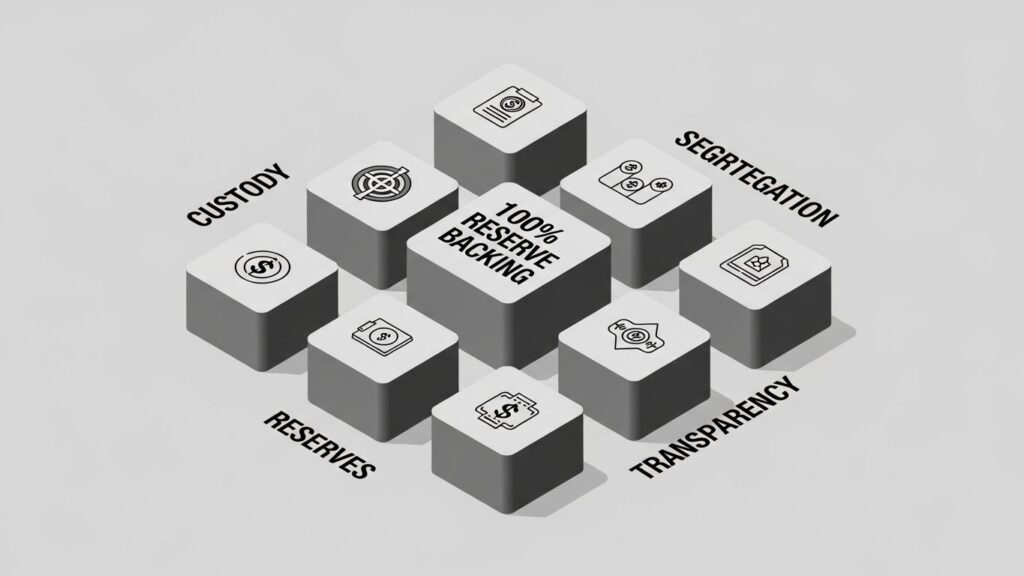
Stablecoin regulation under MiCA mandates that issuers maintain reserves equal to 100% of outstanding token liabilities in segregated custody accounts separate from operational assets. Reserve assets must consist of highly liquid instruments including cash deposits, short-term government securities rated investment-grade, and reverse repurchase agreements collateralized by sovereign debt.
The regulation prohibits stablecoin issuers from deploying reserves in yield-generating activities including lending, staking, or investment strategies that could impair immediate redemption capabilities. This requirement directly challenges business models that generate revenue through reserve deployment rather than transaction fees.
Reserve asset composition limits include maximum 30% allocation to non-cash instruments and mandatory daily liquidity buffers ensuring same-day redemption fulfillment for minimum 10% of outstanding token supply. These requirements prevent bank-run scenarios where simultaneous redemption requests exceed available liquid reserves.
Transparency and Disclosure Obligations
MiCA requires stablecoin issuers to publish white papers detailing reserve composition, redemption mechanisms, governance structures, and operational risk disclosures. White papers must receive competent authority approval before token issuance and require amendments for material changes to reserve strategies or operational frameworks.
Issuers must provide monthly attestation reports from independent auditors verifying reserve adequacy, asset composition compliance, and segregation protocols. These reports must be published within 30 days of month-end and remain publicly accessible for minimum 5-year retention periods.
The regulation establishes criminal liability for false or misleading disclosures, with penalties including authorization revocation, fines up to 5% of annual turnover, and personal liability for directors approving non-compliant disclosures.
Circle USDC MiCA Compliance
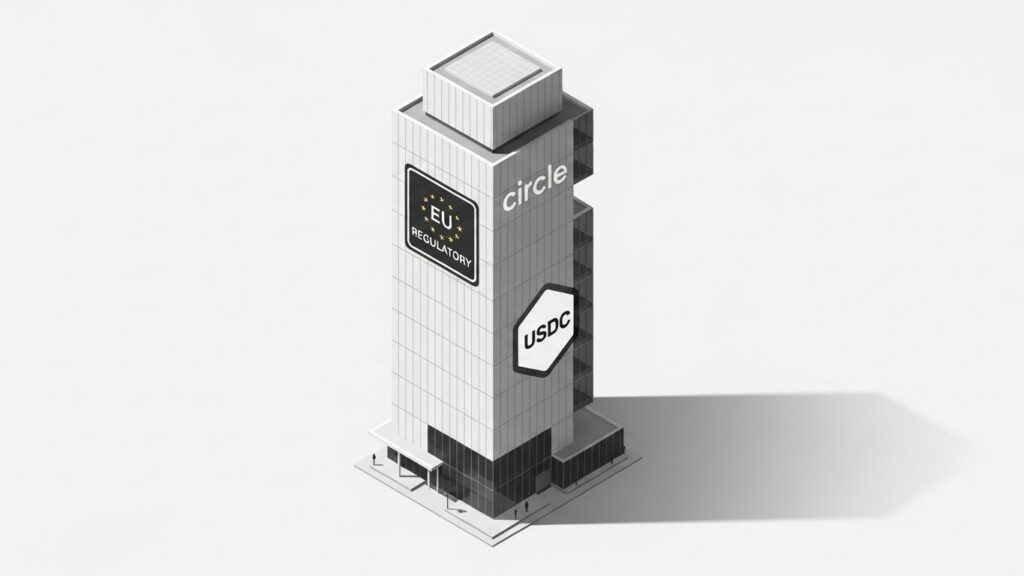
Circle Internet Financial achieved full MiCA compliance in December 2024, securing authorization as the first major US stablecoin issuer approved for pan-European operations under the new regulatory framework.
Authorization Process and Timeline
Circle initiated MiCA authorization applications in early 2024, engaging with French Autorité des Marchés Financiers and Irish Central Bank as competent authorities for EMI licensing. The company established Circle Europe subsidiary headquartered in Paris with operational presence supporting EU customer service, compliance functions, and reserve custody operations.
The authorization process required comprehensive documentation including reserve custody agreements with EU-based financial institutions, governance frameworks addressing conflict-of-interest protocols, and operational continuity plans ensuring uninterrupted redemption services during crisis scenarios.
Circle received preliminary authorization in October 2024 with full operational approval granted December 2024, enabling continued USDC availability on European exchanges and institutional custody platforms throughout the January 2025 MiCA implementation deadline.
Reserve Structure Compliance
Circle maintains USDC reserves in segregated accounts at US banking institutions including BNY Mellon and State Street, with EU-specific reserves established at French and Irish banks supporting European redemption operations. The company holds 100% reserves in cash and short-term US Treasury bills maturing within 3 months, exceeding MiCA liquidity requirements.
Monthly attestation reports from Grant Thornton verify reserve adequacy and composition compliance, with reports published within 15 days of month-end exceeding MiCA’s 30-day requirement. Circle’s attestation framework established before MiCA implementation positioned the company for seamless regulatory transition.
The company processes redemptions in EUR and USD with same-day settlement for requests under €100,000 and two-business-day settlement for larger redemptions, meeting MiCA’s redemption guarantee obligations.
Institutional Market Impact
Circle’s MiCA compliance enables continued USDC adoption by European institutional investors, corporate treasury operations, and DeFi protocols requiring regulatory-compliant stablecoin infrastructure. The company secured partnerships with Societe Generale, BNP Paribas, and Deutsche Bank supporting institutional custody and settlement services.
USDC maintains approximately 30% market share in EU stablecoin trading volume, with MiCA compliance expected to increase institutional allocation as non-compliant alternatives face exchange delistings. Circle projects USDC European circulation growing from current $8 billion to $15-20 billion by end-2025 as institutional adoption accelerates.
Tether USDT Regulatory Challenges
Tether faces significant compliance obstacles under MiCA framework due to historical transparency concerns, reserve composition questions, and governance structure limitations.
Attestation and Transparency Issues
Tether publishes quarterly attestation reports from BDO Italia verifying reserve adequacy at period-end dates, falling short of MiCA’s monthly attestation requirements. The company has not committed to monthly reporting cadence or engaged with EU competent authorities regarding MiCA authorization applications as of November 2025.
Historical controversies including 2021 settlements with New York Attorney General over reserve misrepresentations and ongoing questions regarding commercial paper holdings create regulatory headwinds for European authorization. Competent authorities have discretion to deny authorization based on issuer track records and governance adequacy.
Tether’s reserve composition includes approximately 85% cash and cash equivalents, 5% secured loans, 5% corporate bonds and precious metals, and 5% other investments according to Q3 2024 attestation reports. The secured loan allocation potentially conflicts with MiCA prohibitions on reserve deployment in yield-generating activities.
Exchange Delisting Risk
Major European cryptocurrency exchanges including Bitstamp, Kraken Europe, and Coinbase Europe announced plans to delist or restrict USDT trading pairs for EU users unless Tether achieves MiCA authorization by June 2025 transition deadline. These exchanges face regulatory liability for facilitating non-compliant stablecoin trading after transition periods expire.
Binance Europe similarly indicated potential USDT trading restrictions pending Tether’s regulatory status, though the exchange maintains broader global USDT markets outside EU jurisdiction. European delisting would fragment USDT liquidity and reduce accessibility for EU retail and institutional users.
USDT maintains approximately $120 billion market capitalization representing 65% global stablecoin market share, with European circulation estimated at $15-20 billion. Delisting from EU exchanges could shift European stablecoin flows toward MiCA-compliant alternatives including USDC and emerging European stablecoin issuers.
Potential Compliance Pathway
Tether could achieve MiCA compliance through establishing EU-based subsidiary, engaging competent authority for authorization application, implementing monthly attestation reporting, and adjusting reserve composition to eliminate yield-generating deployments. The company has not publicly disclosed MiCA compliance intentions or timelines as of November 2025.
Alternative strategies include geographic segmentation limiting USDT availability to non-EU jurisdictions while supporting compliant alternatives for European users, or acquisition of existing EU-authorized e-money institution enabling operational restructuring under compliant entity.
Reserve Requirements & Attestations
Stablecoin regulation establishes specific reserve asset eligibility, custody requirements, and attestation protocols ensuring investor protection and systemic stability.
Eligible Reserve Assets
MiCA permits stablecoin reserves in cash deposits at credit institutions, central bank reserves, short-term government securities rated minimum A- equivalent, and reverse repurchase agreements collateralized by sovereign debt. The regulation prohibits reserves in corporate securities, cryptocurrency assets, real estate, commodities, or lending deployments.
Reserve asset maturity limits restrict non-cash instruments to maximum 12-month duration with weighted average maturity not exceeding 6 months. These limits ensure sufficient liquidity supporting rapid redemption fulfillment during market stress scenarios.
Issuers must maintain minimum 30% reserves in overnight deposits or central bank accounts providing same-day liquidity buffers. The remaining 70% maximum allocation to government securities and reverse repos must demonstrate daily mark-to-market valuations and continuous liquidity availability.
Custody and Segregation Requirements
Reserves must be held in segregated accounts at authorized credit institutions, central securities depositories, or investment firms operating under EU regulatory frameworks. Custody agreements must establish legal segregation preventing commingling with issuer operational funds or creditor access during insolvency proceedings.
Multi-jurisdictional reserve custody requires coordination ensuring reserves match regional circulation patterns and redemption flow expectations. Issuers serving pan-European markets typically establish custody relationships across major financial centers including Paris, Frankfurt, Dublin, and Luxembourg.
The regulation mandates quarterly custody audits verifying segregation compliance, beneficial ownership records, and custodian creditworthiness assessments. These audits supplement monthly attestation requirements providing additional verification layers.
Monthly Attestation Protocols
Competent authorities require monthly attestation reports from independent auditors possessing crypto-asset expertise and public interest entity audit qualifications. Attestations must verify reserve adequacy at month-end dates, asset composition compliance, custody segregation, and redemption processing capabilities.
Report publication deadlines of 30 days post-month-end enable timely investor disclosure while providing auditors sufficient time for verification procedures including custody confirmations, valuation reconciliations, and transaction testing.
Attestation standards developed by European Securities and Markets Authority establish minimum procedures including reserve balance confirmations, asset existence verification, legal segregation reviews, and redemption transaction testing. Auditors face professional liability for attestation failures or negligent verification procedures.
US, UK, Singapore Frameworks
Global jurisdictions are developing stablecoin regulation frameworks influenced by EU MiCA precedent while adapting requirements for domestic market structures and regulatory philosophies.
United States Approach
The United States lacks comprehensive federal stablecoin regulation as of November 2025, with regulatory authority fragmented across state money transmitter licensing, SEC securities analysis, and CFTC commodity oversight. Congressional stablecoin legislation proposed in 2024-2025 sessions stalled amid partisan disagreements on federal versus state regulatory primacy.
The Federal Reserve and Office of the Comptroller of Currency published guidance in 2023 requiring banking institutions offering stablecoin services to maintain 100% reserves, implement segregated custody, and provide redemption guarantees, but these requirements apply only to bank-issued stablecoins rather than non-bank issuers like Circle and Tether.
New York Department of Financial Services established limited purpose trust company framework enabling stablecoin issuers to obtain bank-equivalent authorization with reserve requirements, monthly attestations, and FDIC-style depositor protections. Paxos and Gemini operate under NYDFS authorization, while Circle and Tether rely on state money transmitter licenses without comprehensive reserve oversight.
United Kingdom Framework Development
The UK Financial Conduct Authority published stablecoin regulatory proposals in 2024 establishing authorization requirements for systemic stablecoins exceeding £10 million daily transaction volume. The framework mandates 100% reserve backing, monthly attestations, and FCA-supervised redemption protocols.
Implementation timelines target mid-2026 authorization deadlines following consultation periods and legislative approval through Financial Services and Markets Act amendments. The framework adopts MiCA-similar approaches while tailoring requirements for UK market structure and existing e-money regulatory frameworks.
The Bank of England expressed preference for central bank digital currency solutions over private stablecoin proliferation, potentially limiting UK regulatory enthusiasm for expansive stablecoin market development compared to EU’s pragmatic accommodation approach.
Singapore Monetary Authority Standards
Singapore’s Monetary Authority established comprehensive stablecoin regulatory framework through Payment Services Act amendments effective July 2024. The framework requires stablecoin issuers to secure Major Payment Institution licenses, maintain 100% reserves in segregated trust accounts, and provide monthly attestation reports.
MAS mandates reserve composition in Singapore dollar deposits, government securities, or equivalent liquid assets rated minimum AA-. The regulation permits multi-currency stablecoins with proportional reserve matching for each currency peg.
Circle obtained Singapore MPI license in 2023, while Tether has not pursued authorization citing operational focus on other jurisdictions. Singapore’s framework balances investor protection with innovation accommodation, positioning the city-state as competitive digital asset hub.

Institutional Adoption Impact
Stablecoin regulation accelerates institutional adoption by establishing legal certainty, custody frameworks, and compliance infrastructure supporting corporate treasury and asset manager integration.
Corporate Treasury Integration
MiCA-compliant stablecoins enable corporate treasurers to access blockchain payment rails while satisfying fiduciary obligations requiring regulated counterparties and audited reserve backing. Companies including Shopify, Stripe, and SpaceX utilize USDC for cross-border payments, payroll settlement, and treasury diversification benefiting from 24/7 settlement and reduced foreign exchange costs.
Corporate adoption requires stablecoin integration with enterprise accounting systems, tax reporting frameworks, and internal control protocols. Regulated stablecoin issuers provide transaction reporting, tax documentation, and compliance certifications supporting corporate governance requirements.
The global corporate stablecoin payment market is projected to reach $150 billion annual volume by 2027, with MiCA compliance removing regulatory uncertainty that previously prevented risk-averse corporate adoption.
Asset Manager Allocation
Traditional asset managers including BlackRock, Fidelity, and Franklin Templeton integrate MiCA-compliant stablecoins into tokenized fund structures providing instant settlement, 24/7 liquidity, and programmable compliance capabilities. BlackRock’s BUIDL tokenized money market fund utilizes USDC for subscriptions and redemptions, processing $600 million in monthly transaction volume.
Stablecoin regulation enables asset managers to custody digital securities on public blockchains while maintaining regulatory compliance, audit trails, and investor protections required by UCITS directives and Alternative Investment Fund regulations.
European asset managers manage approximately €15 trillion in assets under management, with tokenization initiatives potentially allocating 1-3% to blockchain-native structures utilizing compliant stablecoins for settlement infrastructure. This represents $150-450 billion potential stablecoin demand from European institutional sources alone.
DeFi Protocol Integration
Decentralized finance protocols including Aave, Compound, and Uniswap generate significant stablecoin demand supporting lending, liquidity provision, and decentralized exchange operations. MiCA compliance enables European DeFi users to access protocols without regulatory concerns regarding underlying stablecoin legitimacy.
Regulatory-compliant DeFi architectures separate protocol smart contracts from stablecoin reserve custody, enabling permissionless protocol access while maintaining compliant reserve backing and redemption guarantees. This hybrid model accommodates DeFi innovation within regulatory frameworks.
European DeFi total value locked exceeds $30 billion across major protocols, with stablecoin deposits representing 60-70% of protocol capital. MiCA compliance preserves European DeFi market access while non-compliant stablecoins face functional delisting from EU-accessible protocols.
Issuer Compliance Roadmap
Stablecoin issuers pursuing MiCA authorization must complete comprehensive compliance implementations across legal, operational, and technical dimensions.
Authorization Application Process
Issuers must select competent national authority based on intended operational jurisdiction and regulatory relationship preferences. Major issuers typically engage French AMF, Irish Central Bank, or German BaFin given expertise with cross-border digital asset regulation.
Application packages include corporate governance frameworks, reserve custody agreements, operational continuity plans, anti-money laundering protocols, and white paper documentation. Authorities review applications within 6-month timelines with potential extensions for complex multi-asset structures or novel operational models.
Preliminary authorization enables limited operations while final authorization follows demonstration of operational readiness including custody activations, compliance staffing, and investor protection mechanism implementations.
Reserve and Custody Implementation
Issuers must establish segregated custody accounts at EU-based credit institutions or international banks with EU subsidiary presence. Custody agreements must specify legal segregation, beneficial ownership, insolvency protections, and redemption prioritization protocols.
Reserve management systems require real-time position monitoring, daily reconciliations, and automated compliance checks verifying asset composition limits and liquidity buffers. Integration with blockchain transaction settlement ensures reserves match outstanding token supplies with same-day reconciliation.
Multi-jurisdictional operations require coordinated reserve allocation matching regional circulation patterns and redemption flow expectations, with contingency protocols enabling cross-border reserve transfers during localized liquidity stress.
Operational and Technical Requirements
Issuers must establish EU operational presence including customer service, compliance functions, and redemption processing capabilities. Outsourcing arrangements require competent authority approval and contractual frameworks ensuring service continuity.
Technical infrastructure includes blockchain monitoring systems, transaction surveillance capabilities, and redemption portals meeting accessibility standards. Integration with banking payment systems enables EUR and multi-currency settlement supporting diverse investor preferences.
Ongoing compliance includes monthly attestation report publication, quarterly reserve audits, annual financial statement filings, and continuous governance reporting to competent authorities. Operational readiness for these obligations determines sustainable MiCA compliance beyond initial authorization.
Stablecoin Regulation FAQs
What is EU MiCA stablecoin regulation?
EU MiCA (Markets in Crypto-Assets Regulation) is comprehensive stablecoin regulatory framework requiring 100% reserve backing, monthly attestations, and authorization from European competent authorities. The regulation became effective January 1, 2025.
Is Circle USDC MiCA compliant?
Yes, Circle achieved full MiCA compliance in December 2024, securing authorization for pan-European operations. USDC maintains 100% reserves in cash and US Treasury bills with monthly attestation reports from Grant Thornton.
Will Tether USDT be delisted in Europe?
Major European exchanges including Bitstamp, Kraken Europe, and Coinbase Europe announced potential USDT delisting by June 2025 unless Tether achieves MiCA authorization. Tether has not disclosed compliance plans as of November 2025.
What are MiCA reserve requirements?
MiCA requires stablecoin issuers to maintain 100% reserves in segregated accounts holding cash deposits, short-term government securities, or reverse repos. Minimum 30% must be in overnight deposits ensuring same-day redemption liquidity.
How does US stablecoin regulation compare to MiCA?
The United States lacks comprehensive federal stablecoin regulation as of November 2025. Proposed legislation stalled in Congress, while New York DFS established limited authorization framework for state-chartered trust companies issuing stablecoins.
What is monthly attestation requirement?
MiCA requires independent auditor verification of stablecoin reserves published monthly within 30 days of month-end. Attestations verify reserve adequacy, asset composition compliance, custody segregation, and redemption capabilities.
SOURCES
- European Securities and Markets Authority – MiCA Framework
- Circle – MiCA Authorization Announcement
- Tether – Reserve Transparency Reports
- PrivateCharterX – BlackRock Tokenized Assets Guide
- PrivateCharterX – Institutional Tokenization Strategy
- PrivateCharterX – Institutional Blockchain Adoption
- UK Financial Conduct Authority – Stablecoin Regulation
- Monetary Authority of Singapore – Payment Services Act
- BlackRock BUIDL Fund – Stablecoin Integration
- European Central Bank – Financial Stability Analysis