





Table of Contents
- United Business Class Overview
- Polaris Business Class: Product Deep Dive
- Premium Plus vs Business Class
- Routes & Aircraft: Where to Find Best Product
- Seat Types: Configuration & Comfort Analysis
- Polaris Dining: Food & Beverage Service
- Polaris Lounge Access & Amenities
- Booking Strategies: Cash, Miles & Upgrades
- MileagePlus Miles: Redemption Guide
- Upgrade Tactics: How to Access Premium Cabins
- Frequently Asked Questions
United Business Class Overview
United Airlines business class represents a major component of the carrier’s premium revenue strategy, serving travelers across one of the world’s most extensive international networks. As a founding member of the Star Alliance, United operates comprehensive global coverage with business class availability on long-haul international routes and domestic first class on transcontinental and regional flights.
United revolutionized its business class product in 2016 with the Polaris brand introduction, marking the airline’s most significant premium cabin investment in decades. The Polaris suite features fully lie-flat seats with direct aisle access, elevated dining programs, redesigned amenity kits, and enhanced ground services through dedicated Polaris lounges at major hubs.
According to United Airlines investor disclosures, premium cabin revenue represents 40-45% of total passenger revenue despite occupying only 18-20% of seats, demonstrating critical importance of United business class to the carrier’s financial performance and competitive positioning against Delta and American.
The United business class experience varies significantly by aircraft type, route, and service standard. Long-haul international flights feature Polaris suites with privacy doors and premium bedding. Transcontinental domestic routes offer enhanced first class products. Standard domestic first class provides recliners rather than lie-flat seats, creating important product differentiation for strategic booking decisions.
Polaris Business Class: Product Deep Dive
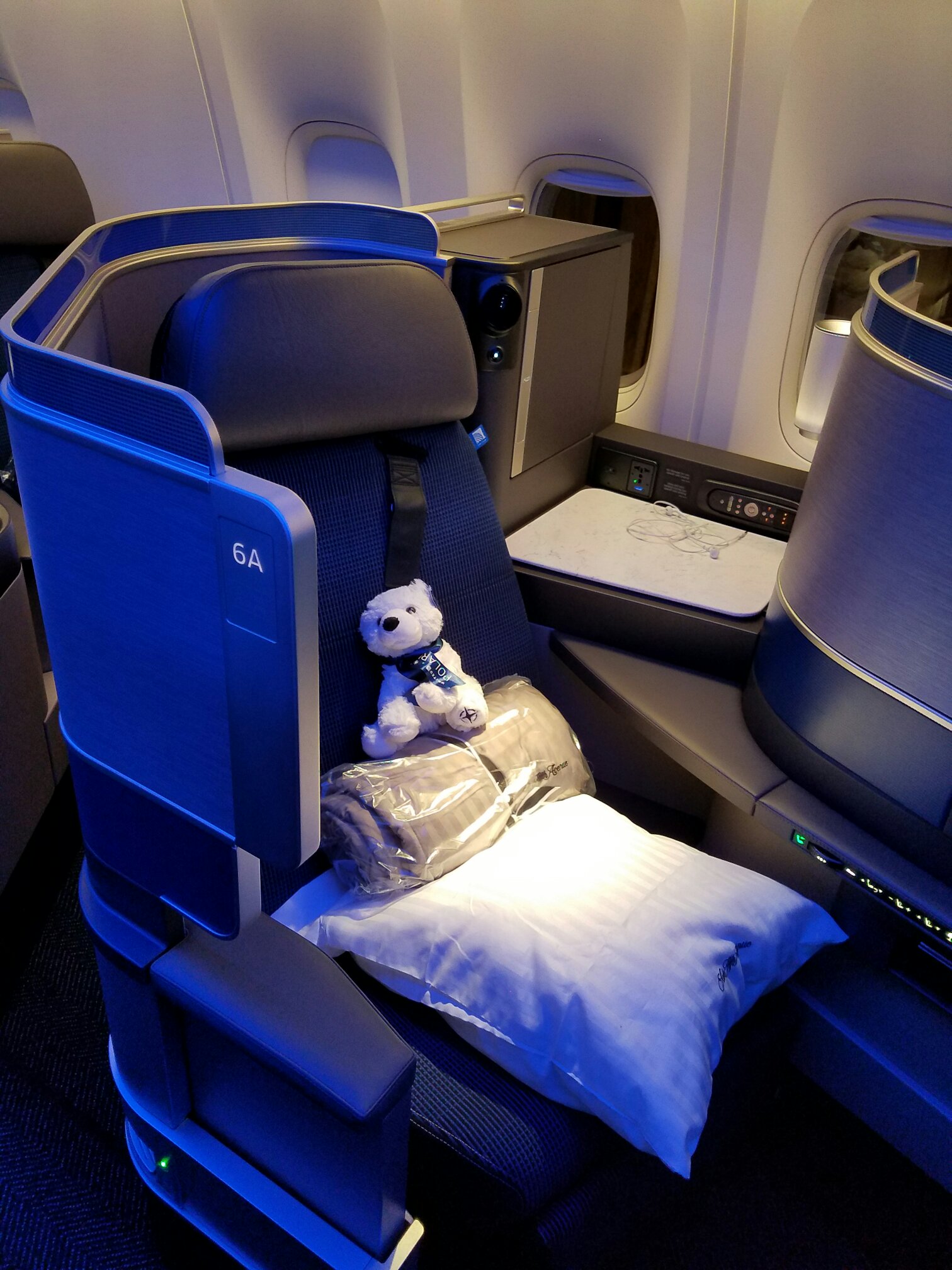
United Polaris represents the airline’s flagship long-haul international business class product, competing directly with Delta One, American Flagship Business, and international premium carriers including Lufthansa, British Airways, and Asian mega-carriers.
Polaris Suite Specifications
The Polaris suite features fully lie-flat beds extending 6 feet 6 inches with direct aisle access from every seat in 1-2-1 configuration. The seats incorporate privacy panels extending from floor to overhead bin, with optional privacy door on newer Boeing 787-10 and select 777-300ER aircraft creating the most secluded product in United’s fleet.
Seat width measures 21-22 inches depending on aircraft type, with substantial storage compartments for personal items, electronics, and shoes. The design prioritizes privacy and personal space, addressing previous United business class criticism regarding tight quarters and limited storage in older configurations.
According to SeatGuru aircraft configuration analysis, approximately 70% of United’s international long-haul fleet features Polaris suites, with remaining 30% operating legacy business class seats scheduled for retirement or retrofit through 2026-2027. The newer 787-10 with privacy doors represents United’s most advanced product.
In-Flight Entertainment and Technology
Polaris passengers receive 16-18 inch high-definition touchscreen displays depending on aircraft, with extensive entertainment libraries featuring new-release movies, television series, music selections, and games. The content selection rivals or exceeds most international competitors, with monthly updates maintaining fresh programming.
All Polaris seats include AC power outlets, USB-A and USB-C charging ports enabling simultaneous device charging throughout flights. Wi-Fi connectivity varies by aircraft and route—domestic and select international flights offer satellite-based internet providing speeds suitable for video streaming, while older aircraft feature slower air-to-ground systems adequate for email and messaging.
Bedding and Amenity Programs
United Polaris bedding includes Saks Fifth Avenue-branded mattress pads, duvets, day blankets, and lumbar pillows specifically designed for lie-flat seats. The bedding quality represents substantial improvement over previous United business class offerings, though some travelers note it still trails premium Asian carriers’ luxury bedding programs.
Amenity kits feature Cowshed Spa products including moisturizer, lip balm, hand cream, dental kit, earplugs, eye mask, and socks. The kits rotate between hard-case and soft-case designs, with contents refreshed periodically to maintain passenger interest and perceived value.
Premium Plus vs Business Class
United introduced Premium Plus cabin in 2019 as premium economy offering positioned between economy and business class, creating additional revenue tier while providing upgrade target for elite members and cash upgrade option for economy passengers.
Premium Plus Product Specifications
Premium Plus features dedicated cabin with enhanced recliners offering 38-inch pitch (versus 31-32 economy) and 19.5-inch width. The seats recline substantially more than economy while remaining upright rather than lie-flat, appropriate for daytime flights or shorter overnight sectors where sleeping capability matters less.
Service includes complimentary alcoholic beverages, enhanced meal service with china and glassware, amenity kit, noise-canceling headphones, and priority services including check-in, boarding, and baggage handling. The enhanced amenities differentiate Premium Plus from economy while costing 40-60% less than business class on most routes.
When Premium Plus Makes Sense
For flights under 6-7 hours or daytime transatlantic/transpacific routes, Premium Plus delivers solid value for travelers not requiring lie-flat beds. The pricing typically ranges $300-800 above economy versus $1,500-3,000 premiums for business class, making Premium Plus attractive for cost-conscious travelers seeking enhanced comfort without full business class expense.
However, overnight long-haul routes exceeding 8-10 hours favor business class for sleeping capability and arrival freshness. Business travelers requiring productive work environment or sleep quality justify business class premium, while leisure travelers on daytime sectors find Premium Plus adequate at substantial savings.
Upgrade Dynamics
MileagePlus elite members receive complimentary upgrades to Premium Plus on international flights when available, making it valuable benefit for frequent United travelers. Premium Plus to business class upgrades require payment or miles, though costs prove more modest than direct business class purchase.
The multi-tier premium cabin structure enables United to optimize revenue by offering products at multiple price points, capturing passengers with varying willingness to pay rather than losing them to competitors’ premium economy or business class offerings.
Routes & Aircraft: Where to Find Best Product
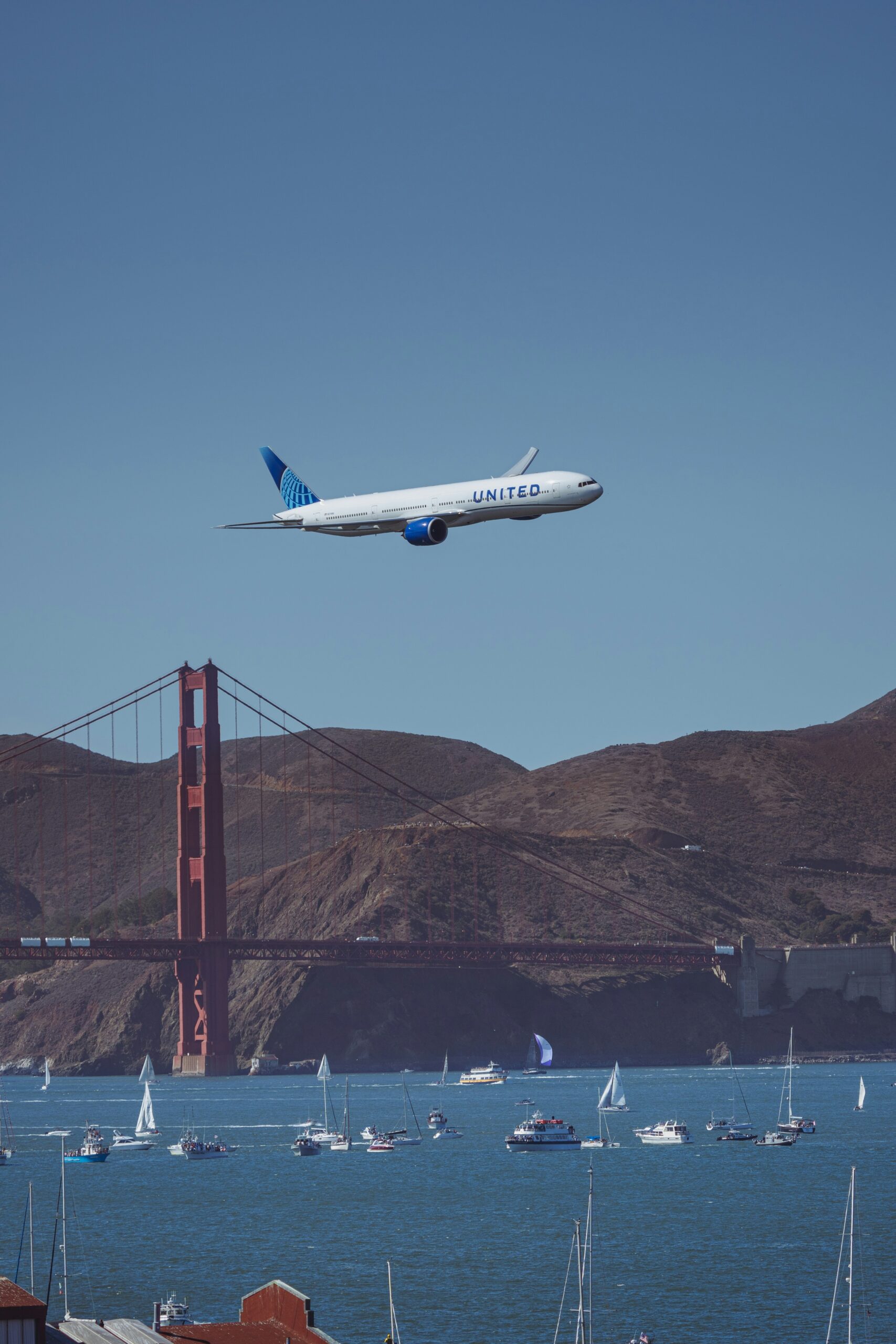
United business class product quality varies by route and aircraft type, making strategic route selection critical for optimal premium experience.
Best United Business Class Routes
Trans-Pacific routes including San Francisco-Tokyo, San Francisco-Singapore, Newark-Hong Kong, and Houston-Sydney feature United’s newest Boeing 787-10 and 777-300ER aircraft with latest Polaris suites including privacy doors. These routes showcase United’s premium long-haul product competing against Asian carriers’ superior business class offerings.
Transatlantic routes from Newark, Washington Dulles, Chicago O’Hare, and San Francisco deploy mix of 787-9, 787-10, and 777-200ER aircraft. Route-specific aircraft assignments change seasonally based on demand, requiring booking-time research through ExpertFlyer or United seat maps to confirm aircraft type.
Latin American routes to São Paulo, Buenos Aires, and Panama City utilize 787-8 and 767-300ER aircraft featuring Polaris business class. The 767-300ER represents older aircraft with Polaris retrofits proving less impressive than purpose-built 787 interiors, though still delivering lie-flat capability and direct aisle access.
Aircraft Types and Product Quality Rankings
Boeing 787-10 represents United’s flagship international aircraft, featuring newest Polaris suites with privacy doors across 44 business class seats. The aircraft operates premium routes to Asia, Europe, and select transcontinental domestic markets from San Francisco and Newark hubs. The 787-10’s cabin environment with enhanced pressurization and humidity control provides superior passenger comfort reducing jet lag effects.
Boeing 777-300ER operates United’s highest-demand long-haul routes with 60 Polaris seats in 1-2-1 configuration. The aircraft serves primarily trans-Pacific routes to Asia and Australia from San Francisco and West Coast gateways. While lacking 787-10’s privacy doors, the 777-300ER delivers excellent Polaris experience with spacious seats and modern amenities.
Boeing 787-9 and 787-8 operate transatlantic and Latin American routes with Polaris suites featuring privacy panels but no doors. These aircraft provide solid business class experience though slightly less impressive than flagship 787-10 and 777-300ER products.
Boeing 767-300ER represents United’s oldest international widebody with Polaris retrofits installed starting 2019. The aircraft serves primarily transatlantic routes to secondary European cities and some Latin American destinations. While featuring lie-flat seats and direct aisle access, the older aircraft shows wear and amenity limitations versus purpose-built 787 family interiors.
Hub Airport Considerations
Newark (EWR) serves as United’s largest international hub offering widest selection of Polaris routes and highest likelihood of newest aircraft. San Francisco (SFO) provides Asia-Pacific gateway with extensive trans-Pacific coverage. Chicago O’Hare (ORD) focuses on transatlantic and domestic connectivity.
Washington Dulles (IAD), Houston (IAH), and Denver (DEN) operate as secondary international hubs with growing but more limited business class route networks. Los Angeles (LAX) concentrates on trans-Pacific service supplementing San Francisco operations.
Seat Types: Configuration & Comfort Analysis
Understanding United business class seat variations enables strategic selection maximizing comfort, privacy, and sleep quality across different aircraft types.
Polaris Suite Configuration (Best Product)
The 1-2-1 Polaris suite layout provides direct aisle access from every seat while creating privacy through forward-facing seat orientation and privacy panels. Window seats angle toward windows providing wall privacy, while center seats offer paired configurations ideal for couples traveling together.
Optimal seats include odd-numbered window seats on 787-10 and 777-300ER (seats ending in A or K) offering maximum privacy with seat angled toward window and privacy door creating cocoon effect. Avoid even-numbered window seats where seat angles toward aisle reducing privacy despite door closure.
Couples should book center seats 2D/2G, 4D/4G, etc., where seats angle toward each other across shared console. The configuration enables conversation and shared space while maintaining individual privacy from other passengers. Avoid booking 1D/1G or other configurations where seats angle away from each other.
Legacy Business Class (Older Product)
Older 777-200ER and some 767-300ER aircraft feature 2-2-2 business class configuration with angled lie-flat or cradle seats lacking direct aisle access from window seats. While providing lie-flat capability, the dense configuration reduces privacy and comfort compared to modern 1-2-1 Polaris suites.
In 2-2-2 configuration, choose aisle seats for direct access or center seats for couples traveling together. Avoid window seats requiring climbing over sleeping neighbor to reach aisle—a significant inconvenience on 10+ hour flights requiring bathroom access and movement.
Domestic First Class Recliners
Standard domestic first class features 2-2 configuration with recliner seats offering 6-8 inches additional legroom versus economy. Optimal seats include bulkhead rows for maximum legroom and exit rows where applicable. Avoid final row of first class cabin and seats near lavatories experiencing higher foot traffic and reduced privacy.
Select transcontinental routes including Newark-San Francisco and Newark-Los Angeles operate widebody aircraft with Polaris suites, providing lie-flat business class on domestic routes. These premium domestic services justify higher fares for business travelers requiring sleep on cross-country overnight flights.
Polaris Dining: Food & Beverage Service
United Polaris dining represents significant component of premium cabin value proposition, though quality varies by route, catering source, and flight timing.
International Long-Haul Dining Service
Polaris passengers receive multi-course meals served on Royal Doulton china with glassware and linens. Typical service includes appetizer or soup, salad, main course selection from 3-4 options, cheese service, and dessert. Meal timing follows airline preference for early dining after takeoff or dine-on-demand options depending on flight length and schedule.
Main course options typically include beef, chicken, fish, and vegetarian selections with quarterly menu rotations featuring seasonal ingredients. Quality varies significantly by departure city—flights from premium international stations like Tokyo, Singapore, or European cities often feature superior meals versus US departures where airline catering standards dominate.
According to The Points Guy Polaris dining reviews, United’s business class catering ranks mid-tier among US carriers—comparable to American but trailing Delta’s elevated premium cabin dining program. The airline made significant improvements post-Polaris launch but faces persistent quality inconsistencies across global network.
Wine and Beverage Program
Polaris wine program features curated selections from premium producers including California, French, and international wines. The program underwent substantial enhancement during Polaris rollout, with Master Sommelier consultation improving selection quality versus previous generic business class offerings.
Current wine list includes sparkling wine or champagne for pre-departure service, red and white wine selections rotating quarterly, and premium spirits. However, specific labels and vintages trail first class programs on premium Asian and Middle Eastern carriers where wine service represents major competitive differentiator.
Full bar service includes top-shelf liquor, craft cocktails on select routes, and specialty coffee drinks. Polaris passengers receive Illy espresso throughout flight, representing quality improvement over previous economy-grade coffee service.
Pre-Arrival and Snack Service
Between main meal services, Polaris passengers access snack basket with fresh fruit, cheese, crackers, and packaged items. This self-service approach enables flexible eating accommodating different time zones and sleep schedules without disturbing crew for minor requests.
Pre-arrival service occurs 90-120 minutes before landing on international flights, featuring lighter meal options including breakfast or lunch depending on arrival time. Quality often exceeds main departure service due to simpler preparation requirements and fresher ingredients loaded at layover stations.
Polaris Lounge Access & Amenities
![United Polaris Lounge business class access premium amenities United international lounge facilities priority services]](https://privatecharterx.blog/wp-content/uploads/2026/02/a10-700x525-1.jpg "United Business Class: Complete Polaris Guide 2026 23")
United operates dedicated Polaris lounges at select hubs representing the airline’s most significant ground service investment, differentiating premium experience from standard United Club facilities.
Polaris Lounge Locations and Access
Dedicated Polaris lounges operate at Newark, Chicago O’Hare, San Francisco, Washington Dulles, Houston, and Los Angeles (opened 2024). These premium facilities restrict access to passengers traveling in Polaris business class on same-day international flights or domestic transcontinental routes with Polaris service.
MileagePlus Premier 1K members (100,000 annual miles) receive Polaris lounge access when traveling internationally in any cabin, while lower-tier elites access standard United Clubs rather than premium Polaris facilities. Star Alliance Gold members traveling on United international flights also qualify for Polaris lounge access.
Polaris Lounge Amenities and Design
Polaris lounges feature premium amenities exceeding United Club standards including restaurant-quality plated dining, full bar with craft cocktails, shower suites with luxury bath products, and quiet rooms for rest before flights. The design emphasizes natural materials, ambient lighting, and comfortable seating creating relaxing pre-flight environment.
Dining areas offer made-to-order options prepared by on-site chefs rather than buffet-style service typical of most airline lounges. Signature items include breakfast selections, salads, and entrées changing throughout day. Quality exceeds standard airport restaurant food though remains below standalone fine-dining establishments.
Private shower suites provide refreshment before or after long-haul flights with premium amenities and clean towels. Quiet rooms with daybeds enable rest during long layovers. High-speed Wi-Fi throughout lounges supports productive work sessions with ample power outlets and workspace.
United Club Access for Other Passengers
Domestic first class passengers and lower-tier elites without Polaris lounge access use United Clubs at major hubs and spoke cities. Club membership costs $650 annually or comes included with United Club Infinite credit card providing lounge access regardless of cabin or destination.
United Clubs offer comfortable seating, complimentary snacks, beverages, and Wi-Fi though without premium dining, showers, or quiet rooms distinguishing Polaris lounges. Quality varies significantly by location—recently renovated clubs at Newark, San Francisco, and Houston offer contemporary experiences while older facilities show dated aesthetics and crowding.
Booking Strategies: Cash, Miles & Upgrades
Strategic booking approaches enable accessing United business class at substantial discounts versus published fares through timing optimization, route selection, and payment method flexibility.
Advance Purchase Pricing Windows
United business class fares follow dynamic pricing with rates fluctuating based on demand, competition, and advance purchase timing. Optimal booking windows occur 10-14 weeks before departure for international routes and 4-8 weeks for domestic premium cabins, balancing advance purchase discounts against schedule certainty.
Last-minute business class fares (within 14 days) carry 50-80% premiums over advance purchase pricing as United targets corporate travelers with urgent requirements. Conversely, occasional close-in sales offer discounts when business class shows poor advance sales—monitor fare alert services including Google Flights and Hopper for these opportunities.
Fare Class Structure and Flexibility
United operates complex fare class hierarchy with business class tickets ranging from deeply discounted I-class (most restrictive) to full-fare J-class (fully flexible). Mid-tier classes including C, D, and Z provide reasonable compromise of price and flexibility for business travelers requiring some change capability.
Flexible business class fares cost 60-120% more than restricted fares but allow free changes, refunds, and highest upgrade priority. For business travel requiring schedule flexibility, premium justifies avoiding hefty change fees ($200-400 per change) and fare differences when rebooking restricted tickets.
According to FareCompare airline pricing analysis, United’s I and R-class business discounts can price 70-80% below full J-class fares while maintaining identical seat and service, making fare class selection critical to value optimization.
Route Optimization and Positioning
International routing via United hubs sometimes prices lower than direct flights from spoke cities despite extra segment. Example: Austin-London via Newark may cost less than Austin-London on American despite longer journey. The pricing anomaly creates opportunities for flexible travelers optimizing total cost rather than convenience.
Positioning flights to United hubs can unlock better business class pricing and aircraft, though separate ticket bookings create miss-connection risk requiring careful schedule padding. Advanced positioning strategies suit experienced travelers comfortable managing complexity for savings and product improvements.
MileagePlus Miles: Redemption Guide
United MileagePlus provides award ticket access to business class cabins at potentially lower effective cost than cash tickets when miles valued appropriately and redemption optimized strategically.
Award Pricing Dynamics
United employs dynamic award pricing where mileage requirements fluctuate with demand similar to cash fares. While lacking published award charts, patterns emerge enabling strategic award bookings with advance planning and flexibility.
Domestic first class awards typically range 25,000-70,000 miles one-way with lowest pricing on off-peak flights booked far in advance. Transcontinental Polaris awards require 50,000-100,000 miles reflecting premium product and competitive demand.
International business class awards range 60,000 miles (off-peak short-haul) to 200,000+ miles (peak long-haul), with typical transatlantic pricing at 70,000-110,000 miles and transpacific at 80,000-140,000 miles one-way. Saver-level awards at lower mileage requirements show limited availability requiring booking flexibility and advance planning.
Partner Award Bookings Through MileagePlus
MileagePlus miles book business class awards on Star Alliance partners including Lufthansa, ANA, Singapore Airlines, Swiss, and Thai Airways. Partner awards often provide superior value and product compared to United’s own business class, particularly on Asian carriers’ exceptional premium cabins.
ANA business class books through MileagePlus at similar mile pricing to United Polaris but delivers dramatically superior hard product and service. Singapore Airlines business class similarly offers premium experience at comparable award pricing. The ability to book premium Asian carrier business class represents MileagePlus’s strongest value proposition.
Award availability on partners varies significantly—ANA and Singapore show generous business class space to MileagePlus members while Lufthansa restricts availability reserving seats for own program members. Strategic use of partner awards requires understanding each carrier’s release patterns and booking windows.
Credit Card Transfer Partners
MileagePlus partners with Chase Ultimate Rewards and Bilt Rewards for transferable points, providing rapid mile accumulation path. Chase Sapphire Reserve and Sapphire Preferred cardholders can transfer points at 1:1 ratio, while Bilt enables rent payments converting to miles for international business class redemptions.
United cobranded credit cards offer substantial welcome bonuses providing quick mile accumulation sufficient for domestic first class or contributing toward international business class. The United Club Infinite card provides 80,000-100,000 mile bonuses plus United Club membership, delivering excellent value for frequent United travelers.
Upgrade Tactics: How to Access Premium Cabins
United offers multiple upgrade pathways enabling economy passengers accessing business class cabins at fraction of direct booking costs through strategic use of elite benefits and paid upgrade options.
Complimentary Elite Upgrades
MileagePlus Premier elite members receive complimentary upgrades to domestic first class when space permits. Premier 1K members (100,000 annual miles) clear at highest priority 100 hours before departure, followed by Premier Platinum (75,000 miles) at 72 hours, Premier Gold (50,000 miles) at 48 hours, and Premier Silver (25,000 miles) at 24 hours.
Higher-fare economy classes receive upgrade priority within each elite tier, creating incentive to book flexible economy rather than basic economy which doesn’t qualify for complimentary upgrades. The system rewards both elite status and revenue contribution to United.
Complimentary upgrades don’t apply to international business class where PlusPoints or paid upgrades provide access paths. The domestic-only restriction reflects international premium cabin revenue importance and limited business class availability on popular routes.
PlusPoints System
Premier 1K members receive 8 one-way PlusPoints annually, while Platinum gets 6, Gold gets 4, and Silver receives 2. PlusPoints enable confirmed upgrades to international business class, Premium Plus, or domestic first class based on qualifying economy fare class and upgrade inventory.
International business class upgrades require 6-8 PlusPoints depending on route and original fare, while Premium Plus upgrades cost 2-4 PlusPoints. The system enables elite members strategically using points on highest-value routes where business class delivers maximum benefit—ultra-long trans-Pacific flights or overnight transatlantic services.
PlusPoint upgrade requests process in elite status order beginning 100 hours before departure, with higher tiers clearing first. Strategic timing of upgrade requests and flexible date selection maximizes confirmation probability when space limited.
Paid Upgrade Options
United offers instant upgrade purchases at booking or post-purchase via email and mobile app. Pricing varies by route and demand, typically ranging $400-1,200 for domestic first class and $800-2,500 for international business class—well below published business class premiums.
The buy-up offers appear most frequently 72-48 hours before departure when business class shows availability but poor advance sales. Accepting offers provides confirmed premium cabin access at reasonable pricing though timing remains unpredictable requiring booking flexibility.
Frequently Asked Questions
How much does United business class cost?
United business class pricing ranges $1,500-4,000 for domestic transcontinental Polaris routes and $3,000-9,000 for international long-haul flights depending on route, season, and advance purchase timing. Transatlantic business class typically costs $3,000-5,500 while trans-Pacific routes range $4,500-9,000. Booking 10-14 weeks ahead and avoiding peak travel periods reduces costs 40-60% versus last-minute or holiday pricing. Award tickets require 60,000-200,000 MileagePlus miles depending on route and demand. Premium Plus offers intermediate option at $300-800 above economy providing enhanced comfort without full business class expense for travelers not requiring lie-flat beds.
What is the difference between United Polaris and Premium Plus?
United Polaris represents full business class with lie-flat seats, premium dining, Polaris lounge access, and superior service on international long-haul routes. Premium Plus provides enhanced economy with extra legroom recliners (38-inch pitch), complimentary meals and alcohol, amenity kits, and priority services but lacks lie-flat capability and premium lounge access. Polaris costs 150-200% more than Premium Plus but delivers substantially superior sleeping experience on overnight flights exceeding 8-10 hours. Premium Plus makes sense for daytime flights or shorter overnight sectors under 6-7 hours where lie-flat capability matters less. Polaris suits business travelers and premium leisure passengers prioritizing arrival freshness, while Premium Plus attracts budget-conscious travelers seeking enhanced comfort at modest premiums over economy.
Does United business class have Wi-Fi?
Yes, United business class includes Wi-Fi on most international and domestic aircraft though connectivity quality and pricing varies by route. Domestic flights and select international routes use satellite internet providing speeds suitable for streaming and video calls. Older international aircraft utilize slower air-to-ground systems adequate for email and messaging but challenging for video. Wi-Fi costs $8-30 depending on flight length and plan type, though MileagePlus Premier elite members receive complimentary Wi-Fi. Business class passengers don’t automatically receive free Wi-Fi unlike some competitors, though connection speeds and reliability generally exceed economy cabin experience. Newest 787-10 and retrofitted aircraft provide best connectivity performance across United’s fleet.
Can you upgrade to business class on United?
Yes, United offers multiple upgrade paths to business class. MileagePlus Premier elite members receive 2-8 annual PlusPoints enabling confirmed upgrades to international business class and domestic first class based on qualifying economy fare and availability. Domestic first class complimentary upgrades process automatically for Premier members on eligible fares starting 100 hours before departure. Paid instant upgrades available at booking or via post-purchase offers range $400-2,500 depending on route and demand. Economy passengers can also use miles for upgrade awards, with costs varying by route and original fare class. Business travelers should focus on earning elite status and booking upgradable economy fares maximizing confirmed upgrade probability versus relying on uncertain space-available clearing.
What aircraft has the best United business class?
Boeing 787-10 features United’s newest and best business class product with 44 Polaris suites in 1-2-1 configuration including privacy doors, direct aisle access, and fully lie-flat beds. Boeing 777-300ER offers excellent Polaris experience with 60 business class seats though lacking 787-10’s privacy doors. Both aircraft types provide superior cabin pressurization and humidity control reducing jet lag on long flights. Boeing 787-9 delivers solid Polaris product on transatlantic and select transpacific routes. Avoid older 767-300ER and 777-200ER aircraft featuring dated business class products lacking privacy and comfort of modern Polaris suites. Check specific aircraft type during booking using seat maps or ExpertFlyer to ensure premium Polaris experience rather than older configurations.
Is United business class worth it?
United business class value depends on route length, pricing, and passenger priorities. For international flights exceeding 8-10 hours, lie-flat Polaris suites, premium dining, lounge access, and priority services justify costs for business travelers requiring arrival freshness. Overnight trans-Pacific flights particularly benefit from sleeping capability enabling productive arrival days. Shorter international flights under 6 hours or daytime transatlantic routes show less compelling value as Premium Plus provides adequate comfort at substantially lower cost. Using MileagePlus miles or PlusPoints for upgrades dramatically improves value proposition versus paying cash premiums. Business class makes most sense when enhanced comfort and service deliver tangible productivity or wellness benefits rather than pure luxury positioning. Strategic redemption on longest routes maximizes per-dollar or per-mile value.
How do I get cheap United business class tickets?
Book United business class 10-14 weeks before departure when pricing algorithms offer advance purchase discounts averaging 40-60% below last-minute rates. Monitor fare sales and mistake fares through services including Google Flights, Hopper, and Scott’s Cheap Flights. Use MileagePlus miles for award bookings providing better value than cash tickets especially on trans-Pacific routes to Asia. Transfer Chase Ultimate Rewards or Bilt points to MileagePlus maximizing award availability. Consider routing through United hubs unlocking better pricing and newer aircraft despite longer journey. Book Premium Plus rather than business class for flights under 6-7 hours where lie-flat capability matters less. Accept instant upgrade offers appearing 48-72 hours before departure pricing business class at significant discounts. Target off-peak seasons and less popular routes showing weaker business class demand enabling lower fares and better upgrade availability.
Book United Business Class
Compare United Airlines business class fares across multiple booking platforms. PrivateCharterX provides instant price comparisons and cryptocurrency payment options for international premium cabin bookings. Compare Business Class Prices →
✈️ Real-Time Comparisons | 💰 Best Price Guarantee | 🔒 Crypto Payments Accepted
United Business Class: Competitive Assessment
United business class delivers competitive premium product through Polaris suites emphasizing privacy, modern amenities, and extensive global network via Star Alliance partnerships. The product ranks solidly mid-tier among global carriers—superior to most US competitors but trailing Asian and Middle Eastern premium products.
Product consistency remains challenge with significant variance between newest 787-10 aircraft featuring privacy doors versus older 767-300ER retrofits showing wear and dated amenities. Strategic booking requires researching specific aircraft assignments ensuring quality Polaris experience rather than disappointing older configurations.
For US-based travelers, United’s extensive domestic network and Star Alliance partnerships provide unmatched destination coverage and hub connectivity. MileagePlus elite benefits including PlusPoints for confirmed upgrades and Polaris lounge access add substantial value for frequent flyers building airline loyalty.
Premium Plus introduction creates valuable intermediate option for travelers seeking enhanced comfort without business class expense, though overnight long-haul routes still favor Polaris lie-flat capability. The multi-tier premium strategy enables United capturing passengers across willingness-to-pay spectrum.
Strategic approaches to accessing United business class through advance booking, mileage redemptions, PlusPoints upgrades, and instant purchase offers enable premium cabin access at dramatically reduced costs versus published fares. For international travelers willing to optimize timing and booking methods, United’s business class provides solid value proposition within US carrier competitive context.
For broader perspective on US carrier business class products and booking strategies, explore our comprehensive guide to American Airlines business class comparison and premium cabin optimization.
Sources
- United Airlines – Premium Revenue and Financial Performance
- SeatGuru – United Airlines Aircraft Configuration Data
- The Points Guy – United Polaris Dining and Service Review
- FareCompare – United Airlines Fare Class Structure Analysis
- Forbes – United Polaris Business Class Comprehensive Review
- Frequent Miler – MileagePlus Award Strategy Guide
- United Airlines – Polaris Business Class Official Information