




The World Economic Forum Annual Meeting returns to Davos, Switzerland January 20-24, 2026, bringing together 3,000+ global leaders, CEOs, heads of state, and influential decision-makers to the small Alpine resort town. For five days each January, Davos transforms from quiet ski destination into the planet’s most concentrated nexus of economic and political power. Getting there requires more than booking a flight—hotel rooms vanish a year in advance, ground transport faces extraordinary demand, and security protocols complicate every movement.
This comprehensive guide provides practical intelligence for business executives, corporate decision-makers, journalists, and service providers navigating WEF Davos 2026. We cover transport solutions from Zurich, realistic accommodation strategies when hotels are fully booked, security considerations affecting mobility, networking opportunities beyond official programming, and cost expectations for what ranks among the world’s most expensive business weeks. Whether you’re attending as a delegate, seeking side-event access, or providing services to attendees, this guide delivers actionable information for successfully navigating WEF week in Davos.
For official information about the World Economic Forum and the Annual Meeting, visit the World Economic Forum official website. Current Davos conditions and local services can be found at Davos Klosters Tourism.
WEF Davos 2026 at a Glance
- Dates: January 20-24, 2026 (Monday-Friday)
- Location: Davos Congress Centre, Davos, Switzerland
- Expected Attendance: 3,000+ participants from 100+ countries
- Theme: TBA (announced December 2025)
- Registration: Invitation-only for official participation
- Elevation: 1,560 meters (prepare for winter conditions)
- Nearest Major Airport: Zurich (ZRH) – 150km / 2.5 hours
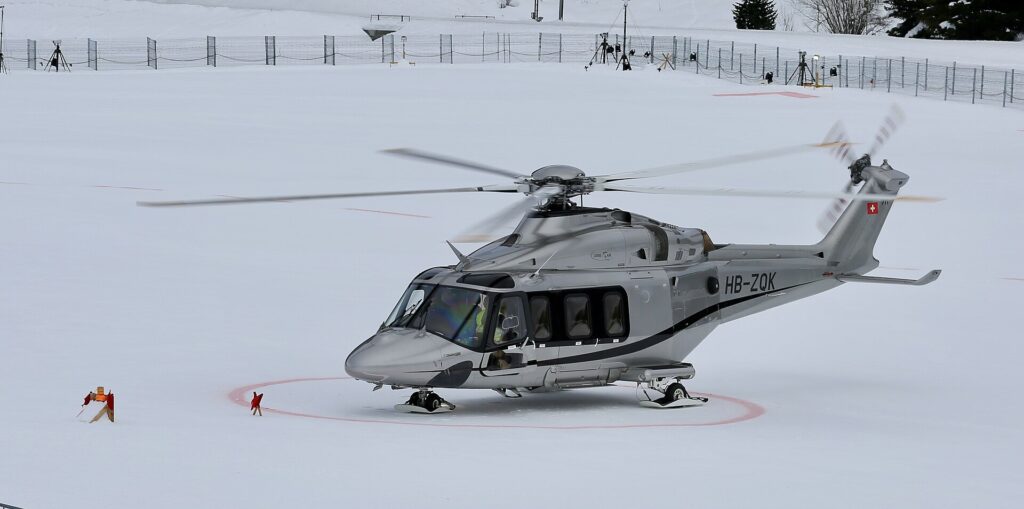
- Transport Surge: 1,000+ helicopter movements during WEF week
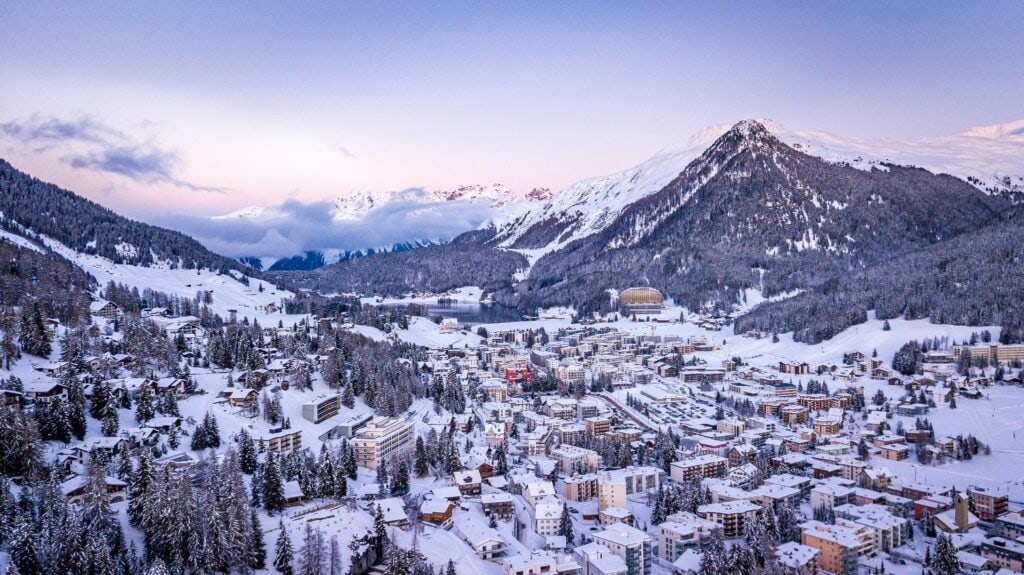
Table of Contents
- WEF Davos 2026 Overview
- How to Get WEF Access
- Getting to Davos: All Transport Options
- VIP Transport Solutions
- Where to Stay: Hotel Reality Check
- What Happens at WEF
- Security & Logistics
- Networking & Side Events
- Costs & Budgeting
- Practical Tips & What to Bring
- Frequently Asked Questions
World Economic Forum Davos 2026 Overview
The World Economic Forum Annual Meeting represents the most concentrated gathering of global economic and political power anywhere on Earth. Founded by Klaus Schwab in 1971, the forum has evolved from academic conference into the world’s premier platform for public-private cooperation addressing global challenges. The 2026 edition marks the 56th Annual Meeting, continuing the January tradition in Davos that began in 1971.
Who Attends WEF Davos
WEF attendance divides into several distinct categories, each with different access levels and participation rights. Understanding these distinctions helps calibrate expectations and networking strategies:
WEF Members – Approximately 1,000 companies hold Forum membership, paying annual fees ranging from CHF 60,000 to CHF 600,000 depending on membership tier. These Strategic Partners, Industry Partners, and Associate Partners receive allocation of delegate passes based on membership level. Member company CEOs and C-suite executives form the core business attendance.
Government Leaders – Heads of state, prime ministers, cabinet ministers, and senior government officials attend by invitation. Approximately 50-70 countries send official delegations, with the United States, European nations, China, and major emerging markets typically represented at the highest levels. Government attendance focuses on sessions addressing geopolitical challenges, economic policy, and international cooperation.
International Organizations – Leadership from the United Nations, World Bank, IMF, WTO, and other multilateral organizations participate in sessions addressing global governance, development, and economic coordination. These participants bridge government and business perspectives, facilitating dialogue on implementing international initiatives.
Media & Journalists – Over 500 journalists from global media organizations receive accreditation to cover the Annual Meeting. Major business publications (Financial Times, Wall Street Journal, Bloomberg), broadcasters (BBC, CNN, CNBC), and digital media outlets send teams. Media access enables interview opportunities with attendees but doesn’t grant full session attendance rights.
Civil Society – NGO leaders, academic experts, cultural figures, and thought leaders receive invitations to participate in specific sessions relevant to their expertise. This category adds diverse perspectives beyond government and business, addressing topics from climate to inequality to technology ethics.
WEF 2026 Expected Themes
While the World Economic Forum announces official themes closer to the event, several issues dominate the 2026 agenda based on ongoing global developments. Artificial intelligence governance and regulation will feature prominently as governments worldwide implement AI frameworks. Climate transition financing requires addressing the $2-3 trillion annual investment gap for net-zero targets. Geopolitical fragmentation and supply chain resilience respond to ongoing tensions affecting global trade. The future of globalization debates protectionism versus openness in an era of economic nationalism.
Central bank policy coordination addresses divergent monetary approaches across major economies. Emerging market growth prospects examine opportunities beyond developed economy stagnation. Technology regulation encompasses everything from AI to cryptocurrency to social media governance. Energy transition pathways balance climate goals with energy security and affordability. These themes shape session programming, panel discussions, and the crucial corridor conversations where real business happens.
WEF Davos 2026: Secure Your Transfer Now
Private jet, helicopter, and chauffeur logistics for World Economic Forum Davos. Crypto payments accepted. Swiss compliance guaranteed.Get Davos Quote Now
How to Get WEF Access (Realistic Assessment)
The harsh reality: most people cannot attend the official World Economic Forum Annual Meeting. Access is strictly controlled through invitation-only participation tied to membership fees, government delegation, media accreditation, or expert invitation. Understanding what’s actually achievable versus aspirational saves time and resources.
Official WEF Participation Paths
Corporate Membership – Companies can apply for WEF membership at strategic partner (CHF 600,000 annual), industry partner (CHF 240,000), or associate partner (CHF 60,000) levels. Membership includes Annual Meeting passes, year-round access to WEF platforms and communities, and participation in regional meetings. This represents the primary access path for business executives. Applications require revenue thresholds and review of company’s global influence. Processing takes months—2026 membership applications closed in 2025.
Government Delegation – Heads of state and senior ministers attend by official invitation coordinated through diplomatic channels. Cabinet-level officials from Forum member countries receive allocation of passes. Government attendance operates outside commercial membership, though participating nations often hold WEF institutional partnerships. Unless you hold senior government office, this path remains closed.
Media Accreditation – Journalists from recognized media organizations apply through the WEF Communications team. Accreditation requirements include working for established news organizations, editorial focus on business/economics/policy, and demonstrated coverage experience. Freelancers face higher barriers. Media access provides extensive interview opportunities and press center facilities but limited session attendance compared to full delegates. Applications typically open 3-4 months before the Annual Meeting.
Expert Invitation – The Forum invites thought leaders, academics, NGO heads, and cultural figures based on expertise relevant to Annual Meeting themes. These invitations target specific individuals for particular sessions or panels. No application process exists—invitations come directly from WEF programming teams. This path requires established global reputation in relevant fields.
Alternative Access: Side Events & Fringe
Davos during WEF week hosts hundreds of side events, private parties, and networking gatherings occurring outside official Forum programming. This “Davos fringe” provides access to WEF attendees without requiring official passes:
Corporate-Hosted Events – Companies maintaining Davos presence during WEF host receptions, dinners, and panels at their rented spaces. Banks, consulting firms, and large corporations invite clients, prospects, and partners to events featuring WEF delegates as speakers or attendees. Securing invitations requires existing relationships with hosting organizations or networking with their event teams.
National Houses – Countries including Canada, Japan, Switzerland, and others operate national pavilions hosting public and private events throughout WEF week. These houses feature cultural programming, policy discussions, and business networking. Many events offer open registration, providing legitimate access to WEF attendee networks.
Think Tank & NGO Events – Organizations from McKinsey to Oxfam host Davos-week programming addressing Annual Meeting themes. These side events often attract official WEF delegates interested in specific topics, creating networking opportunities. Event quality varies—research hosting organization credibility before committing.
Media & Broadcast Events – Bloomberg, CNBC, and other media organizations host public sessions and interviews with WEF attendees. These provide indirect access to Forum participants and legitimate presence in Davos during event week.
Getting to Davos: All Transport Options
Davos sits 150 kilometers southeast of Zurich in the Graubünden Alps, connected via spectacular but winding mountain roads and Switzerland’s efficient rail network. During normal weeks, reaching Davos poses no particular challenge. During WEF week, transport transforms into complex logistics requiring advance planning, significant budget, and flexibility.
Zurich Airport to Davos: Primary Gateway
Most international travelers arrive through Zurich Airport (ZRH), Switzerland’s largest, then continue to Davos via ground transport. The airport handles increased private aviation traffic during WEF week, with FBO facilities managing hundreds of additional business jet movements. For comprehensive coverage of Zurich Airport services and executive arrivals, see our detailed Zurich Airport private jet transfer guide.
Train from Zurich to Davos – The Swiss Federal Railways (SBB) operates regular service from Zurich Hauptbahnhof to Davos Platz station requiring one change in Landquart. Total journey time: 2.5-3 hours. During WEF week, SBB adds extra carriages and special trains to handle delegate traffic, though capacity remains limited. First-class tickets cost approximately CHF 90 one-way, business class premium services available on select trains.
Rail benefits include reliability (Swiss trains maintain legendary punctuality), comfort (work-friendly seating with WiFi), and avoidance of road traffic and security checkpoints. Drawbacks involve fixed schedules, crowded conditions during peak movements, and 3-hour journey each direction. Book as early as possible through SBB Swiss Railways for best availability.
Drive from Zurich to Davos – The 150-kilometer drive via A3 motorway to Landquart, then mountain roads through Klosters to Davos typically requires 2-2.5 hours in normal conditions. During WEF week, security checkpoints, road closures, and heavy traffic can extend journey to 3-4 hours. All vehicles require Swiss motorway vignette (CHF 40 annual). Winter mountain driving necessitates winter tires (legally required) and chains (required in many areas during storms).
Rental cars from Zurich Airport enable flexibility but face multiple challenges during WEF: parking in Davos becomes nearly impossible, security checkpoints require credentials, and some roads close entirely to non-official traffic. Self-driving suits those staying in surrounding valleys (Klosters, Landquart) commuting to Davos, less practical for those requiring accommodation in Davos itself.
Alternative Airports & Routes
St. Gallen-Altenrhein Airport – This smaller airport located 100 kilometers northeast of Davos handles business aviation and some commercial flights. The airport provides alternative to Zurich’s WEF congestion, though ground transport to Davos still requires 90-120 minutes. Limited FBO facilities and fewer transport options make this secondary choice for most travelers.
Milan Airports (Malpensa/Linate) – Some travelers route through Italian airports, particularly when Zurich availability or pricing proves prohibitive. Milan to Davos requires 3.5-4 hours via Como, Chiavenna, and across Swiss border. This routing adds complexity but provides alternatives when Swiss logistics become overwhelmed.
VIP Transport Solutions for WEF Week
WEF week transforms Davos transport from routine to extraordinary. Over 1,000 helicopter movements occur during the five-day period, private jets pack Zurich’s FBO facilities, and executive ground transport operates at premium pricing. Understanding these options and booking early proves essential for smooth WEF logistics.
Helicopter Charter: The WEF Standard
Helicopter transport has become synonymous with WEF Davos, with hundreds of executives choosing rotary-wing access to avoid ground traffic and security delays. Zurich to Davos by helicopter requires approximately 30 minutes compared to 2.5-3 hours ground transport—time savings that justify significant cost premiums for busy executives.
Multiple Swiss helicopter operators provide WEF transport, with pricing for Zurich-Davos routes ranging CHF 8,000-15,000 per flight depending on aircraft type and demand. Popular helicopters include Airbus H125 (5 passengers), AgustaWestland AW109 (6 passengers), and larger H145 or AW139 for groups up to 8-10. Most charters operate Zurich Airport to Davos Heliport, located walking distance from the Congress Centre.
WEF week requires booking helicopter services months in advance—December bookings for January event face limited availability and premium pricing. Flexibility on exact times helps secure capacity as operators coordinate multiple movements throughout each day. Weather provides the primary operational constraint, with January mountain conditions sometimes grounding helicopters. Smart travelers book helicopter for outbound journey (when schedules matter most) while maintaining ground transport backup plans.
For comprehensive coverage of Swiss helicopter charter options, routes, and year-round pricing, explore our detailed helicopter charter price guide for Switzerland. The guide covers standard rates, seasonal premiums, and booking considerations for business aviation throughout the Swiss Alps.
Private Jet & Executive Ground Transport Combinations
Many executives arrive at Zurich Airport via private jet, then continue to Davos via helicopter or executive ground transport. This multi-modal approach enables international travel flexibility while maintaining VIP service standards throughout the journey. Zurich’s FBO facilities coordinate seamless transfers between aircraft and ground transport, with helicopter departures often staged directly from FBO ramps.
Executive ground transport to Davos provides weather-independent alternative to helicopters. Mercedes S-Class, BMW 7-Series, and similar premium sedans with professional drivers operate Zurich-Davos routes during WEF week at rates ranging CHF 2,500-4,000 one-way depending on vehicle type and scheduling. SUVs and vans accommodate larger groups or luggage requirements. Most services include flight monitoring, adjusted pickups for delays, and professional drivers familiar with WEF week security protocols and routing.
The ground transport journey enables productive work time—many executives conduct calls, review documents, or hold meetings during the 2.5-hour drive. Winter mountain scenery through Graubünden passes provides spectacular views when work allows breaks. Premium operators now offer additional services including mobile WiFi hotspots, refreshments, and discrete service appealing to C-suite expectations.
For detailed coverage of executive chauffeur services including booking procedures, vehicle options, and cryptocurrency payment acceptance, see our comprehensive Zurich chauffeur service guide. The guide addresses year-round executive transport needs with special focus on high-demand periods like WEF week.
Within-Davos Transport During WEF
Once in Davos, movement during WEF week faces unique constraints. The compact town center spans about 2 kilometers, theoretically walkable in 20-30 minutes. However, security checkpoints, road closures, and heavy pedestrian traffic transform short distances into lengthy transits. WEF provides shuttle buses connecting major hotels and the Congress Centre for official delegates, though these face crowding and unpredictable schedules.
Many VIP attendees arrange dedicated vehicles and drivers for WEF week, enabling flexible scheduling for meetings, dinners, and events across the valley. Rates for full-day local chauffeur service during WEF run CHF 1,500-2,500 daily plus expenses. This investment buys time efficiency and eliminates logistics stress when managing packed WEF schedules. Vehicles require official permits for Congress Centre area access—coordinate with transport providers well in advance to secure necessary credentials.
Book Your Private Jet Flight
Instant quotes for private jets, helicopters, and luxury transfers. Bitcoin, Ethereum, and 70+ cryptocurrencies accepted. Sphera AI powered booking.Get Instant Quote
Where to Stay: Hotel Reality Check
Davos transforms from ski resort with abundant accommodation into Switzerland’s most impossible booking destination during WEF week. Hotels that normally charge CHF 200-400 per night command CHF 2,000-5,000 daily during the Annual Meeting—when rooms remain available at all. Understanding the accommodation reality and alternative strategies proves essential for WEF trip planning.
The Harsh Reality of Davos Hotels During WEF
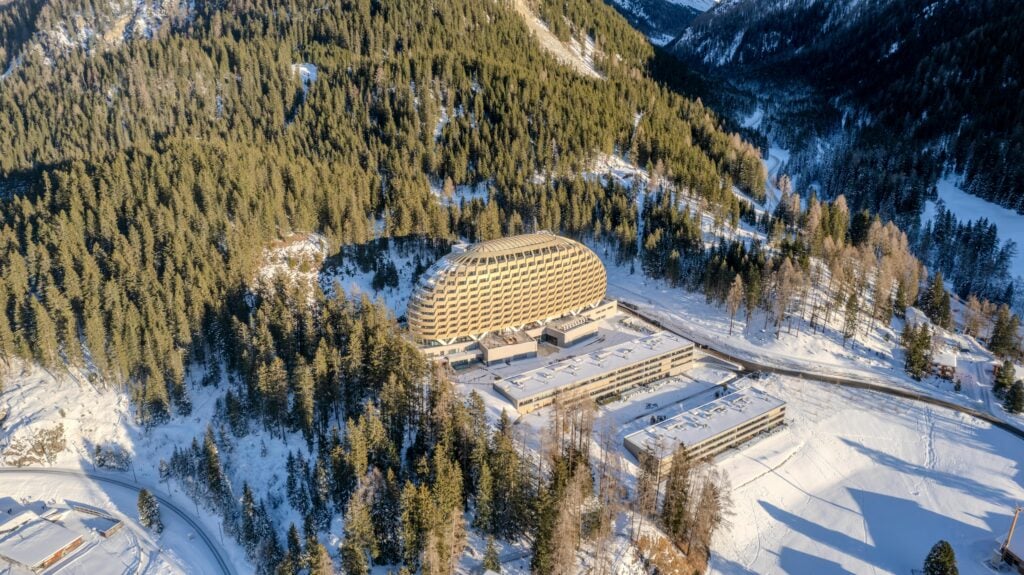
WEF member companies, government delegations, and media organizations book Davos hotel capacity 12-18 months in advance. The Congress Hotel Davos, InterContinental, Steigenberger Grandhotel Belvédère, and other premium properties operate at 100% occupancy throughout WEF week, with rooms allocated to Forum partners and major attendees. Individual travelers calling hotels in December 2025 for January 2026 bookings will find essentially zero availability in Davos proper.
Pricing reflects scarcity. Standard rooms commanding CHF 300 normally increase to CHF 2,000-3,000 during WEF. Suites reach CHF 5,000-10,000 nightly. Minimum stays of 5-7 nights apply universally. These rates include nothing beyond basic accommodation—meals, drinks, and incidentals add substantially to final bills. Hotels also impose 100% prepayment and strict cancellation policies given overwhelming demand.
Corporate clients often book entire hotels or large room blocks for executives, clients, and partners. Banks, consulting firms, and large corporations secure accommodations as part of their annual WEF participation budgets, removing inventory from public booking channels before rates even appear online. This corporate allocation system means traditional hotel booking approaches simply don’t work for WEF week.
Alternative Accommodation Strategies
Klosters (12km from Davos) – This neighboring village provides overflow capacity with easier availability and slightly lower (though still elevated) rates. The train connects Klosters to Davos in 15 minutes when running normally, though WEF week creates crowding. Klosters hotels include Walserhof, Vereina, and several smaller properties. Expect CHF 800-1,500 nightly during WEF versus CHF 250-500 normally. Book by October for January availability.
Chur (50km from Davos) – The regional capital offers broader accommodation options from business hotels to budget properties. Chur to Davos requires 45-60 minutes by train under normal conditions, extending to 90+ minutes with security delays. Rates increase during WEF but remain more accessible than Davos/Klosters—CHF 300-600 for quality hotels. The daily commute adds logistics complexity but enables WEF participation when closer options vanish.
St. Moritz (60km from Davos) – Luxury travelers sometimes base in St. Moritz, commuting to Davos via helicopter (15 minutes) or car (90 minutes). This strategy provides access to St. Moritz’s superior hotel infrastructure, restaurants, and après-ski while attending WEF during daytime. The approach suits those combining WEF business with luxury ski vacation, particularly when traveling with family or extending stays beyond Forum dates. St. Moritz accommodation during WEF week runs CHF 1,000-3,000 nightly at quality properties—expensive but comparable to Davos with vastly superior amenities. For comprehensive St. Moritz coverage including luxury hotels and transport options, see our detailed Zurich to St. Moritz guide.
Private Apartment Rentals – Davos residents rent apartments and chalets during WEF week at premium rates. These rentals appear on vacation rental platforms and through local agencies starting late summer before each Annual Meeting. Prices range CHF 1,000-5,000+ per night depending on size, location, and amenities. Apartment rentals provide more space than hotel rooms, kitchen facilities (reducing meal costs), and sometimes better value for groups sharing costs. However, availability disappears quickly and verification of legitimate listings requires careful research.
Zurich as Alternative Base
Some WEF participants avoid Davos accommodation challenges entirely by basing in Zurich and commuting daily. This strategy works for specific attendance patterns: those with limited sessions requiring Davos presence, people prioritizing Zurich-based side events, or travelers preferring urban infrastructure over Alpine village constraints. Zurich offers vastly more hotel inventory, easier airport access, and infrastructure supporting business needs. The trade-off involves daily 2.5-3 hour commutes (each direction) unless using helicopter transport. For business travelers considering Zurich as their Swiss base, our comprehensive Zurich Switzerland complete guide covers accommodation options, business facilities, and executive services.
What Happens at WEF: Daily Schedule & Programming
The World Economic Forum Annual Meeting operates from early morning through late evening across five intensive days. Official programming fills the Congress Centre with panels, workshops, and sessions, while unofficial activity—corridor conversations, private meetings, dinners—arguably delivers greater value for many participants.
Typical Daily Schedule for WEF Delegates
Days begin early with breakfast sessions starting 7:00-7:30am. These intimate gatherings of 10-30 people address specific topics with expert speakers and Chatham House rules encouraging candid discussion. Morning programming (9:00am-12:30pm) features major sessions in Congress Centre halls, from keynote addresses by heads of state to panel discussions on economic outlook, technology trends, or climate action. Sessions run concurrently across multiple venues—delegates choose priorities from dozens of simultaneous options.
Lunch (12:30-2:30pm) combines nutrition with networking. The Congress Centre restaurant provides table service where much dealmaking and relationship building occurs. Many participants schedule working lunches discussing partnerships, investments, or collaborations in relatively quiet settings away from crowded sessions. Others use lunch for necessary calls with offices operating in different time zones.
Afternoon sessions (2:30-6:00pm) continue with workshops, breakout discussions, and specialized gatherings on topics from artificial intelligence governance to emerging market infrastructure. These smaller-format sessions enable more interactive discussion versus morning’s large-audience panels. Private bilateral meetings also pack afternoon calendars as executives coordinate face-to-face discussions difficult to arrange during normal business operations.
Evenings bring receptions, dinners, and social events where connections deepen beyond formal session environment. National houses host cultural programming and cocktail parties. Companies stage dinners for clients and prospects. The Kirchner Museum, hotels, and restaurants throughout Davos accommodate private events. These evening gatherings continue until midnight or later, creating 15+ hour days for active participants.
Session Types & Content Quality
WEF programming varies significantly in value and accessibility. Large plenary sessions feature prominent speakers—prime ministers, major CEOs, celebrity thought leaders—but offer limited audience participation. These work well for media coverage and general updates but rarely enable substantive discussion. Smaller workshops and specialized sessions (30-50 people) deliver higher-quality dialogue, with expert panels and engaged audiences producing meaningful insights. The most valuable programming often occurs in invitation-only roundtables (15-25 people) addressing specific challenges with relevant stakeholders present.
Content ranges from genuinely important global cooperation on climate or pandemic preparedness to what critics call “Davos theater”—performances of concern and commitment with limited follow-through. Veteran attendees learn to distinguish substantive sessions from publicity exercises, prioritizing programming with actionable outcomes over aspirational declarations. The challenge involves navigating hundreds of session options to identify the dozen truly worth attending given opportunity costs of time.
Security & Logistics During WEF Week
WEF Davos operates under extraordinary security arrangements given the concentration of world leaders, CEOs, and other high-profile individuals. The Swiss military deploys 5,000+ troops securing the Congress Centre and valley perimeter. Road closures, checkpoints, and airspace restrictions affect everyone in the area, requiring patience and flexibility.
Access Control & Credentials
The Congress Centre and surrounding secured zone require official WEF credentials for entry. Delegates receive color-coded badges indicating access levels—white badges provide full access, other colors restrict to specific areas. Security personnel at numerous checkpoints verify badges and IDs constantly. Lost badges require replacement from WEF registration, creating delays and complications. Participants should photograph badges immediately upon receipt and store securely when not wearing them.
The wider Davos area implements tiered security zones. The innermost zone around the Congress Centre permits only credentialed individuals and authorized vehicles. A broader zone allows residents and registered guests but restricts through traffic. Outer areas maintain military presence but allow normal movement with ID verification at checkpoints. Understanding these zones and planning routes accordingly prevents frustration and delays.
Transport Security & Restricted Airspace
Helicopter operations face strict coordination requirements during WEF. All flights require advance approval through Swiss authorities and military air traffic control. The airspace above Davos becomes restricted during the Annual Meeting, with only approved helicopter operators permitted to land at the Congress Centre heliport and other designated sites. This regulation ensures both security and noise management given the high volume of helicopter movements.
Ground vehicle access to secured areas requires special permits obtained through the Davos municipality and WEF security coordination. Most visitors cannot obtain these permits—they’re reserved for official delegates, resident vehicles, and pre-approved service providers. This restriction means even if you have a car or rental vehicle in Davos, you likely cannot drive near the Congress Centre or many hotels during peak hours. Walking becomes necessary despite winter conditions and distances involved.
Personal Security Considerations
Davos during WEF sees minimal violent crime risk despite high-profile attendees. Swiss security proves extremely effective, and the mountain village setting lacks urban crime challenges. The primary personal security concerns involve protecting credentials (badge theft has occurred), securing devices and documents (competitive intelligence gathering happens), and maintaining appropriate discretion about schedules and movements (executive protection protocols apply for high-profile individuals).
Cyber security requires heightened attention. Public WiFi networks in hotels and restaurants become attractive targets for sophisticated actors seeking corporate intelligence or compromising executive devices. Using VPNs, avoiding sensitive communications over public networks, and maintaining updated security software proves essential. Many corporations deploy special IT security for executive teams traveling to WEF given the elevated threat environment.
Networking & Side Events: Where Real Business Happens
Official WEF sessions provide content and context, but many participants find greater value in the extensive network of side events, private gatherings, and informal meetings constituting the “Davos experience.” Understanding this parallel programming and securing access delivers significant return on the substantial investment of time and resources required for WEF attendance.
Corporate & Bank Events
Major banks, consulting firms, and corporations maintain presence in Davos throughout WEF week, hosting clients, prospects, and partners at receptions, dinners, and panels. Goldman Sachs, JPMorgan, McKinsey, BCG, Salesforce, Google, and dozens of others rent venues for events featuring their senior leadership alongside WEF delegates as speakers or attendees. These gatherings provide networking with specific corporate perspectives and direct access to executives difficult to reach during normal business operations.
Event quality varies substantially. Prestigious firms hosting intimate dinners for 20-30 carefully selected guests deliver exceptional networking value. Large cocktail receptions with 200+ people provide atmosphere but limited meaningful interaction. Securing invitations requires existing relationships with hosting organizations or outreach to their WEF event teams—many companies publicize Davos events to clients and partners, while others maintain strictly private guest lists. Starting conversations months in advance improves invitation prospects.
National Houses & Government Receptions
Canada, Japan, India, and other countries operate national pavilions in Davos during WEF week, hosting a mix of public programming, cultural events, and private receptions. The Canada House, Japanese Lounge, and similar venues become hubs for business delegations from those countries, creating networking opportunities around specific national economic interests and investment opportunities. Many events feature government ministers or ambassadors discussing trade policy, investment climate, or bilateral relations.
These national houses often welcome attendance at public events without official WEF credentials, providing legitimate presence in Davos during the Annual Meeting. Event calendars typically appear online 2-3 weeks before WEF—monitoring these sources identifies accessible programming. Quality varies from substantive policy discussions to superficial tourism promotion, requiring selective attendance based on specific interests and networking objectives.
Think Tank & NGO Side Events
Organizations from Chatham House to the World Wildlife Fund stage Davos-week programming addressing Annual Meeting themes from their institutional perspectives. These side events attract WEF delegates interested in specific policy areas, creating networking around shared interests. Academic institutions including Harvard, Oxford, and top business schools host alumni gatherings and policy discussions. Media organizations including Bloomberg, Financial Times, and The Economist stage interviews and panels accessible to broader audiences than official Forum sessions.
The challenge involves separating serious programming from self-promotional exercises. Established institutions with legitimate policy expertise deliver valuable content and networking. Organizations with tenuous relevance trying to capitalize on WEF buzz waste time better spent elsewhere. Researching hosting organizations, reviewing speaker credentials, and consulting trusted sources about event quality helps prioritize attendance across dozens of simultaneous options.
Private Dinners & Invitation-Only Gatherings
Much of Davos’s most valuable networking occurs in small private dinners, working breakfasts, and invitation-only gatherings organized by individuals rather than institutions. A senior executive might host 8-10 CEOs for dinner discussing a specific industry challenge. An investor coordinates breakfast with portfolio company leaders. Government ministers hold working dinners with business leaders from their countries. These intimate settings enable substantive conversation and relationship building impossible in larger forums.
Access to these private gatherings requires established relationships and reputation within specific networks. CEOs, board members, and senior executives operating in the same industries or geographies coordinate meetings building on existing professional relationships. Newcomers to Davos or those lacking relevant networks find these private gatherings difficult to access. Building toward invitation to such events requires years of relationship development, not one-off networking efforts during a single WEF week.
Costs & Budgeting for WEF Davos
Attending WEF Davos ranks among the world’s most expensive business trips. Beyond WEF membership fees (for those with official participation), transport, accommodation, meals, and incidentals during WEF week carry premium pricing reflecting extraordinary demand. Understanding realistic cost expectations enables proper budgeting and prevents unpleasant surprises.
Official WEF Costs
WEF membership providing Annual Meeting access ranges from CHF 60,000 (Associate Partner) to CHF 600,000+ (Strategic Partner) annually. These fees include year-round platform access, but most companies join specifically for Davos attendance rights. Member companies receive delegate pass allocations based on membership tier—strategic partners get more passes than associate members. Additional delegate passes beyond allocation incur supplemental fees (CHF 20,000+ per pass).
Government delegations and invited experts typically don’t pay participation fees—their attendance serves Forum programming objectives. Media accreditation doesn’t require fees but demands working for legitimate news organizations with coverage responsibility. For most business executives, accessing official WEF requires their company holding membership or partnering with member companies coordinating delegate attendance.
Transport Cost Reality
Transport costs vary dramatically based on international travel distance and WEF-week logistics choices:
International Flights – Business class flights from New York to Zurich run $5,000-8,000 during January travel season. From Singapore: $6,000-10,000. From Dubai: $3,000-5,000. Private jet charter for international legs ranges $100,000-300,000+ depending on aircraft size and route. Many executives traveling to WEF expense business class on commercial carriers or split private jet costs among groups traveling from the same region.
Zurich to Davos – Train tickets cost CHF 90 each direction ($100), while executive ground transport runs CHF 2,500-4,000 one-way ($2,800-4,500). Helicopter charter costs CHF 8,000-15,000 per flight ($9,000-17,000), though this often covers groups of 4-6 passengers sharing costs. Round-trip transport (Zurich-Davos-Zurich) therefore ranges from CHF 180 (train) to CHF 30,000 (helicopter)—a factor of 160x difference based on transport mode selection.
Local Transport in Davos – Daily chauffeur service during WEF runs CHF 1,500-2,500 ($1,700-2,800), while walking proves free but time-consuming given security checkpoints and distances. Most VIP attendees arrange dedicated vehicles for the week rather than struggling with shuttles or walking.
Accommodation Costs During WEF
Hotel accommodation in Davos during WEF: CHF 2,000-5,000 nightly ($2,200-5,600) for standard rooms, CHF 5,000-10,000 ($5,600-11,200) for suites. Minimum five-night stays typically required. Total accommodation costs therefore range CHF 10,000-50,000 ($11,200-56,000) per person for the week. Corporate groups renting villas or chalets sometimes achieve better per-person costs when splitting expenses.
Klosters accommodation: CHF 800-1,500 nightly. Chur hotels: CHF 300-600 nightly. These alternatives reduce costs but add commute time and complexity. St. Moritz accommodation during WEF: CHF 1,000-3,000 nightly, comparable to Davos but with superior amenities if combining WEF attendance with ski vacation.
Meals & Incidentals
Restaurant meals during WEF carry premium pricing. Casual lunch: CHF 40-60. Business dinner: CHF 100-200 per person. High-end dinner at hotel restaurants or private venues: CHF 250-500+. Coffee: CHF 6-8. Beer: CHF 9-12. Total daily meal costs easily reach CHF 200-400 ($225-450) per person eating modestly, CHF 500-800 ($560-900) with business entertaining.
Incidentals include ski equipment rental if combining WEF with skiing (CHF 50-100 daily), winter clothing purchases for those unprepared for Alpine January (CHF 500-2,000), and miscellaneous expenses. Tips for drivers, hotel staff, and restaurant service add another CHF 500-1,000 ($560-1,120) for the week for generous tippers.
Total WEF Trip Budget Examples
Budget Corporate Attendee (Train + Klosters)
– International flight: $6,000
– Zurich-Davos train: $200
– Klosters hotel (5 nights): $6,000
– Meals & incidentals: $2,500
Total: ~$15,000
Executive VIP Package (Helicopter + Davos)
– International business class: $8,000
– Helicopter transfers: $18,000
– Davos hotel suite (5 nights): $30,000
– Local chauffeur (5 days): $12,000
– Meals & entertaining: $5,000
Total: ~$73,000
C-Suite Ultra-Premium (Private Jet + Full Service)
– Private jet international (shared): $40,000
– Helicopter transfers (shared): $8,000
– Davos luxury suite (5 nights): $50,000
– Dedicated chauffeur & security: $15,000
– Premium entertaining: $10,000
Total: ~$123,000
These budgets exclude WEF membership fees. For companies sending multiple executives, costs multiply—a 5-person delegation using premium services easily reaches $400,000-600,000 for the week including membership allocations. This investment justifies itself through deal-making, relationship building, and strategic insights impossible to achieve elsewhere, but requires realistic budgeting and executive approval.
Practical Tips & What to Bring
Clothing & Dress Code
WEF maintains business formal dress code for Congress Centre sessions. Men: dark suits, white or light blue shirts, conservative ties. Women: business suits, dresses, or separates in neutral colors. The atmosphere skews conservative—Swiss banking formal rather than Silicon Valley casual. Davos January temperatures average -5°C to +2°C (23-36°F), requiring serious winter outerwear between venues. Bring quality overcoat, scarf, gloves, and waterproof boots for walking between buildings.
Evening events range from business formal (dinners, receptions) to smart casual (national house events). Pack versatile wardrobe enabling multiple outfit combinations without excessive luggage. Layers work better than heavy single garments given temperature variation between heated venues and outdoor movement. The high altitude and dry air require moisturizer and lip balm to prevent chapped skin.
Technology & Devices
Bring laptop, phone, and chargers plus European adapters (Switzerland uses Type J plugs, though Type C also works). Battery packs prove essential given long days away from charging opportunities. VPN software should be pre-installed and tested before arrival for secure communications. Download key documents and presentations offline—congress center WiFi becomes overloaded during peak sessions. Noise-canceling headphones enable work during transport and coffee shop meetings.
Physical documents still matter at WEF—business cards, printed schedules, and backup copies of credentials. Despite digital prevalence, card exchange happens constantly, and having backup paper prevents being stranded if devices fail or batteries die. A leather portfolio or professional bag that fits laptop, documents, and winter layers while looking appropriate for business meetings proves invaluable.
Health & Altitude Considerations
Davos sits at 1,560 meters elevation—high enough that some visitors experience mild altitude effects like headaches, fatigue, or sleep disruption. Hydration helps significantly—drink more water than normal and limit alcohol consumption despite social pressures. The dry mountain air also affects skin and respiratory systems. Bring moisturizer, lip balm, and saline nasal spray. Prescription medications should travel in carry-on luggage with adequate supply for entire trip plus delays.
The intensive schedule and limited sleep common during WEF week stress immune systems. Hand sanitizer, basic first-aid supplies, and over-the-counter cold medications prove useful. Swiss pharmacies stock major medications but under different brand names—bring sufficient supply of critical prescriptions rather than finding Swiss equivalents during busy week.
Money & Payments
Switzerland uses Swiss Francs (CHF), not Euros. Credit cards work universally, though some venues prefer Swiss Franc transactions to avoid poor Euro-CHF exchange rates. ATMs provide Swiss Franc cash, essential for tips and occasional cash-only vendors. Carry CHF 200-300 in mixed bills for taxis, tips, and incidentals. Some premium service providers now accept cryptocurrency payment including Bitcoin, Ethereum, and stablecoins—confirming payment options when booking services eliminates confusion during busy WEF schedule.
Frequently Asked Questions: WEF Davos 2026
Can anyone attend WEF Davos or is it invitation-only?
The official World Economic Forum Annual Meeting operates on invitation-only basis tied to corporate membership (CHF 60,000-600,000 annual), government delegation, media accreditation, or expert invitation. You cannot simply buy a ticket or register to attend official WEF sessions. However, hundreds of side events, national houses, and corporate-hosted gatherings occur in Davos during WEF week that don’t require official Forum credentials—these provide legitimate access to WEF attendee networks without formal membership.
How much does it cost to attend WEF Davos?
WEF membership providing official participation ranges CHF 60,000-600,000 annually depending on membership tier. Beyond membership, individual attendee costs range $15,000-125,000+ for the week depending on transport mode (train vs helicopter), accommodation choice (Klosters vs Davos luxury hotel), and service level (self-navigation vs dedicated chauffeur). Most corporate executives attending WEF incur costs of $40,000-80,000 per person including transport, accommodation, meals, and local services.
When exactly is WEF Davos 2026?
The World Economic Forum Annual Meeting 2026 occurs January 20-24, 2026 (Monday through Friday). Pre-events and setup begin January 18-19, while departure logistics extend through January 25. The full WEF presence in Davos therefore spans roughly January 18-25, though core programming concentrates January 20-24.
How far in advance should I book WEF Davos logistics?
Davos hotel rooms for WEF week require booking 12-18 months ahead—major hotels fill by March-April of the preceding year. Helicopter charter should be reserved 3-6 months prior (September-October for January event) to secure availability and reasonable pricing. Ground transport services see elevated demand but typically accommodate bookings 2-3 months ahead. International flights require less advance booking though business class on convenient routes fills months before travel. The general rule: earlier booking proves better for all WEF logistics.
Is WEF Davos worth attending for business development?
WEF attendance value depends entirely on specific business objectives and existing networks. For CEOs, board members, and senior executives operating globally, WEF provides unmatched concentration of decision-makers enabling 20-30 high-value meetings in one week that normally require months to coordinate. For mid-level executives or those in purely domestic businesses, the substantial investment rarely justifies returns. Companies should evaluate WEF attendance against specific relationship-building objectives, deal pipeline, and strategic priorities rather than attending for general networking or visibility.
Can I get by with just attending side events without official WEF credentials?
Yes, many people successfully network during WEF week attending only side events, national houses, corporate receptions, and fringe programming. This approach provides access to WEF attendees in less formal settings, often enabling more substantive conversations than possible in crowded Congress Centre sessions. However, missing official programming means lacking context for many discussions and potentially appearing less serious to official delegates. The side-event-only strategy works best for those with specific relationship objectives and existing connections rather than first-time attendees seeking broad WEF exposure.
What’s the main theme or focus of WEF Davos 2026?
The World Economic Forum typically announces Annual Meeting themes 2-3 months before the event—expect the WEF 2026 theme announcement in November-December 2025. Recent themes have addressed topics like “Cooperation in a Fragmented World” (2023), “Working Together, Restoring Trust” (2024), and “Leadership in an Age of Disruption” (2025). The 2026 theme will likely address persistent global challenges including AI governance, climate transition, geopolitical tensions, and economic restructuring—check the World Economic Forum website for official announcements.
Is Davos safe during WEF with so many world leaders present?
Yes. Switzerland deploys 5,000+ military personnel securing Davos during WEF, creating one of the world’s most protected locations during Annual Meeting week. The security presence is overwhelming, with checkpoints, surveillance, and military assets throughout the valley. Violent incidents are virtually unknown. The primary security concerns involve protecting credentials, devices, and information rather than physical safety. The intensive security does create movement complications and delays, but effectively eliminates serious security risks to attendees.
Can I combine WEF attendance with skiing in Davos?
Theoretically yes, practically difficult. Davos offers excellent skiing on normal weeks, but WEF schedule leaves minimal time for slopes. Most delegates maintain 7am-midnight schedules throughout the event week. The few who ski typically do so very early morning (6-8am) before sessions or occasionally during specific free afternoons. Those seriously interested in combining WEF with skiing should consider basing in St. Moritz or extending stays before/after WEF week rather than expecting meaningful skiing during the intense five-day Annual Meeting.
Why is WEF always held in Davos instead of major cities?
Klaus Schwab founded WEF in Davos in 1971, and the mountain setting creates focus impossible in major cities. The relative isolation keeps participants concentrated on Forum programming rather than dispersing across urban distractions. Davos provides sufficient infrastructure (congress center, hotels, restaurants) while maintaining manageable size for security. The neutral Swiss location appeals to participants from all countries. Attempts to relocate proved unsuccessful—WEF’s identity has become inseparable from the Davos setting despite logistical challenges the small Alpine town creates during peak attendance.
Conclusion: Making WEF Davos 2026 Worth the Investment
Attending the World Economic Forum Annual Meeting in Davos represents one of business’s most significant investments in time, money, and logistics. The combination of membership fees, premium transport, scarce accommodation, and intensive schedule creates a week costing $40,000-125,000+ per person before accounting for opportunity costs of time away from normal business operations. This investment justifies itself only when approached strategically with clear objectives, realistic expectations, and thorough preparation.
Successful WEF participation requires months of advance planning—booking logistics, coordinating meetings, researching programming, and building context for productive conversations. First-time attendees often struggle with overwhelming options and miss highest-value opportunities through poor prioritization. Veterans approach Davos with specific relationship goals, pre-scheduled meetings, and selective session attendance maximizing limited time against infinite programming options.
The true value of WEF Davos lies not in official sessions—most content eventually becomes public—but rather in the concentrated access to global decision-makers impossible to assemble elsewhere. A C-suite executive can conduct 20-30 high-level meetings in five Davos days that normally require six months to coordinate globally. Deals move forward, partnerships form, and strategic relationships deepen through face-to-face interaction in ways video calls cannot replicate. These tangible business outcomes justify substantial investment for companies operating at relevant scale.
For those attending WEF Davos 2026, success requires balancing official programming, side events, private meetings, and necessary rest against five exhausting days. Prioritize ruthlessly, decline low-value commitments, and protect time for unexpected opportunities that emerge. The best Davos weeks balance structure with flexibility, enabling both planned objectives and serendipitous connections driving future value.
Whether you’re attending as an official delegate, participating in side events, or providing services to WEF attendees, approaching the week with realistic expectations, thorough preparation, and strategic focus transforms the substantial investment into meaningful business outcomes. Welcome to the world’s most concentrated gathering of economic power—use it wisely.
Related Guides: